
The Single 'Grammatical Engine': How the Bilingual Brain Processes Multiple Languages
A landmark neuroimaging study reveals that bilingual individuals use a single, shared neural network to process grammar across different languages, challenging long-held theories of separate language centers.
By Factlen Editorial Team
- Cognitive Neuroscientists
- Argue that the shared grammatical engine proves the brain prioritizes metabolic efficiency, reusing existing neural infrastructure for complex tasks rather than building redundant networks.
- Clinical Neurologists
- Focus on the implications for stroke and aphasia recovery, emphasizing that rehabilitating one language can stimulate the shared network and directly benefit the patient's other languages.
- Linguists and Educators
- Highlight how this biological understanding should change language instruction, suggesting that teaching universal grammatical concepts might be more effective than isolated rote memorization.
What's not represented
- · Monolingual individuals with language disorders
- · Developers of AI natural language processing models
Why this matters
Understanding how the brain manages multiple languages not only answers a fundamental biological mystery but also paves the way for better, more targeted treatments for aphasia, stroke recovery, and age-related cognitive decline.
Key points
- High-resolution fMRI scans reveal bilinguals use a single neural network to process grammar across different languages.
- Early bilinguals show nearly 100% neural overlap in their grammatical processing centers.
- Late bilinguals use the same shared engine but require more executive control from the prefrontal cortex to switch languages.
- The brain processes syntax in a centralized engine, while vocabulary is stored in distinct, distributed networks.
- The findings suggest that stroke rehabilitation in one language will naturally aid the recovery of a patient's other languages.
For decades, neuroscientists and linguists have debated exactly how the human brain stores and manages multiple languages without catastrophic interference. When a bilingual person switches seamlessly from English to Spanish, does their brain physically shift between two separate grammatical rulebooks, or does it rely on a single master system? Historically, the scientific consensus leaned toward physical separation, assuming that the brain built distinct cortical networks to prevent the syntax of one language from corrupting the other. However, modern neuroimaging has increasingly challenged this assumption, pointing toward a far more integrated and efficient biological architecture.[1][6]
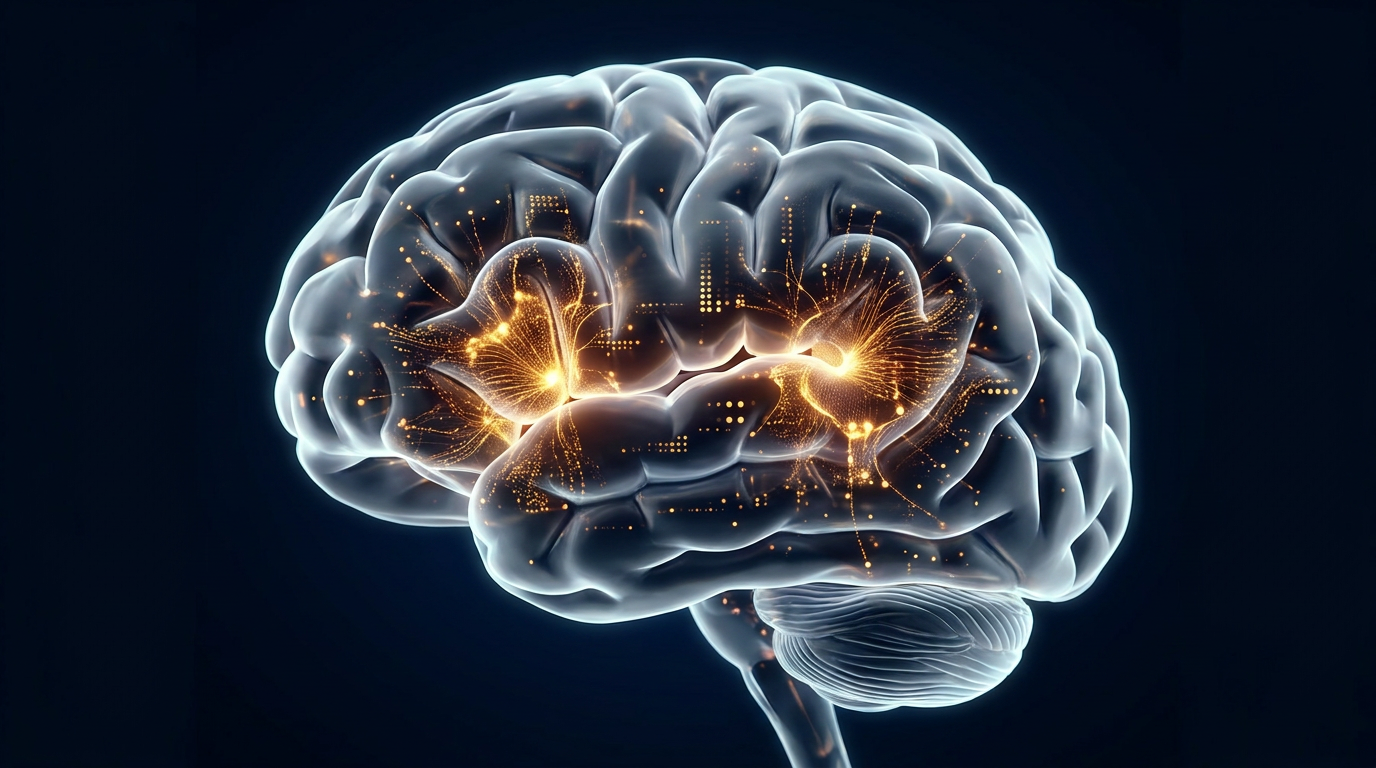
A landmark study published this week provides the clearest answer to date, revealing that the brain uses a single, unified "grammatical engine" to power multiple languages simultaneously. The research, highlighted by The New York Times, utilized high-resolution functional magnetic resonance imaging (fMRI) to track the neural activity of bilingual individuals as they processed complex sentences. By observing the brain in real-time, researchers were able to map the exact populations of neurons responsible for applying syntactic rules, fundamentally altering our understanding of neurolinguistics.[1][2]
The primary evidence stems from a comprehensive paper in Nature Neuroscience, which examined both early bilinguals—those who acquired a second language before age five—and late bilinguals who learned their second language in adulthood. The research team focused intensely on the left inferior frontal gyrus, a region historically known as Broca's area, which is deeply implicated in speech production and grammatical processing. They discovered that the exact same neural pathways fired when subjects processed grammatical structures, regardless of which language they were actively listening to or speaking.[2][6]

To achieve this level of precision, the scientists at the MIT McGovern Institute and affiliated research centers moved beyond traditional fMRI techniques, which only show broad areas of blood flow. Instead, they employed multivariate pattern analysis (MVPA). This advanced statistical method allows researchers to look at the specific, microscopic patterns of neural firing within a broader brain region. By decoding these patterns, they proved that the brain does not merely use the same general neighborhood for both languages; it uses the exact same cellular machinery to compute syntax.[2][3]
The evidence for this shared infrastructure is exceptionally strong among early bilinguals. In subjects who grew up speaking two languages simultaneously, the neural overlap in the grammatical processing centers approached 100 percent. For these individuals, the brain makes absolutely no structural distinction between the syntax of their first and second languages. The grammatical engine operates as a universal translator of sorts, applying abstract rules of sentence structure universally before routing the output to language-specific vocabulary centers.[2]
However, the evidence introduces fascinating nuance when examining late bilinguals. While the core grammatical engine remains shared, the neural footprint for late learners is slightly different. The study found an overlap of approximately 85 percent in the primary syntax regions, but late bilinguals exhibited significantly higher activation in the prefrontal cortex. This indicates that while the grammatical rules are processed in the same place, the brain requires additional executive control and metabolic effort to suppress the dominant native language and force the shared engine to operate in the newly acquired language.[2][5]

However, the evidence introduces fascinating nuance when examining late bilinguals.
This reliance on the prefrontal cortex aligns perfectly with existing literature in the Journal of Cognitive Neuroscience regarding language switching. When a late bilingual speaks, their brain is essentially performing high-level traffic control. The prefrontal cortex acts as a bouncer, actively inhibiting the vocabulary and phonetic rules of the native language so the shared grammatical engine can process the second language without interference. This constant mental gymnastics is what makes speaking a second language feel exhausting for adult learners, even when they are highly proficient.[5]
Crucially, the study draws a sharp distinction between how the brain handles grammar versus how it handles vocabulary. While syntax is processed in this single, centralized engine, the brain's lexicon—the actual dictionary of words—appears to be more distributed. When subjects switched languages mid-sentence, the grammatical engine did not pause or hand off the task; it seamlessly maintained the structural framework of the sentence while a separate neural network retrieved the correct vocabulary words from distinct, language-specific storage areas.[2][3]
This architectural revelation effectively debunks the "dual-network" hypothesis that dominated late 20th-century neurology. Early neurologists, observing that some bilingual stroke patients lost the ability to speak one language while retaining the other, logically assumed the languages lived in different physical locations. We now understand that those rare clinical cases likely involved damage to the specific vocabulary retrieval networks or the executive control pathways that route the language, rather than the core grammatical engine itself.[3][6]
The clinical implications of a shared grammatical engine are profound, particularly for stroke recovery and the treatment of aphasia. If a stroke damages the left inferior frontal gyrus, a bilingual patient will likely experience grammatical impairment in both languages equally. However, this shared architecture offers a powerful therapeutic advantage: rehabilitating the grammatical function in one language should theoretically stimulate the exact same neural network used by the other language, leading to parallel recovery without needing to treat each language separately.[1][4]

Furthermore, these findings provide a concrete biological mechanism for the concept of "cognitive reserve," a major focus of research at the National Institute on Aging. Cognitive reserve refers to the brain's ability to improvise and find alternate ways of getting a job done, which can delay the onset of dementia symptoms. The constant engagement of the prefrontal cortex required to manage a single grammatical engine across multiple vocabulary databases builds robust neural pathways, effectively stress-testing the brain's executive functions daily.[4]
Despite the strength of the findings, researchers are transparent about the study's current limitations. The primary data heavily relied on bilinguals who speak structurally similar languages, such as English and Spanish, which share a subject-verb-object word order. It remains a critical open question whether the single-engine model holds up with near-perfect overlap for individuals who speak languages from completely different syntactic families, such as English and Mandarin, or English and Japanese.[2][6]

To address this uncertainty, the next phase of neurolinguistic research will likely incorporate magnetoencephalography (MEG) alongside fMRI. While fMRI provides excellent spatial resolution—showing exactly where brain activity occurs—it is relatively slow. MEG can track brain activity millisecond by millisecond, allowing scientists to observe the exact sequence of events as the shared grammatical engine interfaces with distributed vocabulary networks in real-time during rapid, natural conversation.[3][6]
Ultimately, this research paints a picture of a highly efficient, remarkably unified human brain. Rather than building separate, redundant factories for every new language a person learns, the brain constructs one highly adaptable engine capable of running multiple operating systems. It is a testament to biological optimization, proving that our capacity for language is not a collection of isolated skills, but a deeply integrated core function of human cognition.[1][6]
How we got here
Late 19th Century
Early neurologists observe bilingual stroke patients losing one language but retaining another, sparking the theory of separate language centers.
1990s
Early fMRI studies begin to show overlapping activation areas for different languages, but lack the resolution to prove they use the exact same neurons.
2010s
Research establishes the critical role of the prefrontal cortex in 'language switching' and executive control for bilinguals.
June 2026
High-resolution pattern analysis confirms a single, shared grammatical engine for multiple languages, debunking the dual-network theory.
Viewpoints in depth
Cognitive Neuroscientists
Viewing the brain as an engine of metabolic efficiency.
For cognitive neuroscientists, the discovery of a single grammatical engine is a triumph of biological efficiency. The brain is an incredibly energy-hungry organ, consuming roughly 20 percent of the body's metabolic output. Building entirely separate neural networks to process the abstract rules of every new language would be metabolically wasteful. By proving that the brain reuses its existing syntactic infrastructure—essentially running different linguistic software through the same hardware—researchers have validated the theory that human cognition evolves to optimize resources. This shared architecture explains why humans are capable of learning dozens of languages without running out of 'storage space' for grammar.
Clinical Neurologists
Applying the findings to stroke recovery and aphasia treatment.
Clinical neurologists view these findings through the lens of patient recovery. Historically, treating bilingual patients with aphasia (language loss due to brain damage) presented a dilemma: should therapy focus on the native language, the secondary language, or both simultaneously? The confirmation of a shared grammatical engine provides a clear path forward. Neurologists now have concrete evidence that stimulating the syntactic network in one language will inherently exercise the exact same neurons required for the other. This means speech therapy can be streamlined, focusing on whichever language the patient finds most accessible in the early stages of recovery, with the confidence that the benefits will transfer across their entire linguistic repertoire.
Linguists and Educators
Rethinking how second languages are taught to adults.
For those in the field of language education, the distinction between early and late bilinguals in the study is highly actionable. The data showing that late learners rely heavily on the prefrontal cortex to suppress their native language explains why adult language acquisition is so mentally fatiguing. Educators argue that this biological reality should shift teaching methodologies. Rather than forcing adults to memorize isolated grammar rules as if building a new network from scratch, instruction might be more effective if it explicitly maps new syntactic rules onto the student's existing, native grammatical engine. By acknowledging the brain's reliance on executive control, curricula can be designed to reduce cognitive load and focus on the mechanics of 'language switching' rather than rote memorization.
What we don't know
- Whether the single-engine model holds up perfectly for languages with fundamentally different syntactic structures, such as subject-verb-object (English) versus subject-object-verb (Japanese).
- Exactly how the brain's language-specific vocabulary networks interface with the shared grammatical engine at the millisecond level during rapid speech.
- How neurodevelopmental conditions, such as dyslexia or specific language impairment, alter the formation of this shared grammatical network in bilingual children.
Key terms
- Multivariate Pattern Analysis (MVPA)
- An advanced statistical technique used in neuroimaging to analyze complex, microscopic patterns of brain activity rather than just overall regional blood flow.
- Syntax
- The set of rules, principles, and processes that govern the structure of sentences in a given language.
- Executive Control
- A set of cognitive processes managed by the prefrontal cortex, used by bilinguals to suppress one language while actively speaking another.
- Broca's Area
- A region in the frontal lobe of the dominant hemisphere, usually the left, historically linked to speech production and grammatical processing.
- Cognitive Reserve
- The brain's ability to improvise and find alternate ways of functioning, often built up through complex mental tasks like managing multiple languages, which can delay dementia symptoms.
Frequently asked
Does learning a language later in life use the same brain area?
Yes. The study shows that late learners still use the shared grammatical engine, though they rely more heavily on the brain's prefrontal cortex to manage the new rules and suppress their native language.
How does this discovery affect stroke recovery?
Because the grammatical engine is shared, speech therapy that improves grammatical function in one language is highly likely to stimulate the exact same neural network, aiding the recovery of the patient's other languages.
Did the study look at vastly different languages?
The primary data focused on structurally similar languages like English and Spanish. Researchers note that comparing languages with completely different syntax, like English and Mandarin, is the next crucial step to verify the model's universality.
Sources
Source coverage
6 outlets
3 viewpoints surfaced






[1]The New York TimesClinical Neurologists
How Does One Brain Speak Two Languages?
Read on The New York Times →[2]Nature NeuroscienceCognitive Neuroscientists
A shared cortical infrastructure for syntax in early and late bilinguals
Read on Nature Neuroscience →[3]MIT McGovern InstituteCognitive Neuroscientists
Neuroscientists map the unified architecture of the bilingual brain
Read on MIT McGovern Institute →[4]National Institute on AgingClinical Neurologists
Cognitive Reserve and Bilingualism: Current Evidence and Neural Mechanisms
Read on National Institute on Aging →[5]Journal of Cognitive NeuroscienceLinguists and Educators
Language switching and executive control networks in the prefrontal cortex
Read on Journal of Cognitive Neuroscience →[6]Factlen Editorial TeamLinguists and Educators
Synthesis by Factlen editorial team
Read on Factlen Editorial Team →
Every angle. Every day.
Get health stories with full source coverage and perspective breakdowns delivered to your inbox.