
U.S. and Iran Reach Framework Peace Deal to End War and Reopen Strait of Hormuz
President Trump and Iranian officials have agreed to a preliminary ceasefire that lifts the U.S. naval blockade and reopens the Strait of Hormuz. The memorandum of understanding sets a 60-day window to negotiate unresolved issues, including Iran's nuclear program and regional security.
By Factlen Editorial Team
- U.S. Administration & Mediators
- Argues the deal successfully reopens global trade routes while maintaining maximum pressure on Iran's nuclear ambitions.
- Congressional Skeptics
- Demands strict oversight and opposes any financial relief for Tehran without verifiable, permanent dismantling of its nuclear program.
- Geopolitical Analysts
- Warns that the agreement is fragile, leaves Iran with significant leverage over the Strait of Hormuz, and fails to address proxy networks.
- International Community
- Welcomes the de-escalation as a critical step to stabilize global energy markets and prevent a wider regional war.
What's not represented
- · Lebanese civilians affected by ongoing Israeli strikes
- · European shipping companies navigating the Strait
Why this matters
The agreement halts a three-and-a-half-month conflict that choked global energy supplies and spiked inflation. Reopening the Strait of Hormuz restores a critical artery for international trade, though the durability of the ceasefire remains uncertain.
Key points
- The U.S. and Iran signed a preliminary memorandum of understanding to end hostilities and lift the U.S. naval blockade.
- The agreement establishes a 60-day ceasefire to negotiate unresolved issues, including Iran's nuclear program.
- The Strait of Hormuz is set to reopen to commercial shipping, causing global oil prices to drop significantly.
- Israel maintains it is not bound by the Lebanon ceasefire provisions and has continued strikes against Hezbollah.
- U.S. lawmakers are demanding to review the unreleased text amid rumors of a $300 billion reconstruction fund for Iran.
The United States and Iran have reached a preliminary framework agreement to end more than three months of direct warfare, establishing a fragile ceasefire and paving the way for the reopening of the Strait of Hormuz. President Donald Trump announced the breakthrough on Sunday, declaring that the strategically vital waterway would be completely open and toll-free by Friday. The memorandum of understanding, mediated in part by Pakistani Prime Minister Shehbaz Sharif, officially halts military operations across multiple fronts and lifts the U.S. naval blockade that had choked Iranian ports. For a global economy battered by soaring energy costs and disrupted supply chains, the announcement offered an immediate lifeline, though the precise terms of the unreleased text remain heavily guarded.[1][2][4]
The current framework does not serve as a final peace treaty, but rather establishes a 60-day ceasefire window during which both sides will attempt to negotiate the most contentious unresolved issues. Chief among these are the future of Iran's nuclear program, the handling of its highly enriched uranium stockpiles, and the potential lifting of crippling economic sanctions. A formal signing ceremony is scheduled to take place this Friday in Geneva, Switzerland. Vice President J.D. Vance and Iranian parliamentary speaker Mohammad Bagher Ghalibaf are expected to serve as the principal signatories, while technical teams prepare to hammer out the granular details of compliance and enforcement in subsequent meetings in Doha.[1][3][7]

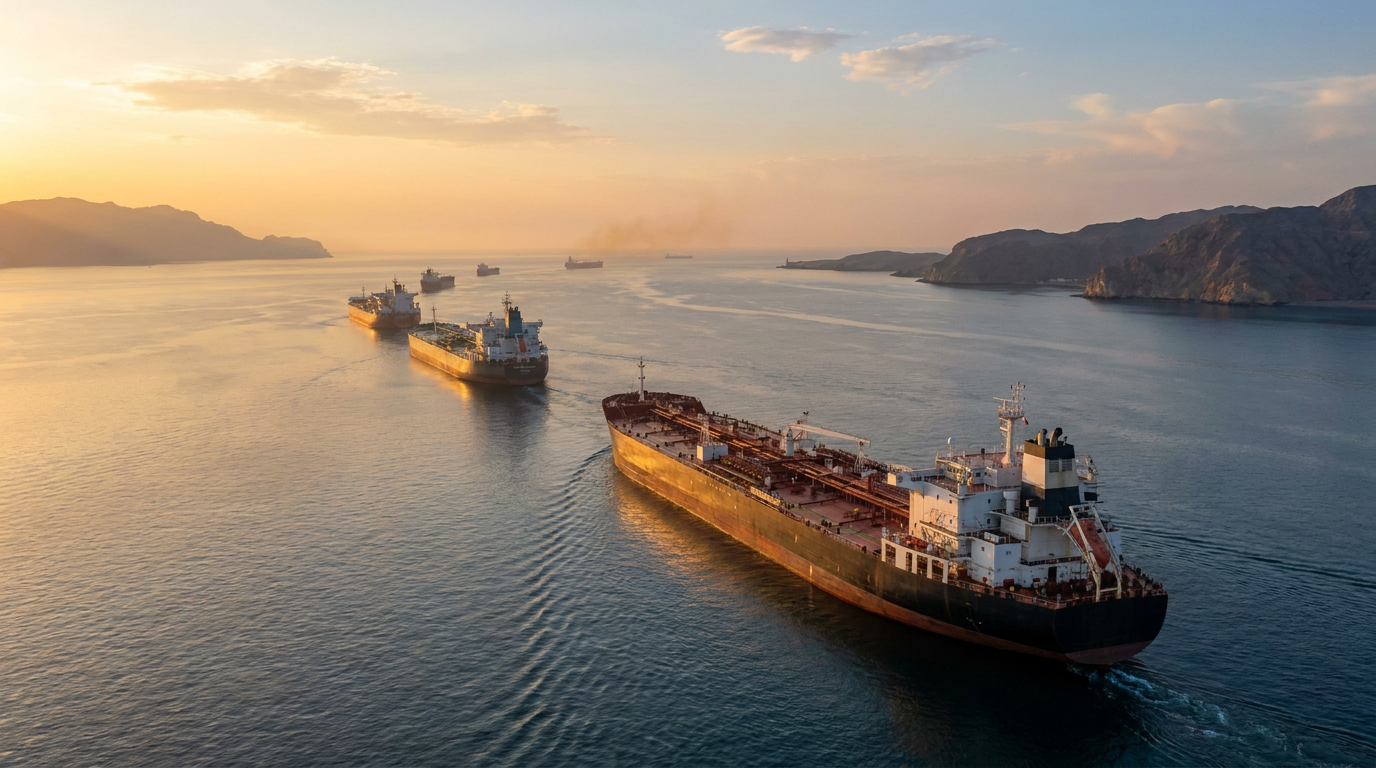
The immediate economic relief was palpable across global trading floors. Oil prices tumbled and stock markets surged to record highs following the announcement, reflecting widespread investor optimism that the severe disruption to global energy supplies is finally ending. The Strait of Hormuz, which Iran militarized and mined at the start of the conflict, is a vital artery for international oil shipments. Its three-and-a-half-month closure had sent shockwaves through the international economy, spiking inflation and forcing shipping companies to reroute vessels at massive expense. While the U.S. administration insists the strait will be cleared of mines and fully operational within days, maritime experts caution that restoring pre-war traffic levels will require extensive demining operations and restored confidence among commercial insurers.[3][4][7]
Despite the diplomatic breakthrough, the situation on the ground remains highly volatile, particularly regarding Israel's ongoing military operations. The U.S.-Iran agreement reportedly includes a cessation of hostilities in Lebanon, but Israeli Prime Minister Benjamin Netanyahu has explicitly stated that Israeli forces will not withdraw from the country and do not consider themselves bound by the Lebanon-related provisions of the bilateral deal. Shortly after the ceasefire was announced, Israel conducted a deadly drone strike against a vehicle in southern Lebanon, highlighting the fragility of the broader regional peace. Hezbollah, which welcomed the U.S.-Iran pact, has warned that it will retaliate against any Israeli violations of Lebanese sovereignty, creating a dangerous flashpoint that could quickly unravel the broader agreement.[2][3]

Despite the diplomatic breakthrough, the situation on the ground remains highly volatile, particularly regarding Israel's ongoing military operations.
In Washington, the agreement faces intense scrutiny and mounting skepticism from lawmakers across the political spectrum. Several Republican senators have demanded to review the classified text of the memorandum, expressing deep suspicion about potential financial incentives being offered to Tehran. Rumors of a $300 billion reconstruction fund—reportedly to be financed by neighboring Gulf states—have sparked particular outrage among Iran hawks who fear the regime is being rewarded for its aggression. While President Trump dismissed the reconstruction fund reports as fake news, Vice President Vance confirmed that financial mechanisms are being discussed but insisted that Iran would not receive any funds without meeting strict, verifiable obligations regarding its nuclear infrastructure.[3][5][6]
As G7 leaders convene in Evian-les-Bains, France, the focus of the international community has shifted to the enforcement of the agreement and the daunting technical negotiations that lie ahead. Analysts warn that while the immediate reopening of the Strait of Hormuz is a significant victory for global trade, Iran's demonstrated ability to threaten the waterway remains a potent point of leverage. The ultimate success of the deal will depend entirely on whether the 60-day negotiating window can produce a verifiable framework to permanently prevent Iran from acquiring a nuclear weapon, while simultaneously satisfying Tehran's demands for comprehensive economic relief and the unfreezing of billions of dollars in foreign assets.[1][3][7][8]

The ambiguity surrounding the unpublished text of the memorandum leaves several critical questions unanswered, leading to conflicting narratives between Washington and Tehran. Iranian state media and affiliated outlets have suggested that Tehran intends to resume charging service fees for commercial vessels transiting the Strait of Hormuz after the 60-day ceasefire period expires. This directly contradicts the U.S. administration's firm assertion that the waterway will remain permanently toll-free. Furthermore, the framework agreement reportedly lacks explicit restrictions on Iran's ballistic missile program or its continued financial and logistical support for regional proxy groups—issues that have long been central to the security doctrines of both Israel and the United States.[3][7][8]
For the international community, the stakes of the upcoming Geneva summit are immense. The United Nations, along with European and regional allies, have universally welcomed the de-escalation, but seasoned diplomats acknowledge that the current framework is merely a temporary pause in hostilities rather than a comprehensive resolution. If the impending technical talks fail to yield a permanent, verifiable agreement regarding Iran's highly enriched uranium stockpiles and the mechanics of sanctions relief, the region could rapidly slide back into open warfare. The next 60 days will test whether coercive diplomacy can forge a lasting peace, or if the underlying geopolitical fractures in the Middle East remain fundamentally unbridgeable.[1][4][7][8]
How we got here
February 2026
The U.S.-Israel war with Iran begins, leading to the closure of the Strait of Hormuz.
June 14, 2026
U.S. and Iranian officials digitally sign a preliminary memorandum of understanding to halt hostilities.
June 15, 2026
Global oil prices plummet as the agreement is publicly announced.
June 19, 2026
A formal signing ceremony is scheduled to take place in Geneva, Switzerland.
Viewpoints in depth
U.S. Administration's view
The White House frames the deal as a masterstroke of coercive diplomacy.
Administration officials argue that the agreement achieves its primary goal: reopening the Strait of Hormuz and stabilizing global markets without conceding on the core demand that Iran must never acquire a nuclear weapon. They maintain that the 60-day window provides the necessary leverage to enforce strict compliance, and that the U.S. naval blockade successfully forced Tehran to the negotiating table on favorable terms.
Congressional Skeptics
Lawmakers fear the administration is offering premature economic relief.
Republicans and Iran hawks view the framework with deep suspicion, demanding congressional oversight to ensure the regime is not rewarded for its aggression. They are particularly concerned about rumors of a massive reconstruction fund and the unfreezing of Iranian assets, arguing that any financial relief will inevitably be funneled into Iran's proxy networks and ballistic missile programs rather than domestic recovery.
Geopolitical Analysts
Experts warn the agreement leaves Iran with significant strategic leverage.
Security analysts point out that while the immediate reopening of the Strait of Hormuz is a victory for global trade, Iran has successfully demonstrated its ability to hold the global economy hostage. They caution that the framework merely defers the most difficult issues—such as uranium enrichment levels and proxy warfare—and that Iran's interpretation of 'toll-free' transit may differ significantly from Washington's.
What we don't know
- The exact text and specific conditions of the memorandum of understanding.
- Whether Israel will escalate its military operations in Lebanon despite the ceasefire.
- How the U.S. and Iran will resolve the fundamental disagreements over uranium enrichment during the 60-day window.
Key terms
- Strait of Hormuz
- A narrow, strategically critical waterway between the Persian Gulf and the Gulf of Oman through which a significant portion of the world's oil supply passes.
- Memorandum of Understanding (MOU)
- A preliminary agreement outlining the broad terms of a deal before a final, detailed treaty is negotiated.
- Naval Blockade
- The use of naval forces to cut off a country's ports from international maritime trade, which the U.S. had imposed on Iran.
Frequently asked
Is the war completely over?
Not definitively. The agreement establishes a 60-day ceasefire to negotiate a permanent resolution, though fighting has paused on most fronts.
Will gas prices go down?
Global oil markets reacted immediately with a sharp drop in prices, which is expected to translate to lower fuel costs if the Strait of Hormuz remains open.
Did Iran agree to give up its nuclear program?
The preliminary deal defers the specifics of the nuclear issue to upcoming negotiations, though the U.S. insists Iran has agreed never to acquire a nuclear weapon.
Sources
Source coverage
8 outlets
4 viewpoints surfaced








[1]TIMEU.S. Administration & Mediators
U.S. and Iran Sign Agreement to Stop Fighting, Reopen Strait
Read on TIME →[2]CBS NewsU.S. Administration & Mediators
Iran and U.S. reach deal, Trump and Pakistani prime minister say
Read on CBS News →[3]The GuardianInternational Community
Trump declares US-Iran peace deal 'all signed' as G7 leaders battle to tie up loose ends
Read on The Guardian →[4]Al JazeeraInternational Community
World reacts as Iran and US reach tentative deal to end war
Read on Al Jazeera →[5]The Washington PostCongressional Skeptics
Trump's Iran deal greeted with skepticism and scrutiny on Capitol Hill
Read on The Washington Post →[6]Fox NewsCongressional Skeptics
Trump's Iran deal sparks GOP demands for vote as Congress remains in the dark
Read on Fox News →[7]Atlantic CouncilGeopolitical Analysts
Experts react: The US and Iran just announced an interim peace deal
Read on Atlantic Council →[8]Institute for the Study of WarGeopolitical Analysts
Iran Update Special Report, June 15, 2026
Read on Institute for the Study of War →

More in news politics
See all 11 stories →White House Plot
FBI Thwarts Drone and Sniper Terror Plot Targeting White House UFC Event
0 sources

Strait of Hormuz
US and Iran Reach Ceasefire Framework to Reopen Strait of Hormuz, but Implementation Hurdles Loom
0 sources
Information Science
The Evidence Pack: Which Fact-Checking Methods Actually Change Minds?
0 sources

Geopolitics
The 2026 US-Iran Security Pact: Mechanisms, Regional Impact, and Enforcement
0 sources
Every angle. Every day.
Get news politics stories with full source coverage and perspective breakdowns delivered to your inbox.