
The Science Behind Clarified Milk Punch: How Curdled Dairy Creates Crystal-Clear Cocktails
By intentionally curdling milk with acidic ingredients, mixologists are stripping harsh tannins from spirits to create perfectly clear, velvety cocktails.
By Factlen Editorial Team
- Culinary Scientists
- Focus on the chemical precision of casein coagulation, pH levels, and modern clarification tools.
- Cocktail Historians
- Emphasize the 18th-century origins of the technique as a practical preservation method.
- High-Volume Bar Directors
- Value milk clarification for its operational benefits, including batching efficiency and shelf stability.
What's not represented
- · Dairy Farmers
- · Vegan Advocates
Why this matters
Understanding milk clarification demystifies one of the most popular and visually striking trends in modern mixology. It empowers home enthusiasts to batch complex, shelf-stable cocktails for entertaining while revealing the fascinating chemistry hiding inside our glasses.
Key points
- Milk clarification is a centuries-old technique that uses curdled milk to filter impurities from cocktails.
- When acidic ingredients meet milk, casein proteins coagulate into curds that trap bitter polyphenols and tannins.
- The curds act as a natural filtration matrix, resulting in a crystal-clear liquid.
- Residual whey proteins remain in the drink, imparting a signature silky and rounded mouthfeel.
- The acidic punch must always be poured into the milk to ensure gradual pH reduction and proper curd formation.
- The technique was originally developed in the 18th century to preserve rough spirits before refrigeration.
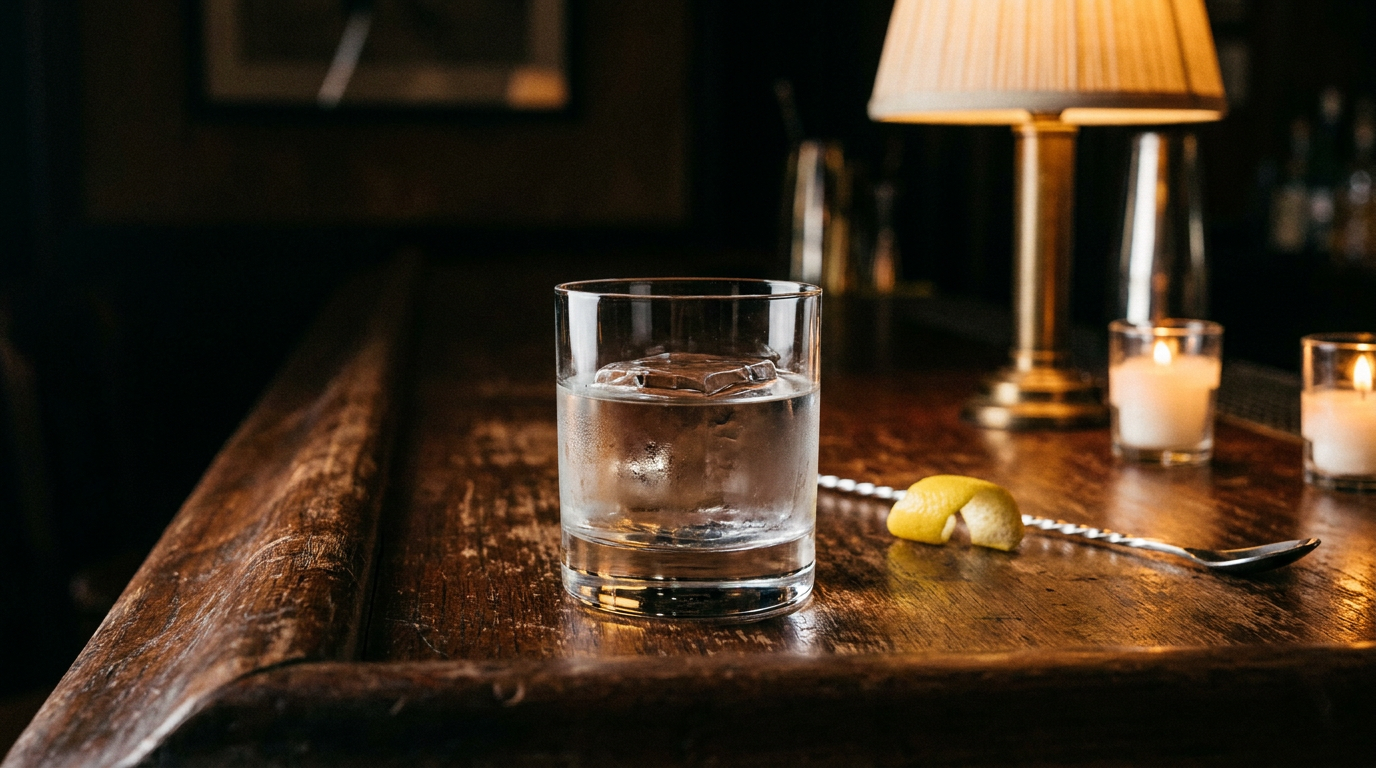
The scene is familiar in high-end cocktail bars around the world: a dimly lit room, a heavy rocks glass, and a crystal-clear liquid poured over a single, perfectly transparent ice cube. To the naked eye, the drink looks like a glass of water or a neat pour of a light spirit. But the first sip confounds expectations. It reveals complex layers of dark rum, sharp citrus, bitter black tea, and baking spices, all delivered with an impossibly velvety texture. This sensory paradox is the magic of the clarified milk punch. It is a technique that sounds like a culinary disaster—intentionally curdling dairy milk with acidic citrus and high-proof alcohol—yet the result is one of the most elegant and scientifically fascinating beverages in modern mixology.[6]
At its core, the process relies on the precise science of protein coagulation and filtration. When an acidic cocktail base is introduced to milk, the sudden drop in pH causes the milk's casein proteins to destabilize. Casein has an isoelectric point of around pH 4.6; as the liquid approaches this threshold, the proteins lose their solubility and begin to clump together into visible curds. While curdled milk in a morning coffee is a sign of spoilage, in a cocktail laboratory, it is the crucial first step in a deliberate chemical transformation.[2][5]
These newly formed curds act as a microscopic dragnet. As they aggregate, they aggressively bind to polyphenols—the chemical compounds responsible for bitter, harsh, and astringent flavors. Ingredients like black tea, oak-aged spirits, and citrus pith are loaded with these tannins. By capturing them in the protein matrix, the curds effectively strip the harsh edges out of the liquid. Simultaneously, the curds trap suspended particulate matter, such as the cellular walls of fruit juices that make traditional shaken drinks look cloudy and opaque.[3][4]

Once the curdling is complete, the entire mixture is slowly strained through a fine filter, such as cheesecloth or a paper coffee filter. The curds settle at the bottom, forming a dense bed that acts as a highly effective natural filtration matrix. What drips through this bed is a liquid entirely stripped of its visual impurities and harsh chemical compounds. But clarification is not merely a process of subtraction; it also leaves behind a crucial element that transforms the drinking experience.[1][5]
While the casein proteins are filtered out in the curds, the milk's whey proteins remain dissolved in the clear liquid. These residual whey proteins are the secret to the drink's signature silken mouthfeel. They provide a rich, rounded texture that coats the palate, softening the bite of high-proof spirits and unifying disparate flavors. If a clarified cocktail is later shaken with ice, these same whey proteins produce a voluminous, meringue-like froth that rivals the texture of a traditional egg-white sour.[4][7]
While the casein proteins are filtered out in the curds, the milk's whey proteins remain dissolved in the clear liquid.
To achieve this perfect balance of clarity and texture, the chemistry dictates a strict golden rule of preparation: the acidic punch must always be poured into the milk, never the other way around. Pouring the punch into the milk lowers the pH of the dairy gradually. This allows the casein proteins to aggregate slowly, forming fine curds that evenly trap impurities from the entire batch. Reversing the order and pouring milk into a highly acidic punch shocks the proteins, causing instant, tight curds that fail to clarify the liquid effectively.[2][3]

While milk washing feels like a modern molecular gastronomy trick, its roots stretch back over three centuries. The oldest known written recipe was recorded by Mary Rockett in 1711, utilizing a potent mix of brandy, lemons, water, sugar, and scalded milk. In the 18th century, clarification was a practical necessity rather than a theatrical flourish. Spirits of the era were often rough and unaged, and refrigeration did not exist. The milk-washing process softened the harsh alcohol and created a shelf-stable beverage that could survive long ocean voyages.[1][6]
The technique was so effective that it became a staple of early American and British drinking culture. Founding father Benjamin Franklin famously penned his own milk punch recipe in a 1763 letter to a friend, utilizing lemon juice, brandy, and grated nutmeg. Queen Victoria was also known to be a fan, issuing a royal warrant to a company that bottled the concoction. For centuries, the clarified punch was the standard for large-format entertaining, allowing hosts to prepare complex, smooth-drinking beverages well in advance of a gathering without fear of the ingredients spoiling.[1][4]

Today, the technique has experienced a massive resurgence, driven by the craft cocktail movement's dual obsession with scientific precision and operational efficiency. High-volume bars utilize milk clarification to prepare complex drinks days or even weeks in advance. Because the perishable components and suspended solids are removed, a clarified milk punch can last for months in a refrigerator without spoiling, oxidizing, or changing its flavor profile. During a busy service, bartenders simply pour the pre-made liquid over ice, ensuring perfect consistency for every guest.[5][7]
Modern bartenders are also pushing the boundaries of the science to accommodate new dietary preferences. While traditional dairy milk remains the gold standard due to its high casein content, mixologists are successfully using alternative milks like coconut, soy, and almond. These plant-based alternatives contain similar fat and protein emulsions that can curdle and clarify liquids, though they often require careful tuning of the acid balance to achieve the same crystal-clear results as cow's milk.[2]

Designing a recipe for clarification requires a different mindset than traditional mixology. Because the curds strip out tannins and bitter notes, bartenders must intentionally over-index on these aggressive flavors in the initial batch. A black tea infusion must be brewed uncomfortably strong, and citrus must be amplified, knowing that the milk wash will aggressively mute their intensity. It is an exercise in controlled chaos—building a liquid that is deliberately unbalanced, trusting the chemical process of the milk wash to pull it back into perfect harmony.[5]
For those seeking even greater efficiency, modern technology has entered the fray. Culinary centrifuges can spin a curdled mixture at thousands of revolutions per minute, separating the heavy solids from the clear liquid in a fraction of the time it takes for gravity filtration. Whether achieved through a slow, patient drip through cheesecloth or the high-speed hum of a laboratory centrifuge, the clarified milk punch represents the perfect marriage of historical necessity and chemical ingenuity, transforming chaotic ingredients into a unified masterpiece.[4][7]
How we got here
1711
Mary Rockett records the first known written recipe for a milk punch, using brandy, lemons, and scalded milk.
1763
Benjamin Franklin writes his own personal recipe for milk punch in a letter, highlighting its popularity in the colonial era.
1862
Bartending pioneer Jerry Thomas publishes recipes like 'Ruby Punch' in his seminal Bartender's Guide.
2010s
Modernist bartenders begin using laboratory centrifuges to rapidly clarify cocktails in minutes instead of hours.
Viewpoints in depth
Culinary Scientists
Focus on the chemical precision of protein coagulation and modern clarification tools.
For culinary scientists and modernist mixologists, milk clarification is a study in precise chemical manipulation. They focus on hitting the exact isoelectric point of casein (pH 4.6) to ensure optimal coagulation. This camp often pushes the boundaries of the technique by employing laboratory equipment like centrifuges, which can spin out solids at thousands of revolutions per minute, reducing a multi-hour gravity filtration process to a mere 20 minutes.
Cocktail Historians
Emphasize the 18th-century origins of the technique as a practical preservation method.
Historians view milk punch not as a modern molecular trick, but as a brilliant 18th-century survival mechanism. Before refrigeration, spirits were rough and highly perishable. By intentionally curdling milk to strip out harsh impurities, early mixologists created a smooth, shelf-stable beverage that could survive long ocean voyages. They revere the foundational recipes of figures like Mary Rockett and Benjamin Franklin, viewing modern iterations as a continuation of a 300-year-old legacy.
High-Volume Bar Directors
Value milk clarification for its operational benefits and batching efficiency.
For bar directors managing busy shifts, the appeal of milk clarification is highly practical. Because the process strips out perishable solids and stabilizes the liquid, complex cocktails can be batched in massive quantities days or weeks in advance. During service, bartenders simply pour the pre-made, crystal-clear liquid over ice, ensuring perfect consistency and rapid service times without sacrificing the intricate flavor profiles of a multi-ingredient drink.
What we don't know
- Exactly who first invented the milk clarification technique before Mary Rockett recorded it in 1711.
- The precise long-term shelf life of modern clarified cocktails, though historical anecdotes suggest they can last for decades.
Key terms
- Casein
- The primary protein found in dairy milk that coagulates and forms curds when exposed to acid.
- Polyphenols
- Chemical compounds found in plants, tea, and oak barrels that contribute bitter and astringent flavors to a drink.
- Whey
- The liquid protein remaining after milk has been curdled and strained, which gives clarified cocktails a silky texture.
- Isoelectric Point
- The specific pH level (around 4.6 for casein) at which a protein molecule loses its solubility and begins to clump together.
- Astringency
- A dry, puckering mouthfeel caused by tannins binding to proteins in saliva, commonly found in black tea and red wine.
Frequently asked
Why pour the punch into the milk instead of milk into the punch?
Pouring the acidic punch into the milk lowers the pH gradually, allowing curds to form slowly and trap impurities evenly. Reversing the order shocks the milk into instant, ineffective clumps.
Can you use plant-based milks for clarification?
Yes. Coconut, soy, and nut milks contain fat and protein emulsions that can curdle and clarify liquids, though dairy milk's high casein content remains the most reliable.
Does milk clarification remove the alcohol?
No. The clarification process removes suspended solids, tannins, and polyphenols, but the alcohol content remains fully intact in the final clear liquid.
How long does a clarified milk punch last?
Because the perishable compounds and suspended solids are stripped out, a properly filtered and refrigerated milk punch can remain shelf-stable for months or even years.
Sources
Source coverage
7 outlets
3 viewpoints surfaced







[1]Tales of the CocktailCocktail Historians
Clarified Cocktails: History and Science
Read on Tales of the Cocktail →[2]Campari AcademyHigh-Volume Bar Directors
Clarified Milk Punch Technique
Read on Campari Academy →[3]America's Test KitchenCulinary Scientists
Milk Punch and How Milk Clarification Produces a Crystal Clear Cocktail
Read on America's Test Kitchen →[4]SevenFifty DailyCulinary Scientists
The Science of Clarified Cocktails
Read on SevenFifty Daily →[5]The Double StrainerCulinary Scientists
Milk Punch (Milk Washing): How to Clarify Cocktails for Crystal-Clear Results
Read on The Double Strainer →[6]Factlen Editorial TeamCocktail Historians
Synthesis by Factlen editorial team
Read on Factlen Editorial Team →[7]The GlenlivetHigh-Volume Bar Directors
What Are Clarified Cocktails?
Read on The Glenlivet →
Every angle. Every day.
Get food drink stories with full source coverage and perspective breakdowns delivered to your inbox.