
U.S. and Iran Sign 60-Day Truce, Bringing Fragile Ceasefire to Lebanon and Reopening Strait of Hormuz
The United States and Iran have reached a preliminary memorandum of understanding to halt hostilities, establishing a 60-day ceasefire that pauses the war in Lebanon and reopens vital global shipping lanes.
By Factlen Editorial Team
- Global Market & Diplomatic Optimists
- Views the truce as a vital breakthrough to stabilize energy markets and prevent wider war.
- Lebanese Humanitarian Focus
- Prioritizes the immediate safety of displaced civilians and the need for a full Israeli withdrawal.
- Israeli Strategic Skeptics
- Argues the bilateral deal bypasses Israel's security needs and leaves Iranian proxies intact.
- Iranian Pragmatists
- Views the deal as a necessary economic lifeline to secure sanctions relief and rebuild.
What's not represented
- · European energy importers who rely heavily on the Strait of Hormuz.
- · Gulf Arab states navigating the shifting balance of power between the U.S. and Iran.
Why this matters
This 60-day truce temporarily halts a war that has displaced millions and severely disrupted global energy markets. If the ceasefire holds, it could lead to a permanent restructuring of Middle Eastern geopolitics and stabilize global oil prices; if it fails, the region risks plunging back into a devastating multi-front conflict.
Key points
- The U.S. and Iran signed a memorandum of understanding establishing a 60-day ceasefire.
- The agreement pauses fighting in Lebanon and reopens the Strait of Hormuz to global shipping.
- Hezbollah ceased rocket attacks, and Israeli airstrikes largely stopped in southern Lebanon.
- The framework includes significant U.S. sanctions relief for Iran in exchange for nuclear concessions.
- Israel is not a formal party to the deal, and Israeli troops have not yet withdrawn from Lebanon.
- Negotiators have two months to finalize a permanent peace settlement and a proposed $300B investment fund.
The United States and Iran have signed a preliminary memorandum of understanding to halt hostilities, establishing a 60-day ceasefire aimed at ending the devastating 2026 Middle East war. The landmark agreement, brokered after months of intense military escalation and stalled back-channel negotiations, brings a fragile quiet to Lebanon and promises to reopen the vital Strait of Hormuz. By pausing a multi-front conflict that has claimed thousands of lives, displaced millions of civilians, and severely disrupted international trade, the framework offers immediate relief to global energy markets. The diplomatic breakthrough sets the stage for a formal signing ceremony in Geneva later this week, though officials caution that the hardest work of securing a permanent peace still lies ahead.[1][2][7]
U.S. President Donald Trump announced the diplomatic breakthrough, stating that the critical maritime chokepoint of the Strait of Hormuz "will be completely open" by Friday, allowing the resumption of global shipping. The interim framework pauses a war that has severely disrupted international supply chains and upended the global economy. Vice President JD Vance described the signed memorandum as a "very general document," noting that while it includes a significant sanctions relief package for Tehran, the intricate details of a permanent peace settlement will require intense negotiation over the coming two months. The administration is betting that immediate economic incentives will keep Tehran at the negotiating table while the broader framework is hammered out.[1][5]
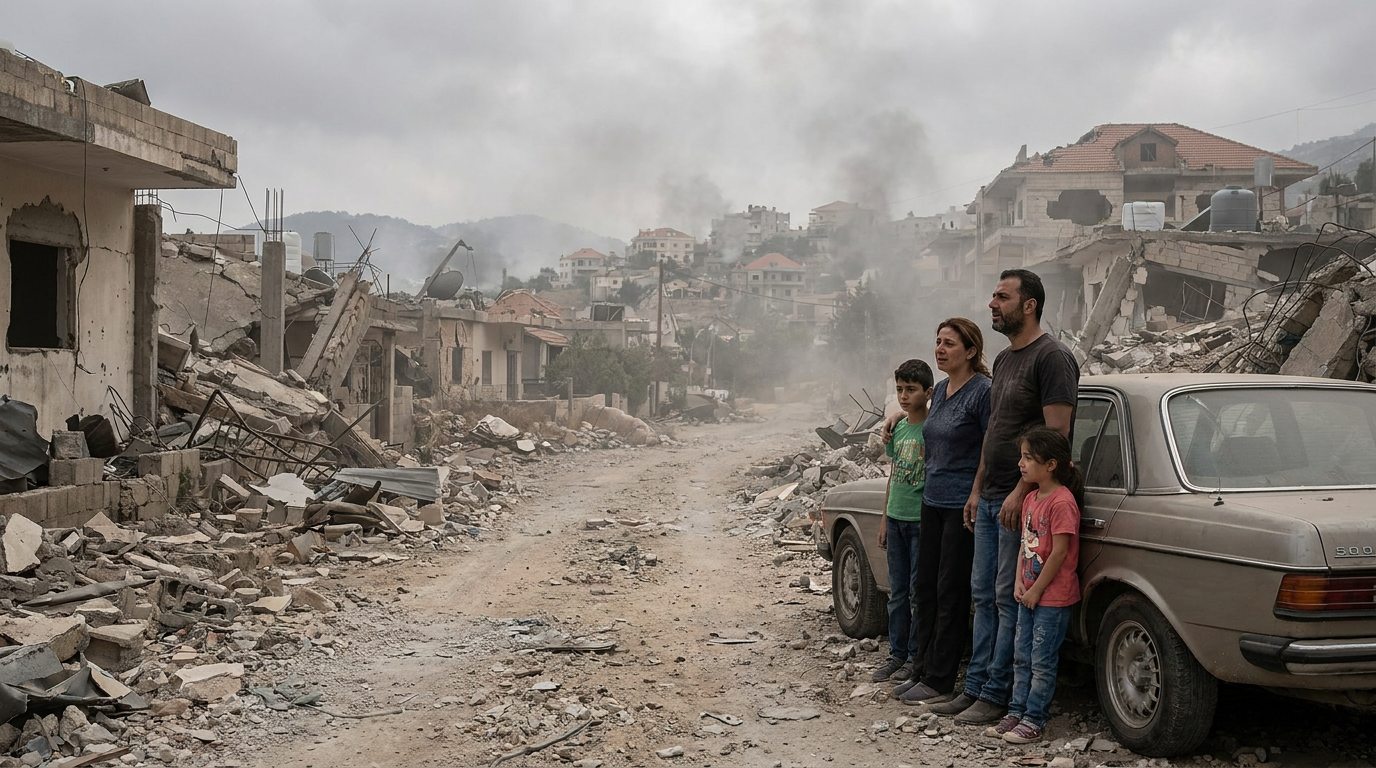
In Lebanon, the truce has brought a sudden, if highly tense, halt to the devastating fighting between Israel and Hezbollah. Within hours of the announcement, Hezbollah ceased its daily rocket attacks into northern Israel, and Israeli airstrikes largely stopped across southern Lebanon, with the exception of isolated drone strikes near forward troop positions. The sudden quiet prompted thousands of displaced Lebanese civilians—many of whom have spent months living out of evacuation bags in temporary shelters—to begin racing back to their villages to assess the destruction and attempt to rebuild their lives after a grueling and destructive military campaign.[1][2]

However, the situation on the ground remains highly volatile and exceptionally dangerous for returning civilians. The Lebanese army and civil defense forces have urgently warned residents against returning to their homes too quickly, citing the widespread presence of unexploded ordnance and explosive-laden vehicles reportedly left behind by Israeli forces. Municipal officials in southern towns like Harees have had to physically block entrances after discovering rigged vehicles on main roads, underscoring that while the broader geopolitical war may be paused, the immediate physical hazards for the 1.2 million displaced Lebanese remain severe and potentially lethal.[1][5]
A major sticking point in the current agreement is the status of Israeli troops deployed across the border. While the U.S.-Iran memorandum of understanding mandates a ceasefire in Lebanon, it does not explicitly require the immediate withdrawal of Israeli forces from the southern Lebanese territories they currently occupy. Lebanon's Prime Minister Nawaf Salam confirmed that diplomatic efforts with Washington are actively continuing in order to secure a full Israeli withdrawal, a condition that Hezbollah has previously cited as absolutely non-negotiable for a permanent peace. The ambiguity leaves a dangerous flashpoint unresolved during the 60-day window.[1][2]
A major sticking point in the current agreement is the status of Israeli troops deployed across the border.
Israel, notably, is not a formal signatory to the U.S.-Iran memorandum, complicating the enforcement of the truce. While the Israeli military has paused major offensive operations in Lebanon, it reported striking Hezbollah forces that approached its positions, citing "imminent threats" to its soldiers. Domestically, Prime Minister Benjamin Netanyahu faces mounting criticism over the war's outcome. Critics and political analysts argue that the conflict has severely strained U.S.-Israeli relations, exacted a heavy economic toll, and ultimately left Tehran's regional proxy network battered but largely intact, raising profound questions about Israel's long-term strategic gains from the campaign.[1][3]
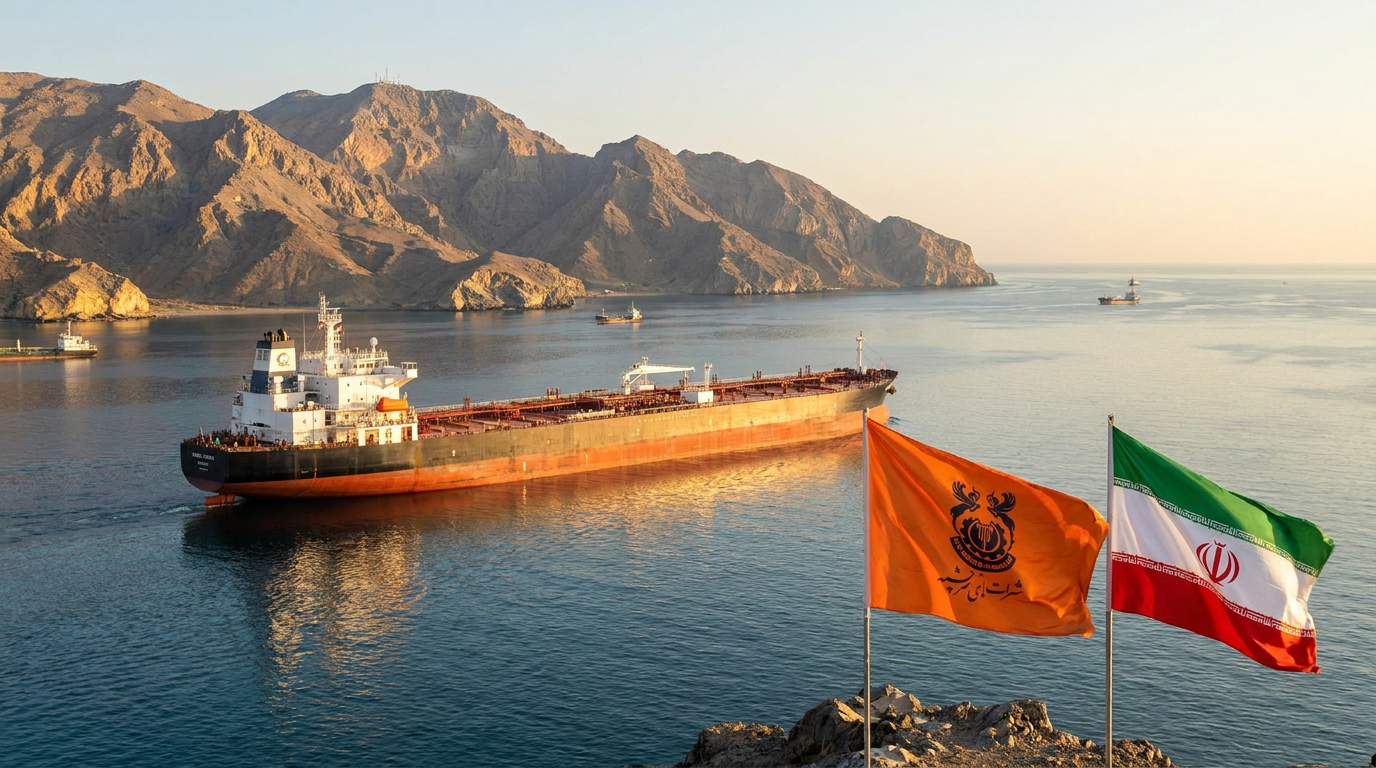
The economic implications of the truce are massive, particularly for global energy markets that have been battered by the conflict. The closure of the Strait of Hormuz—a vital artery for global oil shipments—had triggered one of the most severe energy supply crises in modern history, briefly sending Brent crude prices soaring past $100 per barrel and stoking fears of runaway global inflation. Following the announcement of the memorandum, global oil prices tumbled as shippers and maritime insurers prepared to resume transit through the Persian Gulf, though industry experts warn it could take weeks for full confidence and normal traffic volumes to return.[1][4][8]

As part of the framework, the U.S. has agreed to a 60-day toll-free reopening of the strait, alongside what officials describe as a "very significant sanctions relief package" for Tehran. In exchange, U.S. officials state that Iran must commit to permanently halting its pursuit of a nuclear weapon and severing its military and financial support for proxy militias across the region. Iranian officials, who have consistently maintained that their nuclear program is strictly for civilian purposes, view the resumption of diplomatic talks as a necessary pivot to stabilize their crisis-hit economy and reintegrate into global markets.[5][7]
Iranian leadership has characterized the interim agreement as a pragmatic necessity, though they remain visibly cautious about the long-term prospects of a deal with Washington. President Masoud Pezeshkian wrote that the memorandum is an "important step" toward stopping the bloodshed, but explicitly cautioned his citizens that a final, lasting peace "has yet to take shape." The Iranian government faces intense domestic pressure to deliver tangible economic relief after years of crippling sanctions and the recent financial devastation wrought by the direct military confrontation with Israel and the United States.[5][7]

The next 60 days will serve as a critical test of the framework's durability and the political will of all parties involved. Negotiators face the daunting task of converting this temporary pause into a comprehensive settlement, addressing deeply entrenched issues ranging from the verifiable reduction of Iran's highly enriched uranium stockpiles to the establishment of a proposed $300 billion international investment fund for Iran's reconstruction. If the talks collapse, the region risks plunging back into a wider, more destructive war; if they succeed, it could mark the most significant geopolitical realignment and de-escalation in the Middle East in decades.[4][6][7]
How we got here
April 2025
The U.S. and Iran begin a series of negotiations aimed at reaching a nuclear peace agreement.
June 2025
Negotiations collapse, leading to a severe military escalation and the onset of the Iran War.
February 2026
The U.S. and Israel launch large-scale strikes on Iran, and the Strait of Hormuz is effectively closed.
April 2026
A temporary two-week ceasefire is announced but remains highly fragile amid ongoing skirmishes.
June 15, 2026
The U.S. and Iran sign a memorandum of understanding for a 60-day ceasefire, pausing the conflict.
Viewpoints in depth
U.S. Administration's View
The truce is a necessary step to stabilize global markets and curb Iran's nuclear ambitions.
U.S. officials view the 60-day window as a pragmatic mechanism to immediately reopen the Strait of Hormuz and relieve pressure on the global economy. By offering a significant sanctions relief package, the administration hopes to incentivize Tehran to permanently dismantle its nuclear weapons program and cut off funding to regional proxies like Hezbollah. The U.S. strategy relies on leveraging Iran's desperate need for economic stabilization to secure long-term security guarantees.
Iranian Leadership's View
The agreement is a pragmatic pause to secure economic relief while maintaining regional leverage.
For Tehran, the memorandum of understanding is primarily an economic lifeline. Facing crippling sanctions, domestic unrest, and the financial toll of direct military confrontation, Iranian leaders need the proposed $300 billion investment fund and sanctions relief to stabilize their economy. However, officials remain deeply skeptical of Washington's long-term commitments and view their proxy network and nuclear infrastructure as essential deterrents that cannot be entirely surrendered without ironclad guarantees.
Israeli Government's View
The bilateral U.S.-Iran deal bypasses Israel's core security concerns and leaves threats intact.
Israel is not a party to the agreement and views the framework with profound suspicion. Prime Minister Benjamin Netanyahu and his allies argue that the truce prematurely relieves pressure on Tehran while failing to mandate the full dismantling of Hezbollah's military capabilities in Lebanon. Israeli defense officials worry that the 60-day pause will simply allow Iranian proxies to regroup and rearm, arguing that the U.S. prioritized global oil markets over Israel's immediate border security.
Lebanese Civilians' View
The ceasefire offers desperate relief, but the lack of an Israeli withdrawal leaves their future uncertain.
For the 1.2 million displaced Lebanese citizens, the truce is a desperately needed opportunity to return home and escape overcrowded shelters. However, the joy is heavily tempered by fear. Because the agreement does not force an immediate withdrawal of Israeli troops from southern Lebanon, returning residents face the daily threat of unexploded ordnance, rigged vehicles, and the looming possibility that hostilities could resume the moment the 60-day window expires.
What we don't know
- Whether Israel will agree to fully withdraw its troops from southern Lebanon during the 60-day window.
- How Iran's highly enriched uranium stockpiles will be verifiably reduced under a final agreement.
- Whether the proposed $300 billion international investment fund for Iran will secure enough backing.
- What happens if the 60-day negotiation period expires without a permanent peace treaty.
Key terms
- Strait of Hormuz
- A critical maritime chokepoint between the Persian Gulf and the Gulf of Oman, through which a significant portion of the world's oil supply passes.
- Memorandum of Understanding (MoU)
- A formal agreement between two or more parties that establishes a framework for cooperation, though it is not always legally binding.
- Sanctions Relief
- The reduction or removal of economic penalties imposed on a country, allowing it to resume international trade and access frozen assets.
- Proxy Militia
- An armed group that fights on behalf of or receives support from a larger power, such as Hezbollah's relationship with Iran.
Frequently asked
Is the war completely over?
No. The current agreement is a 60-day temporary ceasefire designed to pause hostilities while negotiators work toward a permanent peace treaty.
Why did oil prices drop?
The agreement includes reopening the Strait of Hormuz, a vital shipping lane for global oil that had been closed during the conflict, easing fears of an energy shortage.
Are Israeli troops leaving Lebanon?
The current memorandum does not explicitly require an immediate Israeli withdrawal from southern Lebanon, which remains a major unresolved sticking point.
What does Iran get out of this deal?
Iran is set to receive a significant sanctions relief package and is negotiating the establishment of a $300 billion international investment fund to rebuild its economy.
Sources
Source coverage
8 outlets
4 viewpoints surfaced








[1]The GuardianGlobal Market & Diplomatic Optimists
US-Iran truce: breakthrough or pause?
Read on The Guardian →[2]BBC NewsLebanese Humanitarian Focus
Fragile quiet in Lebanon as US-Iran truce leaves unanswered questions
Read on BBC News →[3]Al JazeeraIsraeli Strategic Skeptics
Israel went to war with Iran, but Netanyahu may be the loser
Read on Al Jazeera →[4]ReutersIranian Pragmatists
Doubts swirled around the U.S.-Iran interim deal to end the war in the Middle East
Read on Reuters →[5]Al-MonitorIsraeli Strategic Skeptics
Doubts swirl around U.S.-Iran interim deal to end Middle East war
Read on Al-Monitor →[6]Financial TimesGlobal Market & Diplomatic Optimists
US considers $300bn fund for Iran if peace deal is upheld
Read on Financial Times →[7]WikipediaIranian Pragmatists
2025–2026 Iran–United States negotiations
Read on Wikipedia →[8]Council on Foreign RelationsGlobal Market & Diplomatic Optimists
Trump's truce extension
Read on Council on Foreign Relations →

More in news politics
See all 5 stories →US-Iran Ceasefire
US and Iran Reach Tentative Deal to End 100-Day War and Reopen Strait of Hormuz
0 sources

US-Iran Truce
US and Iran Reach Tentative Truce to End 100-Day War and Reopen Strait of Hormuz
0 sources
Naval Brinkmanship
UK Investigates Reports of Russian Warship Firing Warning Shots at British Yacht in English Channel
0 sources

Every angle. Every day.
Get news politics stories with full source coverage and perspective breakdowns delivered to your inbox.