
U.S. and Iran Reach Diplomatic Agreement in Geneva as Congressional Republicans Demand Oversight Vote
The Trump administration has finalized a landmark diplomatic pact with Iran, initiating a 60-day compliance window for Tehran while facing immediate pushback from Republican lawmakers demanding formal congressional approval.
By Factlen Editorial Team
- The Administration
- Argues the agreement is a pragmatic, transactional test of Iran's intentions that requires verifiable compliance before any concessions are made.
- Congressional Skeptics
- Views the deal as a dangerous circumvention of legislative oversight and threatens to use funding mechanisms to block its implementation.
- International Observers
- Welcomes the diplomatic off-ramp from regional escalation but worries that domestic US politics could sabotage the agreement's viability.
What's not represented
- · Iranian domestic political factions
- · Regional Gulf State leaders
Why this matters
This agreement represents the most significant shift in Middle Eastern geopolitics in years, potentially averting a regional war and stabilizing global energy markets. However, its survival hinges on whether the administration can bypass a skeptical Congress that has the power to block the sanctions relief necessary to keep Iran at the table.
Key points
- The U.S. and Iran have signed a landmark diplomatic agreement in Geneva.
- The pact establishes a 60-day window for Iran to prove nuclear compliance in exchange for sanctions relief.
- Congressional Republicans are furious over being left out of the process and are demanding a formal vote.
- The administration is utilizing an executive agreement to bypass the 67-vote Senate threshold required for treaties.
- Hawkish lawmakers are threatening to defund the implementation of the sanctions relief.
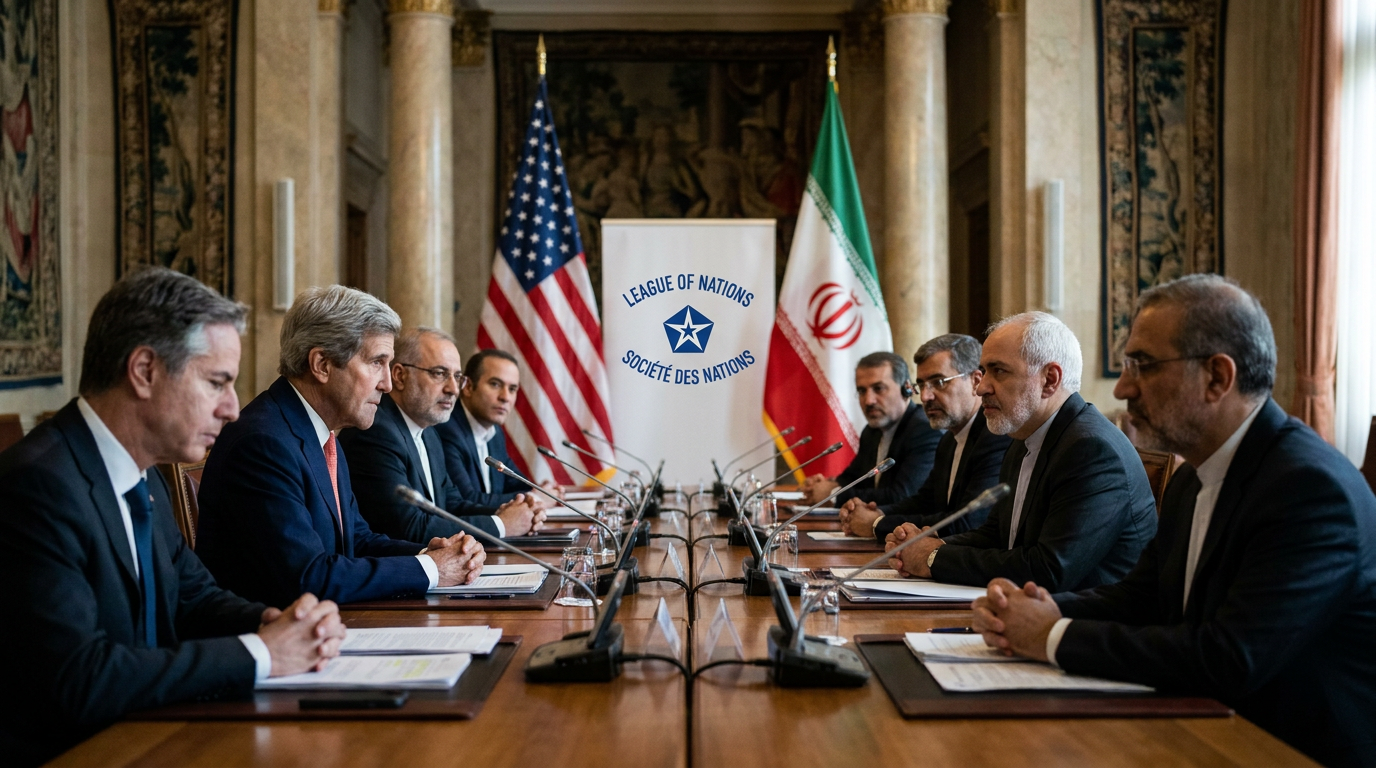
In a geopolitical maneuver that has reshaped the Middle Eastern diplomatic landscape, the Trump administration has finalized a landmark agreement with Iran in Geneva. The pact, aimed at curbing Tehran's nuclear ambitions in exchange for targeted economic reprieves, marks a stark pivot from years of escalating regional hostilities. However, the ink was barely dry before the agreement ignited a fierce constitutional and political battle in Washington, where lawmakers from the president's own party are demanding formal oversight and threatening to derail the implementation.[1][3][4]
The architecture of the agreement hinges on a strict 60-day compliance window. According to Vice President JD Vance, this period serves as a definitive test of Tehran's willingness to trade decades of diplomatic isolation for a reintegration into the global economy. During this two-month span, Iran must demonstrate verifiable steps to halt high-level uranium enrichment and restore comprehensive access for international inspectors before any substantial sanctions relief is unlocked by the Treasury Department.[2][8]

The choice of Geneva as the venue for the signing carries heavy historical resonance, echoing previous international pacts negotiated in the Swiss city known as the 'Peace Capital.' European allies, who have spent years attempting to salvage diplomatic channels following the collapse of the 2015 Joint Comprehensive Plan of Action, have expressed cautious optimism. Diplomats view the new framework as a pragmatic, if fragile, off-ramp from a trajectory that seemed destined for direct military confrontation.[3][7]
Domestically, the announcement has triggered a political shockwave, primarily because the White House negotiated the final terms with minimal congressional input. President Trump declared the deal signed while many lawmakers remained entirely in the dark regarding the specific technical annexes. This opacity has infuriated Republican senators, who argue that any agreement of this magnitude must be submitted to the Senate as a formal treaty, requiring a two-thirds supermajority for ratification.[1][5]
The administration is currently framing the pact as an executive agreement rather than a formal treaty, a legal distinction that allows the White House to bypass the 67-vote Senate threshold it would almost certainly fail to meet. Legal scholars and political analysts note that while presidents have broad authority to direct foreign policy and issue sanctions waivers, the durability of an executive agreement is inherently tied to the sitting president, leaving it vulnerable to future administrations.[4][5]

In an effort to sell the agreement to a skeptical public and a fractured conservative base, Vice President Vance has launched a comprehensive media blitz. Preparing for appearances on daytime television and conservative networks, Vance has framed the strategy as a hard-nosed, transactional approach rather than a concession. He argues that the 60-day deadline places the burden of proof entirely on Tehran, ensuring the United States gives up nothing until verifiable actions are taken.[2]
In an effort to sell the agreement to a skeptical public and a fractured conservative base, Vice President Vance has launched a comprehensive media blitz.
Despite these assurances, hawkish factions within the GOP are already mobilizing countermeasures. Several prominent lawmakers have threatened to introduce legislation that would block the State and Treasury departments from expending any funds to implement the sanctions relief mechanisms. By leveraging the power of the purse, Congress could effectively paralyze the agreement even if they cannot legally veto the executive action itself.[1][6]
For Iran, the next 60 days represent a complex domestic and international balancing act. The Iranian leadership must navigate its own hardline factions, who view any compromise with Washington as a capitulation, while desperately seeking relief for an economy crippled by years of maximum pressure campaigns. International Atomic Energy Agency inspectors are reportedly already staging logistics to verify the initial rollback of centrifuge cascades.[4][8]

The international community is watching the Washington power struggle with deep anxiety. European diplomats have privately warned that if Congress successfully sabotages the sanctions relief after Iran has met its 60-day obligations, it could permanently shatter any remaining trust in American diplomatic commitments, potentially accelerating a nuclear breakout scenario.[5][7]
As the 60-day clock ticks down, the administration faces a two-front war: ensuring Tehran's strict compliance abroad while fending off legislative sabotage at home. The outcome of this dual challenge will not only determine the immediate security architecture of the Persian Gulf but also set a profound precedent for the balance of power between the executive and legislative branches in modern American statecraft.[2][4][6]
How we got here
2015
The original Joint Comprehensive Plan of Action (JCPOA) is signed by the U.S., Iran, and world powers.
2018
The United States formally withdraws from the JCPOA, initiating a 'maximum pressure' sanctions campaign.
2024-2025
Regional tensions escalate significantly, prompting renewed backchannel diplomatic efforts.
June 2026
A new executive agreement is signed in Geneva, triggering a 60-day compliance window and domestic political backlash.
Viewpoints in depth
The Administration's View
The White House frames the deal as a strict, verifiable test of Iran's intentions that protects American interests.
Administration officials, led by Vice President JD Vance, argue that the agreement is fundamentally different from past diplomatic efforts because it requires upfront, verifiable action from Tehran before any economic benefits are realized. By utilizing a 60-day compliance window, the White House believes it has shifted the burden of proof entirely onto Iran. Proponents of this strategy maintain that utilizing an executive agreement was necessary to secure a rapid de-escalation in the Middle East, bypassing a polarized Congress that would likely reject any diplomatic compromise regardless of its merits.
Congressional Skeptics
Lawmakers argue the executive branch is overstepping its constitutional authority by bypassing the Senate.
Republican lawmakers and hawkish foreign policy analysts view the Geneva pact as a dangerous circumvention of the Constitution's treaty clause. They argue that an agreement with such profound national security implications cannot be unilaterally enacted by the executive branch. Beyond the procedural objections, these skeptics fear that the promised sanctions relief will ultimately fund regional proxy groups, and they are preparing legislative strategies to block the Treasury Department from unfreezing Iranian assets, setting the stage for a massive inter-branch legal battle.
Tehran and International Observers
Allies express relief at the diplomatic breakthrough, while Iran faces internal pressure to secure economic relief.
For European allies and international diplomats, the agreement represents a vital, albeit fragile, victory for diplomacy over military confrontation. They are urging both Washington and Tehran to strictly adhere to the 60-day timeline. Inside Iran, the leadership faces immense pressure; they must navigate hardline domestic factions who view the deal as a capitulation, while simultaneously addressing a populace desperate for the economic relief that lifting sanctions would bring. International observers warn that if U.S. domestic politics derail the agreement after Iran complies, it could permanently close the door on future negotiations.
What we don't know
- Whether Congress will successfully pass legislation to defund the sanctions relief mechanisms.
- If Iran will fully comply with the IAEA inspection requirements within the 60-day window.
- How regional allies, particularly Israel and Saudi Arabia, will respond to the finalized terms of the agreement.
Key terms
- Executive Agreement
- An international pact made by the executive branch that does not require the two-thirds Senate supermajority needed for a formal treaty, though it is often less legally durable.
- Sanctions Relief
- The unfreezing of assets or the lifting of economic trade restrictions that were previously imposed to penalize a country.
- IAEA
- The International Atomic Energy Agency, the United Nations watchdog responsible for inspecting and verifying a country's nuclear facilities.
Frequently asked
What happens during the 60-day window?
Iran must allow international inspectors to verify the halting of high-level uranium enrichment and other nuclear activities. If they comply, the U.S. will begin unlocking targeted sanctions relief.
Can Congress block the agreement?
Because the White House is framing it as an executive agreement rather than a treaty, Congress cannot directly vote it down. However, lawmakers can attempt to pass legislation defunding the mechanisms required to lift sanctions.
Why was the agreement signed in Geneva?
Geneva is historically known as a neutral diplomatic hub for international treaties, offering a secure and symbolically significant location for high-stakes negotiations.
Sources
Source coverage
8 outlets
3 viewpoints surfaced







[1]Fox NewsThe Administration
Trump's Iran deal sparks GOP demands for vote as Congress remains in the dark
Read on Fox News →Vance reveals Trump lesson guiding Iran deal strategy as Tehran faces 60-day deadline
Read on Fox News →[3]Al JazeeraInternational Observers
Geneva to host Iran-US deal event: What other pacts have been signed there?
Read on Al Jazeera →[4]ReutersInternational Observers
U.S., Iran sign landmark sanctions-relief pact in Geneva; Congress weighs response
Read on Reuters →[5]The New York TimesCongressional Skeptics
Trump's Iran Deal Bypasses Senate, Setting Up Constitutional Clash
Read on The New York Times →[6]PoliticoCongressional Skeptics
Hawkish Republicans threaten to block funding for new Iran agreement
Read on Politico →[7]BBCInternational Observers
European allies cautiously welcome US-Iran diplomatic breakthrough
Read on BBC →[8]AxiosThe Administration
Inside the 60-day clock for Iran's nuclear compliance
Read on Axios →

More in news politics
See all 14 stories →Geopolitics
The 2026 US-Iran Security Pact: Mechanisms, Regional Impact, and Enforcement
0 sources
Civic Innovation
Fact Check: Can Citizens' Assemblies Actually Cure Political Polarization?
0 sources

U.S.-Iran Relations
U.S. and Iran Reach Framework Peace Deal to End War and Reopen Strait of Hormuz
0 sources

US-Iran Peace Deal
U.S. and Iran Reach Tentative Peace Deal to End 100-Day War: What the Agreement Covers and Where It Could Fail
0 sources

Every angle. Every day.
Get news politics stories with full source coverage and perspective breakdowns delivered to your inbox.