
US and Iran to Sign Ceasefire Memorandum in Geneva as 60-Day Nuclear Deadline Looms
The United States and Iran are set to sign a framework agreement in Geneva to end hostilities, reopen the Strait of Hormuz, and establish a 60-day window for comprehensive nuclear negotiations.
By Factlen Editorial Team
- US Negotiators
- The administration views the framework as a successful use of military and economic pressure to force a nuclear settlement.
- Iranian Leadership
- Tehran frames the agreement as a strategic victory that breaks the US blockade and secures vital economic relief.
- Policy Skeptics
- Lawmakers and analysts warn that the deal relies on vague promises and risks premature financial concessions.
- Regional Stakeholders
- International mediators and regional actors are concerned with how the bilateral deal impacts broader Middle Eastern security.
What's not represented
- · Commercial shipping and global energy companies navigating the Strait of Hormuz
- · Lebanese civilians affected by the linked ceasefire conditions
Why this matters
A formalized US-Iran ceasefire would immediately stabilize global energy markets by reopening the Strait of Hormuz, through which a fifth of the world's oil flows. However, if the ensuing 60-day technical negotiations fail, the collapse of the deal could trigger a wider regional war and a renewed blockade, severely impacting global inflation and supply chains.
Key points
- The US and Iran will sign a memorandum of understanding in Geneva to end hostilities and reopen the Strait of Hormuz.
- The agreement establishes a 60-day window for technical negotiations regarding Iran's nuclear program and US sanctions relief.
- US officials insist financial relief is tied to nuclear compliance, contradicting Iranian claims of immediate asset unfreezing.
- Iran considers the ceasefire to cover all fronts, warning that Israeli operations in Lebanon would breach the accord.
The United States and Iran are preparing to formalize a fragile truce, with delegations converging on Geneva, Switzerland, this Friday to sign a memorandum of understanding (MOU) ending months of direct conflict. The agreement aims to lift the US naval blockade on Iranian ports and reopen the Strait of Hormuz, a critical maritime chokepoint that has been under a de facto Iranian blockade. The diplomatic breakthrough follows more than 100 days of intense regional warfare that severely disrupted global supply chains and energy markets.[2][4]
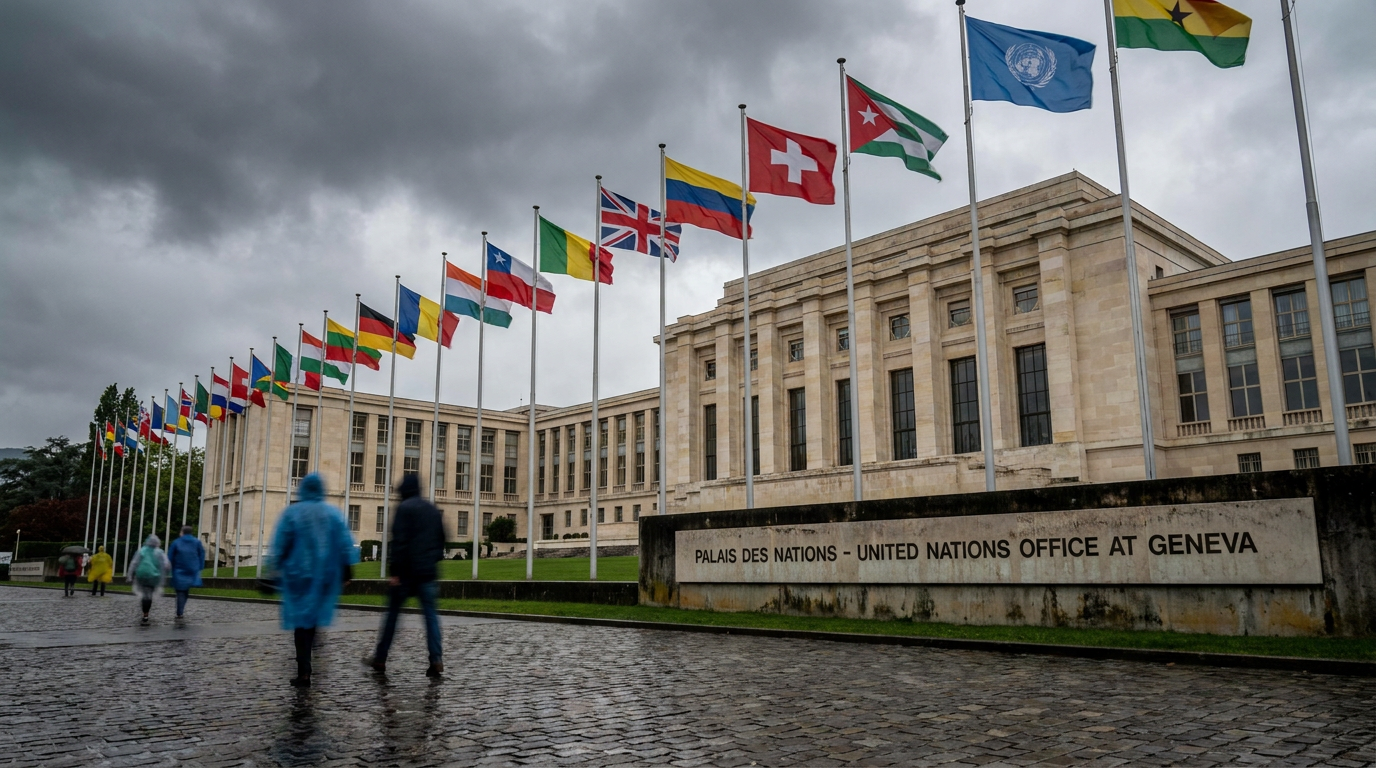
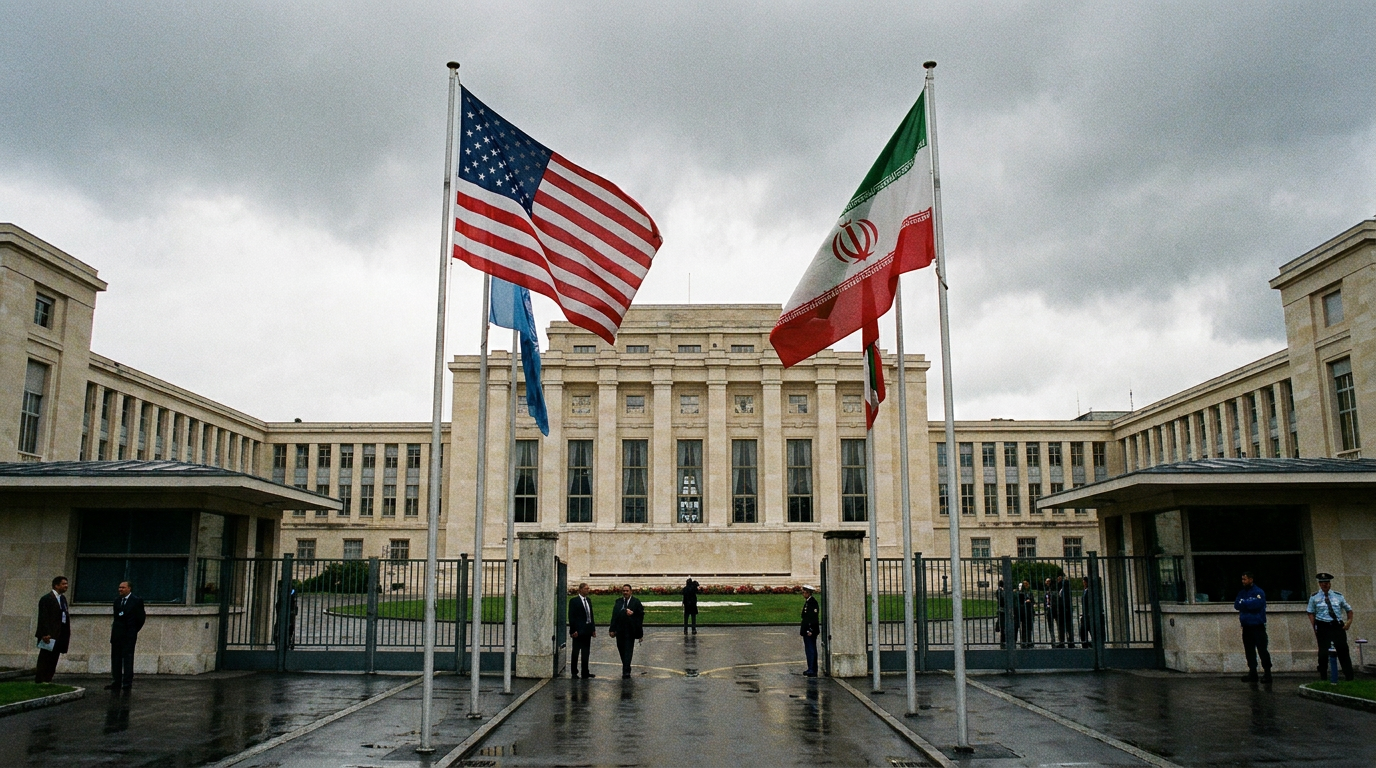
US Vice President JD Vance and Iranian Parliament Speaker Mohammad-Bagher Ghalibaf are expected to attend the high-stakes signing ceremony at the Palais des Nations. The MOU serves as an interim framework rather than a final treaty, establishing a strict 60-day deadline for complex technical negotiations. During this two-month window, diplomats are tasked with resolving the future of Iran's nuclear program, verifying the dismantling of highly enriched uranium stockpiles, and outlining the phased lifting of primary and secondary US sanctions. The tight timeline mirrors the intense pressure both administrations face to deliver a permanent resolution before the fragile ceasefire unravels.[1][4]
Despite President Donald Trump's declaration that the deal is 'all signed' and the strait is already partially open, Western leaders at the G7 summit have scrambled to shore up the agreement's loose ends. Vice President Vance acknowledged in interviews that the MOU is a 'very general document' of about one page, noting that substantial technical details must be hammered out over the next two months. The administration maintains that it holds the upper hand in these subsequent negotiations, leveraging the threat of renewed military action if Tehran fails to comply with the verification mechanisms.[1][3]

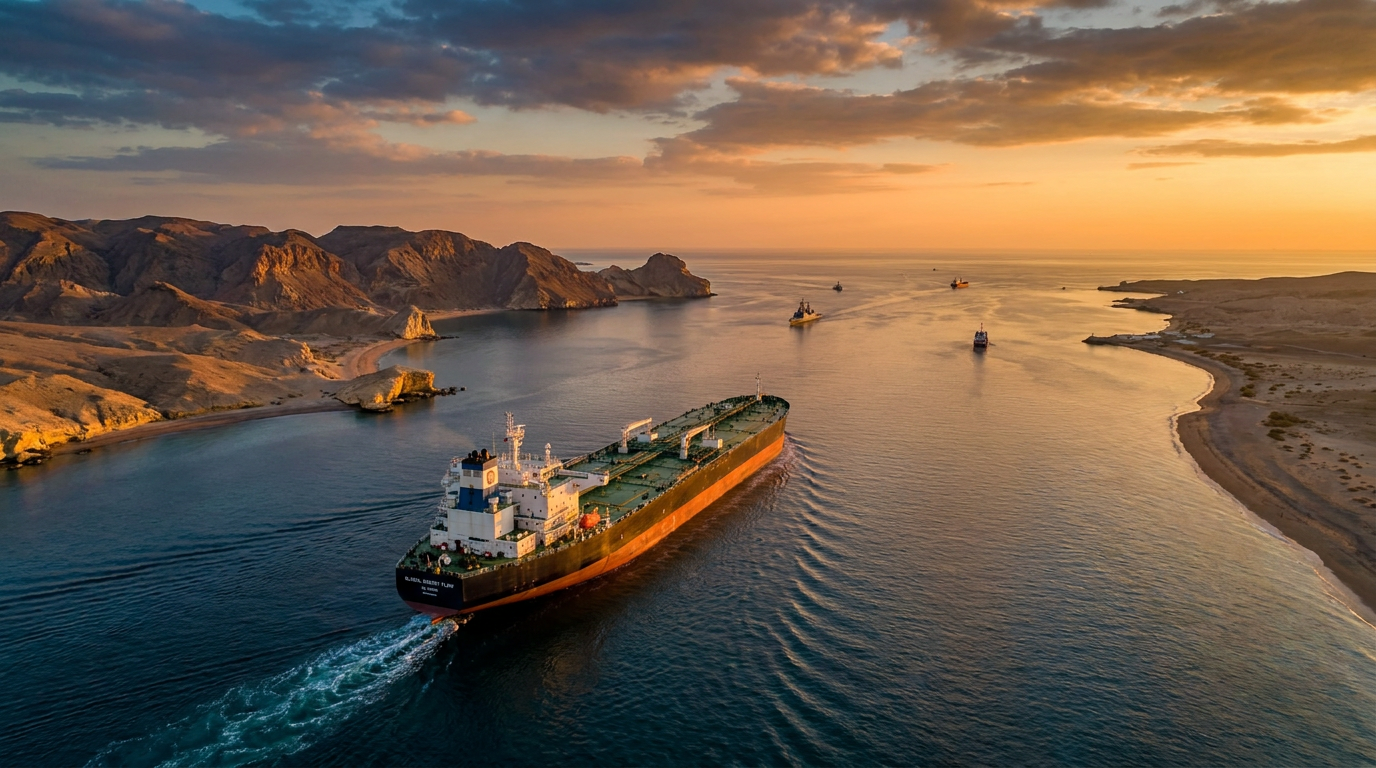
The economic stakes of the Geneva signing are immense. The Strait of Hormuz facilitates roughly 20 percent of the world's daily oil consumption, and its closure sent shockwaves through global markets. The months-long naval standoff triggered a severe energy crisis, prompting European leaders at the G7 summit in France to express cautious optimism that the deal could finally stabilize the world economy. German Chancellor Friedrich Merz and other allied leaders welcomed the reopening of maritime trade routes but warned that the agreement's long-term success hinges on strict enforcement and comprehensive regional compliance.[3][4]
The Strait of Hormuz facilitates roughly 20 percent of the world's daily oil consumption, and its closure sent shockwaves through global markets.
The ambiguity of the brief text has already led to sharply diverging interpretations between Washington and Tehran. The US administration expects the Strait of Hormuz to remain open 'in a toll-free way for the long term,' viewing unrestricted navigation as a non-negotiable red line. Conversely, media affiliated with Iran's Islamic Revolutionary Guard Corps (IRGC) reported that Tehran will only pause maritime fees for the 60-day negotiation window. Iranian officials have signaled their intent to resume charging 'service fees' to transiting commercial vessels once the period expires, a move that would effectively allow Iran to reimpose restrictions at its discretion.[1][5]
Financial incentives remain another major flashpoint threatening to derail the technical talks. Iranian state media claims the draft agreement includes the immediate release of up to $24 billion in frozen assets during the 60-day negotiation period, alongside discussions of a massive $300 billion international reconstruction fund. However, US officials have aggressively pushed back against these assertions. The White House insists that any sanctions relief or unfreezing of assets will be strictly tied to Iran meeting verifiable benchmarks regarding its nuclear infrastructure, explicitly denying that Tehran will receive unconditional financial relief upfront.[2][3][4][5]

The emerging deal has drawn intense scrutiny and pushback from US lawmakers. Senate Republicans returning to Washington expressed deep skepticism about the framework, demanding thorough intelligence briefings before the agreement is finalized. Leaders like Senator Lindsey Graham and Senate Majority Leader John Thune have publicly questioned the conditions attached to the financial incentives. They warned against releasing any frozen funds without a permanent, irreversible dismantling of Iran's nuclear capabilities, arguing that premature economic relief could inadvertently fund regional proxy networks while the core nuclear threat remains unresolved.[3]
Regional entanglements further complicate the viability of the Geneva pact. Tehran insists the bilateral agreement mandates an immediate and permanent cessation of hostilities on all fronts, explicitly including the ongoing conflict between Israel and Hezbollah in Lebanon. Iranian Foreign Minister Abbas Araghchi publicly warned that any renewed Israeli military operations in Lebanese territory, or a failure to withdraw forces, would be viewed by Tehran as a direct breach of the US-Iran accord. This linkage effectively ties the success of the nuclear negotiations to the volatile security situation along the Blue Line.[2][4]

The situation in Lebanon remains highly precarious, threatening to upend the broader diplomatic effort. While the US, Israel, and the Lebanese government recently announced a 10-day ceasefire contingent on Hezbollah withdrawing its operatives south of the Litani River, the militant group has reportedly rejected the enforcement terms. If the Lebanese front collapses into renewed fighting, Hezbollah and Tehran could leverage their implementation of the Geneva agreement to pressure Washington into halting Israeli operations. This dynamic tests the limits of the 60-day diplomatic window, as negotiators race to untangle a web of interconnected regional conflicts.[5][6]
How we got here
April 2025
Initial US-Iran negotiations begin in Oman, with a 60-day deadline set by the US.
June 2025
The deadline expires without a nuclear agreement, leading to military escalation and a naval blockade.
February 2026
The conflict triggers a global energy crisis as the Strait of Hormuz is effectively closed to commercial shipping.
June 14, 2026
The US and Iran reach a preliminary memorandum of understanding to end hostilities.
June 19, 2026
Official signing ceremony scheduled in Geneva, triggering a new 60-day window for technical negotiations.
Viewpoints in depth
US Negotiators
The administration views the framework as a successful use of military and economic pressure to force a nuclear settlement.
US officials argue that the naval blockade and military posturing successfully brought Tehran to the table. They maintain that the US holds the upper hand in the upcoming 60-day technical negotiations, emphasizing that no significant financial relief will be granted until Iran demonstrates verifiable compliance with nuclear dismantling protocols. The administration insists the Strait of Hormuz must remain permanently toll-free.
Iranian Leadership
Tehran frames the agreement as a strategic victory that breaks the US blockade and secures vital economic relief.
Iranian officials and state media portray the Geneva pact as a capitulation by Washington, highlighting the immediate lifting of the US naval blockade and the anticipated unfreezing of billions in assets. Tehran maintains that its sovereignty over the Strait of Hormuz allows it to charge transit fees after the 60-day window, and insists the deal strictly prohibits further Israeli military action against its allies in Lebanon.
Policy Skeptics
Lawmakers and analysts warn that the deal relies on vague promises and risks premature financial concessions.
Congressional skeptics and defense analysts express deep concern over the ambiguity of the one-page memorandum. They argue that unfreezing assets before Iran permanently dismantles its nuclear infrastructure repeats past diplomatic mistakes, potentially funding regional proxy groups. Analysts also warn that Iran's interpretation of the maritime rules could allow it to easily reimpose a blockade if the 60-day talks collapse.
What we don't know
- Whether Iran will actually dismantle its highly enriched uranium stockpiles or transfer them to a third country.
- How the US will respond if Iran attempts to reinstate maritime transit fees in the Strait of Hormuz after 60 days.
- Whether Hezbollah will adhere to the linked ceasefire terms in Lebanon, and how Israel will proceed.
Key terms
- Strait of Hormuz
- A narrow, strategically critical waterway between the Persian Gulf and the Gulf of Oman through which roughly 20% of the world's oil passes.
- Memorandum of Understanding (MOU)
- A formal, non-binding agreement between two or more parties outlining the broad terms of a future treaty or contract.
- Naval Blockade
- The use of naval forces to cut off a specific area, preventing the entry or exit of maritime traffic and commerce.
- Litani River
- A river in southern Lebanon often used as a geographic marker for security buffer zones between Israel and Hezbollah.
Frequently asked
What does the Geneva agreement actually do?
It establishes a ceasefire, lifts the US naval blockade on Iran, reopens the Strait of Hormuz, and sets a 60-day deadline to negotiate a comprehensive nuclear deal.
Will Iran receive frozen funds immediately?
Iranian media claims $24 billion will be unfrozen during the 60 days, but US officials insist financial relief is strictly tied to Iran meeting nuclear benchmarks.
How does this affect the war in Lebanon?
Iran considers the ceasefire to cover all fronts, including Lebanon. However, Hezbollah has reportedly rejected the terms of a parallel US-brokered truce with Israel, complicating the broader peace effort.
Sources
Source coverage
6 outlets
4 viewpoints surfaced






[1]Fox NewsUS Negotiators
Vance reveals Trump lesson guiding Iran deal strategy as Tehran faces 60-day deadline
Read on Fox News →[2]Al JazeeraIranian Leadership
Geneva to host Iran-US deal event: What other pacts have been signed there?
Read on Al Jazeera →[3]The GuardianPolicy Skeptics
Vance says details of US-Iran agreement still to be worked out amid scepticism from Republicans
Read on The Guardian →[4]SwissinfoRegional Stakeholders
Geneva to host signing of Iran-US peace treaty
Read on Swissinfo →[5]ISWPolicy Skeptics
Iran Update Special Report, June 15, 2026
Read on ISW →[6]AxiosRegional Stakeholders
Hezbollah rejects Israel-Lebanon ceasefire terms
Read on Axios →
More in news politics
See all 11 stories →National Security
FBI Thwarts Explosive Drone and Sniper Plot Targeting White House UFC Event
0 sources
White House Security
FBI Thwarts Explosive Drone and Sniper Plot Targeting White House UFC Event
0 sources
Iran Peace Deal
Trump Agrees to Send Iran Peace Deal to Congress as GOP Demands Vote
0 sources
US-Iran Deal
US and Iran Reach 60-Day Ceasefire Deal Amid Conflicting Claims Over Nuclear and Financial Terms
0 sources
Every angle. Every day.
Get news politics stories with full source coverage and perspective breakdowns delivered to your inbox.