
The Evidence on Passkeys: Are We Finally Post-Password?
With 5 billion passkeys now in use globally, cryptographic authentication is rapidly replacing the password. We examine the data on security efficacy, user adoption, and the remaining vulnerabilities holding back a fully passwordless internet.
By Factlen Editorial Team
- Security Researchers
- Prioritizes the mathematical certainty of public-key cryptography and the elimination of shared secrets.
- Enterprise IT Leaders
- Focuses on the practical friction of deploying new authentication standards across legacy corporate infrastructure.
- Consumer Advocates
- Values the frictionless login experience but worries about account recovery and ecosystem lock-in.
What's not represented
- · Small Business Owners
- · Privacy Purists
Why this matters
Passwords are the weakest link in digital security, responsible for the vast majority of identity theft and corporate data breaches. Understanding how passkeys work—and adopting them—is the single most effective step you can take to protect your personal data and finances from cybercriminals.
Key points
- Over 5 billion passkeys are now in use globally, marking a definitive shift away from traditional passwords.
- Passkeys eliminate 'shared secrets' using public-key cryptography, making them immune to server breaches and highly resistant to phishing.
- Consumer adoption is surging, with 75% of users actively logging into accounts with passkeys.
- Enterprise deployment lags significantly, with only 13% of organizations having deployed passkeys at scale due to legacy infrastructure.
- Account recovery remains the primary vulnerability; if fallback methods rely on SMS or email, the account is still at risk.
For decades, the fundamental security model of the commercial internet has relied on a deeply flawed premise: human beings reliably remembering complex strings of random characters. This reliance on human memory has inadvertently fueled a multi-billion-dollar global cybercrime industry, as users inevitably reuse the same passwords across dozens of services or choose easily guessable phrases. Despite years of security awareness training and the widespread implementation of complex password requirements, the human element remains the most vulnerable link in the digital security chain, leaving both individuals and massive corporations exposed to catastrophic data breaches.
The scale of the problem is staggering. According to Microsoft's latest telemetry data, automated systems currently block an average of 7,000 password attacks every single second, with password spraying accounting for a massive 97% of all identity-based attacks. The Verizon Data Breach Investigations Report consistently identifies stolen or compromised credentials as a primary vector for corporate breaches, responsible for nearly a quarter of all unauthorized network intrusions. Hackers no longer need to write complex exploits to break into secure networks; they simply log in using credentials harvested from previous breaches or purchased on dark web marketplaces.[2][4]
But after years of false starts, the technology industry is finally reaching a definitive tipping point in the war against credential theft. Passkeys—a cryptographic alternative to traditional passwords championed by the FIDO Alliance and major tech ecosystem providers like Apple, Google, and Microsoft—have officially crossed the threshold from a niche security feature for tech enthusiasts to a mainstream default. This transition represents arguably the most significant upgrade to consumer cybersecurity in the history of the internet, shifting the burden of proof away from human memory and placing it squarely on secure device possession.[1]
The sheer volume of adoption highlights the momentum behind this shift. As of mid-2026, industry estimates indicate that over 5 billion passkeys are currently in use worldwide across various platforms and services. Major consumer ecosystems have aggressively pushed the technology, with hundreds of millions of users now utilizing passkeys daily to access cloud storage, gaming networks, and digital storefronts. The rapid uptake suggests that consumers are more than willing to abandon the friction of traditional passwords when offered a seamless, biometric alternative that integrates naturally with the devices they already carry.[2]

To fully grasp the evidence supporting passkeys, one must understand exactly how they dismantle the traditional threat model that hackers have relied on for decades. The fundamental weakness of a password is that it acts as a "shared secret." When a user creates an account on a website, the server must store a version of that password—typically a salted hash—to verify the user's identity during future logins. If that server is ever breached by malicious actors, or if a user is socially engineered into typing their password into a convincing fake website, the secret is compromised and the account is breached.
Passkeys, which are built upon the open WebAuthn standard, eliminate the concept of the shared secret entirely by utilizing public-key cryptography. When a user registers a passkey for a new service, their smartphone or computer generates a mathematically linked pair of cryptographic keys. The public key is transmitted to the website's server and stored in their database, while the highly sensitive private key remains securely locked inside the device's hardware secure enclave, never to be transmitted over the internet.[5]
The authentication process itself is entirely different from typing a password. During a login attempt, the website's server sends a unique mathematical challenge—known as a "nonce"—to the user's device. The device uses its stored private key to cryptographically sign this challenge, but it will only do so after the user explicitly authorizes the action via a local biometric check, such as a fingerprint scan, facial recognition, or a device PIN. The server then uses the public key it has on file to verify the signature, granting access without ever knowing the private key.[5]
Because the private key never leaves the physical device, there is absolutely nothing of value for a hacker to steal in the event of a server-side data breach. More importantly, the cryptographic exchange is strictly bound to the website's verified domain name at the protocol level. If a user is tricked into visiting a lookalike phishing site—such as a fake banking portal—the passkey simply will not authenticate, neutralizing the most common and devastating form of social engineering on the internet today.

Because the private key never leaves the physical device, there is absolutely nothing of value for a hacker to steal in the event of a server-side data breach.
Beyond the profound security benefits, the usability data strongly supports the rapid shift toward passwordless authentication. Traditional password requirements—forcing users to mix uppercase letters, numbers, and special symbols—create immense friction during the login process, leading to high failure rates, locked accounts, and frustrated customers. Passkeys replace this cognitive load with a simple biometric tap, mirroring the effortless experience of unlocking a modern smartphone.
The performance metrics from early adopters are striking. The FIDO Passkey Index reports a 93% login success rate for passkeys, compared to a dismal 63% success rate for traditional passwords. Furthermore, e-commerce platforms and digital services implementing passkeys have observed up to a 30% conversion lift on sign-in flows, as users no longer abandon their shopping carts or accounts in frustration due to forgotten credentials and tedious password reset loops.[1]
Consumer awareness and comfort with the technology have skyrocketed over the past year. The comprehensive "State of Passkeys 2026" report reveals that 90% of consumers globally are now aware of passkeys, representing a massive jump from previous years. More importantly, 75% of surveyed consumers report actively using them to log into at least some of their online accounts. Almost half of these respondents indicated that they choose to log in with passkeys "whenever possible," signaling a clear consumer preference for biometric authentication over typing passwords.[1][3]

However, while the consumer landscape is rapidly modernizing, the enterprise sector presents a starkly different and more complicated reality. Corporate IT departments, burdened by decades of technical debt and complex identity management systems, are struggling to match the pace of consumer adoption. While employees enjoy frictionless passkey logins on their personal devices, they are often forced to revert to complex passwords and cumbersome multi-factor authentication apps when accessing corporate networks.
Survey data highlights this significant enterprise bottleneck. While an encouraging 93% of organizations report being at some stage of the passkey adoption journey, a mere 13% have managed to deploy them at scale across their entire workforce. Many companies remain tethered to legacy infrastructure and older applications that cannot easily support modern WebAuthn protocols, leaving critical corporate data vulnerable to the exact types of phishing and credential-stuffing attacks that passkeys are designed to prevent.[1][3]
The hesitation among enterprise IT leaders is not entirely unfounded, as the broader passkey ecosystem still contains unresolved complexities. Security researchers point out that while the core passkey authentication mechanism is mathematically robust, the surrounding account lifecycle—most notably, account recovery—remains a significant weak link. If a user loses their primary device, the process of regaining access to their accounts often relies on legacy fallback methods.[6]

If an application's fallback recovery method relies on an insecure SMS text message or an email magic link, the account remains highly vulnerable to SIM-swapping attacks and email compromise. The fundamental security of a passkey-protected account is ultimately only as strong as its weakest recovery option. Until platforms standardize highly secure, cryptographic recovery flows, determined attackers will simply bypass the passkey entirely and target the help desk or the email inbox.[5][6]
Additionally, the cybersecurity industry is engaged in an ongoing debate regarding the security merits of "synced passkeys" versus strict "device-bound passkeys." Synced passkeys, which automatically back up to cloud ecosystems like Apple iCloud or Google Password Manager, offer immense convenience, ensuring users don't lose access to their accounts when they upgrade or lose their phones. However, this convenience comes with a theoretical trade-off in security assurance.[5]
Because synced passkeys can be copied across multiple devices within a cloud ecosystem, they lack the strict cryptographic attestation of a dedicated hardware security key. If a highly sophisticated attacker manages to compromise the user's underlying cloud account, they could theoretically access the synced passkeys. While this scenario requires a significantly higher level of effort than traditional credential stuffing, it remains a concern for high-security environments like financial institutions and government agencies.[5]
Despite these implementation hurdles and ongoing debates, the consensus among cybersecurity experts is overwhelmingly clear: passkeys offer a monumental leap in security over the status quo. The complete elimination of credential stuffing and the neutralization of remote phishing vectors fundamentally alter the economics of cybercrime, making it exponentially more expensive and difficult for attackers to compromise accounts at scale.[6]
The internet is not yet fully passwordless, and hybrid environments will undoubtedly persist for years as legacy systems are slowly decommissioned and enterprise IT catches up to consumer tech. But the overwhelming evidence from 2026 confirms that the foundation for a post-password future has been successfully laid, promising an era where proving your identity online is both effortless for the user and mathematically secure against the attacker.[6]
How we got here
2012
The FIDO Alliance is founded to develop open standards for passwordless authentication.
2019
The WebAuthn standard becomes an official web recommendation, laying the technical groundwork for passkeys.
2022
Apple, Google, and Microsoft announce expanded support for the FIDO standard, coining the consumer-friendly term 'passkey'.
2026
Passkey usage crosses the 5 billion mark globally, with 75% of consumers reporting active usage.
Viewpoints in depth
Security Researchers' View
Prioritizes the elimination of shared secrets and the mathematical defense against phishing.
For the cybersecurity research community, passkeys represent the holy grail of authentication: a system that is secure by default and immune to human error. Researchers emphasize that because passkeys rely on asymmetric cryptography, they fundamentally break the business model of credential stuffing and mass phishing. The focus in this camp is pushing for strict WebAuthn compliance and deprecating SMS-based recovery methods, which they view as the last remaining backdoor for attackers.
Enterprise IT Leaders' View
Focuses on the logistical nightmare of migrating legacy systems and managing help desk costs.
While acknowledging the security benefits, enterprise IT leaders view passkeys through the lens of deployment friction. Migrating a workforce of thousands to a passwordless system requires overhauling legacy applications, updating active directories, and training staff. This camp is highly concerned with the 'hybrid phase'—the multi-year period where both passwords and passkeys must be supported—which temporarily increases complexity and help desk tickets before the long-term cost savings of passwordless authentication can be realized.
Consumer Advocates' View
Values the frictionless login experience but worries about account recovery and ecosystem lock-in.
Consumer advocates celebrate the end of password fatigue, noting that biometric logins dramatically improve accessibility for non-technical users. However, they raise concerns about ecosystem lock-in, noting that moving synced passkeys between Apple's iOS and Google's Android can still be cumbersome. Furthermore, this camp emphasizes the need for foolproof, user-friendly account recovery options, warning that if users lose their devices and cannot easily recover their passkeys, the resulting lockouts could damage public trust in the technology.
What we don't know
- How quickly legacy enterprise systems will fully deprecate password infrastructure.
- Whether 'synced passkeys' across cloud ecosystems will introduce new unforeseen vulnerabilities compared to strict device-bound keys.
- How account recovery standards will evolve to prevent social engineering of help desks.
Key terms
- Public-Key Cryptography
- A security method that uses two mathematically linked keys: a public key shared with the website, and a private key kept secretly on your device.
- WebAuthn
- The open web standard that allows browsers and operating systems to support passkeys and communicate securely with websites.
- Credential Stuffing
- An automated cyberattack where hackers use lists of stolen usernames and passwords from one breach to try and break into other websites.
- FIDO Alliance
- An open industry association launched to develop and promote authentication standards that reduce reliance on passwords.
- Attestation
- A cryptographic proof that verifies a passkey was generated by a legitimate, secure hardware device rather than a software emulator.
Frequently asked
What exactly is a passkey?
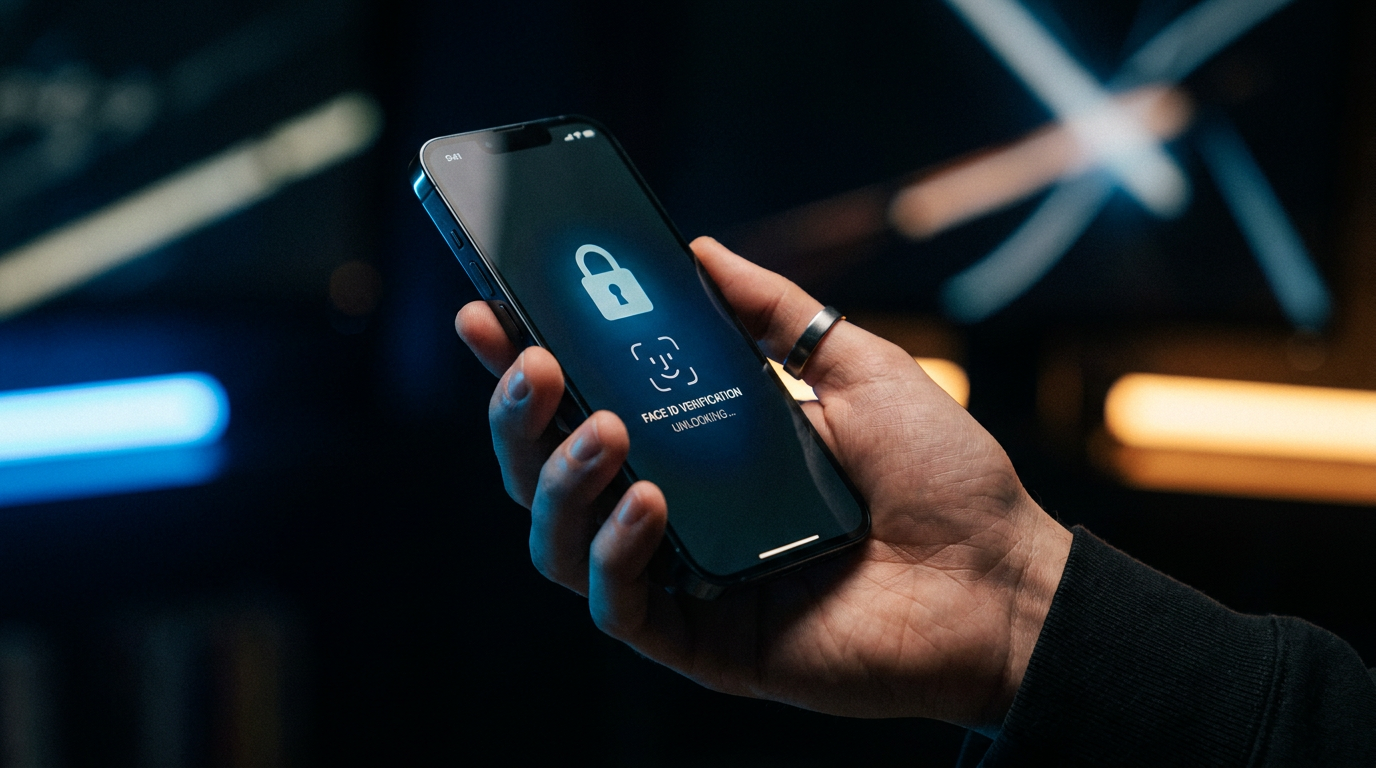
A passkey is a digital credential tied to your device that lets you log into accounts without a password. It uses public-key cryptography and is unlocked using your device's biometrics (like Face ID or fingerprint) or a PIN.
Are my fingerprints or face scans sent to the website?
No. Your biometric data never leaves your device. The fingerprint or face scan is only used locally to unlock the secure chip on your phone, which then mathematically signs the login request.
What happens if I lose my phone?
Most consumer passkeys are 'synced' to your cloud account (like Apple iCloud or Google Password Manager). If you lose your phone, you can regain access to your passkeys by logging into your cloud account on a new device.
Why are passkeys considered phishing-resistant?
Passkeys are cryptographically bound to the specific website you registered them on. If a scammer tricks you into visiting a fake lookalike website, your device will recognize the domain mismatch and refuse to hand over the login credential.
Sources
Source coverage
6 outlets
3 viewpoints surfaced






[1]FIDO AllianceConsumer Advocates
State of Passkeys 2026
Read on FIDO Alliance →[2]MicrosoftSecurity Researchers
Passkey adoption continues to grow industry wide
Read on Microsoft →[3]PCMagEnterprise IT Leaders
Passkey-Adoption Report Finds Many Orgs Don't Know How to Quit Passwords
Read on PCMag →[4]VerizonEnterprise IT Leaders
2025 Data Breach Investigations Report
Read on Verizon →[5]MDPISecurity Researchers
A Comprehensive Review of Passkey Authentication
Read on MDPI →[6]Factlen Editorial TeamSecurity Researchers
Synthesis by Factlen editorial team
Read on Factlen Editorial Team →

Every angle. Every day.
Get technology stories with full source coverage and perspective breakdowns delivered to your inbox.