
US and Iran Reach 60-Day Ceasefire Deal Amid Conflicting Claims Over Nuclear and Financial Terms
The United States and Iran have signed a memorandum of understanding to end a three-month war and reopen the Strait of Hormuz, but the unpublished text has led to starkly different interpretations of the agreement's core terms.
By Factlen Editorial Team
- US Administration
- Views the deal as a definitive end to the war that secures the Strait of Hormuz and forces the destruction of Iran's nuclear program.
- Iranian Leadership
- Frames the agreement as a tactical pause that lifts the US naval blockade while preserving Iran's strategic leverage.
- Congressional Skeptics
- Demands legislative oversight and warns against providing financial concessions to Tehran without a ratified treaty.
- Geopolitical Analysts
- Highlights the fragility of the 60-day window and the risk of the deal unraveling due to ambiguous written terms.
What's not represented
- · European Allies (E3)
- · Gulf State Leaders
- · Commercial Shipping Companies
Why this matters
This agreement halts a devastating regional war that spiked global energy prices and disrupted international shipping. However, if the 60-day technical talks fail to resolve deep disagreements over Iran's nuclear program and transit tolls, the conflict could rapidly resume.
Key points
- The US and Iran have signed a memorandum of understanding to end a three-month war.
- The agreement initiates a 60-day ceasefire and negotiation window.
- The US claims the Strait of Hormuz will be permanently toll-free, which Iran disputes.
- The mechanism for destroying Iran's highly enriched uranium remains unresolved.
- Republican lawmakers are demanding a formal Senate vote on any final agreement.
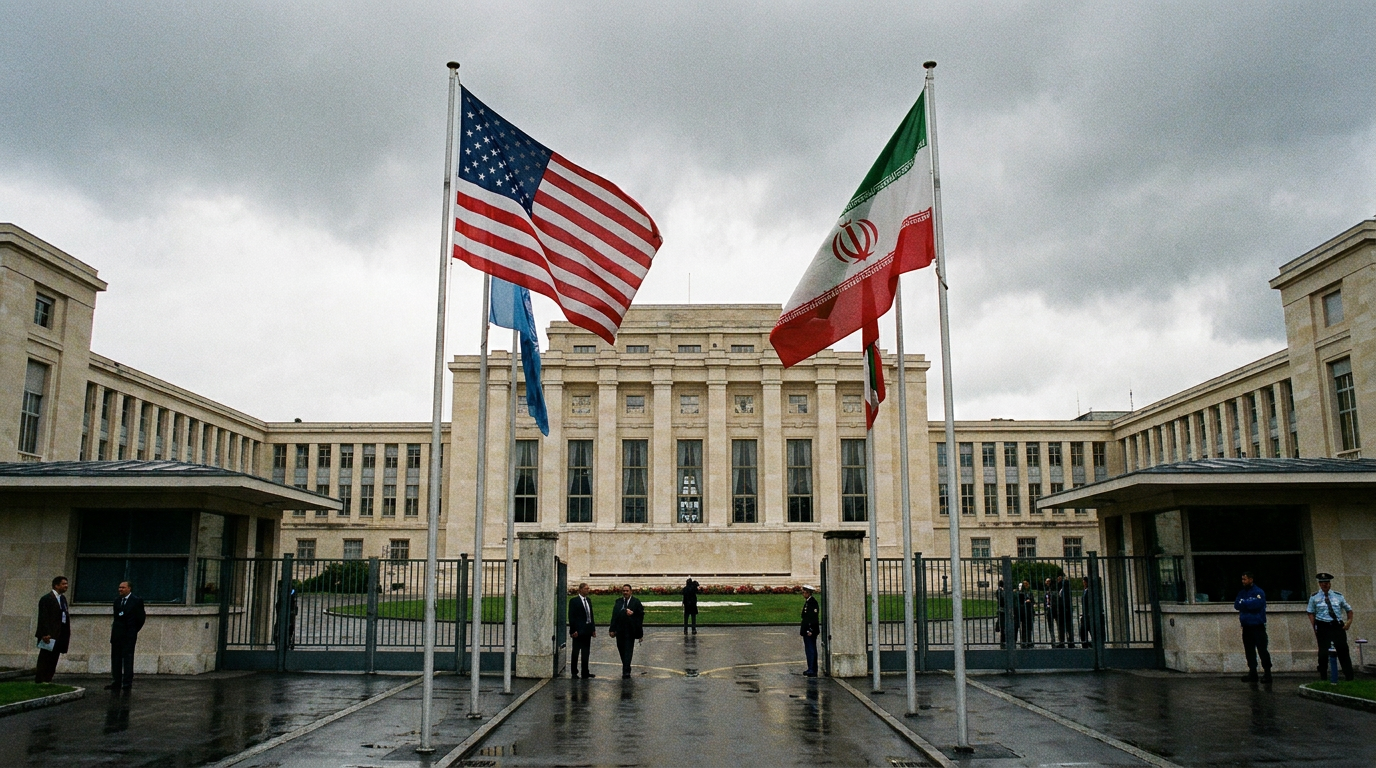
The United States and Iran have digitally signed a memorandum of understanding to end a devastating three-and-a-half-month war, with a formal ceremony scheduled for June 19 in Geneva.[4][5]
The interim agreement establishes a 60-day ceasefire, reopens the Strait of Hormuz, lifts the US naval blockade on Iranian ports, and triggers new negotiations over Tehran's nuclear program.[1][7]
However, the actual text of the memorandum remains unpublished. This opacity has spawned an information war, with Washington and Tehran offering contradictory interpretations of the deal's core provisions and the strength of the underlying evidence.[7][8]
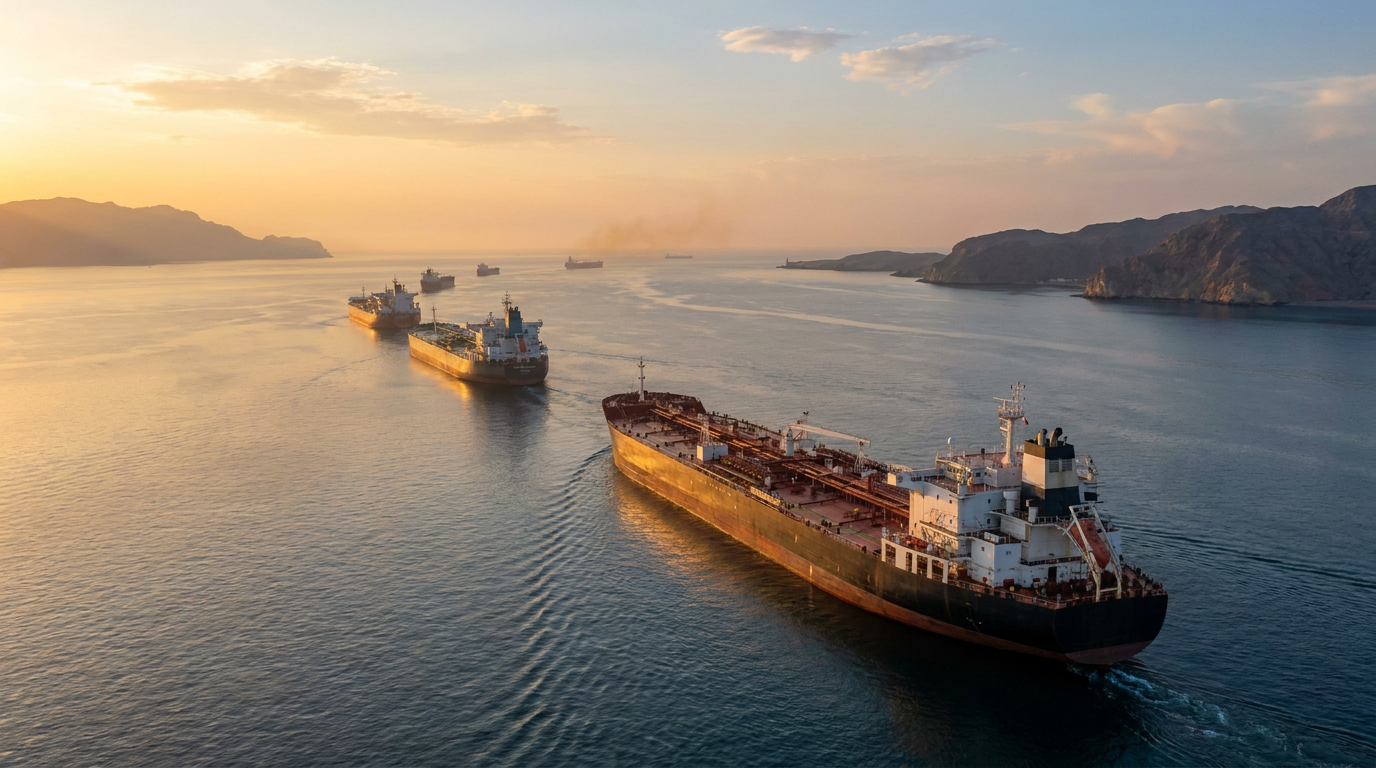
The most immediate dispute centers on the Strait of Hormuz. President Donald Trump declared the vital waterway, which handles a fifth of global oil trade, will be completely open and toll-free by Friday.[3][4]

Iranian state media and military affiliates directly contradict this assertion. They claim Iran is merely pausing transit fees for the 60-day window and retains the right to charge service fees thereafter. Geopolitical analysts warn that if Iran's interpretation prevails, it would constitute a massive strategic victory for Tehran, allowing it to control international shipping.[6]
Furthermore, the physical reopening faces severe logistical hurdles. While the US administration claims ships are already moving, maritime security firms estimate that clearing the naval mines deployed by Iran could take weeks or even months, delaying a full return to normal commercial traffic.[1]
The second major point of contention involves Iran's nuclear stockpile. Vice President JD Vance stated that a core component of the agreement involves the US and the International Atomic Energy Agency helping Iran destroy its highly enriched uranium.[8]
The second major point of contention involves Iran's nuclear stockpile.
Iran currently holds roughly 440.9 kilograms of uranium enriched to 60 percent purity, which is a short technical step from weapons-grade. While US negotiators insist on its destruction or removal, Iranian officials have historically refused to let the stockpile leave their borders. The memorandum reportedly defers the actual mechanism of this destruction to the upcoming 60-day technical talks, leaving the hardest issue unresolved.[7][8]

To secure the ceasefire, the agreement reportedly includes significant economic incentives for Iran. These concessions potentially involve the unfreezing of foreign assets or the creation of a $300 billion regional reconstruction fund paid for by Gulf states.[1][7]
Iranian news agencies claim the US has agreed to release up to $24 billion in frozen assets during the 60-day negotiation period. US officials vehemently deny this, insisting that any sanctions relief or asset transfers are strictly tied to Iran meeting verifiable benchmarks, such as dismantling its nuclear infrastructure and ceasing support for proxy militias.[3][6]
The ambiguity surrounding these financial concessions has ignited fierce backlash on Capitol Hill. Republican lawmakers, traditionally aligned with the administration, are demanding to see the text and insisting that Congress must vote on the final agreement.[2]
Senators have warned against providing a massive financial windfall to the current Iranian regime. They point out the irony that the administration is utilizing executive authority to bypass Congress—the exact same mechanism that allowed the US to unilaterally withdraw from the 2015 Obama-era nuclear accord.[2][8]

Despite the political turbulence, global markets have reacted with aggressive optimism. Crude oil prices plummeted by more than $4 per barrel immediately following the announcement, and US equities rallied on the prospect of stabilized energy supply chains.[4][7]
The agreement also attempts to freeze the broader regional conflict. Pakistani mediators, who helped broker the deal, stated it includes a permanent termination of military operations on all fronts, including the volatile Israel-Lebanon border. Yet, it remains highly uncertain whether Israel will halt its campaign against Hezbollah to comply with a US-Iran framework.[6][7]
How we got here
February 2026
US and Israel launch strikes against Iran, igniting a regional war and prompting Iran to block the Strait of Hormuz.
April 2026
A tenuous initial ceasefire is announced but repeatedly violated by both sides.
June 14, 2026
US and Iranian negotiators digitally sign a memorandum of understanding to end hostilities.
June 19, 2026
Formal signing ceremony scheduled in Geneva, Switzerland, initiating a 60-day negotiation window.
Viewpoints in depth
US Administration
Views the deal as a definitive end to the war that secures the Strait of Hormuz and forces the destruction of Iran's nuclear program.
The administration frames the memorandum as a decisive victory that ends a costly war and secures global energy markets. Officials emphasize that the agreement forces Iran to the negotiating table under maximum pressure, with the ultimate goal of permanently dismantling its nuclear enrichment capabilities. They maintain that the Strait of Hormuz will remain open and toll-free, rejecting Iranian claims to the contrary.
Iranian Leadership
Frames the agreement as a tactical pause that lifts the US naval blockade while preserving Iran's strategic leverage.
Tehran presents the agreement as a successful effort to break the US naval blockade and secure vital economic relief without surrendering its strategic assets. Iranian officials and state media insist that the pause on transit tolls in the Strait of Hormuz is strictly temporary, and they maintain that their highly enriched uranium stockpile will not be transferred out of the country, setting the stage for tense negotiations.
Congressional Skeptics
Demands legislative oversight and warns against providing financial concessions to Tehran without a ratified treaty.
Lawmakers on Capitol Hill view the opaque nature of the agreement with deep suspicion. They argue that relying on executive memorandums rather than formal treaties allows the administration to bypass legislative oversight. Skeptics warn that unfreezing billions in assets or establishing reconstruction funds will only embolden the current regime, and they are demanding a formal Senate vote to ensure any long-term deal is durable.
What we don't know
- The exact text of the signed memorandum of understanding.
- Whether Israel will adhere to the ceasefire regarding its operations against Hezbollah in Lebanon.
- How the US and IAEA plan to physically destroy or remove Iran's uranium stockpile if Tehran refuses to let it leave the country.
Key terms
- Strait of Hormuz
- A narrow, strategically vital waterway between the Persian Gulf and the Gulf of Oman, through which roughly 20% of the world's oil passes.
- Highly Enriched Uranium
- Uranium that has been processed to a purity level of 20% or higher; Iran's stockpile is currently at 60%, a short technical step from the 90% required for a nuclear weapon.
- Memorandum of Understanding (MOU)
- A formal, written agreement between two or more parties that establishes a framework for cooperation, often serving as a precursor to a binding treaty.
Frequently asked
Is the Strait of Hormuz fully open now?
Not entirely. While the US claims ships are moving, maritime security firms state that clearing naval mines deployed by Iran could take weeks or months.
Will Iran get billions of dollars from this deal?
It is heavily contested. Iranian media claims up to $24 billion will be unfrozen, but US officials insist any financial relief is strictly tied to verifiable nuclear concessions.
Does Congress have to approve the agreement?
Currently, the administration is using executive authority. However, Republican lawmakers are demanding the final agreement be submitted to the Senate as a formal treaty.
Sources
Source coverage
8 outlets
4 viewpoints surfaced








[1]ReutersGeopolitical Analysts
U.S.-Iran deal promises end to war but how it will work remains unclear
Read on Reuters →[2]Fox NewsCongressional Skeptics
Trump's Iran deal sparks GOP demands for vote as Congress remains in the dark
Read on Fox News →[3]The GuardianGeopolitical Analysts
Trump says Iran 'will never have a nuclear weapon' and that deal is 'going to second stage'
Read on The Guardian →[4]TIMEUS Administration
U.S. and Iran Sign Agreement to Stop Fighting, Reopen Strait
Read on TIME →[5]Al JazeeraIranian Leadership
Geneva to host Iran-US deal event: What other pacts have been signed there?
Read on Al Jazeera →[6]Institute for the Study of WarGeopolitical Analysts
Iran Update Special Report, June 15, 2026
Read on Institute for the Study of War →[7]Council on Foreign RelationsGeopolitical Analysts
Trump's Iran Deal: What We Know, What's Contested, and What Remains Unresolved
Read on Council on Foreign Relations →[8]CBS NewsUS Administration
Trump recently edited possible U.S.-Iran agreement, including on enriched uranium and Strait of Hormuz, source says
Read on CBS News →

More in news politics
See all 14 stories →Geopolitics
The 2026 US-Iran Security Pact: Mechanisms, Regional Impact, and Enforcement
0 sources
Civic Innovation
Fact Check: Can Citizens' Assemblies Actually Cure Political Polarization?
0 sources

U.S.-Iran Relations
U.S. and Iran Reach Framework Peace Deal to End War and Reopen Strait of Hormuz
0 sources
US-Iran Peace Deal
U.S. and Iran Reach Tentative Peace Deal to End 100-Day War: What the Agreement Covers and Where It Could Fail
0 sources
Every angle. Every day.
Get news politics stories with full source coverage and perspective breakdowns delivered to your inbox.