
EU Parliament Delays Core AI Act Enforcement to 2027, Bans Deepfake 'Nudifier' Apps
The European Parliament has approved the Digital Omnibus package, pushing the compliance deadline for 'high-risk' AI systems back 16 months to December 2027, while introducing a strict new ban on non-consensual explicit deepfakes.
By Factlen Editorial Team
- Enterprise Tech & Compliance
- Views the delay as a necessary pragmatic step to allow the development of technical standards and avoid unworkable compliance mandates.
- Digital Rights Advocates
- Celebrates the immediate ban on non-consensual deepfakes but worries the 16-month delay for high-risk systems leaves citizens vulnerable to algorithmic bias.
- EU Policymakers
- Argues the Omnibus package successfully balances the protection of fundamental rights with the practical realities of standard-setting and industry readiness.
What's not represented
- · Open-Source AI Developers
- · Victims of Deepfake Harassment
Why this matters
The 16-month reprieve gives global enterprises breathing room to build complex compliance architectures for AI used in HR, finance, and critical infrastructure, but the immediate ban on deepfake pornography signals that the EU will still aggressively police AI's societal harms.
Key points
- The European Parliament voted 423-57 to delay the EU AI Act's 'high-risk' compliance deadline to December 2027.
- The delay gives companies an extra 16 months to build governance architectures for AI used in HR, finance, and critical infrastructure.
- The legislation simultaneously introduces a strict ban on AI 'nudifier' apps used to create non-consensual explicit deepfakes.
- Providers must implement technical safeguards against explicit deepfakes by December 2026.
- Requirements to watermark AI-generated content have also been aligned with the December 2026 deadline.
- The package still requires formal adoption by the Council of the European Union.
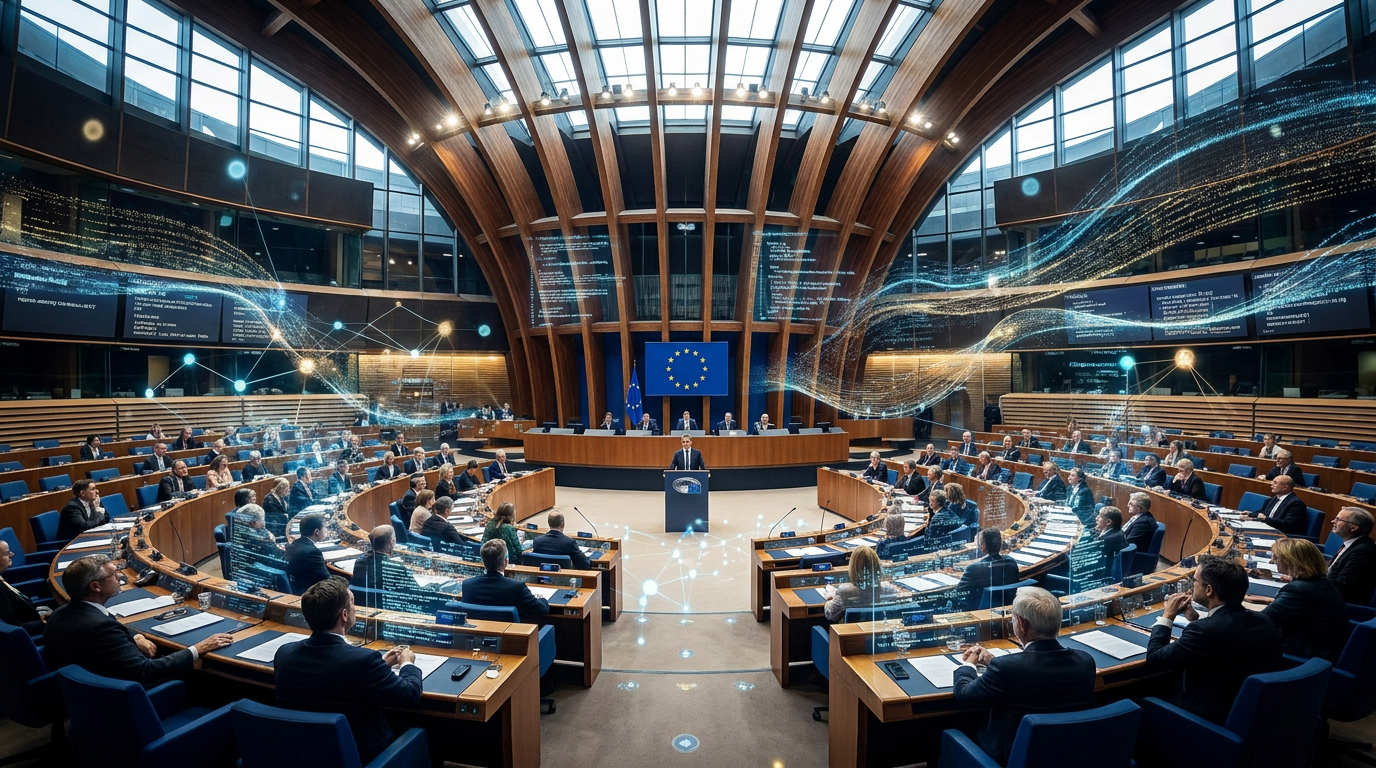
On June 16, 2026, the European Parliament overwhelmingly approved the "Digital Omnibus" package, fundamentally rewriting the enforcement timeline for the world's most comprehensive artificial intelligence law. By a vote of 423 to 57, lawmakers agreed to delay the most stringent corporate compliance requirements of the EU AI Act by 16 months, pushing the deadline for "high-risk" systems from August 2026 to December 2027.[1][2][7]
The legislative maneuver offers a massive reprieve to global technology companies and enterprises that were racing to meet an impending summer deadline. However, the package is not purely a concession to industry. While corporate governance rules were delayed, the Parliament simultaneously accelerated consumer protections, instituting a strict ban on AI "nudifier" applications—software used to generate non-consensual explicit deepfakes—which will take effect by December 2026.[1][4][7]
This dual approach reflects the European Union's ongoing struggle to operationalize its landmark AI regulation. Policymakers are attempting to balance the urgent need to protect citizens from immediate digital harms against the practical reality that the technical standards required to audit complex enterprise AI systems simply do not yet exist.[2][7]

The core of the delay centers on "Annex III" high-risk AI systems. Under the original framework, any AI deployed in sensitive areas—such as recruitment, credit scoring, biometric identification, law enforcement, or critical infrastructure—faced a hard compliance deadline of August 2, 2026.[5][6][8]
To meet that original deadline, companies needed to complete rigorous conformity assessments, establish continuous human oversight mechanisms, and build extensive technical documentation proving their models were free from discriminatory bias.[5][6]
However, as the deadline approached, both regulators and the tech industry realized the necessary harmonized standards—the specific technical benchmarks companies must test against—were not ready. Enforcing the August 2026 deadline without these standards would have forced companies to guess at compliance, risking fines of up to €35 million or 7% of global annual turnover.[2][4][6]
The Digital Omnibus package resolves this by moving the Annex III deadline to December 2, 2027. For AI systems embedded as safety components in physical products (Annex I), the deadline is pushed even further, to August 2, 2028.[1][8]

Legal experts warn that the delay does not change the fundamental criteria for what constitutes a high-risk system. Draft guidelines released earlier this year clarified that human involvement in an AI process does not remove its high-risk status. If an AI system's intended purpose falls under Annex III, it remains subject to the strict oversight rules, regardless of whether a human makes the final decision.[3]
Legal experts warn that the delay does not change the fundamental criteria for what constitutes a high-risk system.
Furthermore, complex multi-agent AI pipelines will be assessed as a single entity. If a company chains together several low-risk models to perform a high-risk task—such as screening resumes—the entire architecture will be regulated under the 2027 high-risk framework.[3][5]
While enterprise compliance is delayed, the Parliament took aggressive action against immediate societal harms. The Omnibus package introduces an outright ban on AI systems designed to generate child sexual abuse material or create sexually explicit deepfakes of identifiable individuals without their consent.[1][2][7]
These "nudifier" apps have proliferated rapidly, overwhelmingly targeting and degrading women. Providers of open-source models and commercial APIs will be legally barred from placing these systems on the EU market unless they incorporate adequate technical safeguards to prevent the generation of such material.[1][7]

Companies have until December 2, 2026, to bring their systems into compliance with the deepfake ban. The prohibition extends beyond the developers to the "deployers"—meaning platforms or individuals utilizing the technology for malicious purposes will also face severe penalties.[1][6]
Alongside the deepfake ban, the Parliament adjusted the timeline for Article 50 transparency obligations. Originally slated for August 2026, the requirement to watermark and label AI-generated content in a machine-readable format has been aligned with the December 2, 2026 deadline.[1][6][8]
This watermarking mandate applies broadly, capturing not just high-risk systems but any AI interface interacting with the public or generating synthetic media. The brief delay is intended to give the industry time to adopt standardized cryptographic provenance techniques, such as those developed by the Coalition for Content Provenance and Authenticity.[6]
Despite the 16-month extension for high-risk systems, compliance engineers are urging organizations not to halt their governance programs. Building the necessary infrastructure—such as automated logging, data governance frameworks, and incident-reporting runbooks—often takes more than a year of engineering effort.[5][6]

"Organizations that pause compliance preparations pending political certainty are making a high-risk bet," noted one technical readiness guide. The foundational work of inventorying AI systems and mapping data flows remains critical, as the underlying requirements of the AI Act have not changed, only the enforcement date.[6]
The Omnibus package also clarified overlapping regulations, specifically removing redundant requirements for AI used in machinery products. Products with AI functions that merely assist users or optimize performance will not automatically face high-risk obligations unless their failure poses a direct health or safety risk.[1]
Before the new timelines become official law, the package must be formally adopted by the Council of the European Union. Given the broad consensus achieved in the Parliament and the urgent need for regulatory clarity, formal adoption is expected to proceed without significant hurdles, officially resetting the clock for global AI compliance.[1][2]
How we got here
August 2024
The EU AI Act officially enters into force, beginning the phased rollout of the world's first comprehensive AI law.
February 2025
The first phase of the Act takes effect, outright banning 'unacceptable risk' practices like social scoring and manipulative AI.
June 2026
The European Parliament approves the Digital Omnibus package, altering the future enforcement schedule.
December 2026
The new deadline for mandatory watermarking of AI content and the strict ban on deepfake 'nudifier' apps.
December 2027
The revised deadline for companies to comply with the rigorous requirements for standalone high-risk AI systems.
Viewpoints in depth
Enterprise Tech & Compliance
Views the delay as a necessary pragmatic step to allow the development of technical standards and avoid unworkable compliance mandates.
For corporate engineering and legal teams, the 16-month extension is seen as a vital correction to an overly ambitious regulatory schedule. Industry groups have consistently argued that enforcing the August 2026 deadline without finalized harmonized standards would have forced companies to guess at compliance requirements, exposing them to massive financial liabilities. However, compliance leaders emphasize that the delay is merely a reprieve, not a repeal. They advise organizations to continue building the complex data governance and automated logging architectures required for high-risk systems, as these technical foundations take significant time to implement.
Digital Rights Advocates
Celebrates the immediate ban on non-consensual deepfakes but worries the 16-month delay for high-risk systems leaves citizens vulnerable to algorithmic bias.
Civil society organizations and digital rights watchdogs have offered a mixed reaction to the Omnibus package. They strongly praise the Parliament for securing an outright ban on 'nudifier' apps, noting that these tools overwhelmingly target and degrade women. However, they express deep concern over the delay in enforcing Annex III rules. Advocates argue that pushing high-risk compliance to late 2027 means citizens will remain unprotected from discriminatory algorithms in critical areas like hiring, credit scoring, and law enforcement for another year and a half, prioritizing corporate convenience over fundamental rights.
EU Policymakers
Argues the Omnibus package successfully balances the protection of fundamental rights with the practical realities of standard-setting and industry readiness.
European lawmakers frame the Omnibus package as a necessary recalibration of the AI Act's rollout. By decoupling the timeline for corporate governance from the timeline for immediate consumer protections, policymakers aim to demonstrate that the EU can be both pragmatic and protective. They argue that rushing the enforcement of high-risk rules without proper testing frameworks would have undermined the law's credibility. Simultaneously, by accelerating the ban on deepfake pornography, they signal that the EU remains committed to aggressively policing AI applications that cause clear and present societal harm.
What we don't know
- Whether the Council of the European Union will demand any further amendments before formally adopting the Omnibus package.
- Exactly how the technical safeguards against deepfake generation will be standardized across open-source and proprietary models.
- How the delayed timeline will impact parallel AI regulatory efforts currently underway in the US and UK.
Key terms
- Digital Omnibus Package
- A legislative amendment package used by the EU to bundle changes to existing digital regulations, in this case adjusting the AI Act's timelines and adding specific bans.
- Annex III Systems
- A specific list within the AI Act defining 'high-risk' AI use cases, such as employment screening and credit scoring, which require strict compliance and human oversight.
- Conformity Assessment
- A rigorous auditing process providers must complete to prove their high-risk AI system meets safety, transparency, and data governance standards before deployment.
- Article 50 Transparency
- The section of the AI Act requiring that users be informed when interacting with an AI and that AI-generated content be clearly watermarked.
- Nudifier Apps
- AI applications specifically designed to strip clothing from images of people to create non-consensual sexually explicit deepfakes.
Frequently asked
Does this delay mean the EU AI Act is paused entirely?
No. Prohibited practices, such as social scoring, and rules for General Purpose AI models are already active. Only the specific requirements for 'high-risk' systems and watermarking have been delayed.
What qualifies as a 'high-risk' AI system?
AI used in sensitive areas that can affect fundamental rights or safety, including recruitment, credit scoring, biometric identification, law enforcement, and critical infrastructure.
How does the new ban on deepfake apps work?
Providers are legally barred from placing AI systems on the EU market that generate non-consensual explicit imagery unless they build in adequate technical safeguards to prevent such outputs.
Does this law apply to companies outside of Europe?
Yes. The EU AI Act has extraterritorial reach, applying to any provider or deployer whose AI system is placed on the EU market or whose outputs are used within the EU.
Sources
Source coverage
8 outlets
3 viewpoints surfaced








[1]European Parliament Press RoomEU Policymakers
AI Act: EP approves simplification measures and 'nudifier' app ban
Read on European Parliament Press Room →[2]ReutersEU Policymakers
EU Parliament delays core AI Act rules to 2027, bans deepfake porn apps
Read on Reuters →[3]Arthur CoxEnterprise Tech & Compliance
EU AI Act: Commission Draft Guidelines on classification of high-risk AI systems
Read on Arthur Cox →[4]TechCrunchDigital Rights Advocates
Europe blinks on AI regulation, pushing high-risk compliance to 2027
Read on TechCrunch →[5]Snowflake EngineeringEnterprise Tech & Compliance
What Is the EU AI Act? Risk Tiers, Deadlines & Compliance
Read on Snowflake Engineering →[6]SureCloudEnterprise Tech & Compliance
EU AI Act Compliance Guide: Updated June 2026
Read on SureCloud →[7]Politico EuropeDigital Rights Advocates
EU lawmakers vote to delay strict AI rules, but crack down on deepfakes
Read on Politico Europe →[8]EU AI Act Service DeskEU Policymakers
Timeline for the Implementation of the EU AI Act
Read on EU AI Act Service Desk →

Every angle. Every day.
Get ai stories with full source coverage and perspective breakdowns delivered to your inbox.