
Major Gaming Platforms Push for Universal Accessibility Standards Following Summer Game Fest
Microsoft, Sony, and major PC storefronts are facing renewed pressure to implement unified accessibility tags and cross-platform adaptive controller support, marking a historic milestone for disabled gamers.
By Factlen Editorial Team
- Accessibility Advocates
- Pushing for standardized, cross-platform hardware and storefront tags so disabled players don't have to guess if a game is playable.
- Platform Holders & Studios
- Implementing new hardware and software guidelines to broaden their audience and meet federal compliance.
- Community Modders & Nonprofits
- Filling the gaps with AI-driven mods for blind players and hardware distribution programs.
What's not represented
- · Disabled gamers in developing nations who cannot afford imported adaptive hardware
- · Indie developers struggling with the budget to implement complex accessibility features
Why this matters
For millions of disabled players, gaming has historically been gated by inaccessible hardware and unreadable software. The industry's shift toward standardized tags and universal adaptive controllers means that virtual worlds—and the social connections they provide—are finally becoming open to everyone.
Key points
- Advocates are pushing for standardized Accessible Games Initiative (AGI) tags across all major console storefronts.
- Microsoft expanded its Adaptive Controller ecosystem with 3D-printable schematics and new thumbsticks.
- Over 50 AI-driven mods have been released recently to help blind players navigate mainstream games.
- Regulatory pressure from the CVAA is forcing AAA publishers to meet baseline accessibility guidelines.
The June 2026 gaming news cycle was dominated by blockbuster reveals at Summer Game Fest, including Resident Evil: Code Veronica and Final Fantasy VII Revelation. But alongside the flashy trailers, a quieter, more profound shift took center stage during the parallel Access-Ability Summer Showcase: the video game industry is finally standardizing accessibility.[2][6]
For years, disabled players have had to guess whether a newly released $70 game would be playable for them. That barrier is crumbling. Following the rollout of Accessible Games Initiative (AGI) tags on Xbox and PC storefronts, players can now filter titles by specific visual, auditory, and motor-control features before purchasing. Accessibility advocates are now pressing PlayStation and Nintendo to adopt the same unified tags to create an industry-wide standard.[1][2]
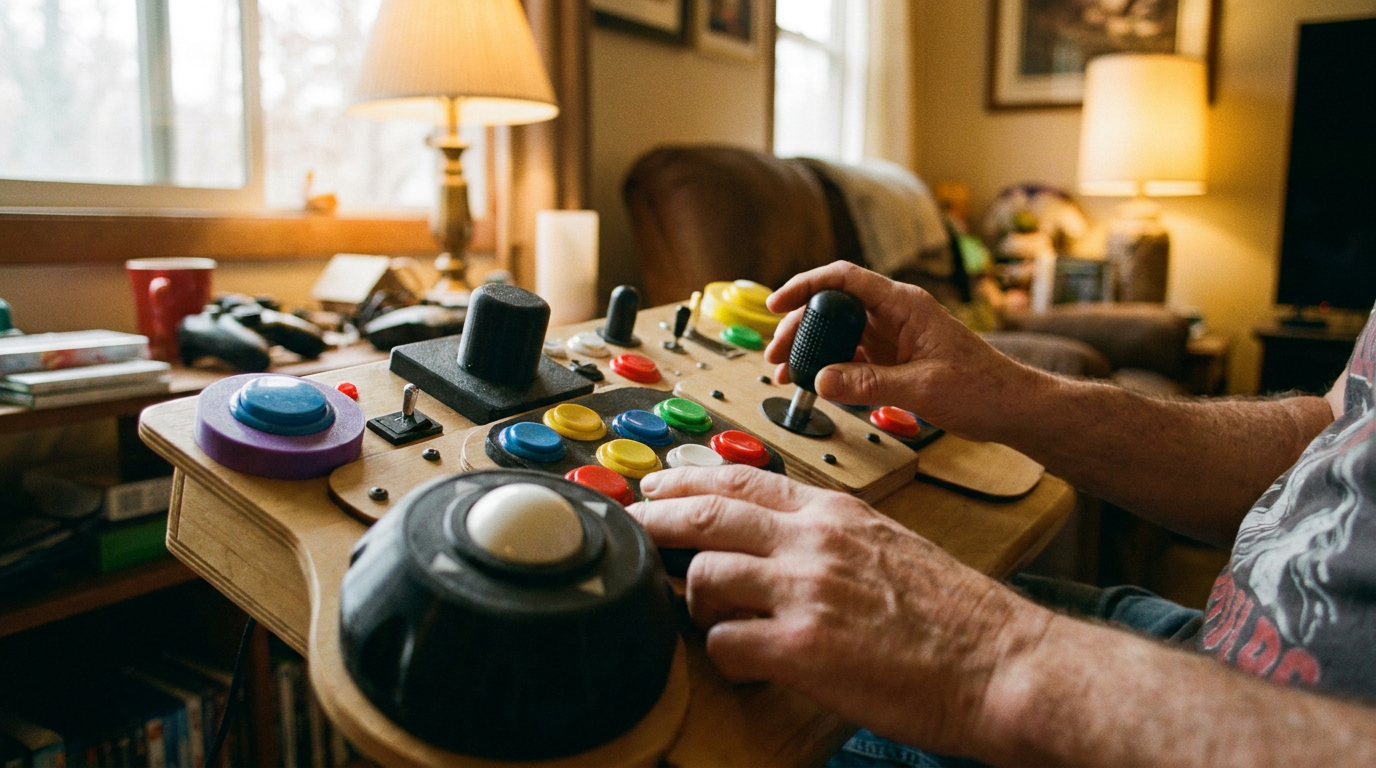
Hardware is also becoming radically more adaptable. Microsoft recently expanded its Xbox Adaptive Controller ecosystem, releasing seven new thumbstick configurations designed by its Inclusive Tech Lab. Crucially, the company also published free 3D-printable schematics, allowing players to manufacture custom parts at home or at local libraries, bypassing expensive specialized retailers.[1]

The push for hardware flexibility extends beyond single ecosystems. Accessibility experts are increasingly calling for multiplatform controller support. Because adaptive rigs can cost hundreds of dollars and require complex physical setups, advocates argue that a single accessibility controller should seamlessly connect across Xbox, PlayStation, and the upcoming Nintendo Switch 2, treating the adaptive inputs as a universal system-level user.[2]
On the software side, regulatory pressure is forcing AAA studios to elevate their baseline features. A decade after the expiration of the Federal Communications Commission's video-game waiver, the Twenty-First Century Communications and Video Accessibility Act (CVAA) is actively pulling the console business toward strict compliance. Of the ten largest AAA publishers, the vast majority now ship games that meet at least the "Basic" tier of the Game Accessibility Guidelines, ensuring remappable controls and colorblind-aware user interfaces are standard out of the box.[3]
On the software side, regulatory pressure is forcing AAA studios to elevate their baseline features.
Upcoming 2026 heavyweights like Forza Horizon 6 and Call of Duty: Black Ops 7 have publicly committed to these expanded guidelines. The industry continues to measure itself against the high-water mark set by Naughty Dog's The Last of Us Part II, which launched with approximately 60 distinct accessibility settings—a feature count that only a handful of subsequent AAA titles have managed to match.[1][3]
Where official studio support lags, the community is stepping in with next-generation tools. A recent boom in artificial intelligence has empowered blind players to mod mainstream games independently, a topic heavily featured at the 2026 GA Conf. Over 50 AI-driven accessibility mods have been released in recent months. These tools use machine vision to read on-screen text and translate visual user interfaces into dynamic audio cues, fundamentally altering what games are playable without sight and bypassing the need for native developer support.[5]

International initiatives are proving that hardware distribution can scale. In South Korea, Kakao Games' "Play Buddy Together" program recently received a government commendation for its success. Over the past three years, the initiative has matched nearly 100 disabled players with 608 customized assistive devices, including eye-tracking cameras and sip-and-puff mice, bridging the financial gap for specialized hardware.[4]
The stakes of this movement extend far beyond entertainment. Disability nonprofits like Easterseals emphasize that virtual worlds erase the physical and transportation barriers that often isolate disabled individuals in offline spaces. By making digital environments accessible, developers are opening vital avenues for friendship, shared challenges, and community.[4]

Ultimately, inclusive game design functions much like curb cuts on physical sidewalks: features built for wheelchair users inevitably smooth the path for strollers and delivery carts. Whether it's high-contrast modes, AI-assisted navigation, or universal storefront tags, the 2026 accessibility push is proving that when games are built for everyone, the entire medium improves.[2][4]
How we got here
Jan 2014
The CVAA takes effect, requiring in-game communications to be accessible.
Sep 2018
Microsoft releases the Xbox Adaptive Controller, revolutionizing hardware accessibility.
Jun 2020
The Last of Us Part II launches with 60 accessibility settings, setting a new AAA industry benchmark.
Jun 2026
The Access-Ability Summer Showcase highlights AI mods and cross-platform hardware standardization.
Viewpoints in depth
Accessibility Advocates' view
True accessibility requires cross-platform standardization, not just siloed corporate initiatives.
Advocates argue that disabled players are still burdened by a fragmented ecosystem. An adaptive controller setup that works perfectly on an Xbox might be entirely incompatible with a PlayStation 5 or a Nintendo Switch 2. Organizations and accessibility critics are pushing for an industry-wide agreement that treats adaptive hardware as a universal input, allowing players to invest in a single, expensive custom rig that works seamlessly across all major consoles.
AAA Studios' view
Balancing complex game design with expanding regulatory and community expectations.
For major publishers, accessibility is increasingly viewed through the dual lenses of market expansion and legal compliance. With the FCC's CVAA regulations expanding to cover more in-game communications, studios are baking accessibility into the ground floor of their game engines rather than patching it in post-launch. However, developers note that retrofitting older engines to support features like full screen-reading or high-contrast modes remains a significant technical hurdle.
Community Modders' view
Players shouldn't have to wait for official patches to enjoy mainstream titles.
The modding community, particularly blind and low-vision players, has embraced generative AI to bypass slow corporate development cycles. By using AI overlays that read the screen and provide audio feedback, modders are making previously inaccessible games playable overnight. They view these grassroots tools as essential stopgaps, proving to major studios that the demand for these features is robust and technologically feasible.
What we don't know
- Whether Sony and Nintendo will officially adopt the AGI tags on their respective digital storefronts.
- If console manufacturers will ever allow native cross-platform compatibility for third-party adaptive controllers.
Key terms
- CVAA
- The Twenty-First Century Communications and Video Accessibility Act, a federal law that requires in-game communications and user interfaces to be accessible to people with disabilities.
- Adaptive Controller
- A highly customizable gaming gamepad designed primarily to meet the needs of gamers with limited mobility, allowing them to plug in external switches, buttons, and joysticks.
- High-Contrast Mode
- A visual setting that strips away complex textures and uses bright, solid colors to highlight characters, enemies, and interactive objects for players with low vision.
- Screen Reader
- Software that uses a synthesized voice to read aloud text displayed on the screen, essential for blind or low-vision players navigating game menus.
Frequently asked
What are the AGI tags?
The Accessible Games Initiative (AGI) tags are standardized labels on digital storefronts that tell players what accessibility features—like remappable controls or colorblind modes—a game includes before they buy it.
Can I use an Xbox Adaptive Controller on a PlayStation?
Currently, cross-platform support requires complex third-party adapters. Accessibility advocates are actively pushing console makers to allow universal compatibility for adaptive hardware.
How is AI helping blind gamers?
Modders are using AI tools to create overlays that read on-screen text and visual cues, translating them into audio descriptions so blind players can navigate menus and gameplay without native developer support.
Sources
Source coverage
6 outlets
3 viewpoints surfaced






[1]Console CreaturesPlatform Holders & Studios
For GAAD 2026, Xbox Releases Fresh Accessibility Updates
Read on Console Creatures →[2]Access-AbilityAccessibility Advocates
2026 Gaming Accessibility Predictions / Questions
Read on Access-Ability →[3]Disability WorldAccessibility Advocates
Game accessibility 2026 — the post-CVAA video-game extension and where AAA studios stand
Read on Disability World →[4]Thompson TribuneCommunity Modders & Nonprofits
Adaptive gaming interfaces multiplied across 2026
Read on Thompson Tribune →[5]GA ConfCommunity Modders & Nonprofits
GA Conf 2026 Schedule and Speakers
Read on GA Conf →[6]EurogamerPlatform Holders & Studios
Summer Game Fest 2026 schedule and announcements
Read on Eurogamer →


Every angle. Every day.
Get entertainment stories with full source coverage and perspective breakdowns delivered to your inbox.