
How Next-Generation Geothermal Energy Could Solve the Grid's Baseload Problem
By borrowing drilling techniques from the oil and gas industry, Enhanced Geothermal Systems (EGS) are unlocking a practically limitless supply of 24/7 clean energy.
By Factlen Editorial Team
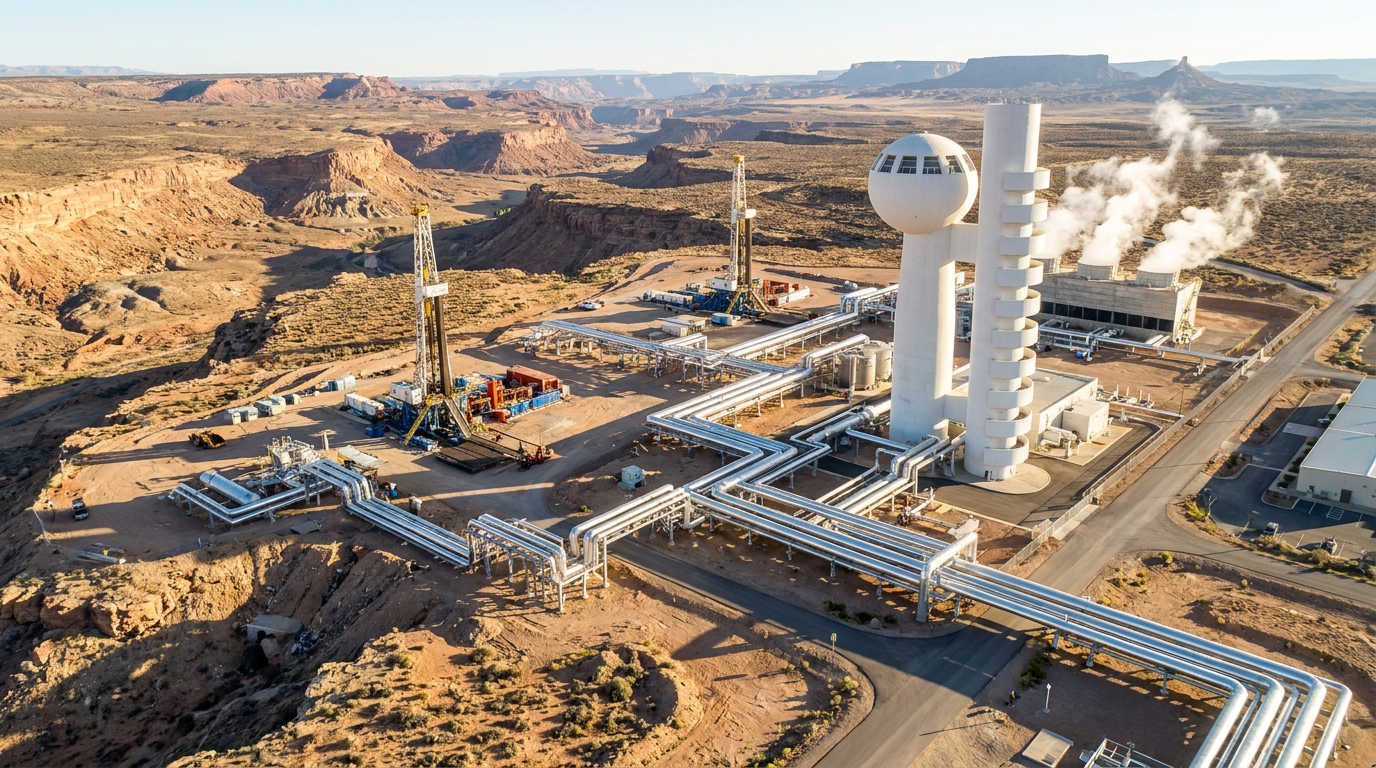
- Geothermal Developers
- Argue that EGS is commercially ready and can scale rapidly by repurposing oil and gas technology.
- Energy Policymakers
- View EGS as a critical 'clean firm' baseload solution but emphasize the need for cost reductions and permitting reform.
- Scientific Researchers
- Focus on the subsurface physics, monitoring safety, and optimizing heat extraction.
- Environmental Advocates
- Support the 100% clean energy potential but urge careful monitoring of induced seismicity and water usage.
What's not represented
- · Local communities near drilling sites
- · Fossil fuel industry workers transitioning to geothermal
Why this matters
As artificial intelligence and electrification push the power grid to its limits, next-generation geothermal energy offers a rare solution: a carbon-free, 24/7 power source that can be deployed almost anywhere. If successful, it could permanently solve the intermittency problem of wind and solar, ensuring reliable electricity without fossil fuels.
Key points
- Next-generation geothermal, or EGS, uses horizontal drilling and fracturing to extract heat from dry rock.
- The technology decouples geothermal energy from rare geological hot springs, allowing it to be deployed widely.
- The U.S. Department of Energy projects EGS could expand U.S. geothermal capacity from 4 GW to 90 GW by 2050.
- Commercial pilots have successfully proven the physics, with drilling times dropping 70% in two years.
- High upfront capital costs and lengthy federal permitting processes remain the primary hurdles to widespread adoption.
The global transition to a zero-carbon grid faces a fundamental math problem. As artificial intelligence data centers, electric vehicles, and industrial reshoring drive electricity demand to unprecedented heights, the world needs massive amounts of new power. Wind and solar are cheap and abundant, but they are intermittent—they stop producing when the sun sets or the wind dies down. To keep the grid stable, operators need "clean firm" power: energy sources that produce zero emissions but run twenty-four hours a day, seven days a week. Historically, the only options for clean firm power were nuclear reactors, which are notoriously slow and expensive to build, or hydroelectric dams, which are geographically constrained.[2][4]
Enter next-generation geothermal energy. For decades, the heat radiating from the Earth's core has been viewed as a niche energy source, but a wave of technological breakthroughs is rapidly moving it to the center of the global energy strategy. Specifically, a technology known as Enhanced Geothermal Systems (EGS) is crossing the threshold from experimental pilot projects to commercial-scale deployment in 2026. By borrowing and adapting advanced drilling techniques from the oil and gas industry, EGS promises to unlock a practically limitless supply of baseload clean energy, fundamentally altering the math of the energy transition.[4][7]
To understand the breakthrough, it helps to look at the limitations of conventional geothermal power. Traditional geothermal plants operate by tapping into naturally occurring hydrothermal reservoirs. These require a rare geological trifecta: intense underground heat, a steady supply of water, and highly permeable rock that allows the water to flow. Because these three conditions naturally intersect in only a few places on Earth—such as the geysers of Iceland, Kenya's Rift Valley, or parts of California and Nevada—conventional geothermal has never scaled globally. Today, it accounts for less than one percent of the world's electricity generation.[2][3]
Enhanced Geothermal Systems bypass nature's geographical limits by engineering the necessary conditions underground. Instead of hunting for natural hot springs, EGS developers use horizontal directional drilling to bore thousands of feet down into hot, dry, impermeable rock. Once the well is drilled, they use hydraulic fracturing—the same "fracking" technology that sparked the shale gas revolution—to create a network of artificial cracks in the deep subterranean rock.[2][4]

This engineered fracture network acts as a massive, closed-loop underground radiator. Engineers pump cold water down an injection well, where it is forced through the newly created cracks in the scorching hot rock. As the water travels through the fissures, it absorbs the Earth's intense thermal energy. The superheated fluid is then drawn back up to the surface through a separate production well, where its heat is extracted to drive a steam turbine and generate electricity. The cooled water is then recirculated back underground, creating a continuous, zero-emission power cycle.[2][4]
The scale of the opportunity unlocked by this mechanism is staggering. Because hot rock exists everywhere if you drill deep enough, EGS effectively decouples geothermal energy from rare geological anomalies. According to a comprehensive "Liftoff" report published by the U.S. Department of Energy, next-generation technologies could expand the United States' geothermal capacity from a mere four gigawatts today to 90 gigawatts by 2050.[1][2]
In the most aggressive deployment scenarios, the Department of Energy estimates that U.S. geothermal capacity could reach 300 gigawatts. To put that figure into perspective, 300 gigawatts represents roughly a quarter of the country's total current electricity generating capacity. Achieving this scale would not only decarbonize vast swaths of the grid but also provide the reliable baseload power necessary to support the explosive growth of energy-intensive industries like artificial intelligence.[1][2]

In the most aggressive deployment scenarios, the Department of Energy estimates that U.S.
This is no longer a theoretical exercise. The industry is currently transitioning from research and development to active commercial deployment, led by companies like Fervo Energy. Fervo's Project Red, the world's longest-running EGS facility, has accumulated two years of rigorous production data that validates the fundamental physics of the technology at a field scale. The data confirms that engineered fracture networks can deliver stable, predictable, and continuous heat extraction without rapid thermal decline.[6][7]
The operational metrics coming out of these early commercial sites are mirroring the rapid cost and efficiency curves seen during the early days of the shale revolution. At Fervo's massive 400-megawatt Cape Station project in Utah, drilling times have plummeted by 70 percent in just two years. As drilling becomes faster and more precise, the capital costs required to construct these deep underground radiators fall dramatically, bringing the technology closer to economic parity with fossil fuels.[4][6]
Alongside the commercial milestones, the scientific community is delivering crucial breakthroughs in monitoring and safety. In April 2026, geophysicists from the Lawrence Berkeley National Laboratory announced the successful deployment of a custom seismometer nearly 7,000 feet underground at the Cape Station site. For seven continuous months, the sensor recorded microseismic activity in an environment where temperatures reached a blistering 338 degrees Fahrenheit.[5][7]

This high-temperature monitoring capability is a critical advancement for the industry. Creating artificial fractures underground inherently causes microseismicity—tiny seismic events that are typically too small to be felt at the surface. By continuously mapping these acoustic signals in extreme heat, scientists can see exactly how the fracture network is forming in real-time. This allows operators to optimize the flow of water for maximum heat extraction while ensuring that the hydraulic stimulation does not induce larger, dangerous earthquakes.[5][7]
Despite the immense technical progress, the path to widespread commercialization is not without friction. The primary hurdle is economic. Drilling miles into hard, crystalline granite is inherently expensive, and the upfront capital required to develop a commercial-scale EGS plant is daunting. While the fuel—the Earth's heat—is free, the infrastructure required to access it requires massive initial investments before a single electron is generated.[1][4]
To achieve true commercial liftoff, the industry must continue to drive down its Levelized Cost of Electricity (LCOE). The Department of Energy estimates that next-generation geothermal must reach a national average LCOE of $60 to $70 per megawatt-hour by 2030 to compete directly with other clean firm power sources. Reaching this target will require continued innovation in drilling bit durability, high-temperature electronics, and reservoir management.[1][4]

Beyond the physics and the economics, developers face a formidable regulatory bottleneck. Because the most accessible hot rock in the United States is located in the West, many early EGS projects are situated on federal lands. Navigating the mandatory environmental reviews and overlapping agency jurisdictions can add years of uncertainty to project timelines. Industry advocates argue that without streamlined permitting processes, the technology will struggle to deploy fast enough to meet urgent climate targets.[2][4]
Recognizing the stakes, policymakers are increasingly treating next-generation geothermal as a national imperative. Bipartisan legislation currently moving through Congress aims to categorize geothermal exploration similarly to oil and gas, easing the regulatory burden on federal lands. Simultaneously, federal grant programs and loan guarantees are stepping in to help de-risk the estimated $225 billion to $250 billion in capital investment required to scale the industry over the next two decades.[3][4]
One of the most compelling aspects of the EGS boom is its workforce dynamic. Unlike the transition to solar or wind, which requires entirely new skill sets, next-generation geothermal relies on the exact same expertise used in the fossil fuel industry. Rig operators, petroleum engineers, and geophysicists can transition directly from extracting hydrocarbons to mining the Earth's heat, offering a seamless and economically vital pivot for hundreds of thousands of workers in traditional energy communities.[1][4]
As 2026 unfolds, the convergence of advanced drilling technology, rigorous scientific monitoring, and urgent market demand has pushed Enhanced Geothermal Systems into the spotlight. If developers can continue to bend the cost curve downward while navigating the regulatory landscape, the heat beneath our feet could soon become the ultimate clean energy battery—powering the grid reliably, invisibly, and indefinitely.[1][7]
How we got here
1970s-1980s
Conventional geothermal energy sees initial growth but remains limited to rare geographical locations.
March 2024
The U.S. Department of Energy releases its 'Liftoff' report, projecting massive growth for next-generation geothermal.
Mid-2025
Fervo Energy begins continuous operations at Project Red, proving the commercial viability of EGS.
April 2026
Berkeley Lab scientists announce a breakthrough in continuous high-temperature monitoring at Fervo's Cape Station in Utah.
Viewpoints in depth
Geothermal Developers
Argue that EGS is commercially ready and can scale rapidly by repurposing oil and gas technology.
Companies pioneering EGS emphasize that the technology is no longer a science experiment. By utilizing the exact same horizontal drilling and hydraulic fracturing techniques perfected during the shale revolution, developers argue they can rapidly scale operations. They point to plunging drilling times and successful commercial power purchase agreements as proof that the industry is ready to absorb massive capital and deliver reliable baseload power to the grid.
Energy Policymakers
View EGS as a critical 'clean firm' baseload solution but emphasize the need for cost reductions and permitting reform.
Federal agencies and energy think tanks see next-generation geothermal as the missing puzzle piece for a fully decarbonized grid. Because wind and solar are intermittent, policymakers argue that a massive expansion of EGS is necessary to replace retiring coal and natural gas plants. However, they stress that the industry must hit strict cost-reduction targets—specifically a Levelized Cost of Electricity of $60 to $70 per megawatt-hour—and navigate complex federal permitting bottlenecks to achieve true commercial liftoff.
Scientific Researchers
Focus on the subsurface physics, monitoring safety, and optimizing heat extraction.
Geophysicists and national laboratory researchers are focused on the extreme engineering challenges of operating miles underground. Their primary concern is mapping and monitoring the artificial fracture networks to ensure efficient heat transfer without inducing dangerous surface earthquakes. By deploying high-temperature sensors in active wells, scientists aim to build predictive models that will allow operators to safely stimulate rock formations in a wider variety of geological settings.
Environmental Advocates
Support the 100% clean energy potential but urge careful monitoring of induced seismicity and water usage.
Climate and environmental groups are broadly supportive of EGS due to its minimal surface footprint and zero-emission profile. However, they caution that the technology must be deployed responsibly. Advocates emphasize the need for rigorous, transparent monitoring of microseismicity to protect local communities, as well as strict regulations on the water usage required to stimulate and maintain the underground fracture networks, particularly in the drought-prone American West.
What we don't know
- Whether the industry can successfully drive the Levelized Cost of Electricity down to the $60-$70/MWh target by 2030.
- How quickly federal permitting reforms will be enacted to unlock development on public lands in the American West.
- The long-term water consumption rates required to maintain closed-loop fracture networks at a massive scale.
Key terms
- Enhanced Geothermal Systems (EGS)
- A technology that creates artificial underground reservoirs by fracturing hot, dry rock and circulating water to extract heat for electricity generation.
- Clean Firm Power
- Electricity generation that produces zero carbon emissions and is available continuously, serving as a reliable baseload for the grid.
- Levelized Cost of Electricity (LCOE)
- A standard metric used to compare the lifetime costs of generating energy across different technologies, expressed in dollars per megawatt-hour.
- Hydrothermal Reservoir
- A naturally occurring underground system containing heat, water, and permeable rock, which conventional geothermal plants rely on.
- Microseismicity
- Very small-scale earthquakes, often imperceptible at the surface, caused by fracturing rock underground.
Frequently asked
What is 'clean firm' power?
Clean firm power refers to electricity generation that produces zero carbon emissions and is available continuously, 24/7, regardless of weather conditions.
How is EGS different from fracking for oil?
While EGS uses similar horizontal drilling and hydraulic fracturing techniques, it does not extract fossil fuels. Instead, it circulates water through hot rock to extract heat, producing zero emissions.
Can geothermal energy be built anywhere?
In theory, hot rock exists everywhere if you drill deep enough. However, early commercial projects are targeting regions where the heat is closer to the surface to minimize drilling costs.
Does EGS cause earthquakes?
Creating underground fractures does cause 'microseismicity,' but these events are typically too small to be felt at the surface. Continuous monitoring ensures operations remain safe and do not induce larger quakes.
Sources
Source coverage
7 outlets
4 viewpoints surfaced







[1]U.S. Department of EnergyEnergy Policymakers
Pathways to Commercial Liftoff: Next-Generation Geothermal Power
Read on U.S. Department of Energy →[2]World Resources InstituteEnvironmental Advocates
Next-Generation Geothermal Can Help Unlock 100% Clean Power
Read on World Resources Institute →[3]MIT NewsScientific Researchers
Next-generation geothermal energy: Promise, progress, and challenges
Read on MIT News →[4]Information Technology and Innovation FoundationEnergy Policymakers
Advanced Geothermal Energy Is Widely Available, Clean, and Maybe Cheap Enough to Make a Big Impact
Read on Information Technology and Innovation Foundation →[5]Lawrence Berkeley National LaboratoryScientific Researchers
Scientists Develop New Technology to Continuously Monitor Geothermal Energy Operations
Read on Lawrence Berkeley National Laboratory →[6]Fervo EnergyGeothermal Developers
Enhanced Geothermal Has Been Proven at Scale. Here's What Two Years of Production Data Show.
Read on Fervo Energy →[7]Factlen Editorial Team
Synthesis by Factlen editorial team
Read on Factlen Editorial Team →

Every angle. Every day.
Get guides stories with full source coverage and perspective breakdowns delivered to your inbox.