
SpaceX Acquires AI Coding Startup Cursor for $60 Billion Following Blockbuster IPO
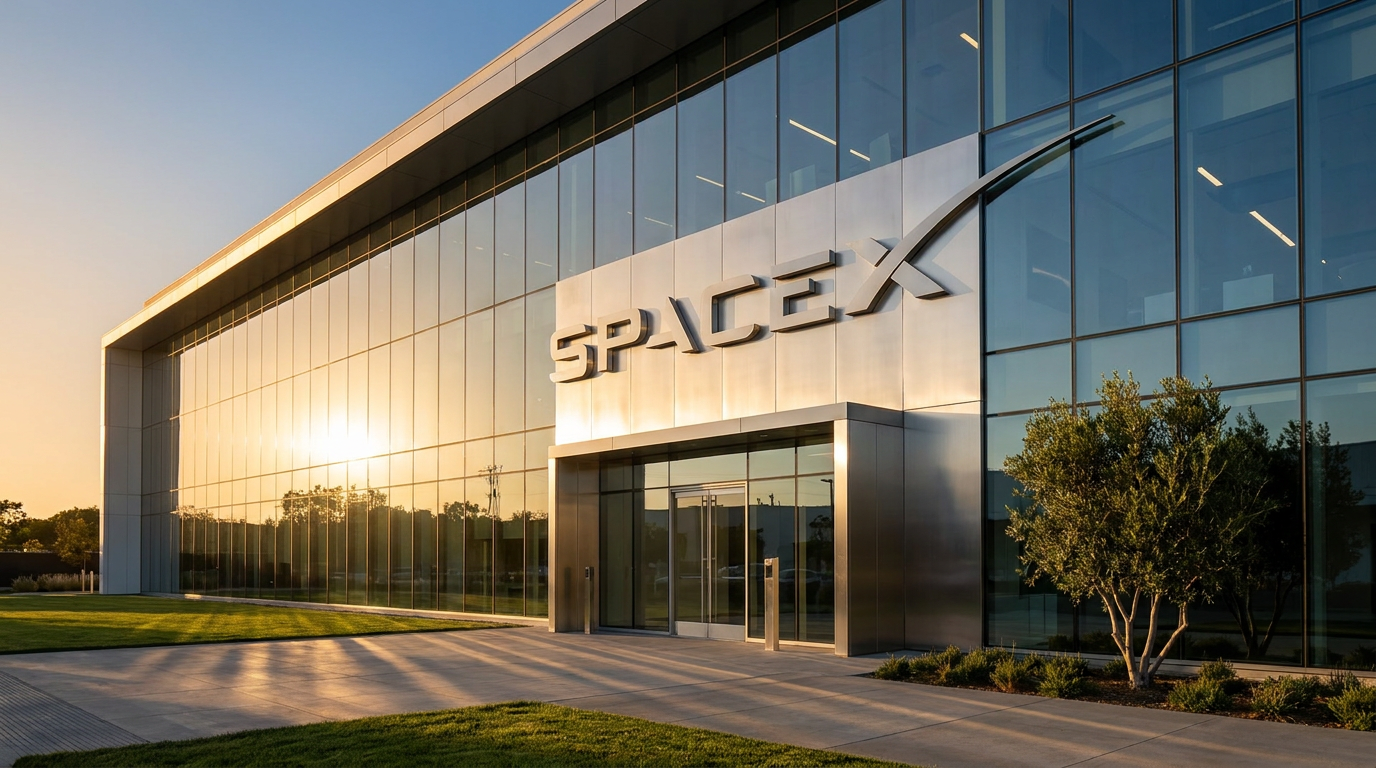
Elon Musk's SpaceX has agreed to purchase Anysphere, the parent company of AI coding assistant Cursor, in an all-stock deal valued at $60 billion. The acquisition merges the fastest-growing enterprise software startup in history with SpaceX's massive xAI supercomputing infrastructure.
By Factlen Editorial Team
- Market Analysts
- Focuses on the financial mechanics, the $60 billion valuation, and the competitive threat to Microsoft.
- Enterprise Developers
- Emphasizes the practical impact on software engineering, productivity gains, and the shift toward vibe coding.
- AI Infrastructure Strategists
- Highlights the compute synergy, noting how Cursor's API costs can be mitigated by moving workloads to xAI's Colossus supercomputer.
What's not represented
- · Open-Source Advocates
- · Antitrust Regulators
Why this matters
The $60 billion acquisition reshapes the artificial intelligence landscape by giving SpaceX's xAI division a dominant foothold in the lucrative developer tools market. For software engineers, it signals that AI-assisted "vibe coding" is transitioning from a niche productivity hack into a heavily capitalized, enterprise-grade mandate.
Key points
- SpaceX is acquiring AI coding startup Cursor for $60 billion in an all-stock transaction.
- The deal follows SpaceX's recent initial public offering, which valued the aerospace company at over $2.5 trillion.
- Cursor is the fastest-growing B2B software company in history, reaching $2 billion in annual recurring revenue in roughly three years.
- The acquisition gives Cursor access to SpaceX's Colossus supercomputer in Memphis to train future AI models.
- SpaceX aims to use Cursor to bolster its xAI division and compete with Microsoft, OpenAI, and Anthropic in the developer tools market.
Fresh off a record-breaking initial public offering, Elon Musk’s SpaceX has agreed to acquire the artificial intelligence coding startup Cursor in an all-stock transaction valued at $60 billion. The definitive merger agreement, announced Tuesday, will see Cursor’s parent company, Anysphere, become a wholly owned subsidiary of the aerospace giant by the third quarter of 2026. The deal marks SpaceX’s first major acquisition since its public market debut last week, which pushed the company’s market capitalization past $2.5 trillion. Under the terms of the agreement, each share of Cursor’s stock will convert into SpaceX Class A common stock, leveraging the rocket manufacturer's newly minted public equity as currency for the massive buyout.[1][2][4]
The outright acquisition completes a strategic maneuver that began earlier this spring. In April 2026, SpaceX and Cursor announced a sweeping collaboration focused on coding and knowledge work AI. As part of that initial arrangement, SpaceX secured a unique contractual right: it could either pay $10 billion to maintain a deep partnership, or exercise an option to purchase the startup entirely for $60 billion. By pulling the trigger on the full acquisition, SpaceX preempted a highly competitive funding environment. At the time the option was negotiated, Cursor was in the middle of raising a $2 billion private funding round that would have valued the company at roughly $50 billion, drawing intense interest from venture capital heavyweights like Andreessen Horowitz and Thrive Capital.[3][4][5]

Founded in 2022 in San Francisco, Anysphere built Cursor into the defining tool of the "vibe coding" era—a paradigm shift where software engineers increasingly rely on natural language prompts to direct AI agents to write, edit, and debug code autonomously. Rather than functioning as a simple autocomplete plugin, Cursor operates as a comprehensive integrated development environment. The platform allows developers to search entire codebases, run complex commands, and generate full software architectures through conversational instructions. This deep integration into the developer workflow has made it the preferred tool for engineers looking to automate the most tedious aspects of software creation.[2][8]
The speed of Cursor’s commercial ascent has virtually no precedent in the history of enterprise software. The company reached $100 million in annual recurring revenue in January 2025, scaled to $1 billion by November of that year following a massive $2.3 billion funding round, and surpassed $2 billion in recurring revenue by February 2026. That trajectory—from zero to $2 billion in roughly three years—makes Cursor the fastest-scaling business-to-business software company on record, easily outpacing the historical growth curves of industry giants like Slack, Zoom, and Snowflake. Today, the platform boasts more than one million paying individual developers and is utilized by engineering teams at nearly 70 percent of the Fortune 1000.[6][7][8]

The speed of Cursor’s commercial ascent has virtually no precedent in the history of enterprise software.
For SpaceX, the acquisition is a calculated strike at the heart of the frontier artificial intelligence market. While Musk’s company is best known for reusable rockets and the Starlink satellite network, it absorbed the billionaire's xAI startup earlier this year to bolster its computational capabilities. By bringing Cursor in-house, SpaceX instantly acquires a dominant foothold in the lucrative developer tools sector, positioning its Grok AI business to compete directly with Microsoft’s GitHub Copilot, Google’s Gemini Code Assist, and Anthropic. Industry analysts note that while xAI has built massive infrastructure, it had previously lacked a killer enterprise application to challenge the entrenched Silicon Valley incumbents.[2][4][7]
The merger also solves a critical structural challenge for Cursor: the staggering cost of computing power. Despite generating billions in revenue, the startup has historically operated with razor-thin margins, spending nearly all of its income on API calls to external AI models provided by Anthropic and OpenAI. By joining SpaceX, Cursor gains direct access to Colossus—xAI’s massive supercomputer cluster located in Memphis, Tennessee. Toted as the largest H100 equivalent training facility in the world, Colossus will provide Cursor with the raw compute capacity required to train its own proprietary, next-generation coding models without paying a premium to third-party vendors.[2][5]

The integration of Cursor into SpaceX’s ecosystem highlights a broader transformation in how software is built globally. AI coding tools generated an estimated $12.8 billion in revenue in 2026, more than doubling the market size from just two years prior. Industry data indicates that more than half of all code currently hosted on repositories like GitHub is now either AI-generated or AI-assisted. As enterprise IT departments transition from allowing individual developers to experiment with AI tools to mandating their use across entire engineering organizations, the productivity gains have become impossible to ignore. Studies show that engineering teams fully deploying Cursor merge up to 40 percent more pull requests than those relying on traditional coding methods.[7]
As the transaction moves toward regulatory approval and a projected third-quarter close, the tech industry is bracing for a reshaped competitive landscape. Microsoft, which had reportedly examined a potential acquisition of Cursor before the SpaceX deal materialized, now faces a well-capitalized rival attacking its core developer constituency. For SpaceX, the $60 billion wager signals that the company views artificial intelligence not just as a tool for navigating spacecraft or optimizing satellite networks, but as a foundational business pillar capable of generating massive enterprise revenue on Earth.[2][4]
How we got here
2022
Anysphere is founded in San Francisco and begins developing the Cursor AI code editor.
Nov 2025
Cursor raises $2.3 billion at a $29.3 billion valuation, crossing $1 billion in annual recurring revenue.
Feb 2026
Cursor hits $2 billion in ARR, becoming the fastest-scaling B2B software company in history.
April 2026
SpaceX and Cursor announce a partnership, giving SpaceX an option to acquire the startup for $60 billion.
June 2026
Days after its blockbuster IPO, SpaceX exercises the option and signs a definitive merger agreement to buy Cursor.
Viewpoints in depth
Market Analysts
Financial experts evaluating the scale and strategic timing of the $60 billion all-stock transaction.
Financial analysts emphasize that SpaceX is brilliantly leveraging its newly minted public equity to execute this deal. Coming just days after an initial public offering that valued the aerospace giant at over $2.5 trillion, the all-stock nature of the $60 billion transaction allows SpaceX to acquire a generational software asset without depleting its cash reserves. Analysts also note that the acquisition is a direct competitive threat to Microsoft, which owns GitHub Copilot and had previously explored buying Cursor itself. By bringing the fastest-growing enterprise software company in history under its umbrella, SpaceX is signaling to Wall Street that it intends to be a dominant force in artificial intelligence, not just space exploration.
Enterprise Developers
Software engineers focused on the practical workflow changes and productivity gains driven by AI coding tools.
For the software engineering community, the acquisition validates the massive shift toward 'vibe coding'—a workflow where developers use natural language to direct AI agents rather than manually typing syntax. Developers point to Cursor's unprecedented adoption rate, noting that it has already penetrated 70 percent of the Fortune 1000 and boasts over a million paying users. The primary sentiment among engineers is optimism that SpaceX's massive resources will accelerate Cursor's product roadmap. Studies showing a 40 percent increase in merged pull requests for teams using Cursor have transformed the tool from a niche productivity hack into an enterprise-wide mandate, fundamentally altering how modern software is built.
AI Infrastructure Strategists
Technologists analyzing the compute synergies between Cursor's software and SpaceX's hardware.
Infrastructure experts view the merger as a perfect marriage of software demand and hardware supply. Despite Cursor's staggering $2 billion in annual recurring revenue, the startup faced severe margin pressure because it spent nearly all its income on API calls to external models from Anthropic and OpenAI. Strategists point out that SpaceX's xAI division operates 'Colossus' in Memphis, Tennessee—the largest H100 supercomputer cluster in the world. By migrating Cursor's workloads to this in-house infrastructure, SpaceX can eliminate the startup's massive third-party compute costs, dramatically improving profitability while simultaneously using Cursor's vast proprietary coding data to train even smarter, next-generation xAI models.
What we don't know
- How quickly Cursor will transition its underlying AI models from external providers like Anthropic and OpenAI to SpaceX's in-house infrastructure.
- Whether antitrust regulators will scrutinize the merger, given the massive scale of SpaceX and Cursor's dominance in the developer tools market.
- How competitors like Microsoft and Google will respond to SpaceX aggressively entering the enterprise software ecosystem.
Key terms
- Vibe coding
- A modern software development approach where engineers use natural language prompts to direct AI agents to write and edit code autonomously.
- Annual Recurring Revenue (ARR)
- A financial metric used by subscription-based businesses to measure the predictable and recurring revenue generated by customers over a 12-month period.
- All-stock deal
- An acquisition structure where the purchasing company uses its own shares, rather than cash, to buy the target company.
- Colossus
- SpaceX's massive artificial intelligence supercomputer cluster located in Memphis, Tennessee, designed to train advanced AI models.
- Pull request
- A method of submitting contributions to a software project, commonly used to measure developer productivity when code is reviewed and merged.
Frequently asked
How much did SpaceX pay for Cursor?
SpaceX agreed to acquire Cursor for $60 billion in an all-stock transaction, leveraging its equity following a massive initial public offering.
What exactly does Cursor do?
Cursor is an AI-powered code editor that allows software developers to write, edit, and debug code using natural language prompts, a trend often referred to as 'vibe coding'.
Why does SpaceX want a software coding company?
The acquisition gives SpaceX's xAI division a dominant position in the lucrative enterprise developer tools market, allowing it to compete directly with Microsoft, OpenAI, and Anthropic.
Will Cursor continue to operate normally?
Yes, Cursor will become a wholly owned subsidiary of SpaceX. The platform is expected to continue serving its million-plus users while gaining access to SpaceX's massive supercomputing infrastructure.
Sources
Source coverage
8 outlets
3 viewpoints surfaced








[1]BBCEnterprise Developers
Musk's SpaceX buys AI coding start-up for $60bn days after IPO
Read on BBC →[2]CBS NewsAI Infrastructure Strategists
SpaceX to buy AI coding assistant Cursor for $60 billion
Read on CBS News →[3]ForbesMarket Analysts
SpaceX Strikes Deal To Buy Cursor For $60 Billion
Read on Forbes →[4]QuartzMarket Analysts
SpaceX agrees to buy Cursor parent Anysphere for $60 billion
Read on Quartz →[5]The GuardianAI Infrastructure Strategists
SpaceX secures option to buy AI startup Cursor for $60bn or partner for $10bn
Read on The Guardian →[6]BloombergMarket Analysts
AI-coding startup Cursor raised a $2.3 billion funding round
Read on Bloomberg →[7]The Next WebEnterprise Developers
AI coding startup Cursor (Anysphere) is in talks to raise at least $2 billion at a $50 billion valuation
Read on The Next Web →[8]WikipediaAI Infrastructure Strategists
Anysphere, Inc.
Read on Wikipedia →

Every angle. Every day.
Get business stories with full source coverage and perspective breakdowns delivered to your inbox.