
How AI and Sensor Fusion Are Accelerating Global Mine Clearance
Advancements in drone-mounted sensors and machine learning are reducing the time required to map minefields from days to hours, offering a breakthrough in humanitarian demining.
By Factlen Editorial Team
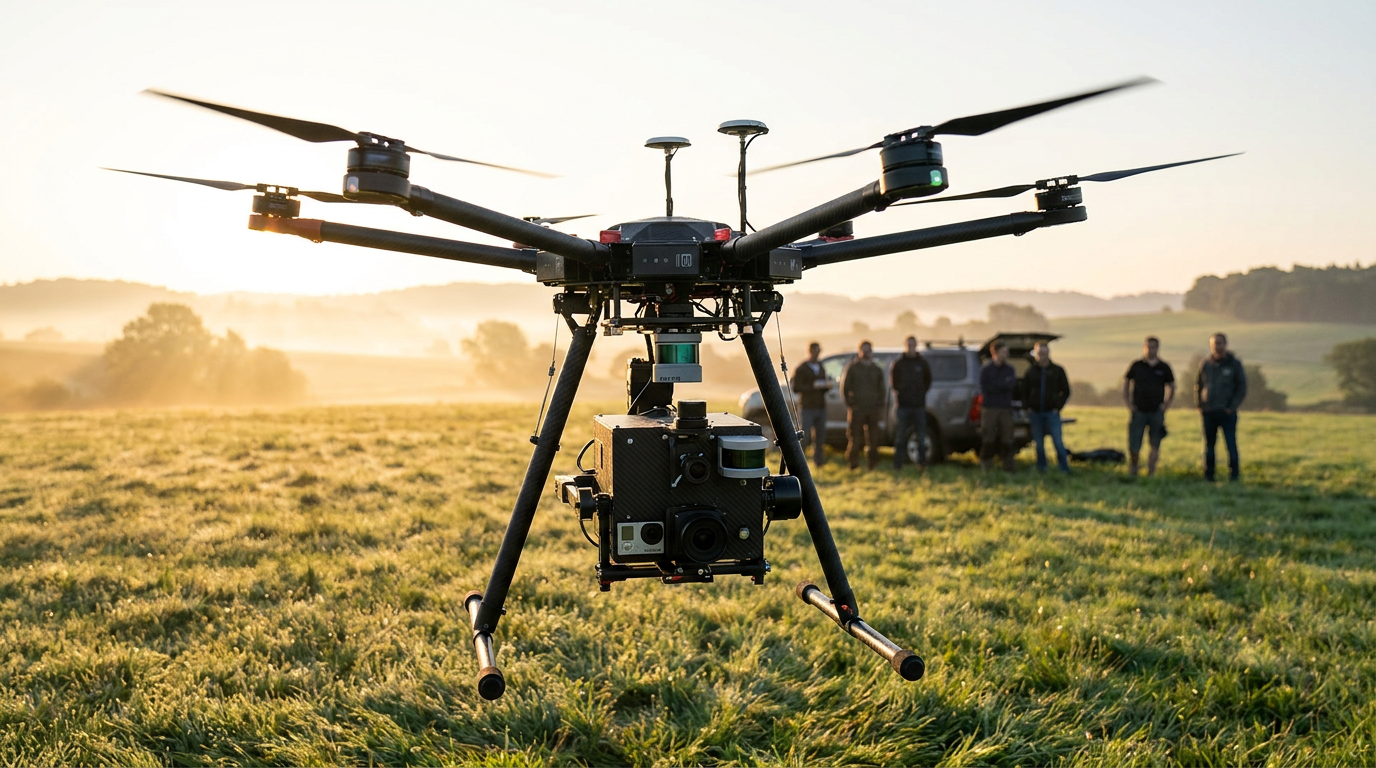
- Defense Technologists
- View mine clearance as a data and engineering problem that can be solved through rapid iteration of sensor hardware and neural networks.
- Humanitarian Deminers
- Emphasize that while AI accelerates mapping, human verification remains the gold standard for ensuring a zone is truly safe for civilians.
- Agricultural Stakeholders
- Focus on the urgent economic necessity of clearing farmland to restore global food supply chains and local livelihoods.
What's not represented
- · Local civilians living in contaminated zones
- · Environmental scientists monitoring soil toxicity from explosives
Why this matters
Unexploded ordnance renders millions of acres of land uninhabitable and economically useless for decades after conflicts end. By automating the most dangerous and time-consuming phases of mine clearance, this technology promises to save thousands of civilian lives and restore vital agricultural supply chains years ahead of schedule.
Key points
- Ukraine is currently the most heavily mined country in the world, with clearance estimated to take centuries using traditional methods.
- Drones equipped with sensor fusion (cameras, radar, magnetometers) are mapping minefields from the air.
- New algorithms successfully filter out the magnetic interference caused by drone motors, allowing for highly accurate low-altitude surveys.
- Artificial intelligence reduces the time needed to analyze drone imagery from several days to a matter of hours.
- AI-generated threat maps are fed to unmanned ground vehicles (UGVs) to safely detonate or excavate the explosives.
- While AI accelerates reconnaissance, human sappers are still required for final verification and clearance.
The global landmine crisis has reached an unprecedented scale, with Ukraine now recognized as the most heavily mined country in the world. An estimated 139,300 to 180,000 square kilometers of territory—an area roughly the size of half of Germany—is currently contaminated with unexploded ordnance. Using traditional manual sweeping methods, clearing this vast expanse of land would take an estimated 757 years and cost upwards of $35 billion.[1][2][9]
In response to this generational challenge, a coalition of defense technologists, humanitarian organizations, and academic researchers is deploying a breakthrough alternative: unmanned aerial vehicles (UAVs) paired with artificial intelligence. The core claim of this evidence pack is that drone-mounted sensor fusion, processed by machine learning algorithms, can accelerate the reconnaissance phase of demining by orders of magnitude while removing humans from the most dangerous preliminary steps.[4][7]
To understand the magnitude of this shift, one must look at the traditional baseline. For decades, mine clearance has remained largely unchanged since the Second World War. Sappers are forced to crawl on their stomachs through dense vegetation, using handheld metal detectors and prodders to locate explosives. This method is painstakingly slow and highly dangerous, particularly with the proliferation of plastic "butterfly" mines that evade basic metal detection.[1][7]
The foundation of the new AI-assisted approach relies on equipping low-flying drones with a suite of advanced sensors. Rather than relying on a single data stream, modern demining drones utilize sensor fusion—combining high-resolution RGB cameras, thermal imaging, LiDAR, and ground-penetrating radar (GPR). This allows the system to detect both the visual anomalies of disturbed earth and the subsurface density changes caused by buried objects.[3][6]

However, detecting the metallic components of landmines from the air requires vector magnetometers, which historically presented a severe engineering hurdle. Drones generate their own powerful magnetic fields through their electric motors and batteries, which easily obscure the faint magnetic signatures of buried landmines. Until recently, this interference made drone-based magnetic surveys highly unreliable.[5][6]
Recent peer-reviewed engineering studies demonstrate that this hardware limitation has been largely solved. Researchers have successfully implemented two-step automated interference removal algorithms—such as the WAIC-UP method originally designed for spaceflight—to filter out drone motor noise. Additionally, physical innovations like pendulum mounts keep the sensor isolated from the drone's chassis.[5]
Field tests confirm the efficacy of these hardware improvements. Studies indicate that when drones fly at an optimal altitude of 0.5 to 1 meter above the ground, at a controlled speed of 2 meters per second, the sensor arrays can reliably detect the magnetic anomalies of both metallic and minimum-metal landmines. This low-altitude precision is critical for generating accurate subsurface maps.[5][6]
Field tests confirm the efficacy of these hardware improvements.
Yet, capturing the data is only half the battle; the most significant bottleneck in aerial reconnaissance has traditionally been data analysis. Previously, human analysts required three to five days to manually review the thousands of high-resolution images captured during a single drone flight. This manual review process was prone to fatigue and human error.[4]

Today, artificial intelligence is eliminating this bottleneck. Organizations like The HALO Trust, backed by global cloud computing infrastructure, are utilizing machine learning models to reduce image analysis time from five days to a matter of hours. The AI algorithms are trained on proprietary datasets containing millions of images of war debris, allowing them to instantly recognize the visual and thermal signatures of various munitions.[1][4]
Commercial deployments are validating these speed claims in the field. The AI platform SpotlightAI recently processed over 931,000 drone images across 10,500 acres of Ukrainian farmland, identifying more than 18,000 explosive remnants. Similarly, specialized defense startups report that a single AI-equipped drone can autonomously survey and map up to 10,000 square meters of contaminated territory in a single day.[2][3]
The output of this AI processing is a highly detailed, color-coded threat map that categorizes zones from safe to high-risk. Once these maps are generated, the data can be fed directly into unmanned ground vehicles (UGVs). Companies like Dropla Tech are producing rugged, expendable ground robots—costing as little as €7,000—that can drive into the identified high-risk zones to detonate anti-personnel mines using flail modules.[1]

International engineering efforts are also contributing to the robotic clearance phase. Japanese robotics firms have developed specialized mine-clearing support robots that use proprietary compressed-air excavation technology. Instead of destroying the mine and the surrounding soil, these remote-controlled robots use high-pressure air to gently blow away the dirt, allowing for safe manual retrieval without collateral damage.[8]
Despite these remarkable breakthroughs, the evidence clearly shows that AI and robotics are not silver bullets. The technology currently excels at identifying surface-level explosives and shallow metallic anomalies, but it struggles significantly with mines that are buried deep underground or obscured by dense forest canopies. The physics of ground-penetrating radar and thermal imaging have hard limits when faced with thick mud or heavy vegetation.[7]
Furthermore, environmental factors like heavy dust, high winds, or uneven terrain can force drones to fly higher than the optimal 1-meter altitude, which rapidly degrades sensor fidelity and increases the rate of false positives. AI models can also be tricked by harmless metallic debris, requiring human operators to sift through the flagged anomalies.[4][5][6]
Consequently, there is a strong consensus among demining experts that AI cannot yet replace human judgment. The technology functions as an advanced triage tool—identifying high-risk zones to prevent sappers from walking blindly into dense minefields. While human verification remains the gold standard for final safety, the integration of AI and drones represents a paradigm shift, offering a realistic pathway to reclaiming millions of acres of land in decades rather than centuries.[1][2][4][8][9]
How we got here
2022
The escalation of the Russia-Ukraine war leads to unprecedented levels of landmine contamination across Eastern Europe.
2023
Early experiments begin mounting commercial drones with cameras to manually spot surface-level anti-tank mines.
2024
Humanitarian groups partner with cloud providers to implement machine learning, reducing image analysis time from days to hours.
2025
Defense startups deploy multi-sensor drones capable of mapping 10,000 square meters a day, integrating AI with ground clearance robots.
2026
Advanced algorithms successfully filter out drone motor interference, allowing highly accurate, low-altitude magnetic surveys of minimum-metal mines.
Viewpoints in depth
Humanitarian Deminers
Safety and human verification remain the ultimate priorities over raw speed.
For organizations that have spent decades clearing minefields by hand, the introduction of AI is welcomed as a powerful triage tool rather than a complete replacement. Humanitarian deminers emphasize that while drones can rapidly identify high-risk zones and prevent sappers from walking blindly into danger, the technology is not infallible. False positives from harmless metallic debris and false negatives from deeply buried munitions mean that human judgment and physical verification remain the gold standard for declaring an area truly safe for civilian return.
Defense Technologists
Mine clearance is viewed as a data problem that can be solved through rapid engineering iteration.
Engineers and defense startups approach the crisis through the lens of sensor fusion and machine learning. By combining ground-penetrating radar, thermal imaging, and vector magnetometers, technologists believe they can map the subsurface environment with unprecedented fidelity. Their focus is on continuously training neural networks with millions of images to improve detection accuracy, and developing low-cost, expendable ground robots that can act on the AI's data without risking human lives.
Agricultural Stakeholders
The rapid clearance of arable land is an urgent economic necessity.
For the agricultural sector, the timeline of traditional demining is economically devastating. With billions of dollars in crops lost to contamination and farmers unable to safely plant or harvest, agricultural companies are actively partnering with AI drone startups. Their primary goal is to quickly identify and clear the most productive farmland, viewing technological acceleration as the only viable path to restoring the region's agricultural output and economic stability.
What we don't know
- How effectively AI models will adapt to entirely new types of experimental munitions deployed in future conflicts.
- Whether the cost of advanced sensor payloads can be reduced enough for widespread adoption in underfunded developing nations.
- The long-term environmental impact of detonating thousands of mines in place using expendable ground robots.
Key terms
- Vector Magnetometer
- A sensor that measures the magnitude and direction of a magnetic field, used to detect the metallic components of buried landmines.
- Ground-Penetrating Radar (GPR)
- A geophysical method that uses radar pulses to image the subsurface, helping detect non-metallic or deeply buried objects.
- Unmanned Ground Vehicle (UGV)
- A remote-controlled or autonomous robotic vehicle that operates on the ground, often used to detonate or excavate explosives safely.
- Sensor Fusion
- The process of combining data from multiple different sensors (like cameras, radar, and magnetometers) to create a more accurate and comprehensive model of an environment.
Frequently asked
How accurate is AI at detecting landmines?
Under optimal conditions, AI computer vision models achieve an 80% to 90% detection rate for surface-level and shallow explosives.
Can drones detect mines buried deep underground?
Deeply buried mines remain a significant challenge. While ground-penetrating radar and magnetometers help, AI currently struggles with munitions hidden deep in the soil or under dense vegetation.
Will robots completely replace human deminers?
No. Experts agree that AI and drones act as advanced triage tools to map high-risk zones, but human sappers and mechanical clearance are still required for final verification and safe removal.
Sources
Source coverage
9 outlets
3 viewpoints surfaced









[1]ForbesDefense Technologists
Inside an old Soviet-era factory, the past and future of warfare sit side by side
Read on Forbes →[2]The Kyiv IndependentAgricultural Stakeholders
AI-powered drone company to assist in demining Ukrainian farmlands
Read on The Kyiv Independent →[3]MilitarnyiDefense Technologists
Ukraine Develops AI Drone for Mine Detection
Read on Militarnyi →[4]The HALO TrustHumanitarian Deminers
Eradicating landmines with drones and AI
Read on The HALO Trust →[5]arXivDefense Technologists
A Drone-mounted Magnetometer System for Automatic Interference Removal and Landmine Detection
Read on arXiv →[6]MDPIDefense Technologists
UAV-Borne Vector Magnetometer System for Landmine Detection
Read on MDPI →[7]The DecoderDefense Technologists
Drones and computer vision could help detect minefields in Ukraine and speed up clearance
Read on The Decoder →[8]Government of JapanAgricultural Stakeholders
Safer Demining through Technology: Japanese Robotics Boosts a Mine-Free World
Read on Government of Japan →[9]Factlen Editorial TeamDefense Technologists
Synthesis by Factlen editorial team
Read on Factlen Editorial Team →
Every angle. Every day.
Get defense security stories with full source coverage and perspective breakdowns delivered to your inbox.