
The Science of Koji: How an Ancient Mold is Revolutionizing Modern Home Cooking
Aspergillus oryzae, the fungus behind soy sauce and miso, is moving from commercial breweries into home kitchens. By breaking down proteins into umami-rich amino acids, koji offers cooks a biological shortcut to deeper flavor and tenderized meats.
By Factlen Editorial Team
- Culinary Innovators
- Chefs and recipe developers focused on using koji to extract novel flavors, tenderize proteins, and bridge cross-cultural cuisines.
- Food Scientists
- Researchers studying the enzymatic mechanisms, postbiotic health benefits, and safety parameters of Aspergillus oryzae.
- Editorial Synthesis
- Analysts bridging the gap between microbiology and practical home cooking applications.
What's not represented
- · Traditional Japanese Fermentation Artisans
Why this matters
Understanding how koji works allows home cooks to harness professional-level flavor extraction and meat tenderization with minimal effort, while also tapping into the gut-health benefits of fermented foods.
Key points
- Koji (Aspergillus oryzae) is an ancient domesticated mold used to make soy sauce, miso, and sake.
- The fungus secretes enzymes that break down starches into sugars and proteins into umami-rich amino acids.
- Home cooks are increasingly using shio koji (salt koji) to rapidly tenderize meats and enhance caramelization.
- Koji is also being utilized in baking, with ingredients like miso replacing salt in desserts.
- Fermentation with koji produces postbiotics and antioxidants that support a healthy gut microbiome.
- The high-salt environment of koji marinades ensures the fermentation process is entirely safe for home kitchens.
For centuries, the secret to the profound, savory depth of East Asian cuisine has been locked inside a microscopic fungus. Today, that same organism is quietly infiltrating Western home kitchens, transforming how everyday cooks approach flavor.
The ingredient driving this culinary shift is Aspergillus oryzae, affectionately known as koji. While it has historically been confined to commercial breweries and traditional fermentation houses to produce soy sauce, miso, and sake, koji is now being celebrated as a versatile, standalone ingredient.[1][2]
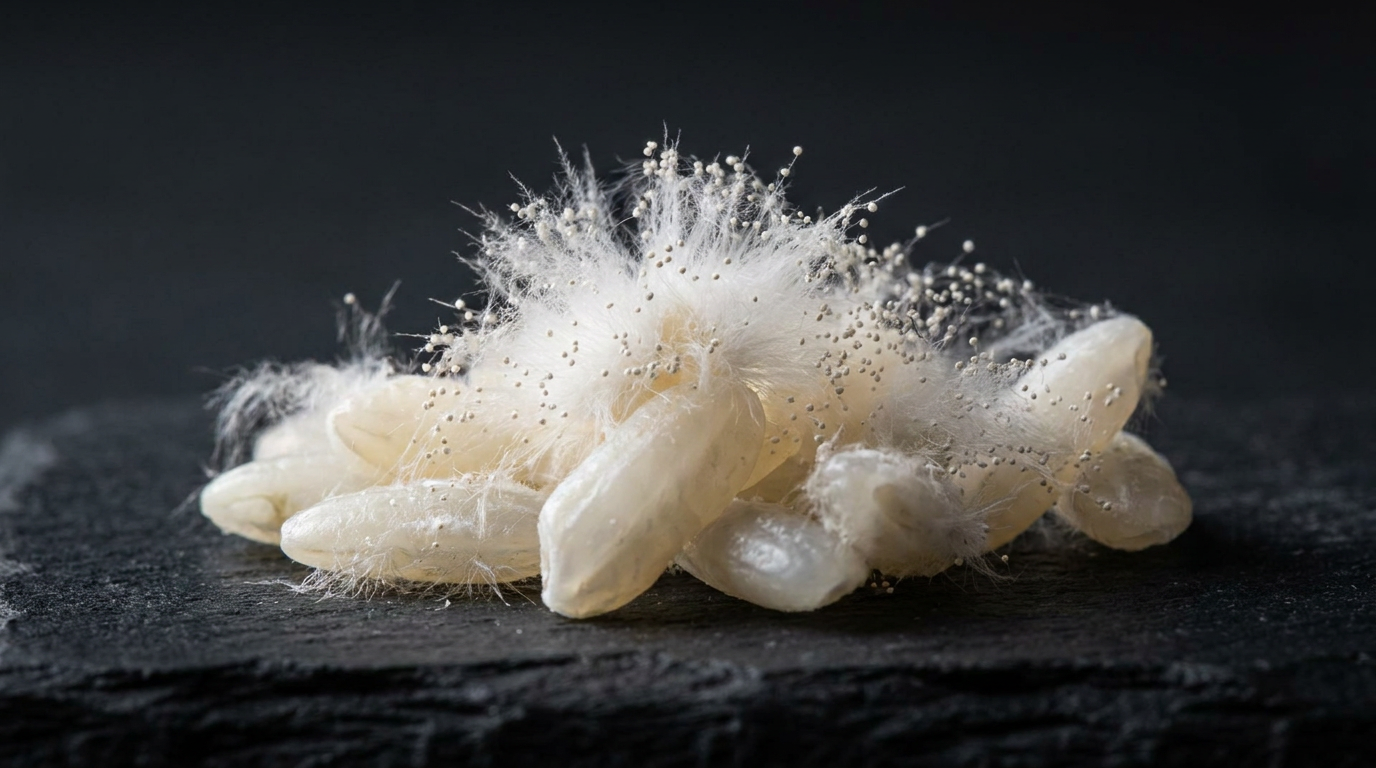
At its core, koji is a domesticated mold that is inoculated onto cooked grains—typically rice or barley—or soybeans. As the fungus grows, it blankets the substrate in a fragrant, fluffy white mycelium, emitting an aroma often compared to sweet roasted nuts or fresh mushrooms.[3][5]
But the true magic of koji lies not in the mold itself, but in the chemical arsenal it deploys. To feed itself, Aspergillus oryzae secretes a massive payload of enzymes into its environment, fundamentally altering the molecular structure of whatever it touches.[3][4]
The two most important enzymes for cooks are amylases and proteases. Amylases act like microscopic scissors, snipping long, complex starch molecules into simple, sweet sugars.[3]
Simultaneously, proteases dismantle tough, coiled proteins into their constituent amino acids. This biological dismantling is the exact mechanism that turns bland soybeans and wheat into intensely flavorful soy sauce over months of fermentation.[3][7]

For the home cook, the most critical byproduct of this protein breakdown is glutamate. Glutamate is the amino acid responsible for umami—the rich, savory "fifth taste" that makes meats taste meatier and broths taste deeper.[5][7]
By harnessing koji, cooks are essentially applying a biological shortcut to flavor extraction. Instead of simmering a stock for 48 hours to coax out umami, they can introduce koji to a raw ingredient and let the enzymes do the heavy lifting in a fraction of the time.[7]
By harnessing koji, cooks are essentially applying a biological shortcut to flavor extraction.
The most accessible gateway into this science is shio koji, a simple mixture of koji-inoculated rice, water, and salt, fermented for about a week. The resulting porridge-like marinade has become a staple for culinary innovators and home cooks alike.[1][2]
When meats like chicken or beef are coated in shio koji, the active proteases immediately begin tenderizing the muscle fibers. A mere 30-minute to 12-hour soak yields poultry that is remarkably juicy and structurally delicate.[1][2]

Furthermore, the sugars produced by the amylase enzymes accelerate the Maillard reaction when the meat hits a hot pan. This means a shio koji-marinated steak will develop a deeply caramelized, mahogany crust much faster than an untreated cut.[7]
Beyond savory applications, recipe developers are discovering koji's potential in baking and desserts. The natural sweetness and subtle cultured tang of the fermented rice can be churned into sorbets or used to create complex syrups.[1]
Even traditional miso, a koji byproduct, is being repurposed as a salt substitute in sweet recipes. Swapping standard salt for white miso in chocolate chip cookies introduces a nuanced, salted-caramel depth that relies entirely on koji's enzymatic history.[1]

The surge in koji's popularity is also intersecting with the growing field of functional nutrition. Food scientists are increasingly studying Aspergillus oryzae fermentation products for their postbiotic properties.[4]
During fermentation, the mold generates bioactive peptides, antioxidants, and oligosaccharides. These compounds have been shown to support gut health by selectively promoting the growth of beneficial bacteria like Bifidobacterium in the human microbiome.[4][5]
Naturally, the idea of intentionally cultivating mold in a home kitchen raises safety questions for the uninitiated. However, Aspergillus oryzae has been domesticated for over a millennium and is recognized as entirely safe and non-pathogenic.[5][6]

When making products like shio koji or miso, the environment is carefully controlled through salinity. A high salt concentration, combined with a natural drop in pH as lactic acid bacteria join the fermentation, creates an inhospitable environment for harmful pathogens while allowing the koji enzymes to thrive.[6]
As this ancient biotechnology continues to spread, it is crossing cultural boundaries. Fine-dining chefs in Mexico are now using koji to ferment native ingredients like huitlacoche, creating cross-cultural umami pastes that defy traditional categorization.[2]
Ultimately, the democratization of koji represents a shift in how we understand cooking. It moves the culinary arts away from mere applied heat, inviting home cooks to collaborate directly with microbiology to unlock the hidden potential of their ingredients.[7]
How we got here
700s AD
Early historical records in Japan mention the use of koji for fermenting foods like miso and amazake.
1894
Chemist Jokichi Takamine commercializes enzymes derived from Aspergillus oryzae as a digestive aid.
2010s
High-end Western restaurants, notably Noma in Copenhagen, begin experimenting with koji to ferment non-traditional ingredients.
2024–2026
Shio koji and koji-based condiments become mainstream staples in Western home cooking and consumer packaged goods.
Viewpoints in depth
Culinary Innovators
Chefs view koji as a biological tool that democratizes flavor.
By applying koji to non-traditional ingredients—like Mexican huitlacoche or leftover bread—innovative chefs are creating entirely new categories of umami-rich seasonings. They argue that this cross-cultural fermentation not only expands the global palate but also offers a powerful method for upcycling food waste into high-value culinary products.
Food Scientists
Microbiologists focus on the precise enzymatic pathways and health benefits of Aspergillus oryzae.
Researchers emphasize koji's potential not just for flavor extraction, but as a biological 'cell factory.' They point to the valuable postbiotics, bioactive peptides, and antioxidants generated during fermentation, noting that these compounds actively support the human gut microbiome and offer functional nutrition benefits beyond basic sustenance.
Home Cooking Advocates
Everyday recipe developers value koji for its practical utility and ease of use.
For home cooks, the appeal of koji lies in its ability to deliver professional-level results with minimal effort. Advocates highlight how a simple shio koji marinade can tenderize a tough cut of meat in 30 minutes or add instant depth to a weeknight stir-fry, making complex, slow-cooked flavors accessible on a tight schedule.
What we don't know
- The full extent to which different strains of Aspergillus oryzae can be optimized for specific postbiotic health outcomes.
- How the widespread commercialization of koji in Western consumer packaged goods will impact traditional artisanal producers in East Asia.
Key terms
- Aspergillus oryzae
- The scientific name for the domesticated fungus used to ferment soybeans and grains in East Asian cuisine.
- Umami
- The savory, rich 'fifth taste' primarily derived from the amino acid glutamate.
- Shio Koji
- A traditional Japanese condiment and marinade made by fermenting koji rice with water and salt.
- Amylase
- An enzyme secreted by koji that breaks down complex starches into simple, sweet sugars.
- Protease
- An enzyme that breaks down tough proteins into flavorful amino acids, naturally tenderizing meats.
- Postbiotics
- Beneficial bioactive compounds produced by microorganisms during the fermentation process.
Frequently asked
What is shio koji?
Shio koji is a versatile, porridge-like marinade made by fermenting koji-inoculated rice with water and salt. It is widely used to tenderize meats and add instant umami to dishes.
Is it safe to eat mold?
Yes. Aspergillus oryzae has been domesticated for over a thousand years and is entirely safe and non-pathogenic for culinary use.
Can I make my own koji at home?
While ambitious cooks can buy spores to inoculate their own grains, most home cooks start by purchasing pre-made dried or fresh koji rice to easily mix into marinades.
Does cooking destroy the health benefits?
Cooking deactivates the live enzymes, but the postbiotic compounds, antioxidants, and pre-digested nutrients created during fermentation remain highly beneficial to the gut.
Sources
Source coverage
7 outlets
3 viewpoints surfaced







[1]Food NetworkCulinary Innovators
What Is Koji? How to Cook with the Fermented Ingredient at Home
Read on Food Network →[2]Fine Dining LoversCulinary Innovators
Trend to Table: The Koji Craze That's Quietly Reshaping Fine Dining
Read on Fine Dining Lovers →[3]National Library of MedicineFood Scientists
Koji Molds for Japanese Soy Sauce Brewing: Characteristics and Key Enzymes
Read on National Library of Medicine →[4]Frontiers in NutritionFood Scientists
Postbiotic potential of Aspergillus oryzae fermentation products
Read on Frontiers in Nutrition →[5]News-MedicalFood Scientists
Koji Fungus: The Science Behind Aspergillus oryzae
Read on News-Medical →[6]BC Centre for Disease ControlFood Scientists
Fermented Food Guidance: Koji & Miso
Read on BC Centre for Disease Control →[7]Factlen Editorial TeamEditorial Synthesis
Synthesis by Factlen editorial team
Read on Factlen Editorial Team →
Every angle. Every day.
Get food drink stories with full source coverage and perspective breakdowns delivered to your inbox.