
ARM Windows vs. Apple Silicon: The 2026 Laptop Architecture Comparison
Qualcomm's Snapdragon X Elite has finally brought MacBook-level battery life to Windows, but Apple's M-series chips still hold the crown for sustained performance. Here is how the two ARM platforms compare in 2026.
By Factlen Editorial Team
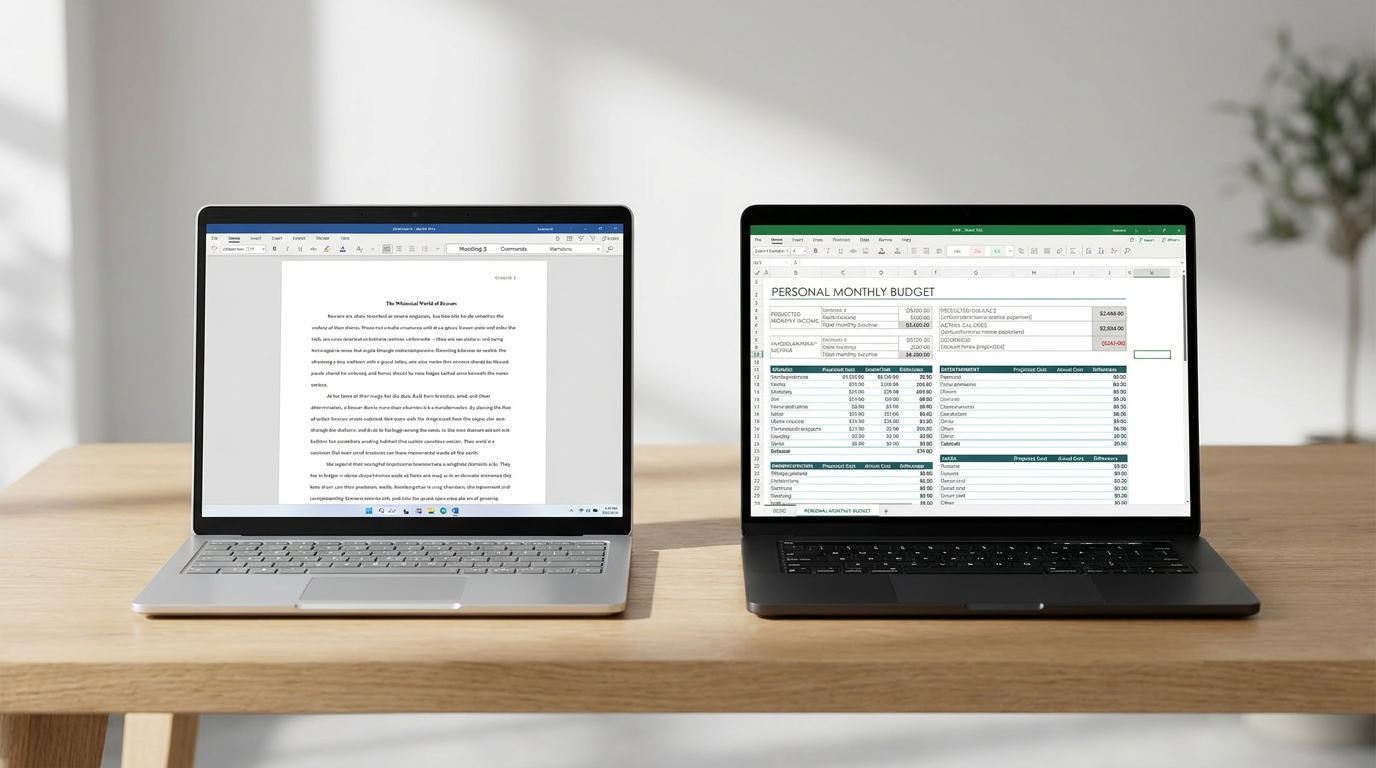
- Windows ARM Adopters
- Users who value unprecedented battery life for standard office work while remaining in the flexible Windows ecosystem.
- Apple Ecosystem Loyalists
- Users who prioritize the seamless integration of hardware and software, and demand sustained performance for creative tasks.
- Performance Realists
- Reviewers focused on the practical limitations of emulation, heavy workload battery drain, and gaming compatibility.
What's not represented
- · Budget-conscious consumers who rely on sub-$500 laptops, a segment currently unserved by premium ARM chips.
- · Linux developers who require open bootloaders and native driver support.
Why this matters
For the first time in PC history, Windows users do not have to sacrifice battery life for performance. Understanding the trade-offs between these two ARM platforms is essential for anyone buying a laptop for work, school, or creative projects.
Key points
- Snapdragon X Elite chips bring unprecedented 20-plus hour battery life to Windows laptops for light productivity.
- Apple's M3 and M4 chips maintain their efficiency advantage under heavy creative workloads and multitasking.
- Windows ARM devices rely on the Prism emulator for legacy apps, which can cause performance drops in gaming and niche software.
- Apple's tight hardware-software integration provides a more reliable, friction-free experience for creative professionals.
- The choice between platforms now depends entirely on specific software needs rather than raw hardware capability.
The era of the x86 monopoly in portable computing is effectively over. For decades, buying a Windows laptop meant accepting a compromise between performance and battery life, while Apple users enjoyed the silent, long-lasting efficiency of M-series chips. In 2026, Qualcomm’s Snapdragon X Elite has matured into a genuine rival, bringing the ARM architecture’s power-sipping benefits to the Windows ecosystem. This shift forces buyers into a new kind of decision: choosing between two highly capable ARM platforms rather than just picking an operating system.[3][4]
The architectural shift is profound. Both platforms utilize Reduced Instruction Set Computing (RISC), which allows for tighter integration of the CPU, GPU, and memory on a single chip. This System-on-a-Chip approach drastically reduces power waste compared to traditional Intel or AMD designs. However, the implementation differs wildly. Apple controls the entire stack from the silicon to the macOS interface, while Qualcomm must rely on Microsoft’s Windows 11 and a sprawling network of third-party manufacturers like HP, Dell, and Lenovo to deliver the final product.[4][5]
For the Snapdragon X Elite, the case for adoption centers entirely on unprecedented Windows endurance and built-in artificial intelligence. Users who live in web browsers, office suites, and video calls can finally leave their chargers at home. The platform also boasts a dedicated Neural Processing Unit capable of 45 trillion operations per second, powering Microsoft’s Copilot+ features locally without pinging a cloud server. This makes it an incredibly compelling option for mobile professionals who need multi-day reliability without sacrificing the familiar Windows environment.[3][5]
The case against the Snapdragon platform revolves around emulation friction and inconsistent power draw. Because Windows was built for x86 processors, legacy applications must run through Microsoft’s Prism translation layer. While basic apps run smoothly, niche professional software, heavy 3D modeling tools, and anti-cheat software for gaming often stutter or fail to launch entirely. Furthermore, the chip’s efficiency is highly conditional; pushing the system with heavy multitasking or maximum screen brightness can cause the battery to drain rapidly, stripping away its primary advantage.[3][6]

The evidence for these trade-offs is starkly quantified in recent testing. In standardized video rundown tests, the Snapdragon-powered HP OmniBook 5 14 achieved a staggering 32 hours and 31 minutes of continuous use, setting a new benchmark for consumer laptops. However, real-world stress tests reveal that when connected to an external display or pushed with high refresh rates, that same Snapdragon battery life can plummet to just four to six hours. The chip is a marathon runner on flat terrain, but it struggles significantly on steep inclines.[1][6]
On the other side of the aisle, the case for Apple’s M3 and M4 silicon is built on absolute coherence and sustained performance. Apple’s transition to ARM is now years in the rearview mirror, meaning nearly every major application has been natively rewritten for macOS. The M-series chips do not just sip power during light tasks; they maintain their efficiency and thermal composure even when rendering 4K video or compiling massive codebases. The hardware and software are tuned to work together flawlessly from the first boot.[2][4]
On the other side of the aisle, the case for Apple’s M3 and M4 silicon is built on absolute coherence and sustained performance.
The case against Apple Silicon is rooted in its rigid walled garden and premium pricing structure. Buyers are locked into Apple’s specific hardware configurations, with steep upgrade costs for additional RAM or storage. The gaming ecosystem on macOS remains a fraction of what is available on Windows, and users who require specific enterprise software or legacy 32-bit applications are simply out of luck. Apple’s ecosystem is a highly optimized environment that demands users adapt to its rules rather than the other way around.[4][5]
The evidence supporting Apple’s dominance in sustained workloads remains robust. Independent testing of the M4 MacBook Pro shows it consistently delivering 15 to 20 hours of battery life, but crucially, that number does not collapse under pressure. In single-core performance benchmarks, the M3 and M4 chips maintain a roughly ten to eleven percent advantage over the Snapdragon X Elite. While Qualcomm closes the gap in multi-threaded tasks, Apple’s ability to deliver peak performance without spinning up a fan or draining the battery remains the industry gold standard.[1][2][5]

The battle ultimately hinges on how well each platform handles the software that was not built for it. Apple’s Rosetta 2 translation layer set a precedent with sub-five percent performance overhead, making the transition nearly invisible to users. Microsoft’s Prism emulator has made significant strides, but it still cannot bridge the gap for legacy 16-bit applications or hardware peripherals that require specific drivers. For enterprise IT departments, this compatibility gap is the primary hurdle preventing a wholesale migration to ARM-based Windows fleets.[3]
The Snapdragon X Elite fits well when the user prioritizes extreme battery life for general productivity, relies heavily on web-based applications, and prefers the flexibility of the Windows operating system. It is the ideal machine for writers, students, and traveling executives who need a device that wakes instantly and lasts through a transatlantic flight and a day of meetings without needing a wall outlet. It is a triumph for the mainstream user who values endurance over raw, sustained compute power.[1][3]
Conversely, the Snapdragon platform does not fit when the user relies on legacy x86 software, plays competitive PC games, or requires sustained peak performance for creative workflows. Video editors, 3D animators, and hardcore gamers will find the emulation layer frustrating and the battery life under load disappointing. For these users, the promise of ARM efficiency is overshadowed by the practical realities of software incompatibility. If a workflow demands absolute graphical horsepower or relies on obscure plugins that have not been updated in years, the Windows ARM experience will feel more like a beta test than a finished product.[6]

Apple Silicon fits well when the user demands a seamless, zero-friction experience, relies on creative applications like Final Cut Pro or Logic, and values sustained performance off the charger. It is the definitive choice for creative professionals, developers working within the Apple ecosystem, and anyone who wants a laptop that simply works exactly as advertised, every single time. The premium price tag buys a level of reliability that the fragmented Windows market still struggles to match. Because Apple designs both the hardware and the software, the system never wastes energy trying to translate code or searching for misaligned drivers.[4]
Finally, Apple Silicon does not fit when the user is on a strict budget, requires deep hardware customization, or needs to run specialized Windows-only enterprise software. It is also a poor fit for PC gamers who want access to the vast library of titles available on Steam or Xbox Game Pass. In 2026, the choice between these two platforms is no longer about which architecture is objectively better, but rather which set of compromises best aligns with how the user actually works and plays.[3][4]
How we got here
Nov 2020
Apple announces the M1 chip, beginning the industry's transition away from Intel processors.
Oct 2023
Qualcomm announces the Snapdragon X Elite, promising to rival Apple Silicon in efficiency.
May 2024
Microsoft launches the Copilot+ PC initiative, heavily featuring Snapdragon chips for local AI tasks.
Late 2024
Apple releases the M4 chip family, extending its lead in performance-per-watt.
Mid 2026
Second-generation ARM Windows laptops hit the market, solidifying the architecture shift across the industry.
Viewpoints in depth
Windows ARM Adopters
A focus on the liberation from power outlets for standard office work.
For users who spend their days in web browsers, spreadsheets, and video calls, the architectural purity of the platform matters less than the practical result: leaving the charger at home. This camp argues that the Snapdragon X Elite finally delivers the 'always-on, always-connected' promise that Windows has chased for a decade. The inclusion of a 45 TOPS NPU also future-proofs these devices for local AI workloads, making them the ultimate productivity machines for the mainstream user.
Apple Ecosystem Loyalists
A focus on the holistic integration of hardware and software.
This perspective emphasizes that a laptop is more than just a processor. Apple's advantage lies in its absolute control over macOS, allowing the operating system to route tasks to the M-series chips with zero friction. Loyalists point out that while Windows ARM devices look great on a spec sheet, they still suffer from the disjointed nature of third-party hardware running an OS that must support millions of legacy configurations. For creatives, the reliability of a MacBook Pro remains unmatched.
Performance Realists
A focus on the drop-off under heavy load and emulation issues.
Hardware reviewers and power users highlight the 'Jekyll and Hyde' nature of the first wave of Windows ARM devices. While light-use battery life is phenomenal, this camp points out that pushing the GPU or relying on the Prism emulator for heavy x86 applications causes efficiency to plummet. They argue that until developers natively recompile their software for Windows ARM—especially in the gaming and enterprise sectors—the platform remains a compromise for anyone outside of basic office workflows.
What we don't know
- Whether major game developers will begin compiling native ARM Windows versions of their titles, or rely entirely on emulation.
- How Intel's upcoming 'Firefly' architecture will compete with these established ARM platforms in real-world efficiency.
- If Microsoft can successfully close the remaining compatibility gaps in its Prism translation layer for niche enterprise software.
Key terms
- ARM Architecture
- A processor design that uses simplified instructions, allowing for higher energy efficiency compared to traditional chips.
- x86 Architecture
- The traditional processor design used by Intel and AMD, known for high performance but historically higher power consumption.
- Emulation Layer
- Software that translates instructions meant for one architecture (like x86) so they can run on another (like ARM).
- NPU (Neural Processing Unit)
- A specialized chip designed specifically to accelerate artificial intelligence tasks locally on the device.
- System-on-a-Chip (SoC)
- An integrated circuit that combines all major computer components, including the CPU, GPU, and memory, onto a single chip.
Frequently asked
Can I play PC games on a Snapdragon X Elite laptop?
While light gaming is possible, heavy 3D games and titles with anti-cheat software often struggle or fail to run entirely due to x86 emulation issues.
Does the Snapdragon battery really last over 30 hours?
In controlled video playback tests at low brightness, yes. However, real-world productivity yields 15 to 20 hours, and heavy workloads can drain it in under six hours.
Which platform is better for video editing?
Apple Silicon (M3/M4) remains the superior choice for video editing due to native software optimization and sustained performance without thermal throttling.
Will my old Windows apps work on an ARM laptop?
Most standard 64-bit applications will run smoothly through Microsoft's Prism emulator, but older 16-bit apps and software requiring custom hardware drivers will not work.
Sources
Source coverage
6 outlets
3 viewpoints surfaced






[1]MashableWindows ARM Adopters
Which laptop lasts the longest in 2026?
Read on Mashable →[2]Digital DigestPerformance Realists
What does 'All-day battery' mean in 2026
Read on Digital Digest →[3]GrowthHQWindows ARM Adopters
Windows 11 ARM vs. Apple M-Series: Comparative Analysis for Decision-Makers
Read on GrowthHQ →[4]WindowsForumApple Ecosystem Loyalists
Why the architecture matters: Apple's MacBook Neo and the Windows response
Read on WindowsForum →[5]CPU-MonkeyApple Ecosystem Loyalists
Qualcomm Snapdragon X Elite vs Apple M3 Pro
Read on CPU-Monkey →[6]OgaBassey TechPerformance Realists
Snapdragon X Battery Life: Great, Until You Use It Differently
Read on OgaBassey Tech →
Every angle. Every day.
Get meta stories with full source coverage and perspective breakdowns delivered to your inbox.