
US and Iran Reach Comprehensive Agreement as Strait of Hormuz Set to Reopen
The United States and Iran have finalized a peace agreement during the G7 summit, ending months of hostilities and paving the way for the full reopening of the Strait of Hormuz. The landmark deal includes new nuclear inspections and the release of frozen assets, though Israel's exclusion from the final negotiations raises questions about regional stability.
By Factlen Editorial Team
- U.S. and Gulf Diplomats
- Focusing on the immediate economic and security benefits of ending the war and reopening the strait.
- Iranian Negotiators
- Prioritizing economic recovery, sanctions relief, and regional leverage.
- Israeli Security Establishment
- Viewing the deal as a premature concession that leaves Iran's nuclear infrastructure intact.
- Energy & Geopolitical Analysts
- Focusing on the macroeconomic impact of the Strait of Hormuz and historical context of the conflict.
What's not represented
- · European Union Energy Importers
- · Iranian Civilians Affected by the War
Why this matters
The reopening of the Strait of Hormuz restores the flow of 21 million barrels of oil per day, immediately stabilizing global energy prices and averting a catastrophic economic shock. Furthermore, the diplomatic breakthrough ends a direct military conflict that had threatened to engulf the entire Middle East.
Key points
- The U.S. and Iran have finalized a Memorandum of Understanding to end hostilities.
- The Strait of Hormuz, a critical oil chokepoint, will fully reopen by Friday.
- Iran agreed to strong nuclear inspections and a commitment not to obtain nuclear weapons.
- The U.S. will release frozen Iranian assets and assist with post-war reconstruction.
- Israel was excluded from the final negotiations, raising concerns about its compliance with the deal.
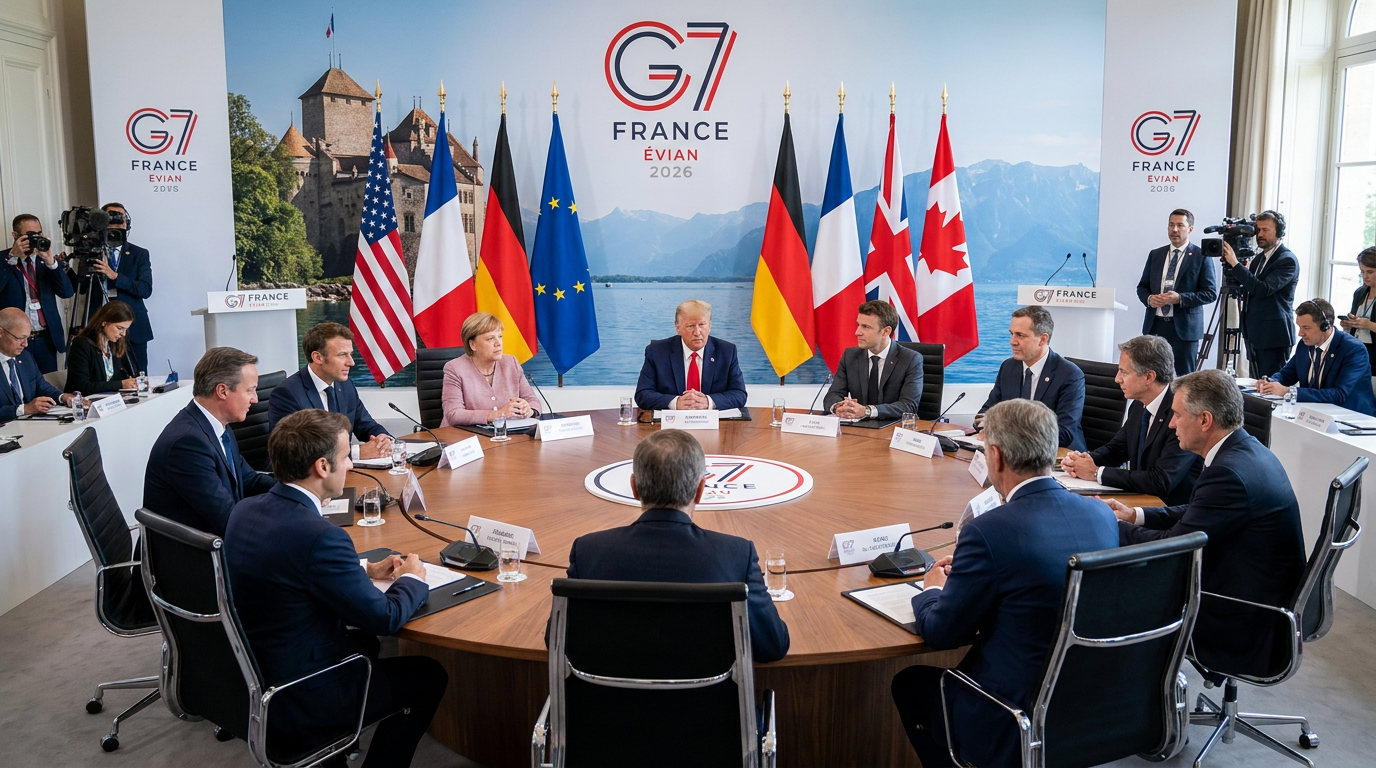
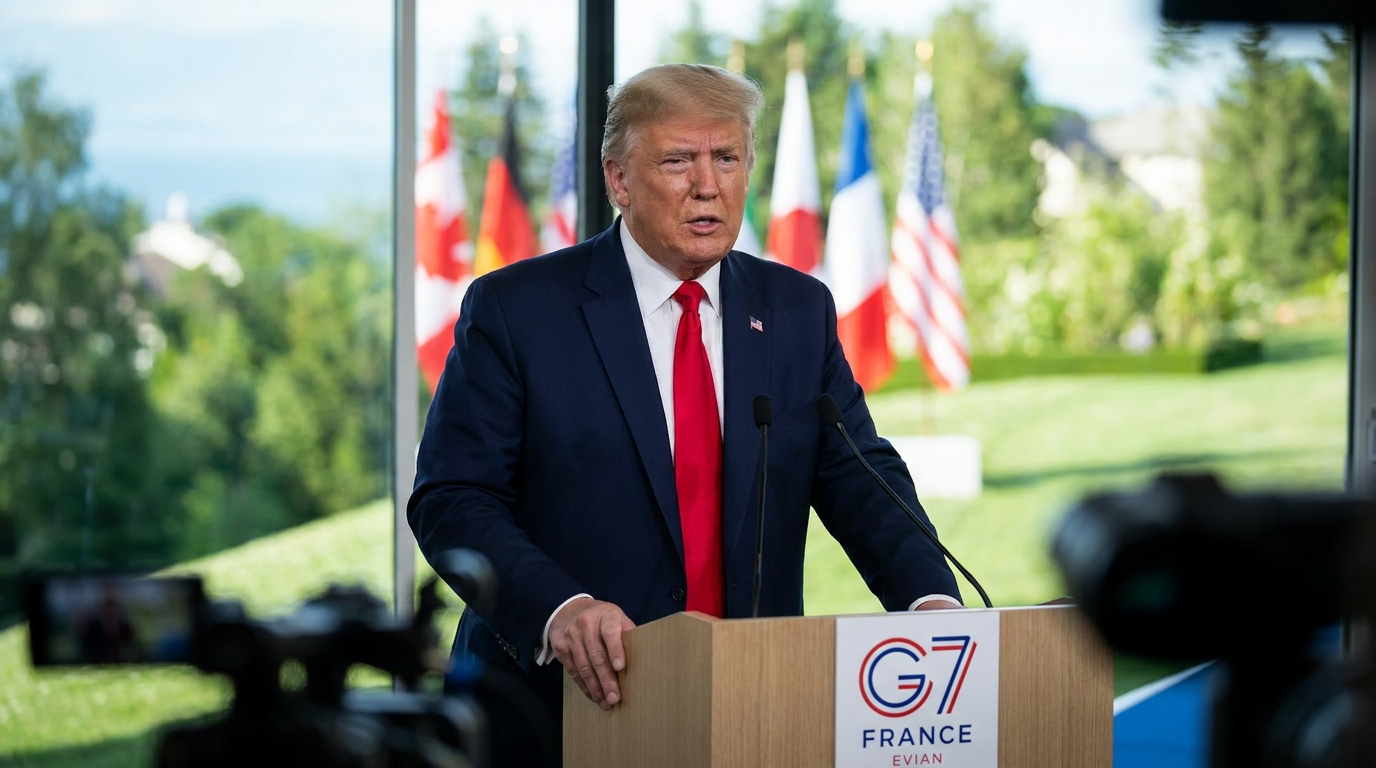
The U.S. administration announced at the G7 summit in France that a comprehensive peace agreement between the United States and Iran is "all signed," bringing a formal end to the hostilities that erupted earlier this year. The most immediate and globally significant consequence of the diplomatic breakthrough is the full reopening of the Strait of Hormuz, which the administration stated would be completely operational and safe for commercial transit by Friday.[1]
The announcement marks a sudden and dramatic de-escalation following the devastating 2026 war, which began in late February with joint U.S. and Israeli military strikes against Iranian nuclear and military sites. The conflict, codenamed Operation Epic Fury by the Pentagon, had severely disrupted global energy markets, forced the rerouting of international shipping, and threatened to engulf the broader Middle East in a protracted, multi-front regional war.[5][7]
According to the finalized Memorandum of Understanding, the core of the agreement centers on permanently capping Iran's nuclear ambitions. The U.S. administration stated that Iran has explicitly committed to not obtaining nuclear weapons and will be subject to a new regime of "strong" international inspections. In exchange for these verifiable guarantees, the United States has reportedly shown significant flexibility on sanctions relief to incentivize Tehran's long-term compliance.[1][4]
Iranian Foreign Ministry officials have publicly outlined additional provisions, noting that the deal includes the immediate release of Iran's frozen financial assets and concrete U.S. commitments toward reconstructing civilian infrastructure damaged during the three-and-a-half-month war. Furthermore, Tehran has insisted that ending the parallel conflict in Lebanon is an "inseparable" component of the finalized agreement, effectively linking the bilateral peace to broader regional stability and the cessation of proxy hostilities.[4]

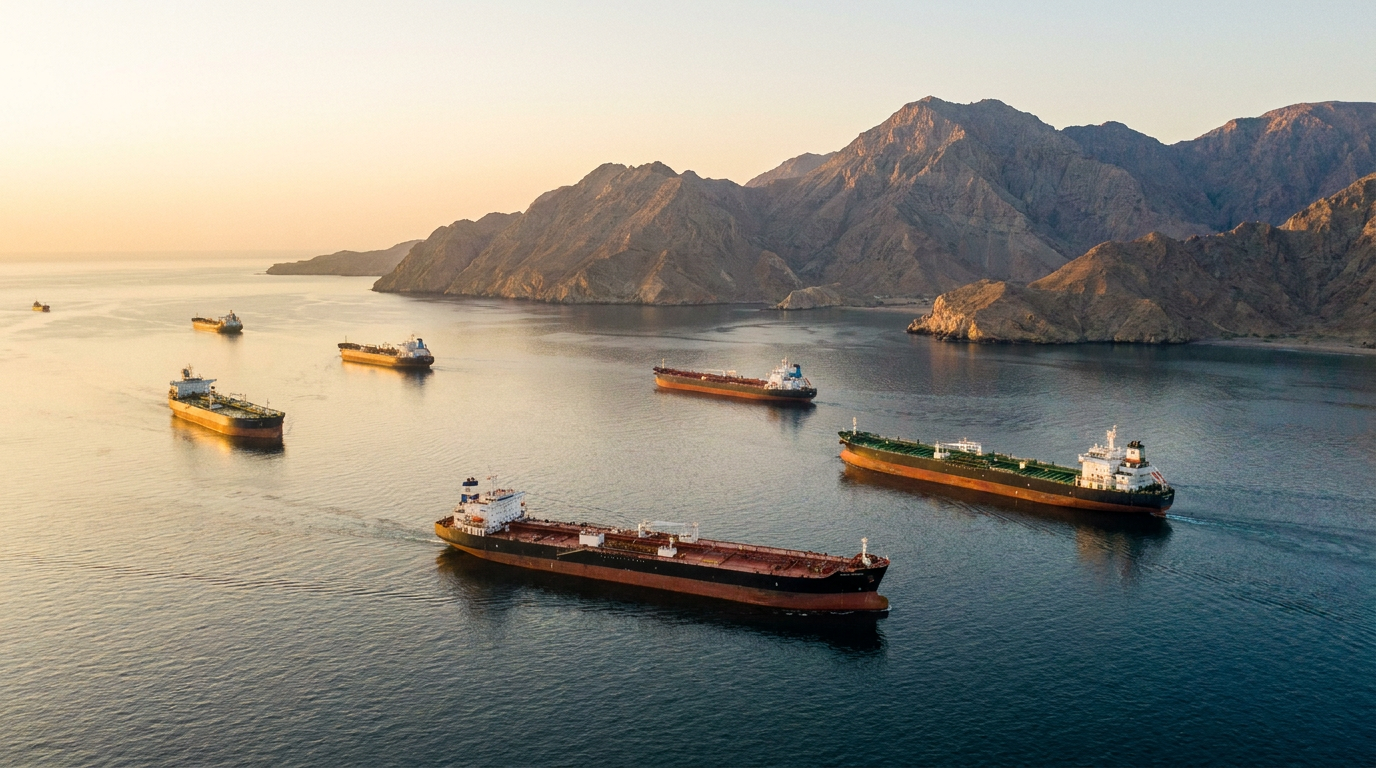
The most immediate global impact of the deal is the unblocking of the Strait of Hormuz. The 21-mile-wide waterway between Iran and Oman serves as the world's most critical oil transit chokepoint, connecting Middle Eastern producers to global markets. During the height of the military conflict, commercial shipping traffic through the strait plummeted by 70 percent as vessels avoided the crossfire and maritime insurers pulled coverage for the region.[5][6]
The most immediate global impact of the deal is the unblocking of the Strait of Hormuz.
In peacetime, the strait facilitates the transit of approximately 21 million barrels of oil per day, representing roughly one-fifth of total global petroleum liquids consumption. Its effective closure during the war had sent immediate shockwaves through global commodities markets, driving up inflation and making its rapid reopening a vital, overriding priority for energy-importing nations and regional oil producers alike.[6]
Gulf allies have responded to the diplomatic breakthrough with profound relief and public support. During a bilateral meeting at the summit, Qatar's Emir hailed the agreement and touted forthcoming U.S. investments in the region that will follow the peace deal. For nations like Qatar and the United Arab Emirates, unimpeded maritime access to the strait is an existential economic necessity that supersedes almost all other regional geopolitical disputes.[2][6]

However, the rapid finalization of the U.S.-Iran memorandum has exposed significant fractures within the original wartime coalition. Israel, which launched the initial February strikes alongside the United States with the explicit, stated goal of permanently dismantling Iran's nuclear threshold status, was notably sidelined during the final rounds of negotiations that led to the current breakthrough.[3][7]
The exclusion of Israeli negotiators from the final talks raises critical questions about the durability of the peace framework. Israeli defense officials have historically maintained that any agreement leaving Iran with residual uranium enrichment capabilities poses an unacceptable national security threat. It remains entirely unclear whether Jerusalem will abide by the terms brokered in France or if it will continue unilateral military and covert operations against Iranian facilities.[3]
The technical specifics of the new nuclear inspection regime also remain undefined, leaving a major gap in the public understanding of the deal. While the U.S. administration has promised robust and intrusive oversight, nonproliferation experts warn that implementing a comprehensive verification system will require complex, protracted negotiations with the International Atomic Energy Agency to establish baseline access to previously targeted military and research sites.[4]

The previous nuclear framework, the 2015 Joint Comprehensive Plan of Action, took two grueling years to negotiate before the U.S. unilaterally withdrew in 2018. Rebuilding a similar, highly technical verification apparatus in the immediate aftermath of a direct military conflict presents an unprecedented diplomatic challenge, particularly because institutional trust between Tehran and Western nuclear monitors remains practically nonexistent.[4][7]
Despite the looming technical hurdles and deep-seated regional anxieties, the agreement represents a historic and sudden de-escalation. By pulling the Middle East back from the brink of a wider regional war and securing the world's most vital energy artery, the finalized deal fundamentally reshapes the geopolitical landscape heading into the second half of the year, prioritizing economic stabilization over continued military confrontation.[1][4]
How we got here
Feb 28, 2026
The U.S. and Israel launch joint military strikes against Iranian nuclear and military sites, beginning the war.
March 2026
Commercial shipping through the Strait of Hormuz plummets by 70 percent amid the crossfire.
June 14, 2026
The United States and Iran announce a mutual halt to hostilities.
June 15, 2026
Negotiators finalize a Memorandum of Understanding outlining the terms of the peace agreement.
June 16, 2026
The U.S. administration announces the deal is 'all signed' at the G7 summit in France.
Viewpoints in depth
U.S. and Gulf Diplomats
Focusing on the immediate economic and security benefits of ending the war.
For the U.S. administration and Gulf allies like Qatar, the agreement is a massive diplomatic victory that averts a prolonged regional war. Their primary objective was restoring the flow of global energy through the Strait of Hormuz, which is an existential economic necessity for Gulf producers. By securing an Iranian commitment to halt nuclear weapons development in exchange for sanctions relief, this camp believes they have achieved a pragmatic stabilization of the Middle East.
Iranian Leadership
Prioritizing economic recovery and regional leverage.
Tehran views the finalized Memorandum of Understanding as a necessary pivot toward economic survival following months of devastating military strikes. Iranian negotiators successfully leveraged their control over the Strait of Hormuz to extract concessions, including the release of frozen assets and commitments for reconstruction aid. Furthermore, by insisting that the ceasefire extends to Lebanon, Iran aims to preserve its broader regional influence while avoiding the total collapse of its domestic infrastructure.
Israeli Security Establishment
Viewing the deal as a premature concession that leaves Iran's nuclear infrastructure intact.
Having launched the initial February strikes with the goal of permanently dismantling Iran's nuclear threshold status, Israeli officials are deeply skeptical of the new agreement. Because Israel was sidelined during the final negotiations, defense leaders fear the U.S. has accepted a deal that relies on easily evaded inspections while leaving Iran with residual enrichment capabilities. This camp argues that lifting sanctions will only allow Tehran to rebuild its military apparatus for a future confrontation.
Energy & Geopolitical Analysts
Focusing on the macroeconomic impact of the Strait of Hormuz and historical context of the conflict.
For macroeconomic analysts and energy researchers, the primary focus is the stabilization of the Strait of Hormuz. Because the strait handles 20 percent of the world's petroleum liquids, its closure during the 2026 war represented an unprecedented disruption to global supply chains. This camp emphasizes that regardless of the political durability of the nuclear agreement, the immediate resumption of commercial shipping is a critical victory for the global economy.
What we don't know
- The exact technical mechanisms and enforcement protocols for the new nuclear inspections.
- Whether Israel will formally accept the terms of the agreement or continue covert operations against Iran.
- The specific timeline for the release of Iran's frozen assets and the lifting of sanctions.
Key terms
- Strait of Hormuz
- A narrow waterway between Iran and Oman that serves as the only sea passage from the Persian Gulf to the open ocean.
- Memorandum of Understanding (MoU)
- A formal agreement between two or more parties outlining the terms and details of an understanding, often preceding a finalized treaty.
- Nuclear Threshold Status
- The point at which a country possesses the technology, materials, and infrastructure necessary to quickly build a nuclear weapon if it chooses to do so.
Frequently asked
Why was the Strait of Hormuz closed?
The strait became a primary conflict zone during the 2026 U.S.-Iran war, with military strikes and threats causing commercial shipping traffic to drop by 70 percent.
What did Iran agree to in the deal?
Iran committed to not obtaining nuclear weapons and agreed to submit to a new, robust regime of international nuclear inspections.
What does the U.S. give up in the agreement?
The United States agreed to release Iran's frozen assets, assist with reconstructing war-damaged infrastructure, and show flexibility on sanctions.
How does Israel fit into the agreement?
Israel was sidelined during the final negotiations, and it remains unclear if the Israeli government will accept the terms, as they originally sought the total destruction of Iran's nuclear program.
Sources
Source coverage
7 outlets
4 viewpoints surfaced







[1]The GuardianU.S. and Gulf Diplomats
First Thing: Trump promises 'great things' for Middle East and claims Iran deal 'all signed'
Read on The Guardian →[2]Al JazeeraU.S. and Gulf Diplomats
Qatar’s Emir hails Iran deal and touts US investments in Trump meeting
Read on Al Jazeera →[3]NPRIsraeli Security Establishment
How Israel could complicate Iran peace negotiations
Read on NPR →[4]XinhuaIranian Negotiators
Explainer: U.S., Iran reach deal to end war -- what comes next?
Read on Xinhua →[5]Council on Foreign RelationsEnergy & Geopolitical Analysts
The Strait of Hormuz: A U.S.-Iran Maritime Flash Point
Read on Council on Foreign Relations →[6]U.S. Energy Information AdministrationEnergy & Geopolitical Analysts
The Strait of Hormuz is the world's most important oil transit chokepoint
Read on U.S. Energy Information Administration →[7]WikipediaEnergy & Geopolitical Analysts
Iran–United States relations
Read on Wikipedia →
Every angle. Every day.
Get news politics stories with full source coverage and perspective breakdowns delivered to your inbox.