
At-Home Brain Implant Restores Independent Communication for Man with ALS
A 48-year-old man with severe paralysis has successfully used a brain-computer interface at home for nearly two years without researcher assistance, marking a major milestone in assistive technology.
By Factlen Editorial Team
- Clinical Researchers
- Focused on the unprecedented volume of longitudinal neural data and the validation of decoding algorithms.
- Patient Advocates
- Focused on the restoration of autonomy, dignity, and the ability to maintain personal relationships.
- Neurotechnology Industry
- Focused on the transition from bespoke academic projects to scalable, commercially viable medical devices.
What's not represented
- · Health Insurance Providers
- · Surgical Ethicists
Why this matters
For decades, brain-computer interfaces have been confined to highly controlled laboratories. This breakthrough proves that severe paralysis patients can regain their autonomy and communicate naturally in their own homes, paving the way for scalable, real-world assistive devices.
Key points
- A 48-year-old man with ALS has used an intracortical brain-computer interface at home for nearly two years.
- The system translates brain signals into text and synthesized speech at 56 words per minute.
- Unlike previous trials, the device operates independently without requiring researchers to be present.
- The interface supports a 125,000-word vocabulary with a 97.5 percent accuracy rate.
- The trial has generated the largest collection of single-neuron resolution data ever recorded.
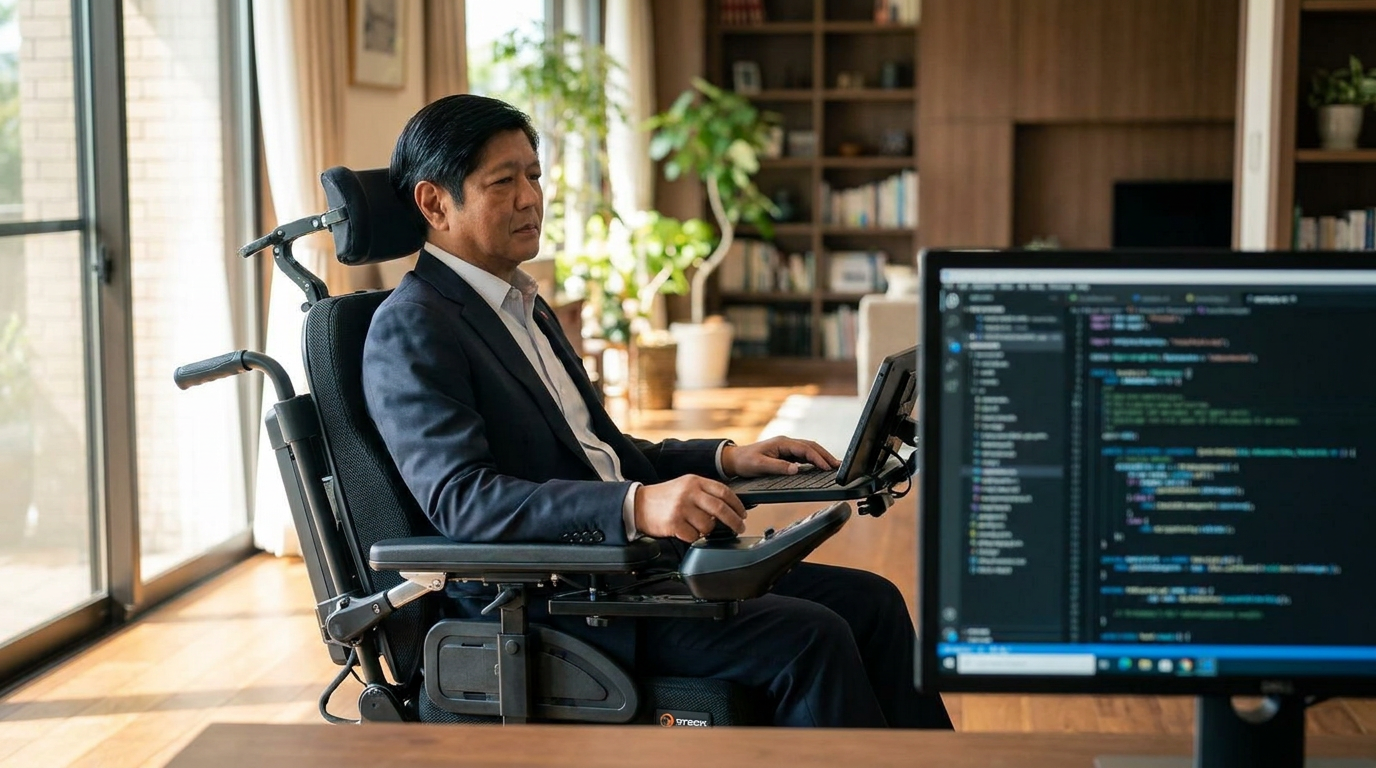
For nearly two years, Casey Harrell has lived with a device embedded in his brain that has fundamentally altered his relationship with the world. The 48-year-old, who lives with severe paralysis caused by amyotrophic lateral sclerosis (ALS), has successfully used an intracortical brain-computer interface (BCI) to communicate and work independently from his own home. Unlike previous iterations of this technology, which required a team of scientists to operate, Harrell’s system functions without the constant presence of researchers. This achievement, detailed in a landmark study, represents one of the longest periods of independent, daily use ever recorded for a speech-focused neural implant. It marks a profound shift in assistive technology, proving that highly complex brain-reading devices can survive the transition from the sterile environment of a laboratory to the unpredictable reality of a family living room.[1][2]
The core of this breakthrough, published in the journal Nature Medicine, lies in the system's longitudinal stability and its capacity for autonomous operation. For decades, the field of neuroprosthetics has been constrained by the fragility of the technology. Early BCI systems were effectively massive science experiments, requiring daily calibration by specialized engineers to interpret the brain's electrical signals accurately. The new study demonstrates that modern machine-learning algorithms and refined hardware can maintain high performance over extended periods without expert intervention. By proving that a patient can rely on the system day in and day out, the research team has cleared one of the most significant hurdles preventing BCIs from becoming practical medical devices.[4]
The contrast between this trial and previous BCI studies is stark. Historically, patients enrolled in neural interface trials could only use their devices during scheduled laboratory sessions. While these sessions produced groundbreaking proof-of-concept data, they offered little practical benefit to the patients once they returned home. The inability to use the technology independently meant that the very tools designed to restore autonomy were paradoxically tethered to a team of observers. The success of the Harrell trial is now prompting a broader shift across the neurotechnology landscape, with regulatory bodies increasingly open to approving at-home trials for other BCI developers seeking to prove real-world efficacy.[3][8]
The mechanism driving this newfound independence begins with a highly invasive but precise surgical procedure. In July 2023, neurosurgeons implanted four microelectrode arrays into Harrell’s brain. These tiny sensors, each containing 64 microscopic metallic spikes, were positioned directly into the left precentral gyrus—the specific region of the speech motor cortex responsible for coordinating the complex muscle movements required for articulation. Together, these 256 electrodes penetrate the outer layer of the brain, allowing the system to record the electrical firing of individual neurons with extraordinary resolution. These neural signals are then transmitted through two external connection points on Harrell's skull to a specialized computer processor.[9]

Once the computer receives the raw neural data, sophisticated decoding algorithms take over. The system does not attempt to read Harrell’s abstract thoughts; rather, it identifies the specific neural patterns associated with the physical attempt to speak. Researchers mapped the brain activity linked to the 39 distinct phonemes that make up all the sounds in the American English language. When Harrell attempts to form a word, the algorithms instantly recognize the sequence of phonemes his brain is trying to execute. This personalized speech decoder then translates those neural commands into digital text on a screen, effectively bypassing his paralyzed vocal cords and muscles.[6]
The performance metrics of this decoding process represent a massive leap forward for the field. On the very first day of testing, the system allowed Harrell to communicate using a 50-word vocabulary with 99.6 percent accuracy. As the machine-learning models adapted to his specific neural patterns, the system's capabilities expanded rapidly. Today, the interface supports a staggering 125,000-word vocabulary while maintaining an accuracy rate of 97.5 percent. Furthermore, Harrell is able to generate text at an average rate of 56 words per minute. While this is slower than the typical conversational speaking rate of roughly 150 words per minute, it is vastly faster and more fluid than traditional eye-tracking communication devices used by many ALS patients.[4][6]
The sheer volume of Harrell's usage has earned him the title of the world's first BCI "power user." Over the first 22.6 months following the implantation surgery, he utilized the device for more than 3,800 hours. The longitudinal data reveals that he logged onto the system on 364 out of 397 monitored days, integrating the technology seamlessly into his daily routine. This level of sustained, high-frequency use provides the most compelling evidence to date that intracortical microelectrode arrays can remain functional and accurate over a period of years, dispelling long-held concerns that the brain's natural immune response would quickly degrade the signal quality.[2][6]

The longitudinal data reveals that he logged onto the system on 364 out of 397 monitored days, integrating the technology seamlessly into his daily routine.
A crucial factor in achieving this level of daily use was the automation of the system's initialization process. In the early months of the trial, members of the research team still had to visit Harrell's home to physically connect the cables to the ports on his skull and boot up the software. Recognizing that true autonomy required removing themselves from the equation, the engineers steadily automated the calibration protocols. Today, the system is entirely manageable by Harrell's care partner, who simply plugs in the device each morning. Once connected, Harrell can wake up the system and begin communicating immediately, without waiting for an engineer to tune the algorithms.[6]
For Harrell, the technological triumph is measured entirely by its impact on his personal life. The ability to communicate fluidly has allowed him to reconnect with friends and family members who previously struggled to understand him or felt intimidated by his condition. The system features a text-to-speech function that utilizes a synthesized version of Harrell's own voice, reconstructed from audio recordings taken before his ALS diagnosis. This personalized audio output has enabled him to read bedtime stories to his young daughter in his natural tone, preserving a vital emotional connection that the disease threatened to sever.[2][6]
Beyond speech generation, the BCI system offers dual functionality that grants Harrell full access to the digital world. The algorithms are trained to decode not only attempted speech but also attempted physical movement. By imagining the movement of his hands, Harrell can control a computer cursor with high precision. This allows him to navigate the internet, send emails, manage his finances, and maintain regular contact with colleagues. By combining speech decoding with cursor control, the interface transforms a standard personal computer into a comprehensive accessibility hub, restoring a level of professional and personal agency that is often lost in the later stages of ALS.[4][9]
While the immediate benefits to the patient are clear, the trial is also delivering an unprecedented windfall for the scientific community. Because Harrell uses the device for hours every day, the research team is accumulating a massive repository of continuous brain recordings. This dataset represents the largest collection of single-neuron resolution data ever gathered from a human subject. Neuroscientists are currently analyzing these thousands of hours of recordings to gain a deeper understanding of how the human brain produces speech, how neural networks adapt to artificial interfaces, and how the motor cortex reorganizes itself in the presence of a neurodegenerative disease.[6][9]

The success of the BrainGate2 trial is already influencing the broader trajectory of the neurotechnology industry. For years, companies developing implantable BCIs have faced skepticism from investors and regulators regarding the commercial viability of devices that require constant technical support. The Harrell case study serves as a powerful proof of concept, demonstrating that at-home use is not just a theoretical goal, but an achievable reality. Consequently, regulatory agencies are becoming more receptive to real-world testing. Recently, authorities in the Netherlands approved a clinical trial for Ability Neurotech, another BCI developer, specifically designed to test their implantable system in everyday home environments rather than controlled laboratories.[8]
Despite the overwhelming success of this specific trial, researchers caution that the evidence, while robust, is currently limited to a single patient. In clinical terms, an N=1 study provides invaluable feasibility data but cannot guarantee universal efficacy. The architecture of the human brain varies significantly from person to person, and the progression of ALS can affect neural pathways in unpredictable ways. To prove that this technology is a viable medical intervention, developers will need to replicate these results across larger, more diverse cohorts of patients. Only through multi-center clinical trials can the industry establish standardized protocols for implantation, calibration, and long-term maintenance.[4]
Furthermore, significant hurdles remain before this technology can transition from a clinical trial to a standard medical treatment. The system requires invasive open-brain surgery, carrying inherent risks of infection and tissue damage. Additionally, the current hardware relies on physical cables protruding from the user's skull, which can be cumbersome and pose a risk of snagging. The neurotechnology field is racing to develop fully implantable, wireless systems that transmit data via Bluetooth or similar protocols, eliminating the need for external ports. There is also the pressing issue of cost; the custom-built hardware and intensive computational power required for real-time decoding currently make these systems prohibitively expensive for the average patient.[4][9]

Looking ahead, researchers are not content to stop at text-to-speech translation. The next frontier in speech neuroprosthetics is the development of direct "brain-to-voice" technology. Current systems decode phonemes into text, which is then read aloud by a synthesizer—a process that strips away the emotional nuance of natural conversation. Scientists are now working to decode the neural signals associated with cadence, inflection, and intonation. The ultimate goal is to create an interface that instantly translates a user's neural activity into a spoken voice that accurately reflects whether they are feeling happy, angry, sarcastic, or sad, restoring the full spectrum of human expression.[6]
For now, the achievement of nearly two years of independent, at-home use stands as a monumental milestone in the history of medicine. It represents the moment when brain-computer interfaces evolved from a futuristic laboratory experiment into a practical lifeline. For Casey Harrell, the device has defied the diminished expectations that typically accompany an ALS diagnosis, proving that severe physical paralysis does not have to mean the end of communication, connection, or autonomy. As the technology continues to mature, it holds the promise of unlocking the voices of thousands of individuals trapped by neurological disease, fundamentally redefining the limits of human resilience.[1][2]
How we got here
July 2023
Surgeons implant four microelectrode arrays into Casey Harrell's brain as part of the BrainGate2 clinical trial.
August 2023
The system begins working, allowing Harrell to communicate with a 50-word vocabulary at 99.6% accuracy on the first day of testing.
2023–2025
The research team automates the system, removing the need for daily researcher intervention and allowing Harrell's care partner to initialize the device.
June 2026
Nature Medicine publishes the landmark study detailing Harrell's 3,800 hours of independent at-home use over nearly two years.
Viewpoints in depth
Clinical Researchers
Focused on the unprecedented volume of longitudinal neural data and the validation of decoding algorithms.
For neuroscientists and clinical engineers, the Harrell trial is a goldmine of data. By moving the BCI out of the lab and into a daily home environment, researchers have collected thousands of hours of single-neuron resolution recordings—the largest dataset of its kind ever assembled. This continuous stream of real-world data allows scientists to study how the brain's speech motor cortex behaves over long periods, how neural signals adapt to the implant, and how decoding algorithms handle the variability of everyday life. Their primary goal is to use this data to refine the machine-learning models, pushing toward systems that require less frequent recalibration and can maintain high accuracy even as the brain's electrical environment subtly shifts over the years.
Patient Advocates
Focused on the restoration of autonomy, dignity, and the ability to maintain personal relationships.
From the perspective of patients living with ALS and their families, the technical specifications of the implant are secondary to the profound human impact. Advocates emphasize that the true breakthrough is the removal of the researcher from the room. Traditional BCI trials required a team of engineers to set up the equipment, severely limiting privacy and spontaneity. By automating the initialization process so a care partner can handle it, the technology restores a critical degree of independence. For users like Harrell, this means the ability to read a bedtime story to a child, have private conversations with a spouse, or participate in a work meeting without a laboratory audience. Advocates view this as a vital step toward treating BCIs not just as scientific experiments, but as essential accessibility tools.
Neurotechnology Industry
Focused on the transition from bespoke academic projects to scalable, commercially viable medical devices.
For the burgeoning neurotechnology sector, this milestone represents the crossing of a critical commercial threshold. Industry analysts and developers have long known that for BCIs to become viable products, they must function reliably outside of controlled clinical settings. The success of this nearly two-year home trial proves that the hardware can withstand daily use and that the software can be operated by non-experts. This validation is already rippling through the sector, as evidenced by regulatory bodies in Europe approving similar at-home trials for other BCI startups. The industry's focus is now shifting toward miniaturization, fully wireless implants, and reducing the prohibitive costs associated with these custom-built systems, with the ultimate goal of achieving broad regulatory approval and insurance coverage.
What we don't know
- How long the microelectrode arrays can remain implanted before the body's immune response degrades the neural signal.
- Whether the high accuracy rates achieved by this specific patient can be consistently replicated across a diverse population with varying neurological profiles.
- When this technology will become affordable and accessible enough to be covered by standard health insurance, rather than being limited to clinical trial participants.
Key terms
- Brain-Computer Interface (BCI)
- A system that connects the brain to an external device, allowing neural signals to control computers or prosthetics.
- Amyotrophic Lateral Sclerosis (ALS)
- A progressive neurodegenerative disease that affects nerve cells in the brain and spinal cord, leading to severe muscle paralysis and loss of speech.
- Intracortical Microelectrode Array
- A tiny sensor implanted directly into the brain's outer layer to record the electrical activity of individual neurons.
- Phoneme
- The distinct units of sound in a specified language that distinguish one word from another.
- Speech Motor Cortex
- The region of the brain responsible for planning and executing the voluntary muscle movements required for speaking.
Frequently asked
How does the brain implant know what the patient wants to say?
The implant detects neural activity in the brain's speech motor cortex, identifying the specific patterns associated with the physical attempt to form the 39 sounds (phonemes) of the English language.
Does a scientist need to be present for the device to work?
No. While early versions required researchers to calibrate the system daily, this new iteration allows a family member or care partner to connect the device, enabling independent at-home use.
Can the user control a computer, or just speak?
The system features dual functionality, allowing the user to both generate synthesized speech and control a computer cursor to browse the internet, send emails, and work.
Is this available to the general public?
Not yet. The technology is still in the clinical trial phase, though the success of this extended at-home study is a crucial step toward regulatory approval and broader availability.
Sources
Source coverage
8 outlets
3 viewpoints surfaced







[1]NatureClinical Researchers
At-home brain implant gives man with motor neuron disease his daily life back
Read on Nature →[2]MIT Technology ReviewPatient Advocates
This man with ALS is 'the first power user' of a brain implant that lets him speak
Read on MIT Technology Review →[3]Medical XpressNeurotechnology Industry
Brain-computer interface enables independent, accurate communication for man living with ALS
Read on Medical Xpress →Long-term independent use of an intracortical brain–computer interface for speech and cursor control
Read on Nature Medicine →[5]Bioengineer.orgNeurotechnology Industry
Brain-Computer Interface Empowers ALS Patient with Independent and Precise Communication
Read on Bioengineer.org →[6]MindplexClinical Researchers
Brain-computer interface enables independent communication for man with ALS
Read on Mindplex →[7]Sri Lanka GuardianPatient Advocates
Brain Implant Gives Man With ALS a New Voice as Scientists Push Boundaries of Communication
Read on Sri Lanka Guardian →[8]ALS News TodayNeurotechnology Industry
Netherlands approves trial of brain implant for ALS communication
Read on ALS News Today →

More in science
See all 6 stories →Neural Interfaces
The Era of the At-Home Brain-Computer Interface Has Arrived
0 sources
Neuroprosthetics
At-Home Brain Implant Restores Speech for Paralyzed ALS Patient in Historic Milestone
0 sources
Archaeological Tech
AI Is Unlocking the Lost Library of Herculaneum Without Unrolling a Single Scroll
0 sources

Exoplanet Biosignatures
The End of the 'Silver Bullet' Biosignature: How JWST is Rewriting the Search for Extraterrestrial Life
0 sources

Every angle. Every day.
Get science stories with full source coverage and perspective breakdowns delivered to your inbox.