
How Neuroaesthetics is Turning Interior Design into a Science of Brain Health
Advancements in neuroscience reveal that interior design choices trigger measurable biological responses, reducing stress hormones and boosting cognitive performance. The emerging field of neuroaesthetics is transforming architecture from an intuitive art into an evidence-based tool for mental well-being.
By Factlen Editorial Team
- Neuroscientists & Researchers
- Focus on the measurable biological responses to spatial design, utilizing fMRI data to map how the brain processes beauty and nature.
- Evidence-Based Designers
- Advocate for moving beyond intuition, using scientific metrics to craft environments that actively lower stress and improve mental health.
- Commercial & Institutional Leaders
- View neuroaesthetic design as a strategic investment to boost productivity, enhance learning, and accelerate patient recovery.
What's not represented
- · Neurodivergent individuals experiencing sensory processing differences
- · Low-income communities lacking access to optimized architectural spaces
Why this matters
Because humans spend the vast majority of their lives indoors, the built environment acts as a constant, invisible influence on our nervous systems. Understanding how spaces manipulate our biology empowers individuals and organizations to design environments that actively reduce anxiety, accelerate healing, and improve daily focus.
Key points
- Neuroaesthetics combines neuroscience and design to measure how the brain and body respond to architectural spaces.
- Thoughtful interior design can trigger measurable biological responses, including a 15 to 20 percent reduction in stress hormones.
- Biophilic design, which incorporates natural light and organic elements, has been shown to boost workplace productivity by 15 percent.
- Curvilinear shapes, symmetry, and natural textures actively reduce cognitive load and activate the brain's reward centers.
- The discipline is shifting interior design from an intuitive art form into an evidence-based tool for preventive mental healthcare.
For decades, interior designers have relied on a mix of intuition, training, and aesthetic judgment to create spaces that simply "feel right." When a client walks into a room and immediately exhales, the success of the design is usually attributed to an intangible artistic touch. But a rapidly growing scientific discipline is proving that this feeling is neither magic nor mere preference. It is a measurable, biological response.
Welcome to the era of neuroaesthetics—the convergence of neuroscience and design. By utilizing functional magnetic resonance imaging (fMRI) and biometric tracking, researchers can now observe exactly what happens inside the human body when it encounters a thoughtfully designed space. The findings are transforming interior design from a purely artistic endeavor into an evidence-based practice with profound implications for public health.
At its core, neuroaesthetics studies how the brain processes beauty, nature, and spatial arrangements. According to researchers at the University of Pennsylvania's Center for Neuroaesthetics, human-building interactions are governed by three primary neural networks: the sensory-motor system, the knowledge-meaning network, and the emotion-valuation system. When these networks are harmoniously engaged, the brain essentially rewards the body.[1]
The biological cascade triggered by a well-designed room is immediate and measurable. Heart rates slow, blood pressure drops, and the production of stress hormones like cortisol decreases by as much as 15 to 20 percent. Simultaneously, the brain increases the release of serotonin and dopamine. The orbitofrontal cortex—the region of the brain associated with emotional regulation and pleasure—lights up in the same way it does when a person listens to a favorite piece of music or connects with a loved one.[2]

One of the most heavily researched pillars of neuroaesthetics is biophilic design, which hinges on the human brain's evolutionary affinity for nature. For most of human history, our nervous systems evolved outdoors. Consequently, our brains are hardwired to seek out natural light, organic forms, and greenery, interpreting them as signals of safety and resource abundance.
When modern interiors mimic these natural environments, the cognitive benefits are striking. Studies published in the journal Building and Environment have demonstrated that employees working in biophilic offices report a 15 percent increase in productivity and significantly lower rates of fatigue. In healthcare settings, patients with access to dynamic daylighting and views of nature have been shown to require less pain medication and recover faster than those in sterile, windowless rooms.[3]
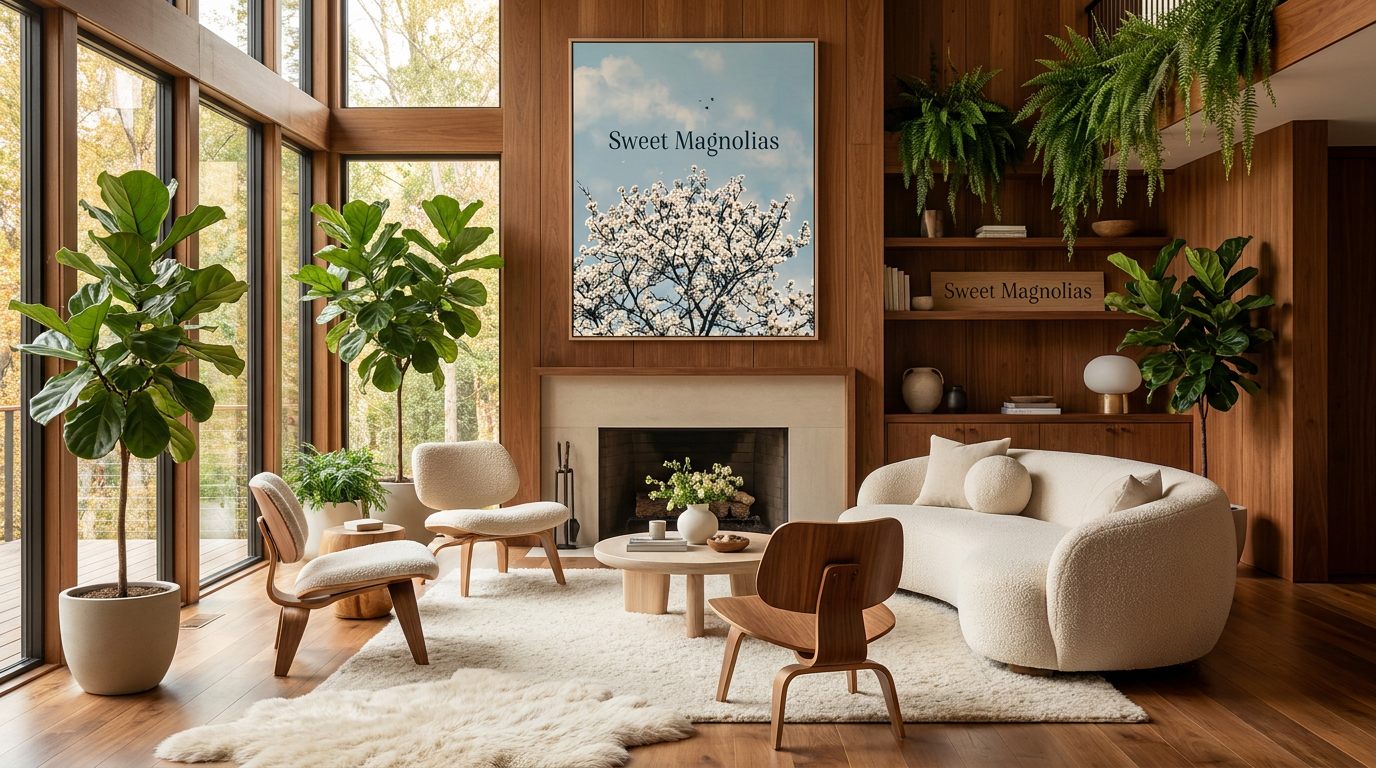
The shape of a room also dictates how hard the brain has to work to process it. Functional imaging studies reveal that the human brain prefers curvilinear spaces and organic shapes over sharp, jagged angles. Curves and arches activate the ventromedial prefrontal cortex, a brain region linked to reward processing, making the occupant feel unconsciously calmer and more secure.[8]
Conversely, spaces that are overly cluttered, highly asymmetrical, or visually chaotic impose a high "cognitive load." The brain must expend continuous energy to map and interpret the environment, which can lead to low-grade, chronic psychological fatigue. By employing symmetry and balanced proportions, designers can actively reduce this cognitive burden, allowing the nervous system to rest.

By employing symmetry and balanced proportions, designers can actively reduce this cognitive burden, allowing the nervous system to rest.
Color and lighting play an equally critical role in neuroaesthetic design, directly influencing circadian rhythms and mood. Natural daylight regulates the body's internal clock, supporting both mental health and sleep quality. When natural light is unavailable, dynamic lighting systems that mimic the sun's progression—shifting from cool, blue-toned light in the morning to warm, amber hues in the evening—can prevent the circadian disruption commonly associated with fluorescent office lighting.
The psychological impact of color is also being validated by neuroscience. Cool hues, such as soft blues and greens, have been shown to physically lower blood pressure and promote relaxation, making them ideal for restorative spaces like bedrooms or hospital recovery wards. Warmer tones stimulate alertness and social interaction, serving as effective tools for collaborative workspaces or dining areas.[7]
Beyond the visual, neuroaesthetics emphasizes the importance of the somatosensory cortex, the part of the brain responsible for processing touch. Textures profoundly influence our sense of comfort and belonging. Research published in the Journal of Environmental Psychology indicates that people feel more welcomed and secure in environments featuring natural materials like wood, stone, or woven fabrics.[5]
These tactile elements remind the brain of evolutionary safe havens. A smooth, cool stone surface might evoke clarity, while a plush, textured rug triggers feelings of warmth and refuge. The strategic layering of these textures prevents a space from feeling sterile, engaging the senses without overwhelming them.

Acoustic design, often the invisible variable in interior architecture, is another critical component of neuroaesthetics. Unpredictable, harsh noise elevates cortisol levels and maintains the body in a heightened state of stress. Conversely, pleasant ambient sounds or carefully engineered acoustic dampening can drastically improve concentration and emotional stability.
Designers are increasingly utilizing sound-absorbing materials—such as acoustic panels, soft flooring, and strategic furniture placement—to separate noisy, collaborative zones from areas meant for deep focus or rest. This acoustic harmony is particularly vital in open-plan offices and busy households, where auditory chaos is a primary driver of burnout.
The implications of this research extend far beyond luxury residential design. Commercial and institutional leaders are beginning to view neuroaesthetics as a critical tool for improving human performance and well-being. Organizations highlight that embedding these principles into commercial environments serves as a measurable differentiator for customer and employee experiences. Schools are redesigning classrooms with dynamic lighting and warm wooden finishes, which studies show can enhance student concentration and emotional stability.[4]
In the corporate sector, companies are realizing that the physical workspace is a tangible differentiator for employee retention and cognitive performance. Investing in neuroaesthetic principles is no longer seen as an aesthetic luxury, but as a measurable strategy to reduce absenteeism, boost creativity, and support mental health.

Despite the robust data, the field of neuroaesthetics is still navigating certain unknowns. Researchers are actively studying how neurodivergent individuals process spatial stimuli differently than neurotypical populations, aiming to create more inclusive design standards. Additionally, the long-term, compounding effects of living in highly optimized neuroaesthetic environments are still being quantified.
What is clear, however, is that the era of designing spaces based solely on visual trends is ending. By bridging the gap between art and biology, neuroaesthetics offers a profound new mandate for the built environment. Thoughtful, evidence-based design has the power to transform the buildings we inhabit into active allies of human flourishing, proving that beauty is not just in the eye of the beholder—it is deeply embedded in the brain.[6]
How we got here
1990s
Advancements in brain scanning technology allow scientists to begin measuring physiological responses to beauty in real-time.
1999
The term 'neuroaesthetics' is formally coined by neurobiologist Semir Zeki to describe the neural basis of aesthetic experiences.
2014
Major studies are published linking dynamic daylight exposure in office buildings to significantly improved sleep quality and cognitive function.
2021
Researchers map the specific neural networks—sensory-motor, knowledge-meaning, and emotion-valuation—that govern human-building interactions.
2026
Neuroaesthetic principles become a standard metric in commercial and healthcare architecture, shifting design from intuition to evidence-based practice.
Viewpoints in depth
The Scientific Community
Mapping the brain's response to the built environment.
Neuroscientists approach interior design as a series of biological inputs. By placing subjects in functional MRI machines and exposing them to various architectural stimuli, researchers have mapped exactly which neural pathways respond to different design elements. They argue that our preference for natural light, symmetry, and organic shapes is not a cultural construct, but an evolutionary adaptation deeply embedded in the orbitofrontal and ventromedial prefrontal cortices. For this camp, beauty is a measurable neurological event that triggers a cascade of stress-reducing hormones.
Evidence-Based Designers
Translating biometric data into tangible spatial layouts.
For the design community, neuroaesthetics represents a paradigm shift from intuition to empirical evidence. Designers in this camp utilize the scientific data to justify choices that were previously considered purely aesthetic. They advocate for the intentional use of biophilia, circadian lighting, and tactile materials to actively manipulate the emotional state of the room's occupants. By understanding how cognitive load is affected by clutter and sharp angles, these practitioners aim to create spaces that serve as preventive mental healthcare, actively soothing the nervous system.
Institutional Stakeholders
Leveraging design for measurable performance outcomes.
Corporate executives, healthcare administrators, and educational leaders view neuroaesthetics through the lens of performance and return on investment. In this view, the built environment is a tool to optimize human output. They point to data showing that biophilic offices yield a 15 percent increase in productivity, and that patients in neuroaesthetically optimized hospital rooms require less pain medication. For these stakeholders, the initial cost of implementing dynamic lighting or acoustic dampening is offset by the long-term financial benefits of reduced absenteeism, faster healing, and enhanced cognitive focus.
What we don't know
- How the long-term, compounding effects of living in highly optimized neuroaesthetic environments alter baseline brain chemistry over decades.
- The precise ways in which neurodivergent individuals process spatial stimuli differently than the neurotypical populations primarily studied.
- How the integration of artificial intelligence in spatial design will impact the deeply human, emotional resonance of neuroaesthetics.
Key terms
- Neuroaesthetics
- A scientific discipline that combines neuroscience and aesthetics to study how the brain processes and responds to beauty, art, and design.
- Biophilic Design
- An architectural and interior design approach that seeks to connect building occupants more closely to nature through the use of natural lighting, plants, and organic materials.
- Orbitofrontal Cortex
- A region of the brain involved in emotional regulation and decision-making that is highly activated when a person experiences something aesthetically pleasing.
- Cognitive Load
- The amount of mental effort and energy required by the brain to process and interpret a given environment or task.
- Circadian Rhythm
- The body's internal 24-hour clock that regulates sleep-wake cycles, heavily influenced by exposure to natural light.
Frequently asked
What is neuroaesthetics in interior design?
Neuroaesthetics is the scientific study of how the brain and body respond to beauty, nature, and spatial design. It uses tools like brain scans to measure how elements like lighting, color, and shape affect our stress levels and mood.
How does biophilic design affect the brain?
Biophilic design, which incorporates natural elements like plants and sunlight, triggers evolutionary signals of safety in the brain. This response has been shown to lower cortisol levels, reduce heart rates, and increase productivity.
Why do curved shapes feel more relaxing than sharp angles?
Functional imaging studies reveal that curvilinear spaces and organic shapes activate the brain's reward and pleasure centers, whereas sharp, jagged angles can increase cognitive load and subtle psychological stress.
Can interior design actually improve physical health?
Yes. Research indicates that thoughtfully designed spaces can lead to a 15 to 20 percent reduction in stress hormones, lower blood pressure, and even accelerate physical recovery times in healthcare settings.
Sources
Source coverage
8 outlets
3 viewpoints surfaced







[1]University of PennsylvaniaNeuroscientists & Researchers
The neuroaesthetics of architectural spaces
Read on University of Pennsylvania →[2]Science in DesignEvidence-Based Designers
Neuroaesthetics: The Science of Beauty
Read on Science in Design →[3]Building and Environment JournalCommercial & Institutional Leaders
Impact of indoor environmental quality on cognitive functions
Read on Building and Environment Journal →[4]BIFMACommercial & Institutional Leaders
Neuroaesthetics in the Built Environment
Read on BIFMA →Spatial Harmony and Sensory Balance
Read on Journal of Environmental Psychology →[6]Factlen Editorial TeamEvidence-Based Designers
Synthesis by Factlen editorial team
Read on Factlen Editorial Team →[7]Trends in Cognitive SciencesNeuroscientists & Researchers
Neuroaesthetics: The Brain, Beauty, and Built Environments
Read on Trends in Cognitive Sciences →[8]BrainFactsNeuroscientists & Researchers
How the Brain Sees Beauty in Buildings
Read on BrainFacts →
Every angle. Every day.
Get lifestyle stories with full source coverage and perspective breakdowns delivered to your inbox.