
US and Iran Reach Preliminary Peace Deal to Reopen Strait of Hormuz and Extend Ceasefire
The United States and Iran have agreed to a memorandum of understanding to end military hostilities and reopen the Strait of Hormuz. The framework includes a 60-day ceasefire for nuclear negotiations and the potential for a privately backed $300 billion reconstruction fund.
By Factlen Editorial Team
- US & Western Officials
- Prioritize nuclear containment, freedom of navigation, and avoiding direct financial payouts.
- Iranian Leadership
- Focus on lifting blockades, securing economic reconstruction funds, and maintaining regional proxy leverage.
- Regional Mediators
- Advocate for immediate de-escalation, long-term stability, and the resumption of normal trade in the Middle East.
- Global Financial Markets
- Analyze the agreement through the lens of energy prices, inflation impacts, and the viability of the $300bn private investment fund.
- Israeli Security Establishment
- Focus on the ongoing threat of Hezbollah and the risks of enriching Iran without dismantling its proxy network.
What's not represented
- · Lebanese civilians affected by the ongoing Hezbollah-Israel conflict
- · Commercial shipping operators assessing the actuarial risk of returning to the Strait of Hormuz
- · European energy consumers impacted by the persistent inflation shock
Why this matters
The reopening of the Strait of Hormuz immediately stabilizes global energy markets, lowering oil prices and easing inflation fears. Furthermore, the 60-day negotiation window presents the most significant opportunity in years to permanently halt Iran's nuclear weapons program and end regional warfare.
Key points
- The US and Iran have agreed to a memorandum of understanding to end hostilities and reopen the Strait of Hormuz.
- The agreement initiates a 60-day window for comprehensive negotiations regarding the permanent containment of Iran's nuclear program.
- A proposed $300 billion reconstruction fund for Iran would rely on private international investment rather than direct US government payments.
- The immediate lifting of reciprocal naval blockades sent global crude oil prices tumbling by nearly 5 percent.
- The ongoing conflict between Israel and Hezbollah in Lebanon remains a major unresolved threat to the broader peace framework.
The United States and Iran have reached a preliminary agreement to end months of devastating military conflict, setting the stage for a formal signing ceremony scheduled for Friday in Geneva. The memorandum of understanding, which was reportedly signed digitally by US Vice President JD Vance and Iranian Parliament Speaker Mohammad Bagher Ghalibaf earlier this week, aims to halt military hostilities across the region. At its core, the framework agreement is designed to reopen the critical Strait of Hormuz, lift reciprocal naval blockades, and initiate a 60-day window for comprehensive negotiations regarding Tehran's nuclear program. The diplomatic breakthrough represents a monumental shift in Middle Eastern geopolitics, offering a potential off-ramp from a war that has severely disrupted global energy markets, triggered widespread economic turmoil, and raised fears of a broader regional conflagration.[1][3]
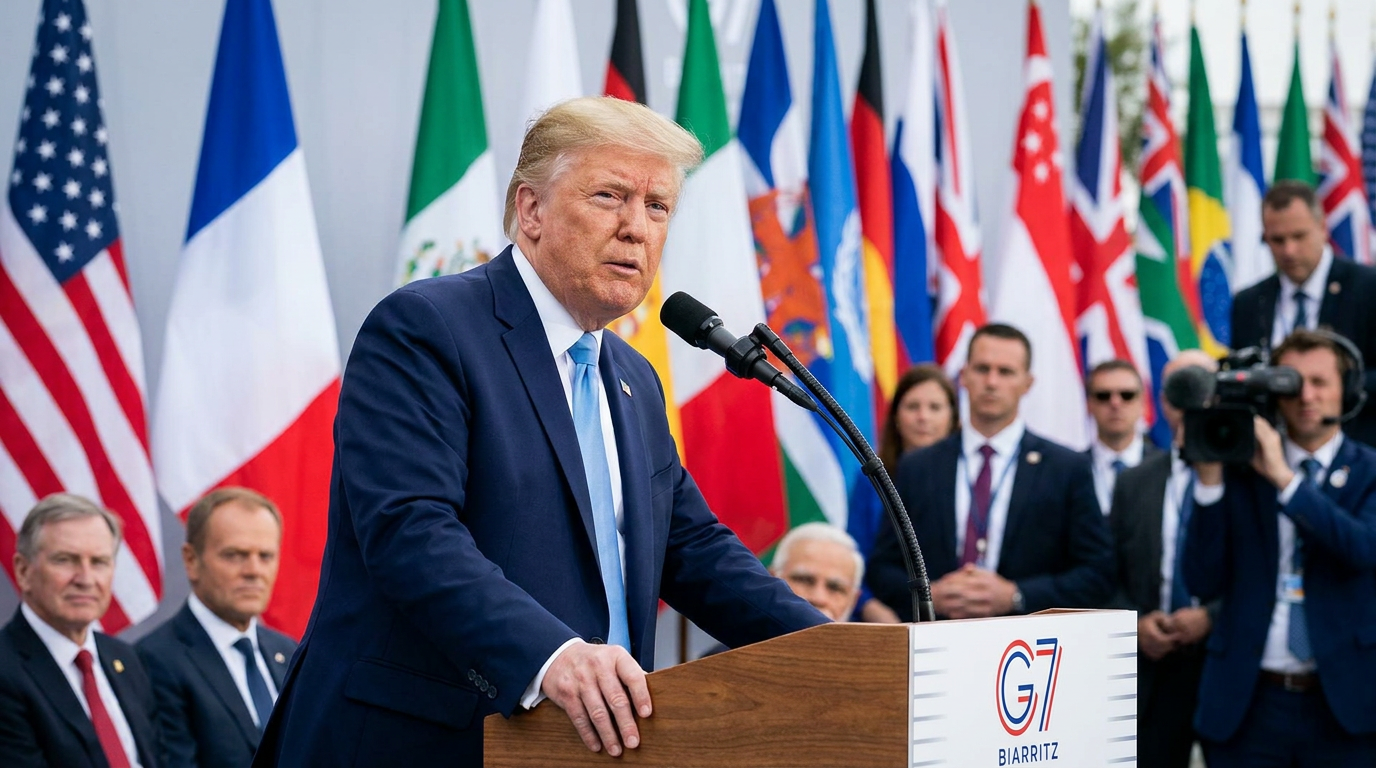
The path to this week's agreement was heavily paved by regional mediators, with Pakistan and Qatar playing central roles in bridging the vast divide between Washington and Tehran. The conflict, which escalated sharply following US and Israeli strikes on Iran in late February, had settled into a fragile and frequently violated ceasefire by April. US President Donald Trump, speaking to reporters at the G7 summit in Évian-les-Bains, France, declared that the initial phases of the deal are already in motion. He noted that the vital shipping lane is currently "partially opened" and promised that it will be fully operational and completely open by the time the ink dries on Friday. The rapid de-escalation has been welcomed by European allies, who have spent months grappling with the secondary economic effects of the Middle Eastern war.[1][2][7]
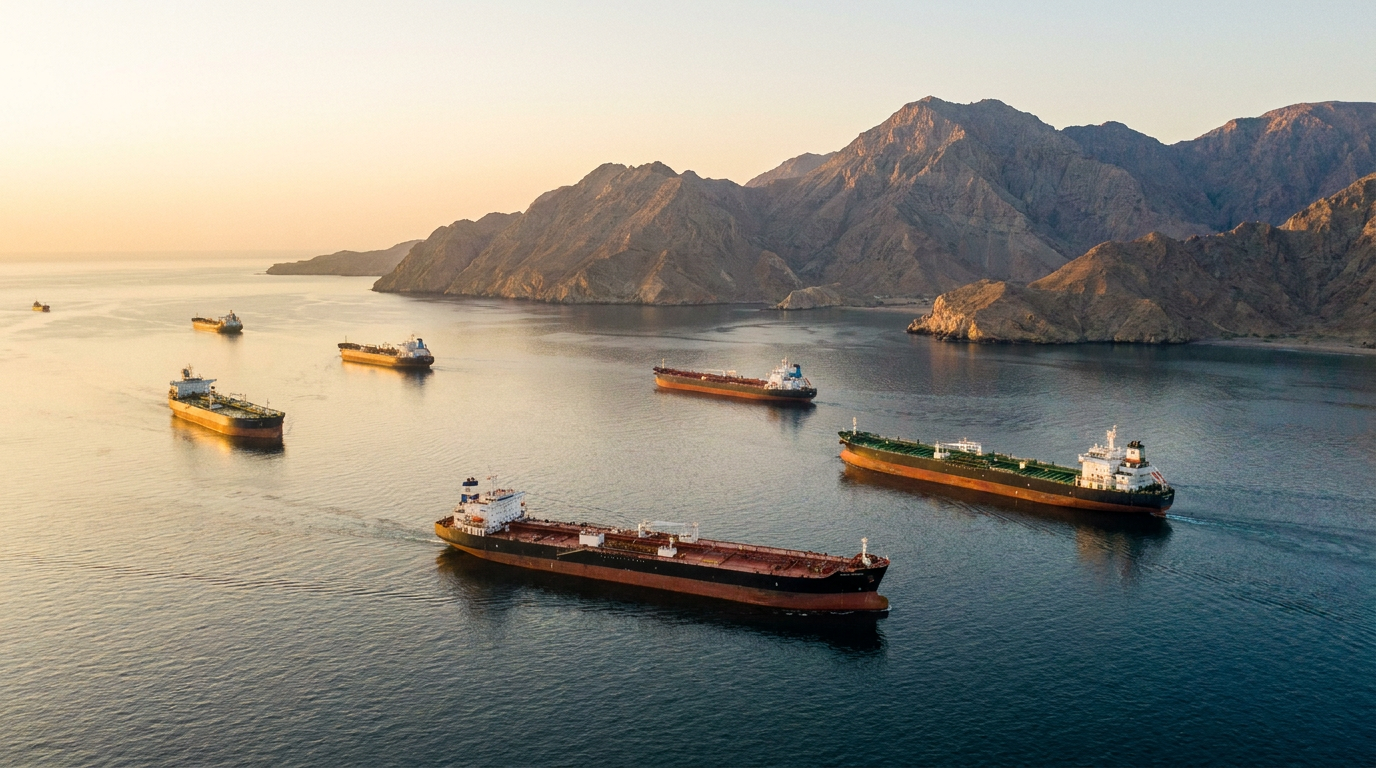
At the absolute center of the geopolitical and economic stakes is the immediate lifting of reciprocal maritime blockades. Early in the conflict, Iran effectively closed the Strait of Hormuz—a narrow, highly vulnerable maritime chokepoint connecting the Persian Gulf to the Gulf of Oman. Because roughly 20 percent of the world's crude oil supply passes through this specific corridor, the Iranian blockade sent global energy prices soaring above $110 a barrel and fueled a persistent inflation shock across Western economies. In direct retaliation, the United States military imposed a strict naval blockade on all Iranian southern ports, effectively cutting off the Islamic Republic from international maritime trade. The new memorandum of understanding mandates the immediate cessation of both blockades, allowing commercial shipping to resume its normal patterns.[1][3][5]
Under the newly established framework, the physical movement of goods has already begun to resume. President Trump stated that ships loaded with crude oil are starting to move through the southern highway of the strait, a route he described to the press as "safe, secure, and pristine." Iranian state media corroborated this shift, reporting that multiple oil tankers and cargo vessels carrying essential goods are currently sailing toward Iranian ports from the Indian Ocean, despite earlier US military advisories that the blockade would technically remain in effect until Friday. The mere announcement of the agreement immediately sent global oil prices tumbling by nearly 5 percent, bringing crude down toward $80 a barrel and significantly easing the inflationary fears that had gripped global financial markets for months.[1][2][8]

Despite the optimism surrounding the resumption of maritime traffic, the exact operational mechanics of the strait's reopening remain a significant point of diplomatic contention. While US Vice President JD Vance indicated in television interviews that Washington fully expects the waterway to operate "toll-free" for the long term, he acknowledged that the specific regulatory details will need to be hammered out in the upcoming technical negotiations. This ambiguity has raised alarms among European leaders committed to the principle of freedom of navigation. They have fiercely opposed any formulation that would grant Iran the right to charge maritime service fees or transit tolls, viewing such a concession as a dangerous precedent that could permanently alter the economics of global shipping through the Middle East.[1][2][5]
Beyond the immediate economic relief of reopening shipping lanes, the second major pillar of the agreement revolves around the permanent containment of Iran's nuclear program. President Trump has been unequivocal about the United States' absolute red line, issuing stark warnings during the G7 summit. He cautioned that "all hell will rain down" on Tehran if the Islamic Republic attempts to develop, purchase, or otherwise acquire a nuclear weapon. The administration views the prevention of a nuclear-armed Iran as the foundational purpose of the entire diplomatic exercise, with Trump asserting that the preliminary deal says "loud and clear" that Tehran will never possess such capabilities. The rhetoric underscores the high stakes of the 60-day negotiation window, during which international inspectors are expected to return to Iranian nuclear sites. US officials have stressed that the text of the memorandum was specifically adjusted at the last minute to ensure it prevents Tehran not only from indigenously developing a bomb but also from acquiring one through external state actors or black-market networks.[2][4]
According to the US administration, the memorandum explicitly codifies this nuclear prohibition. Iranian officials, including Deputy Foreign Minister Kazem Gharibabadi, have publicly confirmed that talks on a final, comprehensive nuclear agreement will commence within the 60-day ceasefire period established by the Geneva signing. However, the eventual fate of Iran's existing stockpile of highly enriched uranium remains one of the most complex and closely guarded secrets of the negotiations. While Vance stated that nuclear inspectors would "absolutely" be allowed to return to Iran as part of the deal, the precise mechanisms for verifying compliance and dismantling existing enrichment infrastructure will require intense, highly technical diplomacy over the coming two months. The success of these secondary talks will ultimately determine whether the temporary ceasefire can evolve into a permanent peace treaty. For now, both sides appear willing to defer the most intractable nuclear details to the 60-day window, prioritizing the immediate cessation of hostilities and the stabilization of the global energy supply chain.[1][2][4]
According to the US administration, the memorandum explicitly codifies this nuclear prohibition.
The most heavily debated and politically sensitive aspect of the emerging peace framework is the financial incentive structure designed to secure Iran's long-term compliance and facilitate its post-war recovery. Financial reporting this week revealed that the Trump administration is prepared to allow the establishment of a massive $300 billion investment fund for Iran's national reconstruction, strictly contingent upon Tehran agreeing to and abiding by a final nuclear settlement. This staggering figure notably matches the exact amount Tehran had previously demanded as formal reparations for the extensive infrastructural damage sustained during the months of US and Israeli military strikes. The revelation of the fund immediately sparked intense political backlash in Washington, with critics accusing the administration of effectively paying ransom to a hostile foreign power. However, sources briefed on the negotiations emphasize that the proposed financial architecture is far more complex than a simple transfer of government wealth, relying entirely on the private sector to generate the promised capital.[5][6]
Crucially, the proposed $300 billion fund would not involve direct monetary payments from the United States Treasury or any other Western government. Instead, it is being structured as an international financial vehicle designed to channel private capital from European, Asian, and American corporations eager to invest in Iran's lucrative energy, infrastructure, and real estate sectors once international sanctions are officially lifted. By tying the influx of private foreign direct investment to Iran's verifiable performance in adhering to the nuclear memorandum, the US aims to create a powerful economic anchor for peace. The fund would only reach its massive scale if Iran faithfully honors its obligations, effectively outsourcing the financial leverage to the global corporate sector. This strategy mirrors previous diplomatic efforts to use market access as a carrot for geopolitical compliance, but the sheer scale of the proposed Iranian reconstruction fund is unprecedented. Companies from South Korea, Japan, and the European Union have reportedly already expressed significant interest in participating, provided the legal framework robustly protects them from future sanctions snapbacks.[5][6]

Despite the private-sector nature of the proposed fund, President Trump swiftly pushed back against the growing domestic narrative that Washington was writing a massive check to Tehran. Taking to his Truth Social platform, the president aggressively dismissed claims that the US is "paying Iran 300 billion Dollars" as "fake news" propagated by his political opponents. He later clarified to reporters in France that the United States is "not investing any money in Iran," emphasizing that the government holds no obligation to finance the Islamic Republic's reconstruction. The distinction between direct government aid and a privately backed, sanctions-exempt investment fund highlights the delicate political tightrope the administration is currently walking. By facilitating international private investment rather than offering state funds, the US administration aims to provide Iran with the sweeping economic relief it demands without violating strict domestic political constraints against paying war reparations. This rhetorical maneuvering allows the White House to claim a hardline victory on the nuclear front while simultaneously offering Tehran a viable path out of economic isolation.[4][6]
Regional mediators have expressed cautious but genuine optimism about the deal's potential to fundamentally stabilize the Middle East. Qatar's Emir Sheikh Tamim bin Hamad Al Thani, who held direct bilateral talks with President Trump at the G7 summit, welcomed the diplomatic progress. Qatari foreign ministry officials stated publicly that the memorandum of understanding could lead to a transformative phase of regional security, provided the subsequent nuclear talks are handled with transparency and mutual respect. Pakistan, which served as a primary back-channel communicator between Washington and Tehran during the darkest days of the conflict, has similarly praised the framework as a necessary step back from the brink of total regional war. These mediating nations have a vested interest in the agreement's success, as their own economies and security architectures are deeply intertwined with the stability of the Persian Gulf. The collaborative diplomatic effort underscores a growing regional consensus that the continuous cycle of military escalation between the US, Israel, and Iran is unsustainable and poses an existential threat to the broader Middle Eastern economic boom.[7][8]
Yet, despite the diplomatic backslapping in Europe, significant geopolitical uncertainties threaten to unravel the fragile consensus before the ink is even dry. The most pressing and volatile complication is the ongoing, intense military conflict between Israel and Hezbollah in Lebanon. While the US-Iran memorandum reportedly includes a broad call for an end to all regional hostilities, Israeli Prime Minister Benjamin Netanyahu has fiercely resisted integrating the Lebanese front into the wider Washington-Tehran agreement. Israel maintains that it must secure its northern border and neutralize the Hezbollah threat independently of any nuclear or maritime deals struck in Geneva. This bifurcated approach to regional security puts the entire peace framework at risk. Iranian officials have repeatedly insisted that the overarching deal is strictly contingent on Israel abiding by a comprehensive ceasefire in Lebanon. If Israeli military operations against Hezbollah continue, Tehran could easily justify walking away from the nuclear table, claiming that the US failed to rein in its primary Middle Eastern ally.[3][5]
The rhetoric from Hezbollah itself further complicates the diplomatic picture. In its first public statements following the announcement of the US-Iran deal, the heavily armed, Iran-backed militant group credited Tehran with achieving a major diplomatic victory. However, Hezbollah leadership explicitly warned that there would be no return to the pre-war status quo in the Levant. The group is demanding the full withdrawal of Israeli troops from southern Lebanon and the reconstruction of war-devastated areas as absolute prerequisites for laying down their arms. This maximalist stance ensures that the Lebanese border will remain a highly combustible flashpoint that could easily drag the US and Iran back into direct confrontation. Diplomats in Geneva are now racing against the clock to find a formula that satisfies Israel's security requirements while meeting Hezbollah's territorial demands, knowing that failure on this front could instantly void the broader maritime and nuclear agreements. The interconnected nature of Middle Eastern proxy conflicts means that a localized skirmish in southern Lebanon has the potential to shut down the Strait of Hormuz once again.[2][3]

Furthermore, the sheer logistical challenges of physically reopening the Strait of Hormuz cannot be understated. Maritime security experts and senior US defense officials have cautioned that it will take considerable time to fully operationalize the waterway, regardless of the political declarations made in Geneva. The strait has been an active war zone for months, meaning that extensive naval mine-clearing operations must be conducted before the route can be declared genuinely safe for massive, slow-moving commercial oil tankers. Additionally, global shipping syndicates and insurance underwriters must independently assess the risk of returning to the route, a process that relies on actuarial data rather than political promises. While the immediate drop in global oil prices reflects the market's optimism, physical supply chains are notoriously slow to pivot. Ship operators will likely demand continuous military escorts or ironclad security guarantees from both the US Navy and the Iranian Revolutionary Guard Corps before committing billions of dollars of cargo to the narrow channel. The transition from a blockaded war zone to a bustling commercial artery will be measured in weeks and months, not days.[1][2]
As the Friday signing ceremony in Geneva approaches, the international community remains highly watchful and deeply anxious. The memorandum of understanding represents a monumental, almost miraculous shift from months of devastating, escalatory warfare to a structured, multi-lateral diplomatic process. However, its ultimate success hinges entirely on the forthcoming 60 days of high-stakes technical and nuclear negotiations. If the US and Iran can navigate the treacherous waters of uranium enrichment limits, sanctions relief, and proxy warfare, the agreement could redefine Middle Eastern security for a generation. If they fail, the region will almost certainly plunge back into a conflict more destructive than the one they just paused. The coming weeks will test the political endurance of both the Trump administration and the Iranian leadership, as hardliners in both capitals will undoubtedly attempt to sabotage the compromises required for lasting peace. For now, the world watches the Strait of Hormuz, waiting to see if the flow of oil can truly wash away the deep-seated animosities that have defined US-Iranian relations for decades.[1][3]
How we got here
Late Feb 2026
US and Israeli military strikes on Iran trigger a broader regional war and the reciprocal blockading of the Strait of Hormuz and Iranian ports.
April 2026
An initial, fragile ceasefire is established between the warring parties, though low-level hostilities continue.
June 15, 2026
US and Iranian officials digitally sign a memorandum of understanding to end the war and reopen maritime trade routes.
June 19, 2026
A formal signing ceremony is scheduled to take place in Geneva, officially initiating a 60-day window for nuclear negotiations.
Viewpoints in depth
US Administration
Focuses on permanently neutralizing Iran's nuclear ambitions without committing direct US taxpayer funds.
For the White House, the primary metric of success is the verifiable dismantling of Iran's nuclear weapons capability. President Trump and his allies emphasize that the deal explicitly forbids Tehran from developing or acquiring a bomb, backed by the threat that 'all hell will rain down' if they violate the terms. Domestically, the administration is highly sensitive to optics, fiercely denying that the US government is paying reparations or ransom. Instead, they frame the $300 billion reconstruction fund as a private-sector mechanism that outsources the financial burden of rebuilding Iran to international corporations, thereby achieving geopolitical stability at zero cost to the American taxpayer.
Iranian Leadership
Prioritizes the immediate lifting of crippling blockades and securing massive foreign investment for national reconstruction.
Tehran views the memorandum of understanding as a necessary pivot from a destructive war to a period of vital economic recovery. Iranian officials have successfully leveraged their control over the Strait of Hormuz to force an end to the US naval blockade of their southern ports. For the Iranian parliament and negotiators, the proposed $300 billion investment fund is the ultimate prize, effectively serving as the reparations they demanded for infrastructure destroyed during the conflict. However, they remain highly suspicious of US commitments and insist that any nuclear concessions will only be finalized if the promised sanctions relief and private capital actually materialize.
Israel & Regional Allies
Views the deal with deep skepticism, prioritizing the immediate threat of Hezbollah over broader maritime agreements.
The Israeli government is highly concerned that the US-Iran deal prematurely relieves pressure on Tehran without adequately addressing the proxy forces actively threatening Israel's borders. Prime Minister Benjamin Netanyahu has resisted integrating the ongoing conflict in Lebanon into the broader Geneva agreement, insisting that Israel must maintain its military campaign against Hezbollah until its northern border is secure. From the Israeli perspective, allowing Iran to rebuild its economy via a $300 billion fund while its proxy militias remain heavily armed represents a critical strategic vulnerability, raising fears that the ceasefire merely gives Tehran time to regroup and rearm.
What we don't know
- Whether Israel and Hezbollah will agree to a ceasefire in Lebanon to align with the broader US-Iran agreement.
- The exact technical mechanisms that will be used to verify the dismantling of Iran's existing highly enriched uranium stockpile.
- Whether Iran will be permitted to charge transit tolls on commercial shipping passing through the newly reopened Strait of Hormuz.
- The specific legal architecture that will protect private companies investing in the $300 billion reconstruction fund from future sanctions.
Key terms
- Strait of Hormuz
- A narrow, highly strategic maritime chokepoint between the Persian Gulf and the Gulf of Oman through which roughly 20 percent of the world's crude oil passes.
- Memorandum of Understanding (MOU)
- A formal, written agreement outlining the broad terms and shared goals of a deal before a final, legally binding treaty is drafted and signed.
- Naval Blockade
- The use of military ships to cut off a specific area, preventing commercial vessels from entering or leaving ports to exert economic pressure.
- Foreign Direct Investment (FDI)
- An investment made by a firm or individual in one country into business interests located in another country, such as the proposed private funding for Iran's reconstruction.
Frequently asked
Is the US paying Iran $300 billion?
No. While a $300 billion reconstruction fund is part of the negotiations, reports indicate it would be financed by private international companies investing in Iran, not by the US government.
When will the Strait of Hormuz reopen?
The US and Iran have agreed to lift their respective blockades immediately. President Trump stated the strait is already partially open and will be fully operational by Friday, June 19.
Does this agreement end the war in Lebanon?
Not yet. While the memorandum calls for an end to regional hostilities, Israel and Hezbollah have not agreed to a formal ceasefire, remaining a major unresolved complication.
Will Iran be allowed to have a nuclear weapon?
No. The agreement explicitly forbids Iran from developing or acquiring a nuclear weapon, with a 60-day negotiation window established to finalize the technical details of international inspections.
Sources
Source coverage
8 outlets
5 viewpoints surfaced








[1]CNAUS & Western Officials
Trump says Strait of Hormuz to reopen on Friday under US-Iran deal
Read on CNA →[2]The GuardianUS & Western Officials
Trump says Iran 'will never have a nuclear weapon' and that deal is 'going to second stage'
Read on The Guardian →[3]PBSUS & Western Officials
Iran and U.S. reach an initial deal to extend the ceasefire and open the Strait of Hormuz but challenges remain
Read on PBS →[4]The HinduRegional Mediators
West Asia LIVE: All hell will rain down if Iran acquires nuclear weapon, says Trump
Read on The Hindu →[5]Financial TimesGlobal Financial Markets
Iran and US agree deal to open Strait of Hormuz and extend ceasefire
Read on Financial Times →[6]The Indian ExpressGlobal Financial Markets
Trump declares Iran 'has agreed to never have a nuclear weapon'; calls $300 billion fund report 'fake news'
Read on The Indian Express →[7]The Times of IsraelIsraeli Security Establishment
Qatar's emir: Trump says efforts ongoing to finalize Iran agreement
Read on The Times of Israel →[8]ISNAIranian Leadership
Qatari Emir, Trump discuss potential agreement regarding Iran
Read on ISNA →
More in news politics
See all 6 stories →Iran Nuclear Deal
U.S. Issues 60-Day Deadline to Iran: Inside the Proposed Nuclear and Sanctions Deal
0 sources
AI Regulation
US Government Classifies Anthropic's Fable 5 AI as a Munition, Forcing Global Shutdown
0 sources
AI Regulation
U.S. Government Forces Anthropic to Disable Advanced AI Models Under Export Control Order
0 sources

Iran Nuclear Standoff
U.S. and Iran Reach 60-Day Ceasefire to Reopen Strait of Hormuz and Negotiate Nuclear Deal
0 sources
Every angle. Every day.
Get news politics stories with full source coverage and perspective breakdowns delivered to your inbox.