
The Rise of Over-the-Counter CGMs: How Non-Diabetics Are Tracking Blood Sugar to Optimize Health
Once restricted to diabetes management, continuous glucose monitors are now available over the counter, offering real-time insights into how food, sleep, and stress affect metabolic health.
By Factlen Editorial Team
- Biohacking & Wellness Advocates
- View CGMs as essential tools for proactive health optimization and personalized nutrition.
- Traditional Endocrinologists
- Urge caution regarding the lack of long-term data and the risk of over-monitoring in healthy people.
- Metabolic Researchers
- Focus on the discovery of biochemical individuality and the end of one-size-fits-all diets.
- Device Manufacturers
- Promote the accessibility and lifestyle benefits of their over-the-counter biosensors.
What's not represented
- · Insurance providers
- · Low-income patient advocates
Why this matters
Understanding your unique metabolic response to food and lifestyle can help eliminate energy crashes, improve sleep, and proactively reduce the risk of developing insulin resistance and chronic disease.
Key points
- Over-the-counter continuous glucose monitors (CGMs) are now widely available for adults without diabetes, shifting the technology from disease management to proactive wellness.
- The sensors measure glucose levels in the body's interstitial fluid, sending real-time data to a smartphone app every few minutes.
- Recent studies reveal that individuals have highly unique glycemic responses to the same foods, challenging the concept of a universal healthy diet.
- CGMs also highlight the profound impact of non-dietary factors, showing how poor sleep and acute stress can cause significant blood sugar spikes.
- While wellness advocates praise the devices for providing actionable insights, some medical professionals warn against the anxiety of over-monitoring normal physiological fluctuations.
For decades, the continuous glucose monitor (CGM) was a medical device strictly reserved for managing diabetes. But a quiet revolution in personal health technology has brought this tool to the masses. Walk into a pharmacy today, and you can purchase a wearable sensor that streams real-time metabolic data directly to your smartphone—no prescription required.[1][2]
The catalyst for this shift occurred when the U.S. Food and Drug Administration cleared the first over-the-counter CGMs, including Dexcom's Stelo and Abbott's Lingo, specifically for adults not using insulin. This regulatory green light transformed the CGM from a clinical necessity into a mainstream biohacking tool. Now, health-conscious individuals, athletes, and those looking to optimize their energy levels are adopting the technology to peek under their own metabolic hoods.[2][8][9]
To understand why healthy people are tracking their blood sugar, we have to look at how the body processes fuel. When you eat carbohydrates, your digestive system breaks them down into glucose, which enters your bloodstream. In response, your pancreas releases insulin, a hormone that acts like a key, unlocking cells so they can absorb the glucose and use it for energy.[1][4]
In a perfectly optimized system, blood sugar rises gently after a meal and returns smoothly to baseline. But modern diets, chronic stress, and poor sleep often lead to sharp spikes and subsequent crashes. These rapid fluctuations—known as glycemic variability—are increasingly recognized as culprits behind afternoon fatigue, brain fog, and intense sugar cravings.[4][5]

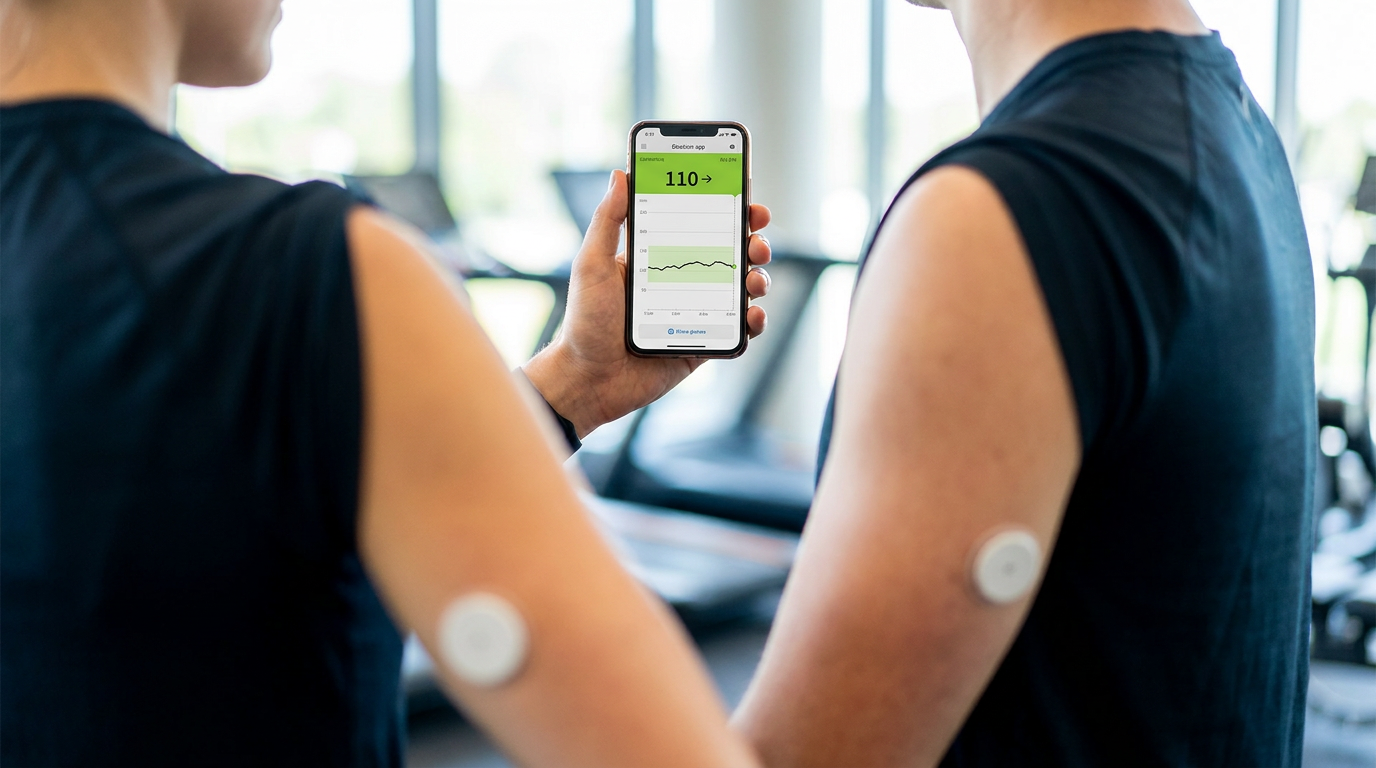
This is where the CGM comes in. The device itself is a small, water-resistant disc applied to the back of the upper arm. A spring-loaded applicator quickly and painlessly inserts a tiny, flexible filament just beneath the skin. Rather than measuring blood directly, the sensor measures glucose levels in the interstitial fluid—the fluid surrounding the body's cells.[2][3]
Because it relies on interstitial fluid, there is a slight delay of about five to fifteen minutes compared to a direct finger-prick blood test. However, the sensor continuously records data, transmitting a new reading to a paired smartphone app every few minutes. The result is a 24/7 continuous curve of your metabolic landscape, revealing exactly how your body reacts to everything you consume.[3][8]
The most profound revelation for many new CGM users is the discovery of biochemical individuality. A landmark study published in Nature Medicine demonstrated that there is no universal "healthy" diet. Researchers found that two people can eat the exact same carbohydrate-rich food—like a banana or a slice of whole-wheat bread—and experience vastly different glucose responses.[6]
In the study, participants were categorized by their unique metabolic profiles. Some were labeled "potato spikers," experiencing massive, prolonged blood sugar surges after eating potatoes, while others handled the starch with ease but spiked dramatically after eating grapes. This data shatters the one-size-fits-all approach to nutrition, suggesting that the optimal diet is highly personalized and dependent on an individual's unique microbiome and insulin sensitivity.[6]

In the study, participants were categorized by their unique metabolic profiles.
Armed with a CGM, users can run their own n-of-1 clinical trials. A user might discover that a bowl of seemingly healthy oatmeal sends their glucose soaring to 160 mg/dL, followed by a crash that leaves them exhausted by 10:00 a.m. By adding a handful of almonds or a scoop of protein powder to the oats, they can watch the app in real-time as the glucose curve flattens out, providing sustained energy instead of a rollercoaster ride.[2][7]
But food is only one piece of the metabolic puzzle. CGMs are revealing the profound impact of lifestyle factors that have nothing to do with calories. Users frequently report shock at seeing their blood sugar spike during a stressful work meeting or after a night of fragmented sleep, even if they haven't eaten anything.[2][4]
Sleep deprivation, in particular, dramatically impairs the body's ability to clear glucose from the blood. A single night of poor sleep can induce temporary insulin resistance, meaning the exact same meal will cause a much larger glucose spike the next day. By making these invisible processes visible, the CGM acts as a powerful behavioral modification tool, providing immediate accountability for sleep hygiene and stress management.[2]
Despite the enthusiasm from the biohacking community, the medical establishment remains cautious about the widespread use of CGMs in healthy populations. Traditional endocrinologists point out that the long-term benefits of continuous monitoring for non-diabetics are not yet proven by large-scale, randomized controlled trials.[3][4]

There is also the risk of data-induced anxiety. Healthy bodies are designed to experience some degree of glucose fluctuation; a spike after a meal is a normal physiological response, not necessarily a pathological event. Critics worry that hyper-fixating on keeping the glucose line perfectly flat could lead to disordered eating, unnecessary carbohydrate restriction, or an unhealthy obsession with metrics.[3][7]
Furthermore, the devices represent a significant investment. At roughly $80 to $100 per month out-of-pocket, they are generally not covered by insurance unless prescribed for diabetes management. This raises questions about accessibility and whether the wellness benefits are limited to those who can afford the subscription.[2]
To mitigate the risks of over-monitoring, many metabolic health experts recommend a targeted approach. Rather than wearing a sensor continuously for years, healthy individuals might use a CGM for a one-to-three-month "discovery phase." This window provides enough time to identify trigger foods, test the impact of a post-meal walk, and establish a baseline understanding of their unique metabolism.[7]

Once the user has learned how their body responds to their typical diet and lifestyle, they can remove the sensor and apply those lessons intuitively. They might choose to wear a sensor for a two-week tune-up once a year, using the technology as an occasional compass rather than a permanent tether.[7]
As the technology matures and algorithms become more sophisticated, the focus is shifting from raw data to actionable coaching. Companion apps now integrate with activity trackers and food logs, using artificial intelligence to provide personalized recommendations, such as suggesting a 10-minute walk when a spike is detected.[8][9]
Ultimately, the rise of the over-the-counter CGM represents a broader shift in healthcare from reactive treatment to proactive optimization. By giving individuals direct access to their own biological data, these devices are democratizing metabolic science. They offer a glimpse into a future where chronic diseases like type 2 diabetes might be prevented decades before they develop, simply by teaching us how to listen to what our bodies are trying to say.[1][5]
How we got here
1999
The FDA approves the first professional continuous glucose monitor for clinical use by doctors.
2017
The first factory-calibrated CGM that does not require daily finger-prick calibrations hits the market for diabetes patients.
March 2024
The FDA clears Dexcom's Stelo as the first over-the-counter CGM available without a prescription.
June 2024
Abbott's Lingo receives FDA clearance, expanding the OTC market for metabolic health tracking.
2026
OTC CGMs become widely adopted in the wellness and biohacking communities as mainstream health optimization tools.
Viewpoints in depth
Biohacking & Wellness Advocates
View CGMs as essential tools for proactive health optimization and personalized nutrition.
This camp argues that waiting for an annual fasting blood glucose test is an outdated, reactive approach to health. They believe that providing individuals with real-time, continuous data empowers them to make immediate lifestyle changes. By identifying hidden glucose spikes caused by specific foods, stress, or poor sleep, advocates argue that people can prevent insulin resistance and metabolic dysfunction decades before a clinical diagnosis of prediabetes or type 2 diabetes would occur.
Traditional Endocrinologists
Urge caution regarding the lack of long-term data and the risk of over-monitoring in healthy people.
Medical professionals who treat diabetes daily often express skepticism about the widespread use of CGMs in healthy populations. They point out that temporary glucose spikes after meals are a normal physiological response, not a disease state. This camp worries that hyper-fixating on keeping glucose lines perfectly flat could lead to unnecessary anxiety, disordered eating, or the avoidance of nutrient-dense carbohydrates like fruit. They emphasize that there are currently no large-scale, randomized controlled trials proving that CGM use in healthy individuals leads to better long-term cardiovascular or metabolic outcomes.
Metabolic Researchers
Focus on the discovery of biochemical individuality and the end of one-size-fits-all diets.
Researchers utilizing CGMs in clinical studies are uncovering the profound uniqueness of human metabolism. They point to data showing that two individuals can eat the exact same meal and experience entirely different glycemic responses based on their microbiome, genetics, and baseline insulin sensitivity. For this camp, the CGM is a revolutionary research tool that is paving the way for precision nutrition, proving that dietary guidelines must be tailored to the individual rather than applied universally.
What we don't know
- Whether using a CGM to flatten glucose spikes in healthy individuals actually translates to a longer lifespan or reduced cardiovascular risk over decades.
- How the constant stream of biometric data affects long-term psychological well-being and whether it contributes to orthorexia (an unhealthy obsession with healthy eating).
- The exact mechanisms by which the gut microbiome dictates an individual's unique glycemic response to specific carbohydrates.
Key terms
- Continuous Glucose Monitor (CGM)
- A wearable device that tracks blood sugar levels in real-time throughout the day and night.
- Interstitial Fluid
- The fluid found in the spaces around cells, which CGMs measure instead of drawing blood directly from a vein.
- Metabolic Health
- The body's ability to efficiently process food into energy without excessive spikes in blood sugar, insulin, or inflammation.
- Glycemic Variability
- The degree to which a person's blood sugar levels fluctuate between high peaks and low crashes over a given period.
- Insulin Resistance
- A condition where cells stop responding effectively to insulin, requiring the pancreas to produce more of it to keep blood sugar in check.
Frequently asked
Do I need a prescription to buy a CGM?
No. While older models require a prescription, new over-the-counter devices like Dexcom Stelo and Abbott Lingo are available to anyone.
Does applying the sensor hurt?
Most users report feeling no pain. The applicator uses a tiny needle to quickly insert a flexible filament just under the skin, and the needle retracts instantly.
Can a CGM help me lose weight?
Indirectly. By showing you which foods cause energy crashes and cravings, a CGM can help you make dietary choices that naturally support weight management.
How long do I have to wear it?
You don't have to wear it forever. Many experts recommend a one-to-three-month discovery phase to learn your body's patterns, followed by occasional tune-ups.
Sources
Source coverage
9 outlets
4 viewpoints surfaced









[1]Factlen Editorial Team
Synthesis by Factlen editorial team
Read on Factlen Editorial Team →[2]ForbesBiohacking & Wellness Advocates
5 Key Insights On Dexcom's Stelo And Abbott's Lingo Glucose Monitors
Read on Forbes →[3]VCU HealthTraditional Endocrinologists
Can continuous glucose monitoring boost health and wellness – even without diabetes?
Read on VCU Health →[4]National Center for Biotechnology InformationMetabolic Researchers
Continuous Glucose Monitoring in Healthy Adults—Possible Applications in Health Care, Wellness, and Sports
Read on National Center for Biotechnology Information →[5]ClinicalTrials.govMetabolic Researchers
Optimal Metabolic Health Through Continuous Glucose Monitoring
Read on ClinicalTrials.gov →[6]Nature MedicineMetabolic Researchers
Individual variations in glycemic responses to carbohydrates and underlying metabolic physiology
Read on Nature Medicine →[7]NutrisenseBiohacking & Wellness Advocates
OTC CGMs: Over-the-Counter Continuous Glucose Monitor Guide
Read on Nutrisense →[8]DexcomDevice Manufacturers
What is metabolic health, and why does it matter? | Stelo by Dexcom
Read on Dexcom →[9]AbbottDevice Manufacturers
Lingo by Abbott: Continuous Glucose Monitor for Metabolic Health
Read on Abbott →


Every angle. Every day.
Get health stories with full source coverage and perspective breakdowns delivered to your inbox.