
Sweeping Student Loan Overhaul Takes Effect July 1, Ending SAVE Plan and Capping Borrowing
The Trump administration's implementation of the One Big Beautiful Bill Act introduces strict new limits on federal student borrowing and forces 7.5 million borrowers to select new repayment plans. The overhaul eliminates the Grad PLUS program for new borrowers and sunsets several legacy income-driven repayment options.
By Factlen Editorial Team
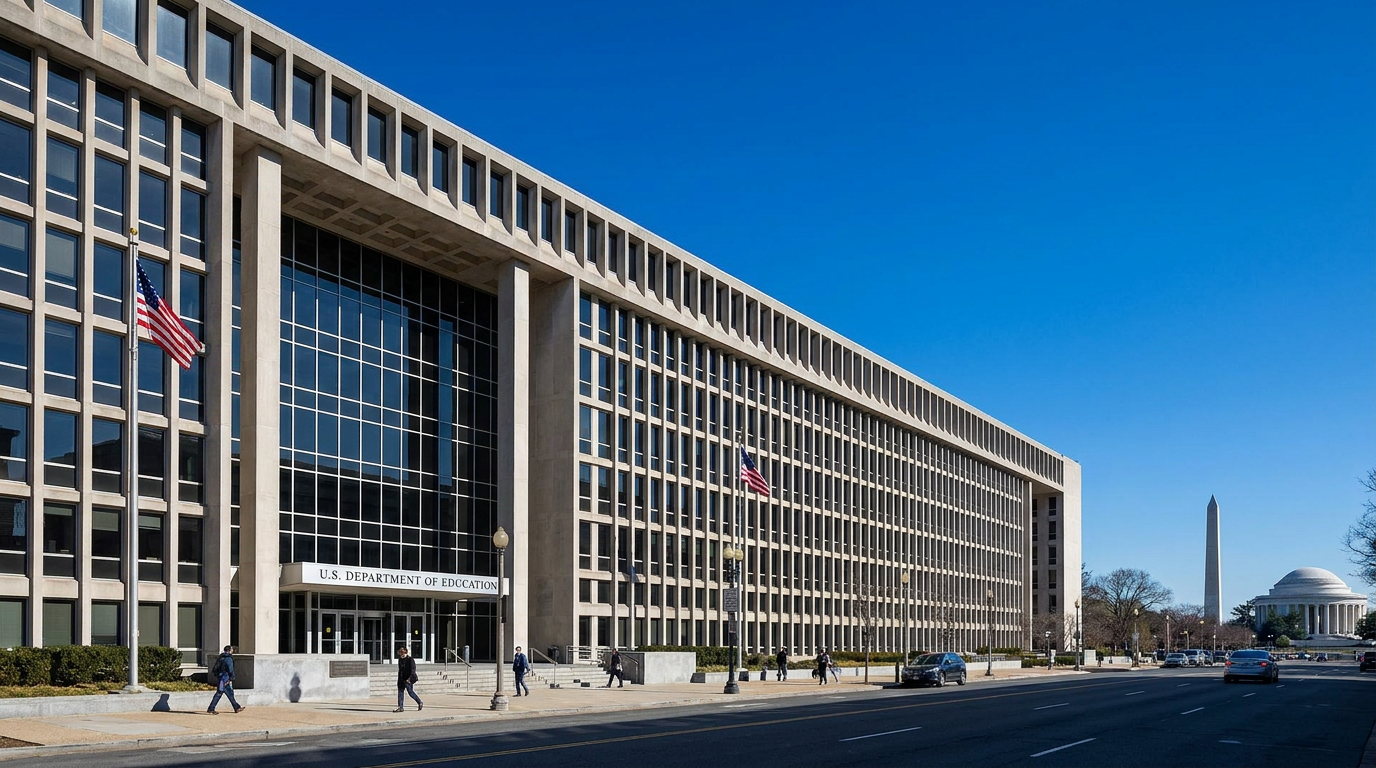
- Fiscal Conservatives & Administration
- Argue the overhaul protects taxpayers and ends unlawful mass forgiveness.
- Borrower Advocacy Groups
- Warn the changes will trigger a default crisis and strip away vital safety nets.
- Higher Education Institutions
- Focus on the logistical scramble and the need for alternative graduate funding.
What's not represented
- · Private student loan lenders
- · Current high school students planning for college
Why this matters
Starting July 1, millions of Americans will face stricter student loan repayment terms and hard caps on federal borrowing, fundamentally altering how families finance higher education and manage their monthly household budgets.
Key points
- The One Big Beautiful Bill Act introduces sweeping changes to federal student loans effective July 1, 2026.
- 7.5 million borrowers on the defunct SAVE plan have 90 days to select a new repayment option.
- The Graduate PLUS loan program is eliminated for new borrowers.
- Parent PLUS loans are now capped at $20,000 annually and $65,000 over a student's lifetime.
- The new Repayment Assistance Plan (RAP) requires 1% to 10% of a borrower's income.
- Legacy borrowers have a three-year grace period to finish their programs under the old rules.
Millions of Americans face a radically altered student loan landscape starting July 1, as the Trump administration's sweeping overhaul of higher education financing takes effect. The changes, driven by the 2025 "One Big Beautiful Bill Act" (OBBBA) and a recent court settlement, represent the most significant contraction of federal student aid in decades.[1][2]
The overhaul fundamentally restructures how students and parents borrow money, while simultaneously dismantling the Biden-era Saving on a Valuable Education (SAVE) plan. For the 7.5 million borrowers currently enrolled in SAVE, the clock starts ticking next month.[3][4]
Starting around July 1, federal loan servicers will issue notices giving SAVE enrollees 90 days to select a new repayment plan. If borrowers fail to act within that window, they will be automatically transferred into the Standard Repayment Plan—a move that could trigger a massive spike in monthly bills.[1][4]
Consumer advocates warn that the abrupt transition could lead to a default crisis. "If you have not been paying attention to your loans for four, five, six years, totally understandable. But now is the time to make sure your contact information is up to date," said Winston Berkman-Breen of the advocacy group Protect Borrowers.[2]

The Department of Education, however, frames the shift as a necessary correction to protect taxpayers. Under Secretary of Education Nicholas Kent stated that the guidance puts the "illegal student loan bailout agenda to rest once and for all," arguing that the SAVE plan was built on false promises of mass forgiveness.[4]
Borrowers transitioning out of SAVE, as well as new borrowers, will primarily be directed toward the newly created Repayment Assistance Plan (RAP). Unlike previous income-driven models that offered zero-dollar payments for low earners, RAP calculates minimum monthly payments based on a sliding scale of 1% to 10% of adjusted gross income, with a hard floor of $10 per month.[2][3]
Borrowers transitioning out of SAVE, as well as new borrowers, will primarily be directed toward the newly created Repayment Assistance Plan (RAP).
RAP also extends the timeline for loan forgiveness. Any remaining balance is canceled only after 30 years of consistent payments, a significantly longer horizon than the 20-year threshold offered by several legacy plans.[3]
Beyond repayment, the OBBBA imposes strict new caps on federal borrowing, effectively ending the era where the government would finance the full cost of attendance for advanced degrees. The Graduate PLUS loan program, heavily relied upon by master's and doctoral students, is being eliminated entirely for new borrowers.[5][6]

In its place, graduate students will be limited to Direct Unsubsidized Loans, capped at $20,500 annually and $100,000 over their lifetime. Students pursuing professional degrees in fields like law, medicine, and dentistry face a slightly higher ceiling of $50,000 annually and $200,000 total.[5][7]
The borrowing restrictions extend to parents as well. The Parent PLUS program, which previously allowed parents to borrow up to the full cost of their child's undergraduate education, will now be capped at $20,000 per year and $65,000 in total per student. Furthermore, new Parent PLUS loans will no longer be eligible for Public Service Loan Forgiveness.[3][7]

A "legacy provision" offers a temporary reprieve for currently enrolled students. Those who borrowed federal loans for their current academic program before June 30, 2026, will be grandfathered into the old rules for up to three years, allowing them to finish their degrees without hitting the new caps.[6][7]
This looming deadline has triggered a scramble among continuing students to secure loan disbursements before July 1. University financial aid offices are urging prospective graduate students to seek alternative funding, noting that federal aid will no longer cover the full cost of tuition and living expenses at many institutions.[5][8]
The July 1 changes are only the first phase of the administration's broader contraction of the student loan system. Existing income-driven options, including Pay As You Earn (PAYE) and Income-Contingent Repayment (ICR), are slated to sunset entirely by the summer of 2028, forcing millions more to eventually navigate the new RAP framework.[1][6]
How we got here
July 2025
President Trump signs the One Big Beautiful Bill Act (OBBBA) into law.
March 2026
A federal court formally ends the Biden-era SAVE plan following a settlement with Missouri and other states.
July 1, 2026
The OBBBA's new borrowing caps take effect, and the 90-day window opens for SAVE borrowers to pick a new plan.
July 2028
Legacy income-driven repayment plans, including PAYE and ICR, are permanently sunset.
Viewpoints in depth
Fiscal Conservatives & Administration
Argue the overhaul protects taxpayers and ends unlawful mass forgiveness.
Proponents of the One Big Beautiful Bill Act view the previous student loan system as a bloated liability that unfairly burdened taxpayers. The Department of Education argues that the Biden-era SAVE plan was an 'illegal bailout' built on false promises, and that streamlining repayment into the RAP framework restores fiscal responsibility. By capping Grad PLUS and Parent PLUS loans, conservatives argue the government is forcing universities to rein in runaway tuition costs rather than relying on endless federal subsidies.
Borrower Advocacy Groups
Warn the changes will trigger a default crisis and strip away vital safety nets.
Consumer advocates and student debt organizations argue the abrupt transition will be disastrous for millions of Americans. They warn that forcing 7.5 million SAVE enrollees to actively select a new plan within 90 days—or face automatic enrollment in the expensive Standard Repayment Plan—will inevitably lead to widespread delinquency. Advocates also criticize the new RAP plan for its 30-year forgiveness timeline and the elimination of zero-dollar minimum payments for the lowest earners.
Higher Education Institutions
Focus on the logistical scramble and the need for alternative graduate funding.
University financial aid offices are primarily concerned with the immediate logistical hurdles of the July 1 deadline. They are urgently advising current students to secure 'legacy' status by taking out loans before the cutoff. Looking long-term, institutions warn that the elimination of Grad PLUS loans means federal aid will no longer cover the full cost of attendance for many master's and professional programs, forcing future students to rely on higher-interest private loans or personal savings.
What we don't know
- How many of the 7.5 million SAVE borrowers will successfully transition to a new plan before the 90-day deadline.
- Whether the elimination of Grad PLUS loans will lead to a significant drop in graduate school enrollment nationwide.
- How private lenders will adjust their interest rates and offerings to fill the gap left by federal borrowing caps.
Key terms
- One Big Beautiful Bill Act (OBBBA)
- A 2025 legislative package that fundamentally restricts federal student loan borrowing limits and repayment options.
- SAVE Plan
- A Biden-era income-driven repayment plan that offered low monthly payments and early forgiveness, now dismantled by court order.
- Repayment Assistance Plan (RAP)
- The new primary income-driven repayment option, requiring 1% to 10% of income and offering forgiveness after 30 years.
- Graduate PLUS Loan
- A federal loan program that previously allowed graduate students to borrow up to the full cost of attendance, eliminated for new borrowers in 2026.
- Legacy Borrower
- A student who received a federal loan before July 1, 2026, granting them a three-year grace period under the old borrowing rules.
Frequently asked
What happens if I am currently on the SAVE plan?
You will receive a notice around July 1 giving you 90 days to select a new repayment plan. If you do not choose one, you will be automatically enrolled in the Standard Repayment Plan.
Can I still get a Grad PLUS loan for my master's degree?
Only if you are a 'legacy borrower' who received a loan for your current program before July 1, 2026. New borrowers are no longer eligible for Grad PLUS loans.
How much can my parents borrow for my undergraduate degree?
Starting July 1, Parent PLUS loans are capped at $20,000 per year and $65,000 in total over your undergraduate career.
Will my monthly payments go up under the new RAP plan?
It depends on your income. RAP calculates payments between 1% and 10% of your adjusted gross income, with a minimum payment of $10 per month, which is higher than the $0 minimum previously offered by SAVE.
Sources
Source coverage
8 outlets
3 viewpoints surfaced








[1]The GuardianBorrower Advocacy Groups
US student debt repayment system is being overhauled – here's what to know
Read on The Guardian →[2]PBS NewsBorrower Advocacy Groups
Major changes to student loan borrowing and repayment are coming. Here's what to know
Read on PBS News →[3]Connecticut PublicBorrower Advocacy Groups
Major changes to federal student loans begin July 1. Here's what to know
Read on Connecticut Public →[4]U.S. Department of EducationFiscal Conservatives & Administration
U.S. Department of Education Announces Next Steps for Borrowers Enrolled in the Unlawful SAVE Plan
Read on U.S. Department of Education →[5]Saving For CollegeHigher Education Institutions
Grad PLUS Loans Ending in 2026: New Borrowing Rules + Limits
Read on Saving For College →[6]TCNJ Financial AidHigher Education Institutions
Update on Federal Loan Changes Beginning in 2026
Read on TCNJ Financial Aid →[7]Chapman UniversityHigher Education Institutions
One Big Beautiful Bill Act's Impact on Undergraduate Student Loans
Read on Chapman University →[8]National Association of Student Financial Aid AdministratorsHigher Education Institutions
Big Changes to Federal Student Loans
Read on National Association of Student Financial Aid Administrators →
More in news politics
See all 5 stories →AI Regulation
U.S. Government Forces Anthropic to Disable Advanced AI Models Under Export Control Order
0 sources

Iran Nuclear Standoff
U.S. and Iran Reach 60-Day Ceasefire to Reopen Strait of Hormuz and Negotiate Nuclear Deal
0 sources
US-Iran Deal
US and Iran to Sign Interim Peace Deal as Trump Warns 'All Hell Will Rain Down' Over Nuclear Ambitions
0 sources

Every angle. Every day.
Get news politics stories with full source coverage and perspective breakdowns delivered to your inbox.