
The Gut-Brain Axis: How 'Psychobiotics' and Diet Are Reshaping Mental Health
Emerging research reveals that the gut microbiome directly communicates with the brain, suggesting that fermented foods and targeted probiotics could be powerful tools for improving mood and reducing anxiety.
By Factlen Editorial Team
- Microbiome Researchers
- Focus on the biological mechanisms of the gut-brain axis and the potential to treat mood disorders by altering microbial ecosystems.
- Clinical Psychiatrists
- View dietary interventions as a promising but supplementary tool that should accompany, rather than replace, established psychiatric treatments.
- Nutritional Advocates
- Emphasize the empowering, accessible, and low-cost nature of using whole foods to build mental resilience and prevent disease.
What's not represented
- · Patients with severe treatment-resistant depression
- · Gastroenterologists treating functional gut disorders
Why this matters
If mental health is partially driven by gut bacteria, dietary interventions offer an accessible, low-cost, and non-invasive way to build emotional resilience. Understanding this connection empowers individuals to actively support their psychological well-being through everyday food choices.
Key points
- The gut-brain axis is a two-way communication network linking the digestive system to emotional and cognitive centers in the brain.
- Gut bacteria produce or stimulate the production of key neurotransmitters, including serotonin and GABA.
- A Stanford study found that a diet high in fermented foods increased microbiome diversity by 25% and lowered inflammation in 10 weeks.
- Psychobiotics—microbes that confer mental health benefits—are emerging as a powerful adjunct therapy for anxiety and depression.
- The modern Western diet actively harms microbiome diversity, while Mediterranean and fermented diets support emotional resilience.
The sensation of having "butterflies in your stomach" before a major presentation is more than just a poetic metaphor; it is a literal biological manifestation of the gut-brain connection. For decades, modern psychiatry focused almost exclusively on the brain—specifically neurotransmitter imbalances—to explain and treat conditions like depression and anxiety. However, a profound paradigm shift is underway in the medical community. Researchers are increasingly looking downward, past the blood-brain barrier, to the trillions of microorganisms residing in the human gastrointestinal tract.[2][6]
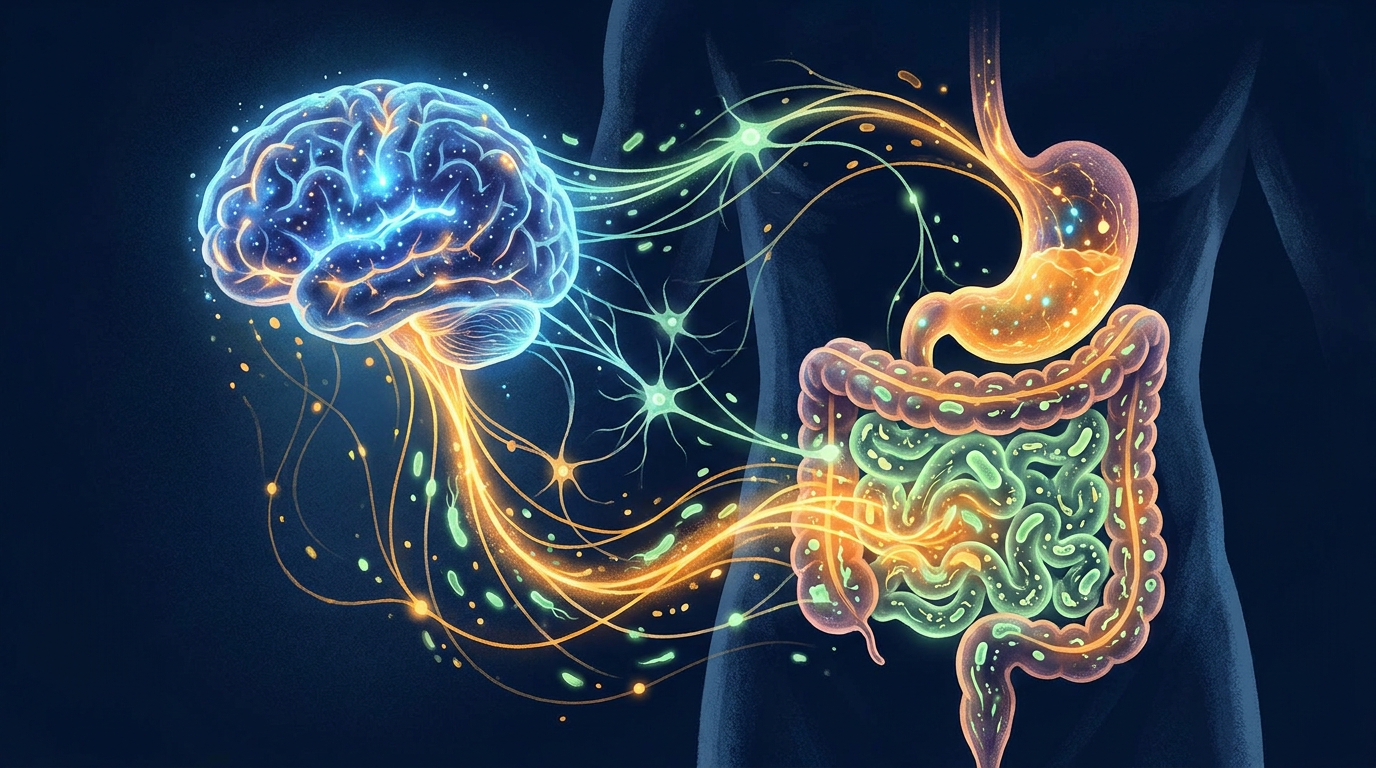
This complex, bidirectional communication network is known as the gut-brain axis (GBA). It serves as a continuous feedback loop between the central nervous system and the enteric nervous system of the gut. Rather than being passive passengers, the bacteria, viruses, and fungi that make up the gut microbiome are active participants in our neurological health, influencing everything from daily mood fluctuations to long-term cognitive resilience.[2][4]
The communication along the gut-brain axis occurs through three primary channels. The first is physical: the vagus nerve acts as a biological superhighway, providing a direct neural connection from the intestinal tract straight to the brain's emotional centers, such as the amygdala. Microbial signals in the gut can stimulate the vagus nerve, altering neuronal excitability and emotional processing in real time.[1][2]
The second channel is chemical. It is a little-known fact that the gut microbiome is responsible for producing or stimulating the production of a vast majority of the body's neurotransmitters. Certain beneficial bacteria actively synthesize gamma-aminobutyric acid (GABA), a neurotransmitter that calms the nervous system, as well as precursors to serotonin, the chemical heavily targeted by traditional antidepressant medications.[1][5]
The third channel involves the immune system and systemic inflammation. When the gut microbiome is imbalanced—a state known as dysbiosis—the intestinal barrier can become compromised. This allows inflammatory markers to leak into the bloodstream. These inflammatory cytokines can cross the blood-brain barrier, triggering neuroinflammation that is increasingly recognized as a root cause of depressive symptoms and chronic anxiety.[2][4]

This emerging understanding has given rise to a new frontier in nutritional psychiatry: "psychobiotics." Originally coined to describe live probiotics that confer mental health benefits, the term has expanded to include prebiotics and whole dietary patterns that intentionally modulate the microbiome to support brain health. Psychobiotics represent a fascinating shift from treating the brain directly to treating the ecosystem that supports it.[1][5]
Specific bacterial strains have shown remarkable promise in clinical settings. Meta-analyses indicate that certain species within the Lactobacillus and Bifidobacterium genera can significantly reduce the severity of depressive symptoms when administered over several weeks. These psychobiotic strains appear to enhance intestinal barrier integrity, reduce systemic inflammation, and regulate the body's hypothalamic-pituitary-adrenal (HPA) axis, which controls our biological response to stress.[1][4]
Specific bacterial strains have shown remarkable promise in clinical settings.
But psychobiotics do not just come in pill form; they are abundant in our food supply. A landmark clinical trial conducted by researchers at the Stanford School of Medicine provided some of the most compelling evidence to date on how quickly diet can remodel this internal ecosystem. Led by Dr. Justin Sonnenburg and Dr. Christopher Gardner, the study sought to understand how specific dietary interventions impact microbial diversity and immune status.[3][6]
In the Stanford trial, 36 healthy adults were randomly assigned to one of two 10-week diets: one high in fiber, and the other high in fermented foods such as kimchi, kefir, kombucha, and yogurt. The researchers hypothesized that the high-fiber diet would yield the most significant improvements, given fiber's well-known role as fuel for beneficial gut bacteria.[3]
The results, however, were surprising. It was the fermented food group that experienced a profound transformation. Participants who steadily increased their intake to about six servings of fermented foods per day saw their overall microbiome diversity increase by roughly 25%. More importantly, this increase in diversity was accompanied by a significant decrease in 19 different molecular markers of inflammation.[3][6]

Conversely, the high-fiber diet did not universally decrease inflammation or increase microbial diversity within the 10-week window. Researchers suspect this is because the modern, industrialized gut may have lost the specific microbes required to properly break down complex plant fibers. Without the right microbial workforce in place, simply adding fiber isn't enough; the gut needs the live, active cultures provided by fermented foods to rebuild its foundational diversity.[3]
Beyond fermented foods, broader dietary patterns play a crucial role in the gut-brain axis. Comprehensive reviews published in 2025 highlight that the Mediterranean diet—rich in polyphenols, omega-3 fatty acids, and diverse plant matter—consistently correlates with lower rates of depression. These whole-food diets promote the production of short-chain fatty acids (SCFAs), which are vital metabolites that protect the brain and reduce neuroinflammation.[2][4]

In stark contrast, the standard Western diet, characterized by ultra-processed foods, refined carbohydrates, and saturated fats, actively depletes microbiome diversity. This dietary pattern starves beneficial bacteria and feeds inflammatory microbes, creating a biological environment that leaves the brain more vulnerable to stress and mood disorders.[4][6]
Despite the excitement surrounding psychobiotics, clinical psychiatrists urge a balanced perspective. Dietary interventions and probiotic supplements are not standalone cures for severe, clinical psychiatric conditions. Instead, they are viewed as powerful, low-risk adjunct therapies that can enhance the efficacy of traditional treatments and build baseline emotional resilience in healthy populations.[1][6]
One of the greatest challenges in the field is individual variability. Because every person's microbiome is as unique as a fingerprint, a psychobiotic strain or dietary change that works wonders for one individual might have little effect on another. The effects of these interventions are highly strain-specific and population-dependent, meaning that broad, one-size-fits-all recommendations are still difficult to formulate.[1][2]

Looking ahead, the future of nutritional psychiatry lies in personalization. As microbiome sequencing becomes more accessible and affordable, clinicians may soon be able to map a patient's gut flora and prescribe specific psychobiotic strains or dietary modifications tailored to their unique biological makeup. This precision approach could revolutionize how we manage stress, anxiety, and depression.[2][5]
Ultimately, the science of the gut-brain axis offers a deeply empowering message. While we cannot always control the external stressors in our lives, we have immense agency over our internal environment. By choosing foods that nourish our microbiome, we are not just feeding our bodies—we are actively cultivating our mental health, one meal at a time.[2][6]
How we got here
2013
The term 'psychobiotics' is formally coined by researchers to describe live organisms that confer mental health benefits.
2019
Major physiological reviews establish the specific neural, immune, and endocrine pathways of the microbiota-gut-brain axis.
July 2021
Stanford University publishes a landmark clinical trial demonstrating that fermented foods rapidly increase microbiome diversity and lower inflammation.
2025
Comprehensive medical reviews confirm that dietary modulation of the gut microbiome can significantly impact the body's stress response and mood.
Viewpoints in depth
Microbiome Researchers
Scientists focused on mapping the complex biological mechanisms that link gut bacteria to brain function.
Researchers in microbiology and immunology view the gut as an untapped frontier for treating systemic disease. They emphasize the empirical data showing how specific bacterial strains produce short-chain fatty acids and neurotransmitters that directly alter brain chemistry. For this camp, the focus is on identifying the precise molecular pathways—such as vagus nerve stimulation and HPA axis regulation—so that highly targeted, strain-specific psychobiotic therapies can be developed for clinical use.
Clinical Psychiatrists
Medical professionals who treat mental health disorders and view diet as a supplementary tool.
While optimistic about the gut-brain connection, clinical psychiatrists caution against viewing diet or probiotics as a panacea for severe mental illness. They point out that current psychobiotic research is still in its infancy and that individual microbiome variability makes it difficult to prescribe specific dietary interventions with the same predictability as traditional pharmaceuticals. They advocate for using nutritional psychiatry as an empowering, low-risk adjunct therapy alongside established treatments like cognitive behavioral therapy and SSRIs.
Nutritional Advocates
Public health experts and dietitians focused on the preventative power of whole foods.
This perspective highlights the accessibility and foundational importance of diet in overall well-being. Nutritional advocates argue that the modern Western diet is a primary driver of the current mental health crisis due to its destructive effect on the microbiome. They champion public education on the benefits of fermented foods, fiber, and the Mediterranean diet, emphasizing that these interventions are low-cost, democratized ways for individuals to build emotional resilience without needing a prescription.
What we don't know
- Which specific strains of bacteria are most effective for different types of anxiety or depression.
- How to predict which dietary intervention will work best for an individual based on their unique baseline microbiome.
- The exact long-term mental health impacts of maintaining a high-fermented food diet over several years.
Key terms
- Gut-Brain Axis (GBA)
- The bidirectional communication network that links the enteric nervous system of the gut with the central nervous system of the brain.
- Psychobiotics
- Interventions, including targeted probiotics and specific diets, that influence the microbiome to produce positive mental health outcomes.
- Vagus Nerve
- A major cranial nerve that acts as a direct physical communication highway between the gastrointestinal tract and the brain.
- Short-Chain Fatty Acids (SCFAs)
- Beneficial compounds produced when gut bacteria ferment dietary fiber, known to reduce inflammation and protect the brain.
- Dysbiosis
- An imbalance in the gut microbial community, often associated with increased inflammation and a higher risk of mood disorders.
Frequently asked
What exactly are psychobiotics?
Psychobiotics are live microorganisms (probiotics), prebiotics, or specific dietary patterns that confer mental health benefits by positively interacting with the gut-brain axis.
Can eating fermented foods cure depression?
No. While fermented foods can reduce inflammation and improve baseline mood by supporting a healthy microbiome, they are considered an adjunct therapy, not a standalone cure for clinical depression.
How quickly does diet change the microbiome?
Research shows that significant changes to the gut microbiome's diversity and inflammatory markers can occur in as little as 10 weeks of consistent dietary intervention.
Why didn't a high-fiber diet work as well in the Stanford study?
Researchers believe that many people eating a modern Western diet have lost the specific gut microbes needed to break down complex fibers, meaning they need live cultures from fermented foods to rebuild that diversity first.
Sources
Source coverage
6 outlets
3 viewpoints surfaced






[1]Frontiers in NutritionMicrobiome Researchers
The influence of a psychobiotic diet on microbial profiles and mental health outcomes
Read on Frontiers in Nutrition →[2]CureusClinical Psychiatrists
The Gut-Brain Axis and Mental Health: How Diet Shapes Our Cognitive and Emotional Well-Being
Read on Cureus →[3]Stanford MedicineMicrobiome Researchers
Fermented-food diet increases microbiome diversity, decreases inflammatory proteins, study finds
Read on Stanford Medicine →[4]MDPI NutrientsNutritional Advocates
The Effect of Dietary Types on Gut Microbiota Composition and Development of Non-Communicable Diseases
Read on MDPI Nutrients →[5]National Institutes of HealthMicrobiome Researchers
Psychobiotics: A novel class of psychotropic
Read on National Institutes of Health →[6]Factlen Editorial TeamNutritional Advocates
Synthesis by Factlen editorial team
Read on Factlen Editorial Team →


Every angle. Every day.
Get health stories with full source coverage and perspective breakdowns delivered to your inbox.