
The Rise of 'Coolcationing': How Climate Change is Rewiring the Global Summer Holiday
As extreme heat reshapes traditional summer getaways, a massive structural shift toward temperate northern destinations is driving record tourism to Scandinavia and the Baltics.
By Factlen Editorial Team
- Climate-Adaptive Travelers
- Prioritize physical comfort, safety, and the ability to engage in outdoor activities over traditional sun-seeking.
- Northern Destination Managers
- Welcome the economic windfall but urgently advocate for sustainable capacity limits and infrastructure funding.
- Southern Hospitality Sector
- Adapting to the loss of the July/August peak by extending their operational seasons into the spring and autumn.
What's not represented
- · Local residents in Southern Europe facing economic shifts
- · Aviation industry policymakers addressing the carbon paradox
Why this matters
The $10 trillion global tourism industry is undergoing a permanent geographic shift. This trend alters local economies, real estate markets, and how millions of families plan their time off to ensure safety and comfort.
Key points
- Extreme summer heat is driving tourists away from the Mediterranean in July and August.
- Searches for cooler destinations jumped 237% as travelers prioritize safety and comfort.
- Scandinavia, the Baltics, and Scotland are experiencing unprecedented summer tourism booms.
- Southern Europe is adapting by shifting its peak seasons to the spring and autumn.
- The influx of 'climate refugees' is straining infrastructure in remote northern communities.
- The trend highlights a carbon paradox, as tourists fly further to escape climate change.
For generations, the blueprint for a European summer holiday was simple: chase the sun, pack a swimsuit, and head to the nearest Mediterranean beach. But as global temperatures rise and heatwaves become more severe, the traditional July and August peak is losing its luster. In its place, a new phenomenon has rapidly moved from a niche marketing buzzword to a measurable macroeconomic shift.[5]
Welcome to the era of the "coolcation"—a portmanteau of "cool" and "vacation." The concept is straightforward: rather than enduring 40°C (104°F) temperatures in crowded southern resorts, travelers are actively seeking out temperate climates, higher latitudes, and higher elevations for their summer escapes.[5]
This is no longer just a preference for sweater weather; it is a structural rewiring of the global travel industry. Driven by consecutive years of record-breaking heat, wildfires, and water shortages across Southern Europe and parts of North America, the coolcation trend is fundamentally altering where billions of tourism dollars flow.[4][5]
The data behind this migration is stark. According to figures from Trip.com Group, search volumes for cooler destinations jumped 237% during the summer months of 2025 compared to the previous year, with demand continuing to spike into 2026.[2]
This shift is deeply rooted in climate anxiety and physical comfort. The Booking.com 2026 Travel & Sustainability Report reveals that 74% of global travelers now explicitly consider extreme weather risks when choosing their destination and the timing of their trip. Furthermore, over a quarter of respondents state they are actively seeking out cooler destinations to ensure a reliable, safe experience.[3]

Airlines are already reallocating capacity to meet this new reality. Scandinavian Airlines (SAS) reported a dramatic surge in bookings from Southern Europe to Norway for the summer 2026 season. Flight bookings from France to Norway are up 22% year-over-year, while the coastal city of Stavanger has seen a 38% increase in arrivals from Spain, Italy, and France.[1]
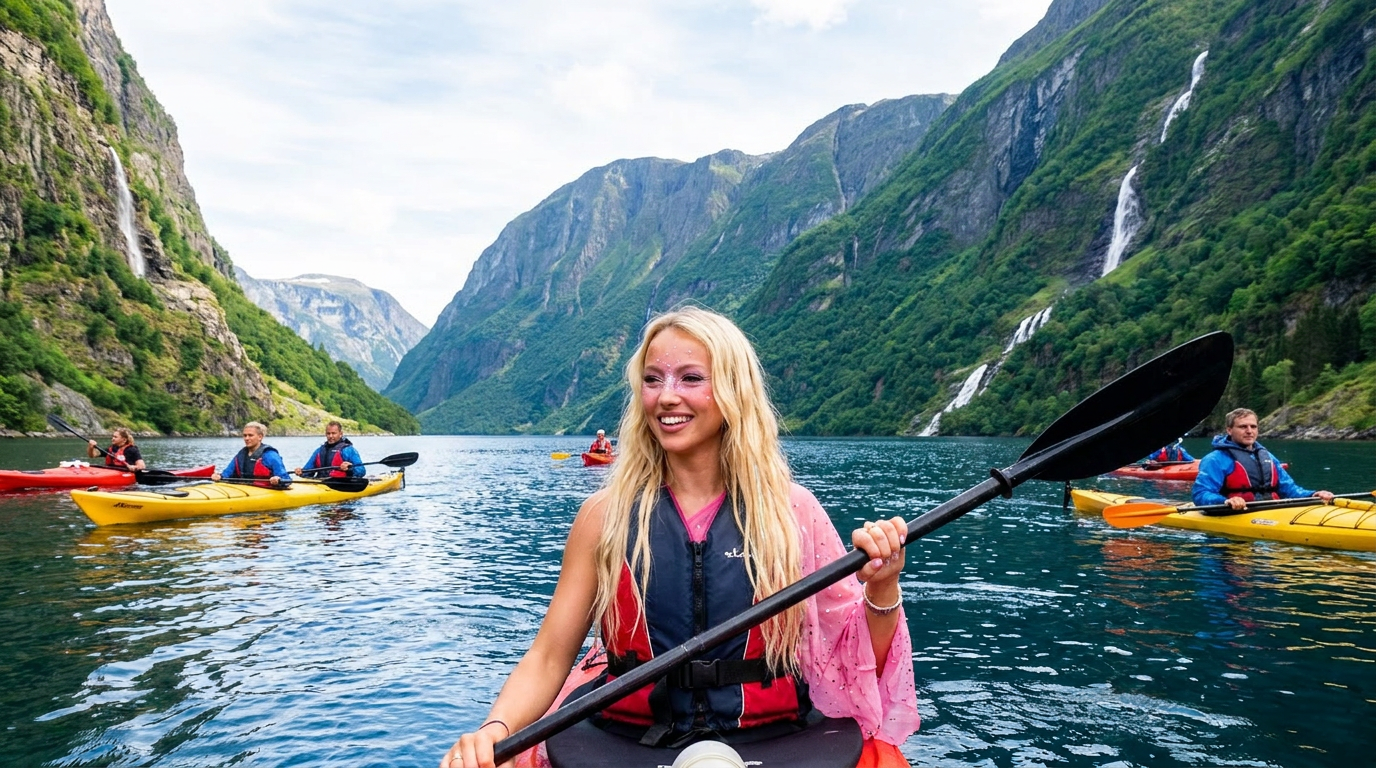
The mechanism driving this change is twofold: the push of extreme heat and the pull of outdoor accessibility. When temperatures in Greece or Spain top 44°C (111°F), outdoor activities become dangerous, confining tourists to air-conditioned hotel rooms. In contrast, destinations in Scandinavia, the Baltics, and Scotland offer average summer temperatures around 20°C (68°F), allowing for full days of hiking, kayaking, and exploration.[5]
Consequently, the traditional travel calendar is flattening. The European Travel Commission notes that the Mediterranean summer is moving away from a single, high-priced peak season in July and August. Instead, Southern Europe is seeing the rise of two distinct high seasons: May-June and September-October, when the weather is more manageable.[4]

Consequently, the traditional travel calendar is flattening.
Meanwhile, Northern Europe is experiencing an unprecedented summer boom. Countries like Norway, Sweden, Finland, and Iceland are the primary beneficiaries of this climate-induced migration. These nations offer the exact commodities that are becoming increasingly rare in global tourism: mild weather, vast open spaces, and abundant fresh water.[1][5]
The economic windfall for these northern destinations is substantial. Statistics Norway reported record-breaking guest nights over the past year, with foreign demand jumping by double digits. Hotels, tour operators, and rural communities that previously relied on short, intense winter seasons are now seeing sustained, lucrative summer traffic.[1]
However, this sudden influx of climate refugees brings significant complications. The primary uncertainty facing the coolcation boom is whether northern infrastructure can handle the volume. Popular areas are already facing mounting pressure on local resources, housing, and natural ecosystems.[1][5]
In Norway's picturesque Lofoten Islands, locals have raised alarms about traffic congestion, waste management, and the environmental impact of cruise tourism. Frequent opinion pieces in regional newspapers highlight the strain on public amenities, noting that the region's narrow roads and limited facilities were never designed for mass summer tourism.[1]

Urban centers are not immune to the squeeze. Tromsø, long known as a winter destination for the Northern Lights, has seen its recently expanded airport pushed to capacity by the influx of summer flights. Officials are already debating whether further expansions will be necessary to accommodate the projected growth through the end of the decade.[1]
There is also a glaring environmental paradox at the heart of the coolcation trend. As travelers from Southern Europe, Asia, and the Americas fly further north to escape the effects of climate change, they are generating more carbon emissions, thereby contributing to the very warming they are trying to avoid.[5]
This contradiction has prompted calls for a more regenerative approach to tourism. Organizations like the World Wildlife Fund and the European Union's Transition Pathway for Tourism are urging travelers to take fewer, longer trips, utilize electrified rail networks where possible, and support destinations with strict sustainability certifications.[2][5]

Looking ahead, the travel industry must adapt to a permanently altered map. Ski resorts in the Alps and North America are heavily investing in "summer in reverse" branding, transforming into year-round mountain biking and wellness retreats to offset dwindling winter snowfalls.[5]
For the hospitality sector, the mandate is clear: climate resilience is no longer an optional sustainability goal, but a core business requirement. Destinations must develop infrastructure that can withstand both extreme weather and sudden shifts in visitor volume.[3][5]
Ultimately, the rise of the coolcation signifies the end of the predictable summer holiday. As the planet warms, the ultimate luxury in travel is no longer a guaranteed tan, but the simple, increasingly rare privilege of a cool breeze.[5]
How we got here
Summer 2023-2024
Record-breaking heatwaves and wildfires across Southern Europe prompt initial shifts in traveler behavior.
Summer 2025
Booking platforms record triple-digit percentage growth in searches for Nordic destinations.
Early 2026
Airlines like SAS dramatically increase flight capacity to Scandinavia to meet surging southern demand.
June 2026
Coolcationing is recognized not as a temporary anomaly, but as a permanent structural shift in global tourism.
Viewpoints in depth
Climate-Adaptive Travelers
Prioritizing physical comfort, safety, and the ability to engage in outdoor activities over traditional sun-seeking.
For this demographic, the definition of a 'good trip' has fundamentally changed. Enduring 40°C heat on a crowded beach is no longer seen as a relaxing escape, but as a physical endurance test. By shifting their gaze northward, these travelers are reclaiming their ability to spend full days outdoors—hiking, kayaking, and exploring—without the constant threat of heat exhaustion. They view the higher costs of Scandinavian travel as a necessary premium for reliable weather and personal comfort.
Northern Destination Managers
Welcoming the economic windfall but urgently advocating for sustainable capacity limits and infrastructure funding.
Tourism boards and local governments in places like Norway and Iceland are caught in a delicate balancing act. While the influx of summer revenue is revitalizing rural economies that previously relied solely on winter sports, the sheer volume of arrivals is overwhelming local infrastructure. Officials are pushing for 'value over volume' strategies, implementing tourist taxes, and encouraging visitors to explore lesser-known regions to prevent their pristine landscapes from suffering the same overtourism fate as Venice or Barcelona.
Southern Hospitality Sector
Adapting to the loss of the July/August peak by extending their operational seasons into the spring and autumn.
Hoteliers and tour operators in the Mediterranean are rapidly adjusting their business models to survive the hollowing out of their traditional peak season. Rather than fighting the climate reality, they are heavily marketing the 'shoulder seasons' of May, June, September, and October as the optimal times to visit. This adaptation requires keeping staff employed longer and maintaining facilities year-round, ultimately transforming the region's highly seasonal economy into a more stable, albeit shifted, year-round operation.
What we don't know
- Whether northern destinations will implement hard caps on visitor numbers to protect their ecosystems.
- How the aviation industry will reconcile the increased emissions generated by travelers flying further north.
- The long-term economic impact on Southern European communities that rely heavily on July and August revenue.
Key terms
- Coolcation
- A travel trend where holidaymakers deliberately choose destinations with cooler, temperate climates to avoid extreme summer heat.
- Shoulder Season
- The travel periods between the peak and off-peak seasons, typically spring and autumn, which are now becoming the new high seasons for Southern Europe.
- Regenerative Tourism
- A sustainable approach to travel that aims to leave a destination better than it was found, often through longer stays and lower-emission transport.
- Flattening of Demand
- The economic shift where tourism is spread more evenly throughout the year rather than being concentrated in a single two-month summer peak.
Frequently asked
What exactly is a coolcation?
A 'coolcation' is a vacation planned specifically around finding a temperate, mild climate to escape extreme summer heatwaves, typically involving travel to higher latitudes or elevations.
Which countries are benefiting most from this trend?
Northern European nations like Norway, Sweden, Finland, and Iceland are seeing the largest surges, alongside regions like Scotland, the Baltics, and Canada.
Is the Mediterranean losing tourists entirely?
No. Instead of a single massive peak in July and August, Southern Europe is seeing a 'flattening of demand' where tourists visit during the milder shoulder seasons of May-June and September-October.
What are the downsides of coolcationing?
The sudden influx of tourists is straining the infrastructure of remote northern towns, and flying further distances to reach these destinations increases carbon emissions.
Sources
Source coverage
5 outlets
3 viewpoints surfaced





[1]ForbesNorthern Destination Managers
Data Proves Coolcation Trend Is Real
Read on Forbes →[2]TravelPulseClimate-Adaptive Travelers
Coolcations Heat Up as Climate Concerns Reshape Travel Demand: New Data
Read on TravelPulse →[3]Booking.comClimate-Adaptive Travelers
2026 Travel & Sustainability Report
Read on Booking.com →[4]European Travel CommissionSouthern Hospitality Sector
European Travel Sentiment Survey 2025-2026
Read on European Travel Commission →[5]Factlen Editorial TeamNorthern Destination Managers
Synthesis by Factlen editorial team
Read on Factlen Editorial Team →

Every angle. Every day.
Get travel stories with full source coverage and perspective breakdowns delivered to your inbox.