
SpaceX Completes Largest IPO in History, Surpassing $2 Trillion Valuation
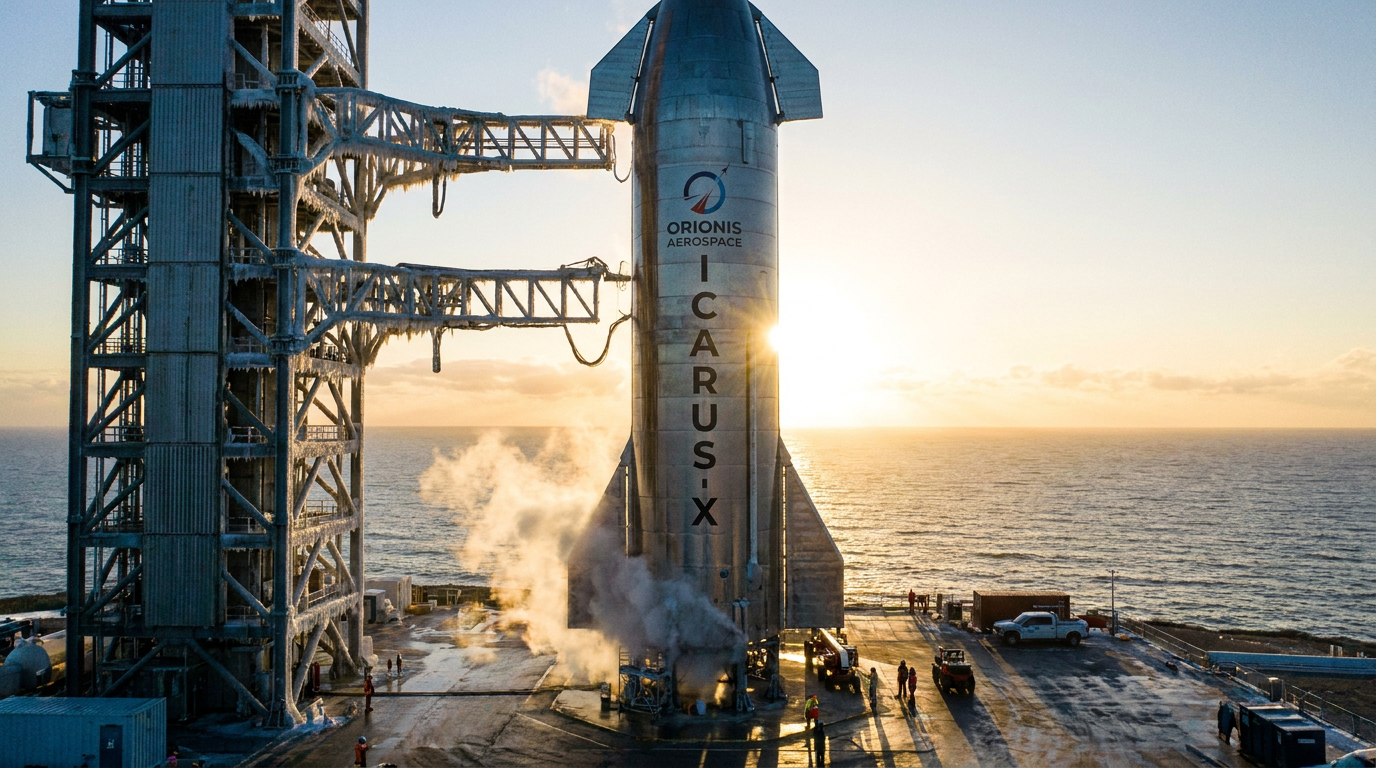
SpaceX has shattered records with a $75 billion initial public offering, propelling its market capitalization past $2 trillion and cementing its status as a commercial space and technology juggernaut. The landmark debut, guided by President Gwynne Shotwell, also makes founder Elon Musk the world's first trillionaire.
By Factlen Editorial Team
- Tech Bulls & Retail Investors
- Viewing the IPO as a generational wealth event and a validation of the space economy.
- Space Industry Analysts
- Focusing on the operational execution and the capital unlocked for deep-space exploration.
- Governance Skeptics
- Raising alarms over the unprecedented concentration of voting power and wealth.
What's not represented
- · Legacy Aerospace Competitors
- · Telecommunications Providers
Why this matters
SpaceX's record-shattering IPO permanently alters the landscape of the global stock market, injecting a $2 trillion aerospace giant into major index funds. For everyday investors, this means their retirement portfolios are now directly tied to the success of commercial spaceflight, satellite internet expansion, and the unprecedented concentration of corporate control.
Key points
- SpaceX raised a record-breaking $75 billion in its initial public offering, pricing shares at $135 each.
- Strong market demand pushed the company's valuation past $2 trillion on its first day of trading.
- The historic listing officially made founder Elon Musk the world's first trillionaire.
- President Gwynne Shotwell's operational leadership was credited with preparing the capital-intensive business for public markets.
- Musk retains approximately 85% of the company's voting power through a dual-class share structure.
SpaceX has officially rewritten the record books of global finance, completing the largest initial public offering in history. By raising $75 billion through the sale of 555.56 million shares, the aerospace juggernaut nearly tripled the previous high-water mark set by Saudi Aramco in 2019.[3][6]
Priced at $135 per share, the offering initially valued the company at $1.77 trillion. However, insatiable demand on the Nasdaq quickly pushed the stock higher, with shares jumping 11% at the open and closing their first day of trading at $160.95. This surge propelled SpaceX's market capitalization past the $2 trillion threshold, instantly cementing it as the sixth most valuable public company in the United States.[4][6]
The sheer scale of the listing triggered one of the most concentrated wealth-creation events in Silicon Valley history. The debut officially pushed founder Elon Musk's net worth past the $1 trillion mark, making him the world's first trillionaire. Musk's massive equity stake, combined with his holdings in Tesla, vaulted him into unprecedented financial territory as retail and institutional investors clamored for a piece of the space economy.[2][4][5]

While Musk's vision dominates the headlines, Wall Street has focused heavily on the operational architect behind the company's financial maturity: President and Chief Operating Officer Gwynne Shotwell. Long known as the pragmatic counterweight to Musk's lofty ambitions, Shotwell was instrumental in transforming SpaceX from a scrappy startup into an IPO giant capable of commanding a multi-trillion-dollar premium.[1]
For years, Shotwell had publicly expressed skepticism about subjecting a capital-intensive, long-horizon space venture to the pressures of quarterly earnings reports. However, her recent pivot to embrace the public markets served as a crucial signal to institutional investors that SpaceX's core businesses—particularly its Starlink satellite internet constellation and commercial launch services—had achieved the predictable cash flows necessary to satisfy Wall Street. Her own stake in the company is now valued at approximately $1.9 billion.[1][5]
For years, Shotwell had publicly expressed skepticism about subjecting a capital-intensive, long-horizon space venture to the pressures of quarterly earnings reports.
The astronomical valuation is anchored by SpaceX's near-monopoly on global launch capabilities and the rapid expansion of Starlink. The company accounted for more than 80% of the mass launched into orbit over the past three years, drastically reducing the cost of space access through its reusable Falcon 9 rockets. Furthermore, a recent multiyear cloud services agreement with Google and the integration of AI initiatives have positioned SpaceX as a dual-threat infrastructure play in both aerospace and artificial intelligence.[3][5][6]

The appetite for SpaceX shares was evident long before the opening bell. In the weeks leading up to the IPO, synthetic pricing and dark-market indications suggested a valuation well above the $1.77 trillion reference price. The company allocated an unusually high 30% of its shares to retail buyers, bypassing the traditional roadshow process and relying instead on overwhelming organic demand that reportedly exceeded $100 billion.[3][6]
Despite the euphoria, the listing carries unique structural risks that have drawn scrutiny. Musk retains an estimated 85% of the company's voting power through a dual-class share structure, leaving public shareholders with virtually no influence over corporate strategy. This absolute control, combined with the company's stated mission to "make life multiplanetary," means investors are underwriting a vision that prioritizes Mars colonization over traditional capital returns.[3][6]
Financial analysts have also pointed to the stark contrast between SpaceX's market cap and its current revenue profile. The company trades at a massive multiple compared to legacy mega-cap stocks, having swung to a net loss in 2025 following its merger with the AI firm xAI. Skeptics warn that pricing a company at 90 times its sales leaves little room for execution errors, particularly given the inherent technical risks of the upcoming Starship program.[6]

Nevertheless, SpaceX's triumphant debut has sent a powerful message to the broader technology sector. By proving that public markets can absorb a $2 trillion listing and still chase the close higher, the IPO provides a clear template for other late-stage private giants. Bankers and venture capitalists are already viewing the event as a green light for the next wave of mega-cap artificial intelligence listings, suggesting the window for generational tech offerings is wide open.[4][6]
A significant driver of the premium valuation is the anticipated rollout of Starlink's next-generation V3 satellites. Designed to address network latency and handle a surge in global subscribers, the V3 architecture promises network speeds exceeding 1Gbps. This infrastructure upgrade is viewed by analysts as the critical bridge to transforming Starlink from a rural broadband alternative into a dominant global telecommunications provider, justifying the massive capital raise.[1][6]

As SpaceX settles into its new reality as a publicly traded behemoth, the stakes for the aerospace industry have been permanently altered. The $75 billion war chest provides the company with unparalleled resources to accelerate its Starship development and deepen its AI integrations. For the millions of new shareholders, the investment represents a high-stakes wager that the economics of space exploration will ultimately match the scale of human ambition.[3][4][6]
How we got here
2002
Elon Musk founds Space Exploration Technologies Corp. (SpaceX) with the goal of reducing space transportation costs.
2019
Saudi Aramco sets the previous IPO record by raising $25.6 billion.
May 2026
SpaceX files paperwork for a massive public offering, targeting a valuation near $1.75 trillion.
June 11, 2026
SpaceX prices its IPO at $135 per share, officially raising $75 billion.
June 12, 2026
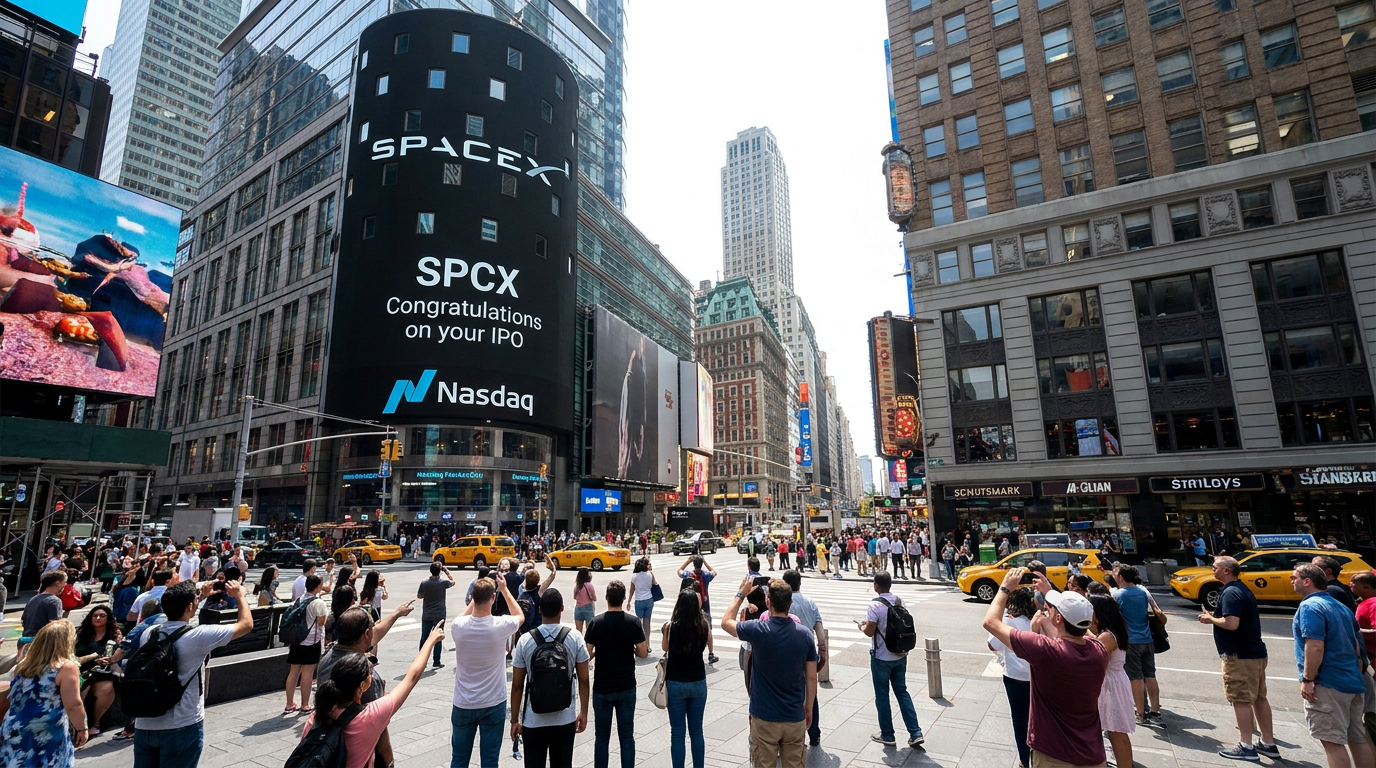
Shares begin trading on the Nasdaq under the ticker SPCX, surging to push the company's valuation past $2 trillion.
Viewpoints in depth
Tech Bulls & Retail Investors
Viewing the IPO as a generational wealth event and a validation of the space economy.
For bullish investors, SpaceX's debut is the ultimate validation of the commercial space narrative. They argue that the company's near-monopoly on orbital launches and the recurring revenue model of Starlink justify the unprecedented valuation. Furthermore, retail demand—which exceeded $100 billion before the offering—demonstrates a massive appetite for visionary infrastructure plays. This camp views the $2 trillion market cap not as a ceiling, but as a baseline for a company that is simultaneously cornering aerospace, satellite telecommunications, and artificial intelligence.
Space Industry Analysts
Focusing on the operational execution and the capital unlocked for deep-space exploration.
Industry experts emphasize the operational triumph behind the financial milestone, largely crediting President Gwynne Shotwell for building a sustainable business model beneath the founder's lofty goals. From this perspective, the $75 billion raised is a necessary war chest for the capital-intensive Starship program and the deployment of V3 Starlink satellites. Analysts note that by securing public funding, SpaceX has insulated its multiplanetary ambitions from the volatility of private venture capital, ensuring steady progress on its NASA contracts and commercial launch manifest.
Governance Skeptics
Raising alarms over the unprecedented concentration of voting power and wealth.
Corporate governance watchdogs and financial skeptics point to the structural risks embedded in the offering. With 85% of the voting power secured through a dual-class share structure, public shareholders have effectively surrendered all strategic oversight. Skeptics also highlight the staggering revenue multiple—trading at roughly 90 times sales—which leaves zero margin for error. They warn that tying trillions of dollars in index-fund capital to a single individual's tightly controlled, high-risk aerospace venture introduces unique systemic vulnerabilities to the broader market.
What we don't know
- How the public market's demand for quarterly profitability will impact SpaceX's long-term, capital-intensive goal of Mars colonization.
- Whether the massive valuation multiple can be sustained if the Starship program faces significant technical delays.
- How regulatory bodies will respond to the unprecedented concentration of wealth and infrastructure control following the listing.
Key terms
- Initial Public Offering (IPO)
- The process of offering shares of a private corporation to the public in a new stock issuance, allowing the company to raise capital from public investors.
- Market Capitalization
- The total dollar market value of a company's outstanding shares of stock, calculated by multiplying the current share price by the total number of shares.
- Dual-Class Stock
- A stock structure where different classes of shares have different voting rights, often used by founders to retain control of a company after it goes public.
- Perpetual Futures
- A type of derivative contract that allows traders to speculate on the future price of an asset without an expiration date, often used to gauge shadow-market demand.
Frequently asked
How much did SpaceX raise in its IPO?
SpaceX raised $75 billion by selling 555.56 million shares at $135 each, making it the largest initial public offering in history.
What is SpaceX's market valuation?
The company debuted with a reference valuation of $1.77 trillion, which quickly surged past $2 trillion on its first day of trading.
Does Elon Musk still control SpaceX?
Yes. Despite going public, Musk retains approximately 85% of the voting power through a dual-class share structure.
Why did SpaceX go public now?
The IPO provides liquidity for early investors and employees while raising massive capital to fund the capital-intensive Starship program and expand Starlink's satellite infrastructure.
Sources
Source coverage
6 outlets
3 viewpoints surfaced






[1]CNBCSpace Industry Analysts
How Elon Musk's second-in-command Gwynne Shotwell helped turn SpaceX into an IPO giant
Read on CNBC →[2]ForbesTech Bulls & Retail Investors
SpaceX Shares Soar Again In Premarket As It Inches Towards $2.75 Trillion Market Cap
Read on Forbes →[3]ReutersSpace Industry Analysts
SpaceX prices biggest-ever U.S. IPO at $135 per share
Read on Reuters →[4]The GuardianGovernance Skeptics
Elon Musk becomes world's first trillionaire as SpaceX ends trading day with valuation of $2.1tn
Read on The Guardian →[5]Business InsiderGovernance Skeptics
The SpaceX IPO just created one of the biggest wealth events in Silicon Valley history. Here are the winners.
Read on Business Insider →[6]Investing.comTech Bulls & Retail Investors
SpaceX prices IPO at $135 per share, valuation hits $1.77 trillion
Read on Investing.com →
More in business
See all 5 stories →AI Developer Tools
SpaceX to Acquire AI Coding Startup Cursor for $60 Billion in Major Enterprise Push
0 sources

AI Industry
Anthropic Nears $1 Trillion Valuation and Files for IPO in Landmark Moment for AI Startups
0 sources
Space Economy
SpaceX Completes Historic $85 Billion IPO, Minting Elon Musk as World's First Trillionaire
0 sources
Every angle. Every day.
Get business stories with full source coverage and perspective breakdowns delivered to your inbox.