
G7 Summit Opens With US-Iran Truce and Plans to Reopen Strait of Hormuz
A tentative peace agreement between the United States and Iran dominated the opening of the G7 summit in France, promising to reopen the critical Strait of Hormuz. However, the deal faces fierce opposition from Israel over provisions demanding a ceasefire in Lebanon.
By Factlen Editorial Team
- US and European Administrations
- Prioritizes immediate economic relief, restoring global trade through the Strait of Hormuz, and preventing a wider regional war.
- Iranian Leadership
- Frames the deal as a diplomatic victory that secures vital sanctions relief while protecting regional allies by tying the agreement to an Israeli withdrawal from Lebanon.
- Israeli Government
- Views the bilateral US-Iran deal as a profound betrayal that enriches a sworn enemy while attempting to dictate Israel's security operations on its northern border.
What's not represented
- · Lebanese Government
- · Commercial Shipping Industry
Why this matters
The reopening of the Strait of Hormuz—a chokepoint for 20 percent of the world's oil—promises immediate relief for global energy markets and inflation. But the deal's attempt to force a ceasefire in Lebanon puts Washington on a direct collision course with its closest Middle Eastern ally, Israel.
Key points
- The US and Iran have signed a 14-point MoU to end hostilities and begin a 60-day negotiation period.
- The agreement promises to reopen the Strait of Hormuz, a critical chokepoint for 20% of global oil.
- France, the UK, and potentially Japan are organizing a naval mission to clear mines from the strait.
- Israel fiercely opposes the deal, rejecting a clause that demands a permanent ceasefire in Lebanon.
- The US and Iran are already issuing conflicting statements regarding the timeline for unfreezing Iranian assets.
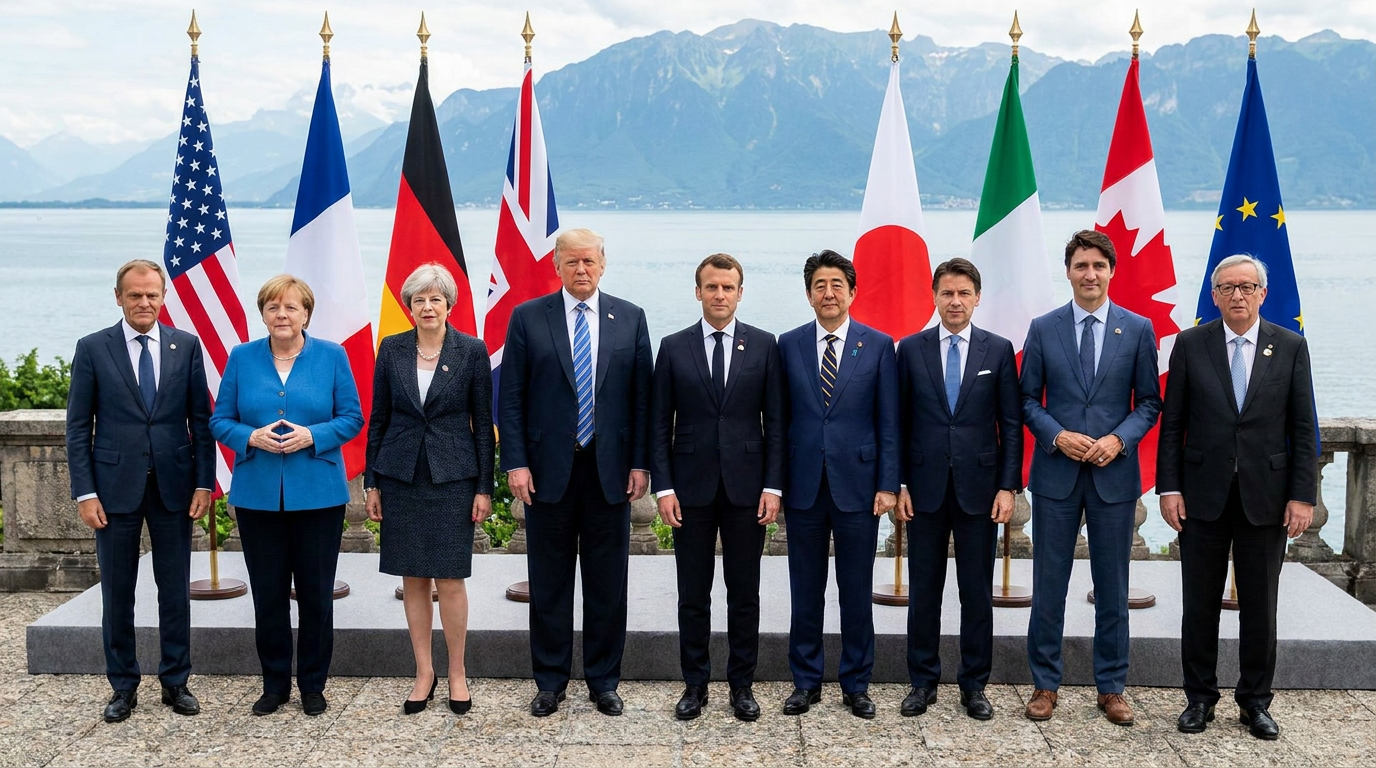
The 52nd G7 summit in Évian-les-Bains, France, opened Monday under the shadow of a massive geopolitical breakthrough: a tentative peace agreement between the United States and Iran. The surprise deal, designed to end months of direct military hostilities, promises to reopen the Strait of Hormuz and stabilize fractured global energy markets.[1][2]
U.S. President Donald Trump, speaking alongside French President Emmanuel Macron, announced that the 14-point Memorandum of Understanding (MoU) had been signed virtually by U.S. Vice President JD Vance and Iranian Parliament Speaker Mohammad-Bagher Ghalibaf. Trump declared that the critical shipping lane is "already partially opened" and will be fully operational by Friday, when a formal in-person signing ceremony is scheduled in Geneva.[1][5]
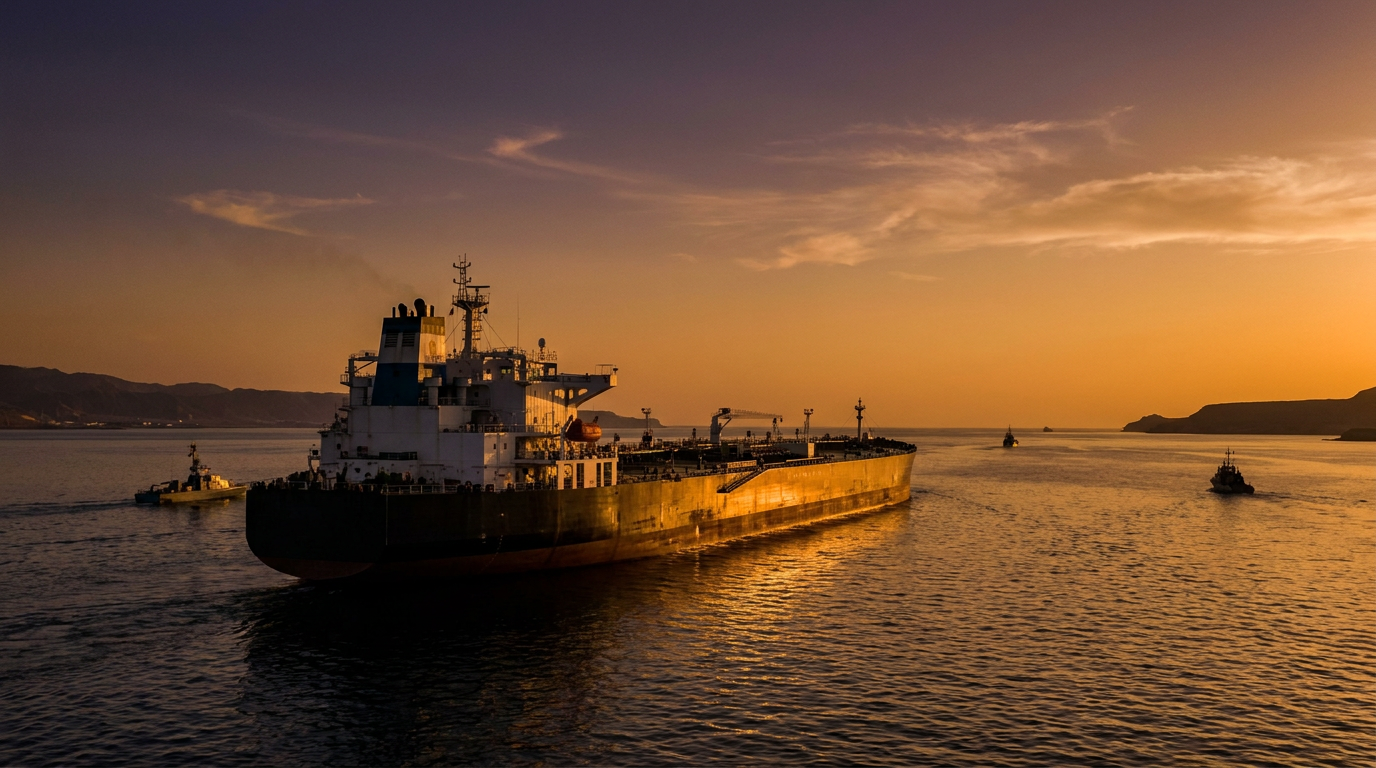
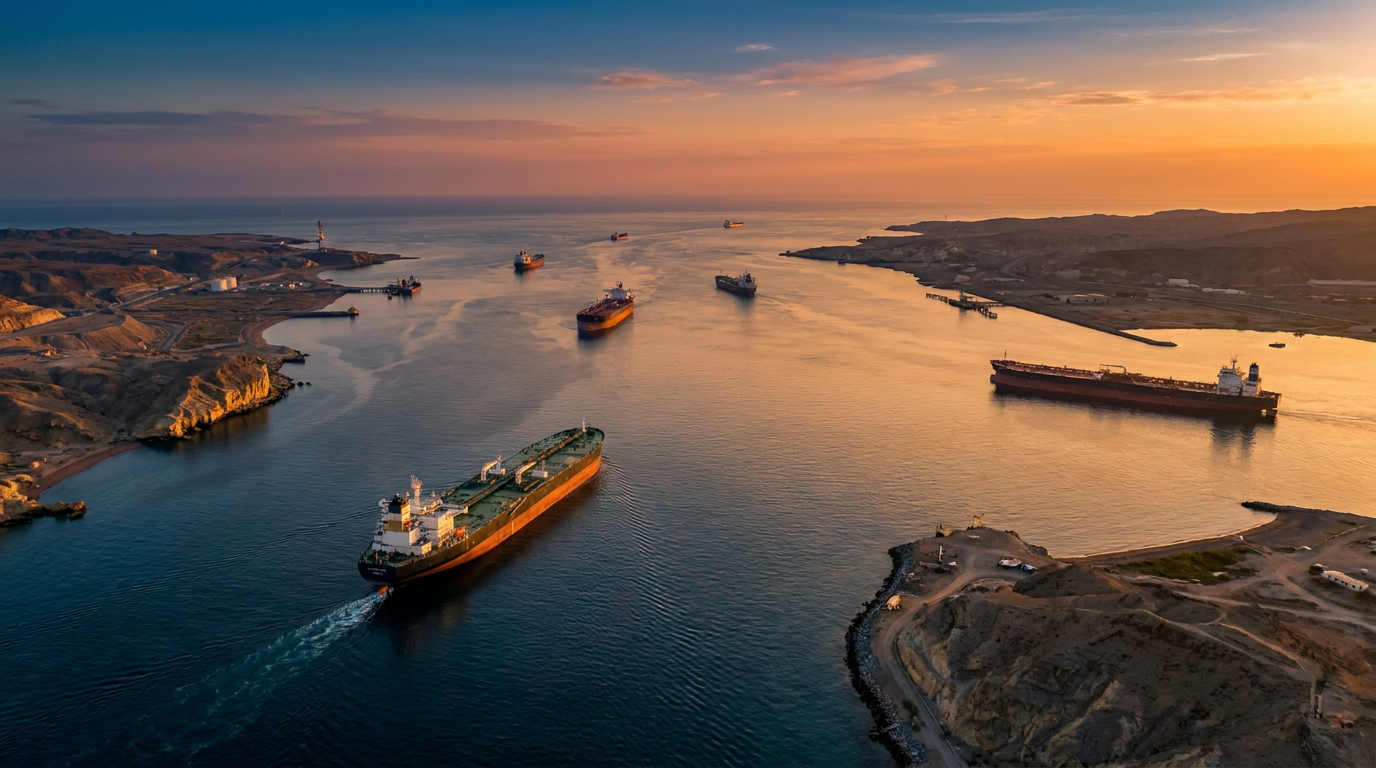
The economic implications of the truce are immediate and profound. Roughly 20 percent of the world's oil supply passes through the Strait of Hormuz, which had been effectively choked off by naval blockades and sea mines since the conflict escalated in late February. Global oil prices plummeted and stock markets rallied sharply as news of the impending reopening spread through the summit.[2][4]

Securing the waterway will require a massive multinational effort. Macron confirmed that France and the United Kingdom are organizing a joint naval mission to clear mines and escort commercial vessels. France is preparing to deploy the aircraft carrier Charles de Gaulle and specialized mine-clearance teams within days, while Japan is also considering dispatching Maritime Self-Defense Force minesweepers to assist the coalition.[6][8]
While European leaders expressed profound relief at the de-escalation, the mechanics of the MoU remain highly contested. The agreement establishes a 60-day ceasefire window to negotiate a comprehensive treaty covering Iran's nuclear program and regional security. However, Washington and Tehran are already issuing conflicting statements regarding the timeline for sanctions relief.[1][7]
Iranian state media and officials claim the U.S. has agreed to unfreeze between $12 billion and $24 billion in Iranian assets before the formal negotiations even begin. Conversely, U.S. officials insist that Tehran will not receive any financial relief until it demonstrates strict compliance with the deal's preliminary terms, setting the stage for early diplomatic friction.[1][2]

has agreed to unfreeze between $12 billion and $24 billion in Iranian assets before the formal negotiations even begin.
The most explosive element of the agreement, however, involves a third party: Israel. According to diplomatic sources, the MoU explicitly calls for the "immediate and permanent termination" of military operations on all fronts, specifically including Lebanon. Iranian negotiators reportedly insisted on this clause, tying the broader U.S.-Iran peace to a cessation of Israel's campaign against Hezbollah.[2][7]
The Israeli government, which is not a signatory to the MoU, reacted with furious defiance. Prime Minister Benjamin Netanyahu and Defense Minister Israel Katz vehemently rejected the terms, vowing that Israeli forces will remain in "security zones" across southern Lebanon and Gaza indefinitely. Katz warned that Israel would strike Iran with "full force" if Tehran attempted to use the Lebanon clause to justify new attacks.[4][7]
The U.S.-Iran deal has triggered a rare moment of unified outrage across Israel's fractured political spectrum. Opposition leaders and government officials alike have condemned the agreement as a disaster that funnels billions of dollars to Tehran while leaving its nuclear infrastructure and ballistic missile capabilities intact, characterizing it as a profound betrayal by Washington.[4]

Despite the looming crisis with Israel, the mood among European G7 members is overwhelmingly supportive of the truce. Macron, hosting his final G7 summit, called the pact a "very important step for peace" and emphasized that Europe's primary focus is ensuring the Strait of Hormuz remains open without the imposition of illegal transit tolls.[6]
The sudden pivot to the Middle East has forced a reshuffling of the summit's broader agenda, raising concerns about the ongoing war in Ukraine. Ukrainian President Volodymyr Zelenskyy is attending the Évian-les-Bains gathering to ensure that Western military and financial support does not waver as diplomatic attention shifts toward the Gulf.[2][3]

The summit is also serving as a hub for broader geopolitical realignment. Trump is holding a series of high-stakes bilateral meetings on the sidelines of the G7, including discussions with Indian Prime Minister Narendra Modi, Egyptian President Abdel Fattah el-Sissi, and leaders from Qatar and the United Arab Emirates, aiming to solidify a new regional security architecture.[3]
The ultimate success of the Évian-les-Bains diplomatic push hinges on the coming days. Negotiators face the daunting task of translating a fragile 14-point memorandum into a binding, comprehensive treaty within 60 days, all while navigating a furious Israeli government, a skeptical U.S. Congress, and the logistical nightmare of de-mining the world's most vital energy artery.[1][7]
How we got here
Feb 28, 2026
US-Israeli military operations begin, resulting in the death of Iranian Supreme Leader Ayatollah Ali Khamenei.
Early June 2026
The Strait of Hormuz is effectively closed by mines and a US naval blockade, spiking global oil prices.
June 15, 2026
US and Iranian officials virtually sign a 14-point Memorandum of Understanding to end hostilities.
June 16, 2026
G7 leaders convene in Évian-les-Bains, France, focusing on implementing the strait's reopening.
June 19, 2026
A formal in-person signing ceremony is scheduled to take place in Geneva, Switzerland.
Viewpoints in depth
US and European Administrations
Focused on restoring global trade and preventing a wider regional war.
For Washington and its European allies, the primary objective is economic stabilization. The closure of the Strait of Hormuz sent shockwaves through global energy markets, and European leaders, who bear the brunt of energy inflation, view the MoU as a critical pressure release valve. Macron and other G7 leaders are prioritizing the immediate deployment of naval assets to clear mines and ensure the free flow of commerce, viewing the 60-day negotiation window as a necessary risk to secure the waterway.
Iranian Leadership
Framing the deal as a diplomatic victory that secures sanctions relief and protects regional allies.
Tehran is presenting the MoU to its domestic audience as a major concession by the United States. Iranian officials emphasize that the agreement will unfreeze billions in assets and lift the naval blockade on their ports. Crucially, Iran views the inclusion of Lebanon in the ceasefire terms as a strategic victory, effectively using its leverage over the Strait of Hormuz to force Washington to rein in Israeli military operations against Hezbollah.
Israeli Government
Viewing the bilateral US-Iran deal as a profound betrayal that compromises Israel's security.
Israel sees the agreement as an existential threat. Across the political spectrum, Israeli leaders argue that the deal enriches a sworn enemy without dismantling its nuclear infrastructure or ballistic missile programs. The government is particularly incensed by the clause demanding an end to military operations in Lebanon, viewing it as an unacceptable infringement on Israel's right to secure its northern border. Officials have vowed to ignore the Lebanon ceasefire provisions, setting up a major diplomatic clash with Washington.
What we don't know
- Whether Iran will actually receive any frozen assets before the 60-day negotiation period concludes.
- How the US will respond if Israel continues its military operations in Lebanon in defiance of the MoU.
- Exactly how long it will take multinational naval forces to fully clear the Strait of Hormuz of sea mines.
Key terms
- Strait of Hormuz
- A narrow waterway between the Persian Gulf and the Gulf of Oman, serving as the only sea passage for oil from the Middle East to the open ocean.
- Memorandum of Understanding (MoU)
- A formal agreement outlining the broad outlines of a peace deal before a final, binding treaty is negotiated.
Frequently asked
Is the war between the US and Iran over?
The two countries have signed a preliminary Memorandum of Understanding to end hostilities and begin a 60-day negotiation period for a permanent treaty.
Will gas prices go down?
Global oil prices have already plummeted on the news that the Strait of Hormuz will reopen, which is expected to eventually lower prices at the pump.
Why is Israel angry about the deal?
Israel argues the deal enriches Iran without dismantling its nuclear program, and strongly opposes a clause demanding an end to Israeli military operations in Lebanon.
Sources
Source coverage
8 outlets
3 viewpoints surfaced








[1]CBS NewsUS and European Administrations
Trump says Strait of Hormuz will be 'completely open' Friday
Read on CBS News →[2]The GuardianIranian Leadership
US president left last meeting early, but world leaders aim to end Ukraine war and push for resolution in Gaza and Iran
Read on The Guardian →[3]Al Jazeera
G7 meeting in France: What's on agenda, who is attending?
Read on Al Jazeera →[4]PBSIsraeli Government
Iran deal could hamper Israel's operation in Lebanon
Read on PBS →[5]Channel News AsiaUS and European Administrations
Trump says Strait of Hormuz will be 'completely open' Friday
Read on Channel News Asia →[6]Anadolu AgencyUS and European Administrations
G7 will ensure US-Iran deal implemented, Strait of Hormuz reopens: French president
Read on Anadolu Agency →[7]Amwaj MediaIranian Leadership
Inside story: Iran, US 'explicitly agree' on peace in Lebanon, but will Israel end war?
Read on Amwaj Media →[8]Nippon
Japan Mulls Sending SDF Minesweepers to Strait of Hormuz
Read on Nippon →
More in news politics
See all 9 stories →US-Iran Deal
The US and Iran Are Closing In on a Peace Deal. Here Is Why Israel Is Sidelined.
0 sources
Energy Infrastructure
Ukraine Strikes Moscow Oil Refinery as G7 Leaders Meet to Discuss Ceasefire
0 sources
Middle East Peace
How Israel's Sidelining Could Complicate the U.S.-Iran Peace Agreement
0 sources
Iran Nuclear Talks
US and Iran Reach Ceasefire to End War, Deferring Nuclear Negotiations
0 sources
Every angle. Every day.
Get news politics stories with full source coverage and perspective breakdowns delivered to your inbox.