
US and Iran Reach Ceasefire to End War, Deferring Nuclear Negotiations
The United States and Iran have agreed to a 60-day ceasefire and the reopening of the Strait of Hormuz, halting a devastating three-month war. However, the deal defers the core issue of Tehran's nuclear program to future negotiations, drawing sharp criticism from hawks who argue Washington surrendered its leverage.
By Factlen Editorial Team
- US Administration
- Views the deal as a necessary step to restore global commerce and secure a pledge against nuclear weapons.
- Iranian Leadership
- Frames the ceasefire as a strategic victory that broke the US naval blockade and secured economic relief.
- Security Hawks & Israel
- Argues the agreement is a capitulation that rewards Iran without dismantling its nuclear infrastructure.
- Nonproliferation Advocates
- Welcomes the diplomatic off-ramp but stresses the urgent need to neutralize Iran's highly enriched uranium.
What's not represented
- · Lebanese civilians affected by the ceasefire
- · European energy consumers
Why this matters
The reopening of the Strait of Hormuz will immediately ease the worst global energy crisis in modern history and lower skyrocketing gas prices. But by kicking the nuclear question down the road, the agreement leaves the fundamental trigger of the conflict unresolved, setting the stage for a tense 60-day diplomatic sprint that will determine the future of Middle East security.
Key points
- The US and Iran have agreed to a 60-day ceasefire and the reopening of the Strait of Hormuz.
- The deal defers negotiations over Iran's nuclear program to a 60-day window following the ceasefire.
- Iran has reportedly secured access to $12 billion in frozen overseas assets as part of the agreement.
- Critics argue the US lost leverage by separating the cessation of hostilities from nuclear concessions.
- A formal signing ceremony for the memorandum of understanding is scheduled for Friday in Geneva.
The United States and Iran have reached a preliminary agreement to halt a devastating three-month war, trading a 60-day ceasefire and the reopening of the Strait of Hormuz for deferred negotiations over Tehran's nuclear program.[1][3]
The memorandum of understanding, slated for a formal signing ceremony in Geneva on Friday, marks a sudden diplomatic off-ramp to a conflict that began in late February with US and Israeli strikes on Iranian territory.[3][4]
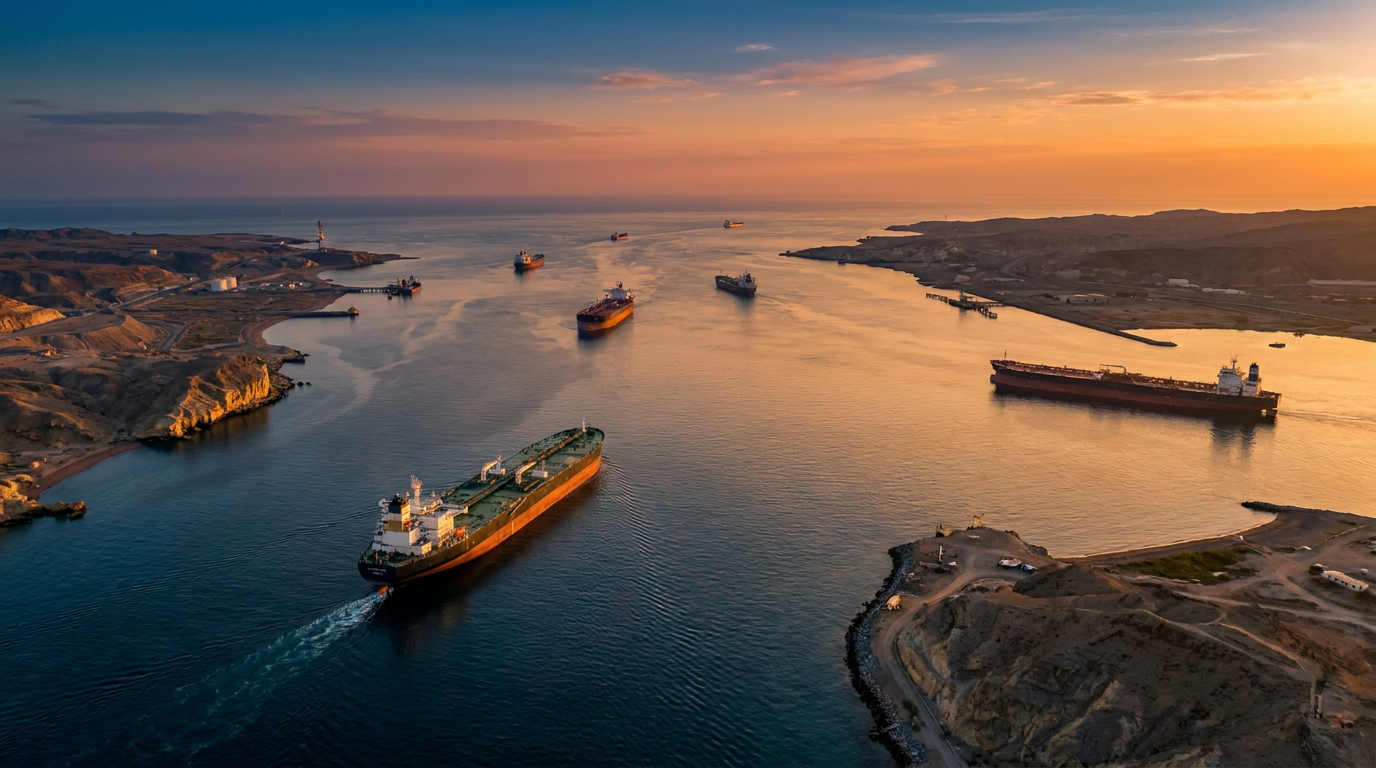
Under the terms of the deal, President Donald Trump has authorized an end to the US naval blockade of Iranian ports, while Tehran has agreed to lift its reciprocal blockade on maritime traffic through the Strait of Hormuz.[3]
The reopening of the strait—a critical global chokepoint that handles roughly a fifth of the world's oil and gas trade—promises immediate relief to a global economy battered by skyrocketing energy prices.[5]

Yet the agreement leaves the fundamental trigger of the war unresolved. The core issue of Iran's nuclear ambitions has been kicked down the road, setting up a tense 60-day window for negotiators to reach a comprehensive settlement.[1][4]
Iran enters these upcoming talks projecting a narrative of victory. Despite suffering significant damage to its military infrastructure during the conflict, the regime survived the onslaught and successfully used its leverage over global shipping to force an end to the fighting.[2][5]
Iran enters these upcoming talks projecting a narrative of victory.
Tehran has reportedly secured access to $12 billion in frozen overseas assets as part of the ceasefire, providing a crucial lifeline to an economy suffocated by years of sanctions and recent wartime destruction.[1]
In Washington, the Trump administration is framing the deal as a major win that restores global commerce and extracts a renewed pledge from Iran to never acquire a nuclear weapon. Vice President JD Vance confirmed that International Atomic Energy Agency (IAEA) inspectors will "absolutely" be allowed to return to Iranian nuclear sites.[4][7]

However, the decision to separate the cessation of hostilities from the nuclear question has drawn fierce criticism from security hawks and former diplomats. Critics argue that by agreeing to reopen the Strait of Hormuz before securing nuclear concessions, the US has surrendered its primary leverage.[7]
"We will go into the nuclear negotiations in a weak position, with no certainty we will get the results we need," noted former US Ambassador to Israel Dan Shapiro, warning that Washington has effectively paid a massive price just to return to the pre-war status quo.[7]
Israel, which was largely sidelined during the final stages of the Oman- and Pakistan-mediated negotiations, has expressed deep alarm. The agreement reportedly contains no restrictions on Iran's ballistic missile program or its support for regional proxy groups like Hezbollah and Hamas.[1][3]
The technical hurdles awaiting negotiators in the next 60 days are immense. Iran currently possesses an estimated 440.9 kilograms of uranium enriched to 60 percent purity—a short technical step away from the 90 percent threshold required for weapons-grade material.[3][6]

Nonproliferation experts emphasize that the immediate priority must be neutralizing this stockpile. Excavating the highly enriched uranium under IAEA supervision and diluting it to civilian-grade levels within Iran is viewed as the most viable path forward, especially since much of the material is buried in underground facilities damaged by recent strikes.[6]
As both sides prepare for the Geneva signing, the fragility of the truce remains apparent. Reports of explosions near Qeshm Island in the Strait of Hormuz on Tuesday underscored the volatile security environment, even as global oil markets tumbled in anticipation of restored supply.[7]
How we got here
Feb 28, 2026
US and Israel launch large-scale strikes against Iran, initiating the war.
March 2026
Iran closes the Strait of Hormuz, triggering a historic global energy crisis.
April 2026
Initial ceasefire talks in Islamabad fail to produce a breakthrough over nuclear demands.
June 14, 2026
US and Iran electronically sign a memorandum of understanding to end hostilities.
June 19, 2026
Formal signing ceremony scheduled in Geneva to initiate the 60-day ceasefire.
Viewpoints in depth
US Administration
Views the deal as a necessary step to restore global commerce and secure a pledge against nuclear weapons.
The Trump administration argues that reopening the Strait of Hormuz was an urgent global economic necessity. By securing a 60-day ceasefire and a renewed Iranian pledge to never acquire a nuclear weapon, the administration believes it has created the breathing room necessary to negotiate a permanent, verifiable end to Tehran's nuclear program. Vice President JD Vance has emphasized that the return of IAEA inspectors is a core component of the preliminary agreement.
Iranian Leadership
Frames the ceasefire as a strategic victory that broke the US naval blockade and secured economic relief.
Tehran is projecting confidence, arguing that its resilience during the three-month war and its control over the Strait of Hormuz forced Washington to the negotiating table. By securing the release of $12 billion in frozen assets and separating the ceasefire from the nuclear negotiations, Iranian leaders believe they have successfully decoupled their immediate economic survival from their long-term strategic deterrent.
Security Hawks & Israel
Argues the agreement is a capitulation that rewards Iran without dismantling its nuclear infrastructure.
Critics, including the Israeli government and former US diplomats, warn that Washington has surrendered its most potent leverage by agreeing to lift the naval blockade before securing concrete nuclear concessions. They argue that returning to the pre-war status quo without addressing Iran's ballistic missile program or its support for regional proxies leaves the Middle East fundamentally less secure, setting the stage for future conflict.
Nonproliferation Advocates
Welcomes the diplomatic off-ramp but stresses the urgent need to neutralize Iran's highly enriched uranium.
Arms control experts view the 60-day ceasefire as a critical, albeit narrow, window to prevent a nuclear-armed Iran. They advocate for practical, verifiable steps during the upcoming negotiations, specifically focusing on excavating and diluting Iran's 440.9-kilogram stockpile of 60 percent enriched uranium under strict IAEA supervision, rather than pursuing maximalist demands that could derail the talks.
What we don't know
- Whether Iran will agree to permanently dilute its stockpile of 60 percent enriched uranium during the upcoming 60-day window.
- The exact mechanisms for the return of IAEA inspectors to Iranian nuclear facilities damaged during the war.
- How Israel, which was sidelined during the final negotiations, will respond to the agreement.
Key terms
- Strait of Hormuz
- A critical maritime chokepoint between the Persian Gulf and the Gulf of Oman, through which roughly 20% of the world's oil consumption passes.
- Highly Enriched Uranium (HEU)
- Uranium that has been processed to increase the concentration of the U-235 isotope, bringing it closer to the 90% threshold needed for nuclear weapons.
- IAEA
- The International Atomic Energy Agency, the United Nations' nuclear watchdog responsible for inspecting and verifying nuclear programs.
- Memorandum of Understanding (MOU)
- A preliminary diplomatic agreement outlining the broad terms of a deal before a final, detailed treaty is negotiated.
Frequently asked
Has the war officially ended?
The US and Iran have agreed to a 60-day ceasefire and an end to naval blockades, but a permanent peace settlement depends on upcoming nuclear negotiations.
What happens to Iran's nuclear program now?
The current deal defers the issue. Negotiators have 60 days to agree on how to handle Iran's stockpile of highly enriched uranium and restore international inspections.
Why is Israel unhappy with the deal?
Israel argues the agreement rewards Iran with sanctions relief without dismantling its nuclear infrastructure, ballistic missile program, or support for regional proxy groups.
Will gas prices go down?
Global oil prices have already begun to tumble in anticipation of the Strait of Hormuz reopening, which is expected to significantly ease the global energy crisis.
Sources
Source coverage
7 outlets
4 viewpoints surfaced






[1]The GuardianSecurity Hawks & Israel
US-Iran peace deal hinges on shipping, sanctions relief and deferred nuclear talks
Read on The Guardian →[2]The New York TimesIranian Leadership
Iran Will Enter Nuclear Talks Feeling Emboldened
Read on The New York Times →[3]PBSUS Administration
Deal is reached to end Iran war and Trump orders stop to U.S. naval blockade
Read on PBS →[4]AxiosUS Administration
The 8 unresolved questions in Trump's Iran deal
Read on Axios →[5]Center for Strategic and International StudiesNonproliferation Advocates
The United States and Iran Announce a Deal to End the War | State of Play
Read on Center for Strategic and International Studies →[6]Arms Control AssociationNonproliferation Advocates
The U.S.-Iran MOU Is a Welcome Step; Now Negotiators Must Focus on Practical Nuclear Nonproliferation Diplomacy
Read on Arms Control Association →Iran 'agreed to never have a nuclear weapon', says Trump – as it happened
Read on The Guardian Live →
More in news politics
See all 5 stories →US-Iran Deal
The US and Iran Are Closing In on a Peace Deal. Here Is Why Israel Is Sidelined.
0 sources
Energy Infrastructure
Ukraine Strikes Moscow Oil Refinery as G7 Leaders Meet to Discuss Ceasefire
0 sources
Middle East Peace
How Israel's Sidelining Could Complicate the U.S.-Iran Peace Agreement
0 sources
Every angle. Every day.
Get news politics stories with full source coverage and perspective breakdowns delivered to your inbox.