
The Science of Pilates: How It Actually Changes Your Body
Once a niche rehabilitation tool, Pilates has secured robust clinical backing as a frontline intervention for chronic back pain, core stability, and functional longevity.
By Factlen Editorial Team
- Clinical Rehabilitation Advocates
- Focus on pain reduction, injury recovery, and deep core stability.
- Fitness & Conditioning Coaches
- Focus on muscular endurance, flexibility, and athletic cross-training.
- General Wellness Practitioners
- Focus on accessibility, posture improvement, and mind-body connection.
What's not represented
- · Traditional Yogis
- · Heavy Powerlifters
Why this matters
Understanding the clinical mechanics behind Pilates helps you choose the right modality—Mat or Reformer—to effectively treat back pain, improve posture, and build a resilient core without wasting time on fitness fads.
Key points
- Clinical meta-analyses rank Pilates among the most effective exercise interventions for reducing chronic low back pain and disability.
- The method targets the 'powerhouse'—deep stabilizing muscles like the transverse abdominis and multifidus—rather than superficial muscles.
- Mat Pilates is often more challenging for pure core activation because it lacks the mechanical assistance of Reformer springs.
- Reformer Pilates offers superior versatility for upper-body resistance and deep, assisted stretching.
- While excellent for core stability and posture, Pilates should be paired with heavy resistance training for maximum muscle hypertrophy and bone density.
Pilates is experiencing a massive cultural resurgence, moving far beyond its origins as a niche rehabilitation tool for injured dancers. Today, it is a staple of boutique fitness, physical therapy clinics, and professional athletic training.[6]
But unlike many fitness trends that rely on celebrity endorsements and aesthetic promises, the modern Pilates boom is anchored by a growing mountain of clinical evidence. Over the past decade, researchers have rigorously tested the method against chronic pain, postural decline, and muscular imbalances.[1]
The consensus among physical therapists and sports scientists is clear: Pilates is not just a gentle stretching routine. It is a highly specific neuromuscular intervention that fundamentally changes how the body stabilizes itself, making it one of the most effective evidence-based tools for functional longevity.[3]
To understand why Pilates works, one must look at its underlying mechanism. Developed in the 1920s by Joseph Pilates, the system was originally called "Contrology." It was designed to harmonize the mind and body through precise, controlled movements rather than mindless repetition.[4]
At the center of this mechanism is what Pilates called the "powerhouse"—the deep stabilizing muscles of the torso. While traditional abdominal workouts like crunches target the superficial rectus abdominis (the "six-pack" muscle), Pilates targets the transverse abdominis, the pelvic floor, and the multifidus muscles that run along the spine.[3]

By training these deep stabilizers to fire correctly, Pilates creates an internal corset that supports the spine during dynamic movement. This neuromuscular re-education is precisely why the method has become a frontline treatment for chronic lower back pain, a condition that affects hundreds of millions of people globally.[1]
The clinical data on this front is striking. A comprehensive network meta-analysis published in the Journal of Orthopaedic & Sports Physical Therapy evaluated various exercise interventions for adults with chronic low back pain. The researchers compared everything from general aerobic exercise to heavy strength training and stretching.[2]
The results placed Pilates at the absolute top of the hierarchy. According to the analysis, Pilates had a 93 percent likelihood of being the most effective intervention for reducing pain, and a 98 percent likelihood of being the most effective for reducing functional disability.[2]

The results placed Pilates at the absolute top of the hierarchy.
By restoring alignment and strengthening the muscles that support the lumbar spine, Pilates effectively unloads the injured areas. Patients often find it more tolerable than generic physical therapy, leading to higher adherence rates and better long-term outcomes.[1]
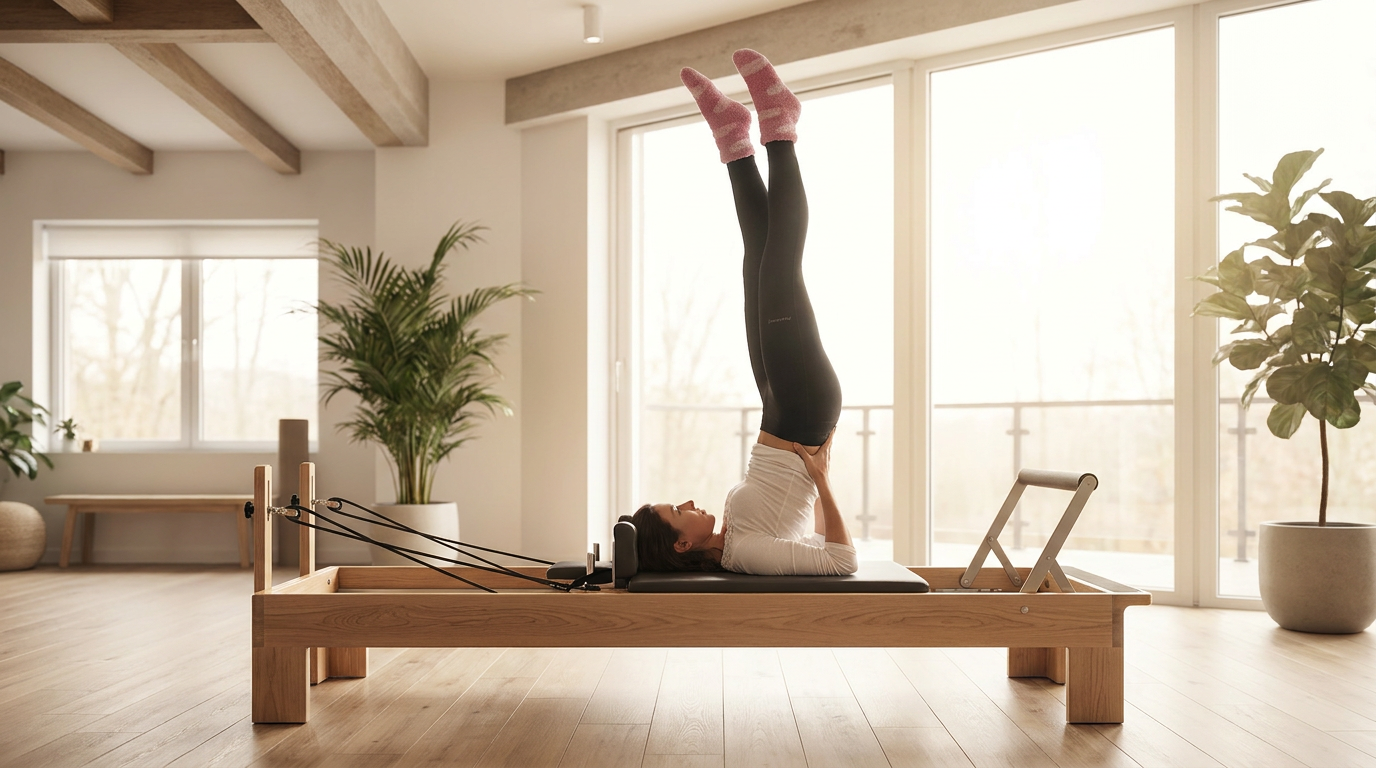
As new practitioners flock to the method, they inevitably encounter the primary divide in the Pilates world: the Mat versus the Reformer. Mat Pilates requires only body weight and gravity, while Reformer Pilates utilizes a specialized machine equipped with a sliding carriage, pulleys, and variable spring resistance.[4]
A common misconception is that Mat Pilates is the "easy" version, while the intimidating Reformer is for advanced athletes. Biomechanically, the opposite is often true for the core. On a Reformer, the springs provide resistance, but they also offer assistance. A movement like a roll-up is heavily assisted by the tension of the springs pulling the torso forward.[5]
On a mat, there is no mechanical assistance. The core must do 100 percent of the work against gravity. Studies comparing the two modalities have found that Mat Pilates produces comparable, and sometimes superior, core muscle activation for foundational exercises.[8]

However, the Reformer offers distinct advantages that the mat cannot match. The sliding carriage challenges balance and proprioception in a dynamic environment, while the straps allow for a vast array of upper body and lower body resistance exercises.[4]
The Reformer also facilitates deep, assisted stretching under tension, which is highly effective for improving joint mobility. Furthermore, the added resistance of the springs increases the overall metabolic cost of the workout; a rigorous 60-minute Reformer class can burn up to 250 calories, compared to roughly 175 for a standard mat class.[5][7]
Beyond core strength and pain management, regular Pilates practice yields significant benefits for posture and longevity. By stretching tight chest muscles and strengthening the neglected muscles of the upper back, Pilates counteracts the forward-head posture induced by modern desk work and smartphone usage.[3]

For older adults, this postural correction is paired with improvements in proprioception—the body's ability to sense its position in space. Clinical trials have demonstrated that Pilates significantly improves balance and reduces fall risk in elderly populations, a critical metric for extending independent living.[7]
Despite its extensive benefits, sports scientists are careful to note what Pilates cannot do. It is not a replacement for heavy resistance training. Because it does not subject the body to heavy, progressive loads, it will not drive significant muscle hypertrophy or maximize bone mineral density in the way that lifting weights will.[6]
Additionally, while it elevates the heart rate, it does not provide the intense cardiovascular conditioning required for optimal heart health. Therefore, experts recommend using Pilates as a foundational pillar of a broader fitness routine—one that builds the structural integrity necessary to run, lift, and live without pain.[3][6]
How we got here
1920s
Joseph Pilates develops 'Contrology', a system of exercises designed to rehabilitate injured soldiers and dancers.
1990s
Pilates enters the mainstream fitness market, popularized by celebrities and boutique studios.
2010s
Physical therapy clinics begin widely adopting Pilates principles for spinal rehabilitation and core stability.
2022
A major network meta-analysis confirms Pilates as one of the most effective exercise interventions for chronic low back pain.
Viewpoints in depth
Clinical Rehabilitation Advocates
Physical therapists and clinicians who utilize Pilates primarily for injury recovery and pain management.
This camp views Pilates through a purely medical lens. They emphasize its unparalleled ability to re-educate the neuromuscular system, particularly in patients with chronic lower back pain or joint instability. For these practitioners, the value of Pilates lies in its low-impact nature and its focus on the deep stabilizing muscles—the transverse abdominis and multifidus—which are often neglected in traditional physical therapy. They rely heavily on clinical meta-analyses proving its efficacy in reducing functional disability.
Fitness & Conditioning Coaches
Athletic trainers who integrate Pilates into broader strength and conditioning programs.
Conditioning coaches appreciate Pilates for its ability to improve muscular endurance, flexibility, and proprioception, but they view it as a supplementary tool rather than a complete fitness regimen. They argue that while Pilates is excellent for core stability and movement mechanics, it lacks the progressive overload required to build significant muscle mass (hypertrophy) or maximize bone mineral density. They advocate for pairing Pilates with heavy weightlifting and cardiovascular training to achieve a well-rounded athletic profile.
Mind-Body Practitioners
Instructors and enthusiasts who focus on the holistic, stress-reducing aspects of the original Contrology method.
Staying true to Joseph Pilates' original vision of 'Contrology,' this camp emphasizes the psychological and neurological benefits of the practice. They focus on breath control, mindful movement, and the parasympathetic nervous system's response to the exercises. For them, the primary benefit is not just a stronger core, but the reduction of stress, the improvement of sleep quality, and the cultivation of a deep mind-body connection that counteracts the physical and mental toll of modern sedentary lifestyles.
What we don't know
- While Pilates is highly effective for back pain, it is not yet clear if it is strictly superior to all other forms of targeted motor control exercises over a multi-year period.
- The exact threshold of Pilates frequency required to maintain bone mineral density in post-menopausal women remains an area of active clinical study.
Key terms
- Contrology
- The original name Joseph Pilates gave to his exercise method, emphasizing the mind's control over the muscles.
- Transverse Abdominis
- The deepest layer of abdominal muscles that wraps around the torso like a corset, crucial for spinal stability.
- Proprioception
- The body's ability to sense its movement, action, and location in space.
- Reformer
- A specialized piece of Pilates equipment featuring a sliding carriage, springs, and pulleys for variable resistance.
- Hypertrophy
- The enlargement of muscle tissue from the increase in size of its cells, commonly achieved through heavy weightlifting.
Frequently asked
Is Mat Pilates easier than Reformer Pilates?
Not necessarily. While the Reformer looks more intimidating, its springs often assist with movements. Mat Pilates forces your core to do 100 percent of the work against gravity.
Can Pilates replace weightlifting?
No. While Pilates builds muscular endurance and core stability, it does not provide the heavy progressive overload required for significant muscle hypertrophy or maximum bone density gains.
How often should I do Pilates to see results?
Clinical studies typically observe significant improvements in pain reduction and core strength with two to three sessions per week over an 8- to 12-week period.
Is Pilates effective for weight loss?
Pilates is not a primary weight-loss tool due to its relatively low caloric burn, but it improves body composition, posture, and muscle tone, which can change how the body looks and moves.
Sources
Source coverage
8 outlets
3 viewpoints surfaced








[1]National Institutes of HealthClinical Rehabilitation Advocates
Pilates exercise for chronic low back pain: A systematic review and meta-analysis
Read on National Institutes of Health →[2]Journal of Orthopaedic & Sports Physical TherapyClinical Rehabilitation Advocates
Best Exercise Options for Reducing Pain and Disability in Adults With Chronic Low Back Pain: A Network Meta-analysis
Read on Journal of Orthopaedic & Sports Physical Therapy →[3]Cleveland ClinicClinical Rehabilitation Advocates
Pilates Benefits: Why You Should Try It
Read on Cleveland Clinic →[4]Medical News TodayGeneral Wellness Practitioners
What to know about reformer vs. mat Pilates
Read on Medical News Today →[5]Women's HealthFitness & Conditioning Coaches
Reformer Pilates Vs. Mat Pilates: Which Is The Best Workout For You?
Read on Women's Health →[6]Factlen Editorial TeamFitness & Conditioning Coaches
Synthesis by Factlen editorial team
Read on Factlen Editorial Team →[7]HealthlineGeneral Wellness Practitioners
19 Science-Backed Benefits of Pilates
Read on Healthline →[8]Journal of Bodywork and Movement TherapiesFitness & Conditioning Coaches
Mat vs reformer Pilates: Core muscle activation comparison
Read on Journal of Bodywork and Movement Therapies →

Every angle. Every day.
Get fitness stories with full source coverage and perspective breakdowns delivered to your inbox.