
The End of Iron? How Digital Weights and Magnetic Resistance Are Rewiring Strength Training
Smart home gyms are replacing traditional dumbbells with electromagnetic resistance, offering adaptive workouts that change weight mid-rep. By leveraging algorithms and eccentric loading, digital weights promise a safer, more efficient path to building muscle.
By Factlen Editorial Team
- Connected Fitness Advocates
- Proponents argue that digital weights offer a safer, more efficient, and data-driven approach to strength training.
- Exercise Scientists
- Researchers focus on the physiological responses to different resistance profiles, noting benefits in both modalities.
- Traditional Strength Purists
- Traditionalists maintain that free weights are essential for developing functional strength and stabilizer muscles.
What's not represented
- · Commercial gym owners facing competition from home setups
- · Physical therapists using digital weights for precise rehabilitation
Why this matters
For decades, heavy strength training required buying space-consuming iron racks and risking injury without a spotter. Digital resistance democratizes elite lifting techniques—like eccentric overload and dynamic spotting—allowing anyone to safely build muscle and bone density from their living room.
Key points
- Digital weights use electromagnets and algorithms to generate resistance, replacing physical iron plates.
- The technology eliminates momentum, providing constant tension that makes digital weight feel significantly heavier.
- Automated eccentric loading allows users to safely lower more weight than they can lift, accelerating muscle growth.
- Built-in sensors act as a digital spotter, automatically reducing weight mid-rep if a user begins to struggle.
- While digital systems maximize safety and convenience, traditional free weights still offer superior engagement of stabilizer muscles.
For over a century, the pursuit of physical strength has relied on a simple, unyielding force: gravity. From cast-iron dumbbells to towering stacks of plates, lifting weights meant fighting the earth's pull. But a quiet technological revolution is replacing the familiar clank of iron with the silent hum of electromagnets. Digital weight systems, powered by advanced algorithms and magnetic resistance, are fundamentally rewiring how people train in their living rooms. By condensing the capabilities of a fully equipped commercial gym into sleek, wall-mounted screens and compact floor platforms, these devices are not just saving space—they are introducing dynamic, adaptive resistance profiles that were previously impossible to achieve with static metal.[1][7]
Unlike traditional free weights, which rely entirely on physical mass, smart home gyms like Tonal, Vitruvian, and Speediance generate resistance using digitally controlled electromagnetic fields. When a user pulls a cable attached to the machine, a high-torque electric motor pulls back. Because the resistance is generated by a computer rather than gravity, it can be manipulated in real-time. The internal algorithms adjust the magnetic pull up to hundreds of times per second, ensuring a perfectly smooth and highly responsive lifting experience. This marks a profound departure from analog fitness equipment, shifting the burden of resistance from heavy physical objects to sophisticated software and engineering.[2][6]
This technological shift solves one of the oldest mechanical problems in strength training: momentum. When you swing a heavy dumbbell upward during a bicep curl, the momentum carries the weight through the top half of the movement, effectively reducing the mechanical tension on the muscle. Digital weights completely eliminate this inertia. A 50-pound digital load remains exactly 50 pounds through every millimeter of the movement, providing constant, unrelenting tension. There is no swinging, no bouncing, and no relying on gravity to help you through the easiest parts of the lift.[2][7]

Because of this constant tension and lack of momentum, digital weight famously feels significantly heavier than its iron equivalent. Fitness experts and everyday users frequently note that 100 pounds of magnetic resistance can feel like 120 pounds of traditional free weights. The user is forced to engage the target muscle fully throughout the entire range of motion, leaving absolutely no room to 'cheat' the rep. This heightened time under tension forces the muscle to work harder in a shorter amount of time, making workouts highly efficient for those with tight schedules.[2]
The true superpower of digital resistance, however, lies in its ability to manipulate the 'eccentric' phase of a lift. Every exercise has two main phases: the concentric (lifting the weight up) and the eccentric (lowering it down). Exercise scientists have long known that human muscles can handle significantly more weight during the eccentric phase, and that overloading this lowering phase is a potent trigger for muscle hypertrophy, strength gains, and tendon resilience. However, taking advantage of this biological quirk has historically been difficult.[3][5]
The true superpower of digital resistance, however, lies in its ability to manipulate the 'eccentric' phase of a lift.
In a traditional gym setting, safely achieving 'eccentric overload' requires specialized, bulky equipment or two attentive spotters to physically press down on the barbell as you lower it. Digital systems automate this entirely. With the tap of a screen, the machine can provide 100 pounds of resistance as you stand up from a squat, and instantly increase the load to 120 pounds as you lower back down. This seamless, mid-rep weight adjustment maximizes the muscle-building stimulus while completely removing the logistical hurdles of traditional eccentric training.[3][6]

Beyond eccentric loading, digital platforms act as an algorithmic, ever-present spotter. If a user struggles during the final, grueling reps of a heavy bench press, the machine's sensors immediately detect the drop in cable speed. Within milliseconds, the system automatically reduces the weight by a few pounds, allowing the user to safely complete the set without getting pinned under a heavy bar. This dynamic adjustment maximizes muscle fatigue and failure while virtually eliminating the risk of catastrophic injury, a game-changer for people who train alone at home.[1][6]
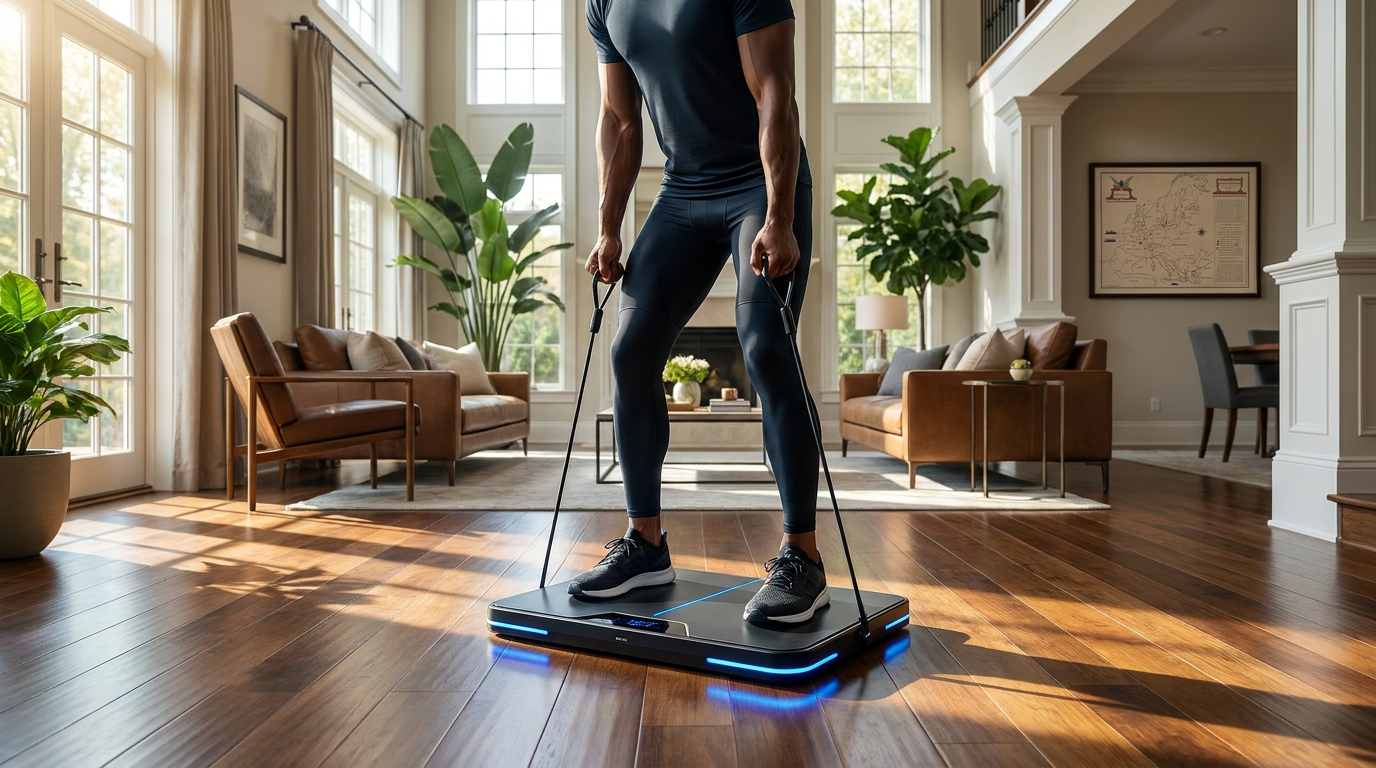
The hardware landscape has rapidly diversified to accommodate different training styles and space constraints. Tonal pioneered the space with a sleek, wall-mounted screen and adjustable cable arms that max out at 200 pounds of total resistance, making it ideal for general fitness and bodybuilding. For heavier lifters, Australian startup Vitruvian developed a floor-based platform that requires no wall mounting and can generate up to an astonishing 440 pounds of resistance, enough to challenge advanced powerlifters and professional athletes. Meanwhile, newer entrants like Speediance offer foldable, all-in-one rigs that blend the benefits of both designs, proving that the form factor of digital weights is still rapidly evolving.[1][2]
Despite these massive technological leaps, traditional free weights are not entirely obsolete, and the debate between iron and algorithms continues. Strength coaches and purists point out that lifting a physical barbell requires the lifter to balance and stabilize the load in three-dimensional space. This raw, unguided movement recruits dozens of tiny stabilizer muscles in the core, hips, and shoulders that a perfectly smooth, cable-guided digital machine might underutilize. For developing true, real-world functional strength, many experts argue that nothing replaces the chaotic nature of a free weight.[4][5]

Furthermore, the scientific principle of specificity dictates that if an athlete wants to get better at lifting a physical barbell on a competition platform, they must train with a physical barbell. Meta-analyses of strength training consistently show that free-weight training is superior for gaining strength in free-weight exercises, while machine training excels for machine-based tests. A powerlifter preparing for a meet cannot rely solely on magnetic resistance, as the neurological adaptations required to balance a 400-pound barbell are highly specific to the iron.[5]
Yet, for the vast majority of people whose primary goals are general health, longevity, and muscle growth, the distinction in stabilizer recruitment is often outweighed by the sheer convenience and safety of digital systems. The ability to condense an entire commercial gym's worth of equipment into a device the size of a yoga mat has removed massive barriers to entry for busy professionals, parents, and those intimidated by crowded weight rooms. The best workout is the one that gets done consistently, and digital weights remove the friction of commuting to a gym.[1][4]

As these platforms evolve, they are increasingly incorporating artificial intelligence to track form, count reps, and automatically progress workout programs based on daily readiness. Instead of guessing which weights to use, the machine prescribes the exact load based on historical performance and fatigue levels. By turning physical exertion into measurable data, digital weights are transforming strength training from a brute-force endeavor into a precise, personalized science. While the clank of iron will always have a place in the hearts of purists, the silent hum of magnetic resistance is undeniably shaping the future of human performance, making elite-level fitness accessible to anyone with a spare corner in their living room.[6][7]
How we got here
2018
Tonal launches the first major wall-mounted digital weight system, introducing electromagnetic resistance to consumers.
2020
The global pandemic triggers a massive boom in at-home fitness, accelerating the adoption of smart gyms.
2022
Vitruvian releases the Trainer+, a floor-based platform capable of generating 440 pounds of digital resistance without wall mounting.
2024
Smart gym platforms begin rolling out advanced AI features, including real-time form correction and adaptive 'Echo' modes.
Viewpoints in depth
Connected Fitness Advocates
Proponents argue that digital weights offer a safer, more efficient, and data-driven approach to strength training.
This camp, which includes fitness tech companies and home gym enthusiasts, believes that electromagnets are fundamentally superior to gravity. They emphasize that digital systems eliminate momentum, provide constant tension, and allow for advanced techniques like eccentric overload without the need for a human spotter. By turning physical exertion into measurable data, they argue that smart gyms remove the guesswork from progressive overload, making elite-level training accessible to the average consumer.
Traditional Strength Purists
Traditionalists maintain that free weights are essential for developing functional strength and stabilizer muscles.
Strength coaches and barbell purists argue that while digital weights are convenient, they cannot fully replicate the physical demands of balancing a heavy barbell in three-dimensional space. They point out that free weights force the body to recruit dozens of tiny stabilizer muscles in the core and joints. For athletes looking to improve performance in real-world sports or powerlifting competitions, this camp insists that the principle of specificity requires training with actual iron.
Exercise Scientists
Researchers focus on the physiological responses to different resistance profiles, noting benefits in both modalities.
The scientific community takes a pragmatic view, noting that muscle tissue responds to mechanical tension regardless of its source. Researchers highlight that digital weights excel at providing eccentric overload—a proven trigger for muscle hypertrophy—and maintaining time under tension. However, meta-analyses show that strength gains are highly specific to the training modality; free weights build better free-weight strength, while machines build better machine strength. Ultimately, scientists view digital resistance as a highly effective tool, rather than a complete replacement for all traditional modalities.
What we don't know
- The long-term durability and repairability of high-torque digital motors in consumer living rooms over a 10+ year lifespan.
- Whether the subscription-heavy business model of most smart gyms will remain sustainable for consumers in the long run.
- How the exact hypertrophy outcomes of purely digital, cable-based training compare to a lifetime of barbell training in decades-long longitudinal studies.
Key terms
- Magnetic Resistance
- A system that uses digitally controlled electromagnets to create physical tension, replacing the need for gravity and iron.
- Concentric Phase
- The portion of an exercise where the muscle shortens while contracting, such as lifting the dumbbell during a bicep curl.
- Eccentric Phase
- The portion of an exercise where the muscle lengthens under tension, such as slowly lowering the dumbbell back down.
- Hypertrophy
- The scientific term for an increase in muscle size, typically achieved through progressive resistance training.
- Time Under Tension
- The total amount of time a muscle is actively working and resisting weight during a set.
Frequently asked
Does digital weight actually feel heavier than free weights?
Yes. Because digital resistance eliminates momentum and inertia, the muscle is forced to work continuously through the entire range of motion. Users often find that 100 pounds of digital weight feels equivalent to 115-120 pounds of iron.
Can you build as much muscle with digital weights as with barbells?
Yes. Muscle tissue responds to mechanical tension, regardless of whether that tension comes from gravity or electromagnets. Features like eccentric overload can even accelerate hypertrophy.
Do you need a subscription to use these machines?
Most major smart gyms, like Tonal and Vitruvian, require or heavily encourage a monthly subscription to access their full range of features, workout tracking, and adaptive weight modes.
Are digital weights safe to use without a spotter?
They are generally safer than heavy free weights. Digital platforms feature 'spotter modes' that instantly detect if you are struggling and automatically reduce the weight so you can finish the rep safely.
Sources
Source coverage
7 outlets
3 viewpoints surfaced







[1]Men's HealthConnected Fitness Advocates
The Best Smart Home Gym Equipment of 2026
Read on Men's Health →[2]Connect The WattsConnected Fitness Advocates
Vitruvian Trainer+ Home Gym: In-depth review
Read on Connect The Watts →[3]TonalConnected Fitness Advocates
How to Harness the Benefits of Eccentric Training
Read on Tonal →[4]HealthlineTraditional Strength Purists
Free Weights vs. Machines: Which Is Better?
Read on Healthline →[5]Applied PerformanceExercise Scientists
Free Weights vs. Machines: A Direct Comparison
Read on Applied Performance →[6]SpeedianceConnected Fitness Advocates
The Science Behind Smart Equipment and Workout Efficiency
Read on Speediance →[7]Factlen Editorial TeamExercise Scientists
Synthesis by Factlen editorial team
Read on Factlen Editorial Team →

Every angle. Every day.
Get fitness stories with full source coverage and perspective breakdowns delivered to your inbox.