
The Science of Cold Water Swimming: How Freezing Dips Rewire the Brain and Body
Cold water immersion is moving from a niche extreme sport to a mainstream longevity and recovery tool. Emerging research shows it can dramatically spike dopamine, activate metabolism-boosting brown fat, and accelerate muscle recovery.
By Factlen Editorial Team
- Metabolic & Longevity Researchers
- Focusing on how cold exposure fundamentally alters the body's energy use and cellular health.
- Sports Medicine Specialists
- Balancing the powerful recovery benefits against the risk of blunting long-term muscle growth.
- Mental Health Advocates
- Championing cold water as a tool for building psychological resilience and managing mood.
What's not represented
- · Cardiologists warning about the risks of sudden cold shock for individuals with underlying heart conditions
- · Traditional Nordic and Indigenous cultures who have practiced winter swimming for centuries
Why this matters
Understanding the precise biological mechanisms of cold exposure allows you to use it strategically—whether your goal is to accelerate athletic recovery, improve insulin sensitivity, or naturally elevate your mood.
Key points
- Cold water immersion triggers a 250% increase in dopamine and a 530% spike in noradrenaline.
- The practice activates brown adipose tissue (BAT), which burns glucose to generate heat and improves insulin sensitivity.
- Water temperatures between 11°C and 15°C are optimal for reducing delayed onset muscle soreness (DOMS).
- Athletes should avoid cold plunges immediately after resistance training, as it can blunt muscle hypertrophy.
- Just 11 minutes of total cold exposure per week is enough to yield significant metabolic benefits.
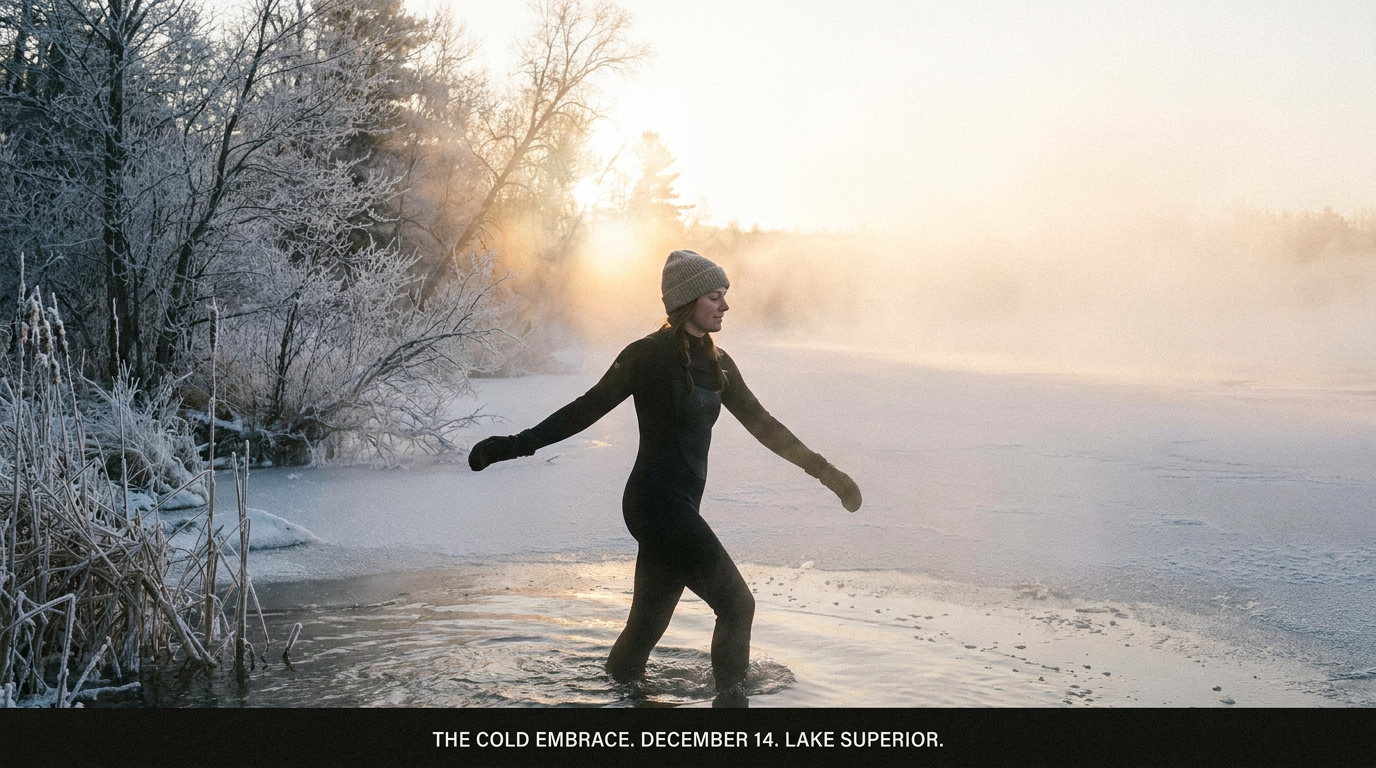
The visual of people breaking ice to swim in freezing lakes used to be reserved for eccentric Nordic traditions and extreme athletes. Today, cold water swimming has exploded into a mainstream wellness practice, championed by neuroscientists, professional athletes, and longevity researchers alike.[6]
But beyond the viral social media challenges, a robust body of clinical evidence is uncovering exactly what happens to the human body when it is submerged in icy water. The practice triggers a cascade of ancient survival mechanisms that, when dosed correctly, offer profound benefits for both physical and mental health.[6]
The physiological journey begins the moment the skin hits the water. This triggers the "cold shock response," a sudden and involuntary gasp for air followed by rapid hyperventilation. The sympathetic nervous system kicks into overdrive, perceiving the sudden temperature drop as a life-threatening emergency.[5]
Within minutes, the adrenal glands flood the bloodstream with stress hormones. Research indicates that cold water immersion can cause noradrenaline (norepinephrine) concentrations to spike by up to 530 percent. This massive release of noradrenaline acts as a powerful neurotransmitter, instantly sharpening focus, increasing alertness, and reducing inflammation throughout the body.[8]
Simultaneously, the brain releases a surge of dopamine, the neurotransmitter responsible for motivation, pleasure, and reward. Studies have shown that submerging the body in cold water can increase dopamine levels by 250 percent. Unlike the fleeting dopamine hits from scrolling social media or eating sugar, the dopamine elevated by cold exposure remains elevated for hours, providing a sustained mood boost and a profound sense of calm.[8]

This neurochemical cocktail is why many mental health advocates and researchers are exploring cold water swimming as a complementary therapy for anxiety and depression. The deliberate act of forcing the body to endure a physical stressor helps build mental resilience, training the brain to remain calm and regulate its response when faced with psychological stressors in daily life.[6]
Beyond the brain, cold water exerts a powerful influence on the body's metabolism, primarily through the activation of Brown Adipose Tissue (BAT), commonly known as brown fat. Unlike white fat, which stores excess calories, brown fat is packed with mitochondria and actively burns glucose and fatty acids to generate heat.[4]
For decades, scientists believed that only infants possessed significant amounts of brown fat to keep them warm. However, recent metabolic research has confirmed that adults retain brown fat, primarily around the spine and collarbones, and that deliberate cold exposure is the most potent way to activate it.[4]
For decades, scientists believed that only infants possessed significant amounts of brown fat to keep them warm.
Regular cold water swimmers not only activate their existing brown fat but can actually recruit new brown fat cells over time. This process improves insulin sensitivity, accelerates glucose clearance from the blood, and enhances overall metabolic health, offering a fascinating non-pharmacological tool for managing blood sugar levels.[4]
In the realm of sports medicine, cold water immersion has long been utilized as a recovery tool, though its precise application is becoming more nuanced. When submerged in cold water, peripheral blood vessels rapidly constrict, a process known as vasoconstriction. This shunts blood away from the extremities and toward the vital organs to preserve core temperature.[5]
Once the swimmer exits the water and begins to warm up, vasodilation occurs. Blood vessels expand, pumping fresh, oxygen-rich blood back into the muscles. This "flushing" mechanism helps clear out metabolic waste products, such as lactic acid, that accumulate during intense exercise.[5]
A comprehensive review by the Cochrane Database of Systematic Reviews analyzed multiple trials and confirmed that cold-water immersion effectively reduces delayed onset muscle soreness (DOMS) at 24, 48, and 72 hours post-exercise compared to passive recovery. The optimal protocol for muscle recovery appears to be water temperatures between 11°C and 15°C for a duration of 10 to 15 minutes.[1][3]

However, sports scientists issue a crucial caveat regarding the timing of cold plunges. While cold water is excellent for reducing inflammation after endurance events like marathons or cycling, it can actually be detrimental if performed immediately after resistance training.[2]
Muscle hypertrophy—the process of building larger, stronger muscles—relies on the very inflammation and molecular signaling pathways that cold water suppresses. By blunting this acute inflammatory response, athletes may inadvertently hinder their long-term strength and muscle growth adaptations. Experts advise separating resistance training and cold exposure by several hours, or reserving cold plunges for rest days.[2]
For those looking to reap the metabolic and mood-boosting benefits without blunting athletic performance, researchers have sought to define the minimum effective dose. Dr. Susanna Søberg, a leading researcher in the field, developed a protocol suggesting that just 11 minutes of cold water exposure per week, divided into multiple short sessions, is sufficient to activate brown fat and improve insulin sensitivity.[4]
The key to maximizing these benefits, according to the Søberg Principle, is to end on cold. Allowing the body to naturally shiver and reheat itself, rather than immediately jumping into a hot shower or sauna, forces the brown fat to work harder, maximizing the metabolic burn.[4]

While the benefits are compelling, experts emphasize that cold water swimming is not without risks. Unacclimated individuals can experience a dangerous cold shock response, leading to hyperventilation and a sudden spike in heart rate and blood pressure. It is crucial to start slowly, focus on controlled breathing, and never swim alone in open water.[6]
Ultimately, the science of cold water swimming reveals a profound connection between environmental stress and human biology. By intentionally stepping out of our thermoneutral comfort zones, we can tap into ancient physiological pathways that build a more resilient mind and a healthier, more adaptable body.[6]
How we got here
1990s-2000s
Cold water immersion becomes a standard recovery protocol in elite sports and athletic training facilities.
2009
Researchers confirm that adult humans retain active brown adipose tissue (BAT), sparking interest in cold exposure for metabolic health.
2021
Dr. Susanna Søberg publishes research defining the minimum effective dose of cold exposure (11 minutes per week) for health benefits.
2024-2026
Cold plunging transitions from a niche biohacking trend to a mainstream wellness practice with widespread clinical backing.
Viewpoints in depth
Metabolic & Longevity Researchers
Focusing on how cold exposure fundamentally alters the body's energy use and cellular health.
For longevity researchers, the primary excitement around cold water swimming lies in its ability to activate Brown Adipose Tissue (BAT). By forcing the body to generate its own heat, cold exposure improves insulin sensitivity and clears glucose from the bloodstream more efficiently. This camp views deliberate cold exposure not just as a fitness trend, but as a vital hermetic stressor—a 'good stress' that trains the cardiovascular system and metabolic pathways to function optimally, potentially offering a non-pharmacological intervention for metabolic disorders.
Sports Medicine Specialists
Balancing the powerful recovery benefits against the risk of blunting long-term muscle growth.
Athletic trainers and physiotherapists have long used cold water immersion to manage acute inflammation and reduce delayed onset muscle soreness (DOMS) after grueling endurance events. However, this camp is increasingly nuanced in its application. Because cold water suppresses the molecular signaling pathways responsible for muscle repair and growth, sports scientists strongly advise against cold plunging immediately after resistance training, warning that it can actively hinder strength gains and hypertrophy.
Mental Health Advocates
Championing cold water as a tool for building psychological resilience and managing mood.
Psychologists and mental health advocates point to the massive, sustained release of dopamine and noradrenaline as a powerful tool for combating low mood and anxiety. Beyond the neurochemical spike, this camp emphasizes the psychological victory of the practice. Voluntarily stepping into freezing water requires overriding the brain's panic signals, which builds a deep sense of self-efficacy and trains the nervous system to remain calm in the face of everyday psychological stressors.
What we don't know
- The exact long-term impact of daily cold plunging on cardiovascular health in older adults.
- Whether the metabolic benefits of brown fat activation translate to significant, sustained weight loss in humans.
- The precise threshold at which the benefits of cold exposure are outweighed by the risks of over-stressing the nervous system.
Key terms
- Brown Adipose Tissue (BAT)
- A type of fat packed with mitochondria that burns glucose and fatty acids to generate heat, improving metabolic health.
- Vasoconstriction
- The narrowing of blood vessels in response to cold, which shunts blood away from the extremities to protect vital organs.
- Cold Shock Response
- The body's initial, involuntary physiological reaction to sudden cold exposure, characterized by a gasp reflex and hyperventilation.
- Hypertrophy
- The increase in muscle size and strength achieved through exercise, which can be blunted if cold exposure is applied immediately after lifting weights.
- Hermetic Stress
- A beneficial type of acute, short-term stress that triggers cellular repair and makes the body stronger and more resilient.
Frequently asked
How long should I stay in the cold water?
Research suggests that a total of 11 minutes per week, divided into multiple short sessions of 2-3 minutes, is sufficient to activate brown fat and improve metabolism.
What is the best temperature for a cold plunge?
For muscle recovery, studies indicate that water temperatures between 11°C and 15°C (51°F to 59°F) are optimal. Colder temperatures are not necessarily better and increase the risk of hypothermia.
Should I take a hot shower immediately after?
To maximize metabolic benefits, researchers recommend the 'Søberg Principle'—ending on cold and allowing your body to naturally shiver and reheat itself, which forces brown fat to work harder.
Can cold water swimming hinder muscle growth?
Yes. If done immediately after resistance training, cold water suppresses the inflammation necessary for muscle repair, potentially blunting long-term strength and size gains.
Sources
Source coverage
8 outlets
3 viewpoints surfaced








[1]Cochrane Database of Systematic ReviewsSports Medicine Specialists
Cold-water immersion (cryotherapy) for preventing and treating muscle soreness after exercise
Read on Cochrane Database of Systematic Reviews →[2]Mayo Clinic Health SystemSports Medicine Specialists
Can taking a cold plunge after your workout be beneficial?
Read on Mayo Clinic Health System →[3]National Institutes of HealthSports Medicine Specialists
Effects of cold water immersion on muscle recovery
Read on National Institutes of Health →[4]ZOE Science & NutritionMetabolic & Longevity Researchers
Cold water therapy: Health benefits and risks
Read on ZOE Science & Nutrition →[5]European Journal of Applied PhysiologySports Medicine Specialists
Cold for centuries: a brief history of cryotherapies to improve health, injury and post-exercise recovery
Read on European Journal of Applied Physiology →[6]Factlen Editorial TeamMental Health Advocates
Synthesis by Factlen editorial team
Read on Factlen Editorial Team →[7]PLOS OneSports Medicine Specialists
Effects of cold water immersion versus hot water immersion on muscle recovery
Read on PLOS One →[8]Medical News TodayMetabolic & Longevity Researchers
What to know about cold water therapy
Read on Medical News Today →
Every angle. Every day.
Get fitness stories with full source coverage and perspective breakdowns delivered to your inbox.