
The Modern Resurgence of Ancient Pilgrimages: Why Millions Are Walking the Camino and Kumano Kodo
As modern life becomes increasingly digital and complex, record numbers of secular travelers are turning to ancient religious trails for psychological healing, digital detox, and physical transformation.
By Factlen Editorial Team
- Psychological & Secular Seekers
- Viewing the trail as a therapeutic tool for mental health and digital detox.
- Heritage & Tourism Advocates
- Focusing on the economic and cultural revitalization of rural communities.
- Traditional Believers
- Maintaining the original sacred intent of the pilgrimage as a path to the divine.
What's not represented
- · Local residents in trail-adjacent towns dealing with the daily influx of tourists.
- · Environmental conservationists concerned about the ecological impact of millions of walkers.
Why this matters
As rates of burnout and digital fatigue climb, millions are turning to ancient, physically demanding trails for psychological healing. Understanding the science behind this trend reveals how structured physical challenges and offline community can serve as powerful antidotes to modern isolation.
Key points
- The Camino de Santiago saw a record-breaking 530,987 official completions in 2025.
- An estimated 1.5 million people walked portions of the Spanish trail network last year.
- Japan's Kumano Kodo is experiencing a similar boom, linked to Spain via the 'Dual Pilgrim' program.
- Studies show 74% of modern pilgrims are motivated by psychological and existential reasons, not religion.
- The physical rhythm of long-distance walking actively lowers cortisol and reduces anxiety.
- The shared hardship of the trail creates 'communitas,' a temporary, classless society that fosters deep emotional connection.
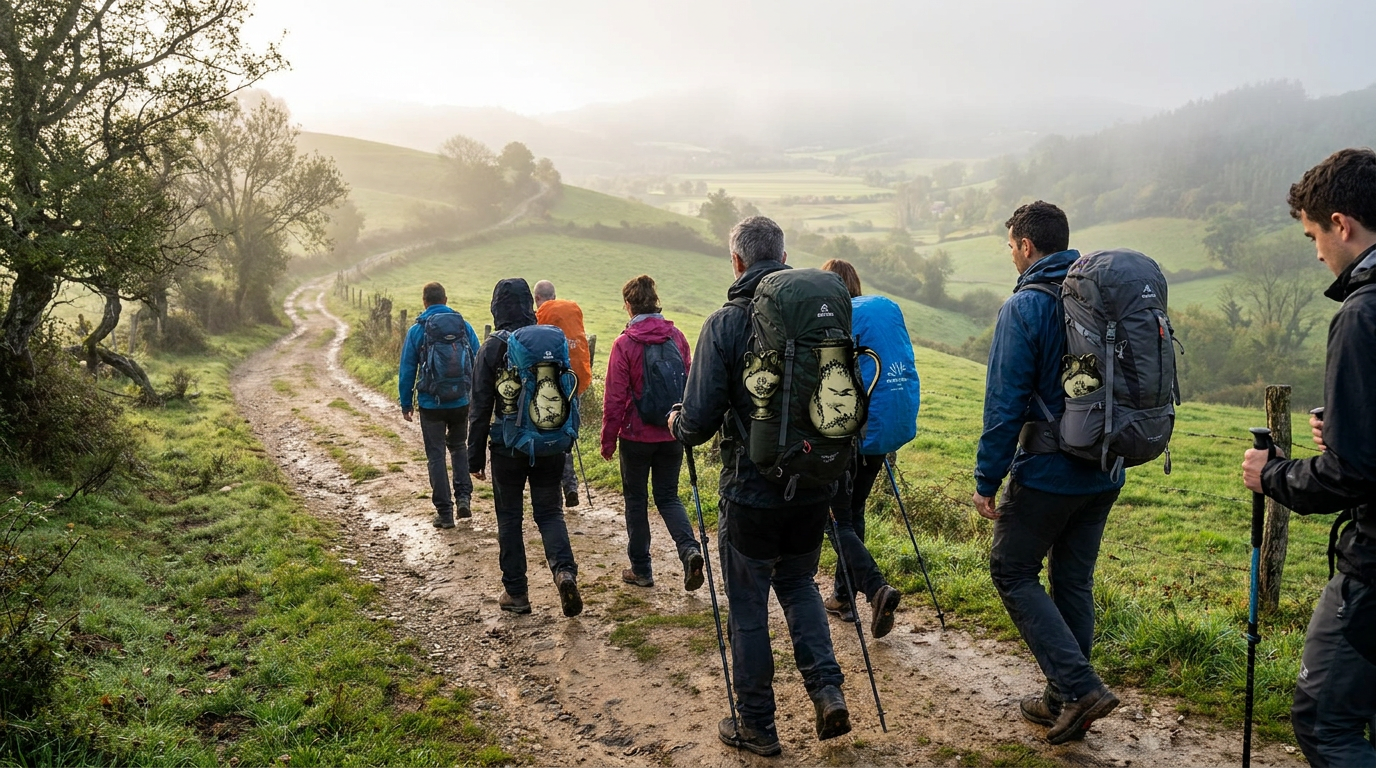
The modern world is increasingly secular, yet ancient religious trails are experiencing an unprecedented, global boom. In 2025, the Camino de Santiago—a centuries-old network of paths culminating at a grand cathedral in northwestern Spain—shattered all previous attendance records, cementing its transition from a niche religious rite to a mainstream cultural phenomenon. For decades, the trail was primarily the domain of devout European Catholics seeking spiritual absolution. Today, it resembles a global cross-section of humanity, drawing hikers, seekers, and tourists from every continent. The sheer volume of foot traffic has transformed quiet rural villages into bustling international hubs, prompting sociologists and tourism boards alike to ask what is driving millions of modern citizens to strap on heavy backpacks and walk hundreds of miles through unpredictable weather.[1][5]
The numbers behind this resurgence are staggering. According to the Pilgrim's Reception Office in Santiago de Compostela, 530,987 people received the official "Compostela" certificate in 2025, marking a 6% increase over the previous year, which was itself a record-breaking season. To earn this certificate, a walker must complete at least the final 100 kilometers of the route on foot. However, when accounting for those who walk shorter sections without seeking official documentation, or those who cycle the route, the total number of participants on the Camino network is estimated to be around 1.5 million. This sustained growth trajectory has completely reshaped the local economy and the physical infrastructure of the trail, leading to a proliferation of new hostels, cafes, and luggage-transfer services designed to cater to a rapidly expanding demographic.[1][5]
This surge is not an isolated European phenomenon. Halfway across the world in Japan, the Kumano Kodo—a network of ancient, moss-covered trails winding through the dense cedar forests of the Kii Mountains—is seeing a similar renaissance. Together, these two routes represent the only pilgrimage networks in the world recognized as UNESCO World Heritage sites, and they are increasingly drawing a new generation of global travelers who view the physical journey as a necessary antidote to modern life. The Japanese trails, once reserved for emperors and ascetic monks, now host thousands of international visitors seeking the profound silence and natural beauty of the Wakayama Prefecture. The parallel growth of these two distinct cultural touchstones suggests a universal human appetite for structured, immersive travel that goes beyond traditional sightseeing.[2][8]

What makes this explosion in popularity so remarkable is the shifting demographic and motivation of the walkers. While these paths were originally forged by devout Catholics and Shinto practitioners seeking divine favor, penance, or miraculous healing, today's pilgrims are largely driven by entirely different forces. A recent phenomenological study published in the journal Culture & Psychology found that 74% of modern pilgrims are motivated primarily by "psycho-existential" reasons rather than strict religious adherence. They are seeking a physical challenge, a prolonged digital detox, and a structured, safe environment for deep personal reflection. The modern pilgrim is just as likely to be a burnt-out tech executive or a recent divorcee as they are to be a traditional religious believer.[3][5]
The demographic makeup of the Camino perfectly reflects this global, secular shift. In 2025, women accounted for 53% of all registered walkers, continuing a multi-year trend of female majority on the trails. Furthermore, international visitors made up 58% of the total, the highest share ever recorded. The United States has risen rapidly to become the second-largest country of origin, a stark contrast to two decades ago when the trail was almost entirely dominated by domestic Spanish walkers and citizens of neighboring European countries. This internationalization highlights how the concept of the pilgrimage has been successfully decoupled from its specific religious origins, evolving into a globally recognized rite of passage accessible to anyone with the time and physical ability to walk.[1][5]
Psychologists and neuroscientists are increasingly studying this "pilgrimage effect" to understand exactly why walking long distances with a backpack yields such profound mental health benefits. The act of traveling to sacred sites, even for purely secular reasons, has been consistently linked to significant, measurable reductions in anxiety, depression, and perceived stress. Researchers note that the modern world is characterized by constant digital interruption, sedentary lifestyles, and complex, ambiguous professional responsibilities. The pilgrimage offers a radical inversion of this reality: the physical demands are high, the daily goals are incredibly simple, and digital connectivity is often limited by geography or personal choice.[4][7]
One of the primary mechanisms behind this psychological healing is the rhythmic nature of the walk itself. The physical exertion of covering 15 to 20 miles a day, combined with prolonged, unbroken immersion in nature, helps reset the body's circadian rhythms and actively lowers cortisol levels. This rhythmic cadence acts as a form of moving meditation, quieting the brain's default mode network—the area responsible for rumination and anxiety—and allowing deeply suppressed emotions to surface safely. Clinical psychiatrists note that the trail provides a unique therapeutic container; the combination of physical exhaustion and natural beauty breaks down emotional walls, allowing individuals to process grief, trauma, or major life transitions in a healthy, forward-moving manner.[4][7]
One of the primary mechanisms behind this psychological healing is the rhythmic nature of the walk itself.
Researchers analyzing the modern pilgrimage experience have identified six core themes that define its psychological benefits: authentic experience, walking in nature, self-transformation, community, simplicity, and spirituality. By stripping away the complexities of modern life and reducing one's daily existence to simply walking, eating, and finding a bed for the night, pilgrims experience a profound sense of cognitive relief. The sheer simplicity of the routine eliminates decision fatigue. Every morning, the objective is clear and tangible: follow the yellow arrows to the next town. This clarity provides a stark, comforting contrast to the endless, ambiguous choices that define modern urban living, allowing the nervous system to finally downregulate.[3][4]

Beyond the internal psychological shifts, sociologists point to the unique social environment of the trail as a massive driver of the pilgrimage's popularity. Scholars refer to this phenomenon as "communitas"—a temporary, unstructured, and classless society where traditional social hierarchies completely dissolve. On the trail, a corporate executive, a retired teacher, and a recent college graduate endure the exact same blisters, sleep in the same rustic bunkhouses, and share the same physical hardships. The superficial markers of wealth and status are stripped away, replaced by a shared vulnerability that accelerates human connection. Conversations that might take months to unfold in normal society happen within hours of walking side-by-side.[4][7]
This shared vulnerability fosters what the pioneering sociologist Émile Durkheim called "collective effervescence," an emotional high and sense of deep, transcendent connection that emerges when people participate in a shared, structured ritual. Studies show that this communal support promotes emotional catharsis and equips individuals with adaptive coping strategies that persist long after the journey ends. Pilgrims frequently report that the friendships forged over a few weeks of walking are among the most profound of their lives, built on a foundation of mutual support rather than networking or convenience. In an era often defined by an epidemic of loneliness, this intense, offline community is a powerful draw.[4][7]
The global, interconnected nature of this trend is perhaps best illustrated by the "Dual Pilgrim" initiative, a collaborative tourism and cultural program formally linking the Camino de Santiago and the Kumano Kodo. Pilgrims who complete designated sections of both ancient routes receive a special credential recognizing their cross-cultural journey, celebrated with traditional ceremonies in both Spain and Japan. This initiative was designed to foster mutual understanding and highlight the shared spiritual heritage of two vastly different cultures, proving that the desire for a transformative physical journey transcends language, geography, and specific religious dogma. By officially linking a Catholic route with a Shinto-Buddhist one, the program underscores the universal human need for physical rites of passage.[2][8]

The popularity of the Dual Pilgrimage has skyrocketed in recent years. In 2024, a record 3,272 people completed both trails, and tourism officials in Wakayama Prefecture expect that number to approach 10,000 by the end of 2025. This partnership highlights how cultural tourism can be leveraged to preserve ancient heritage while simultaneously providing modern travelers with deeply meaningful experiences. For many walkers, completing one trail naturally sparks the desire to attempt the other, creating a global community of dedicated "serial pilgrims" who spend their vacations seeking out new historic routes across the globe, from the Via Francigena in Italy to the St. Olav Ways in Norway.[2][6]
Local economies are also experiencing a massive transformation as a direct result of this walking boom. In rural Spain and Japan, agricultural areas that were previously suffering from severe depopulation and economic decline are finding vibrant new life through the steady, year-round stream of walkers. Abandoned farmhouses are being renovated and converted into boutique hostels, local artisans are finding a global market for their traditional goods, and young people are returning to their ancestral villages to open cafes and guide services. This influx of capital has provided a vital lifeline to rural communities, proving that heritage preservation and economic development can successfully go hand-in-hand.[2][5]
However, the unprecedented boom is not without its significant logistical and environmental challenges. The influx of over half a million certified walkers on the Camino has prompted urgent discussions among local governments about sustainability, trail erosion, and the management of over-tourism. During the peak summer months, the final 100 kilometers leading into Santiago de Compostela can feel more like a crowded highway than a serene spiritual path, straining local resources and frustrating walkers seeking solitude. To alleviate this severe crowding on the famous French Way—which still accounts for nearly half of all traffic—tourism boards are actively promoting alternative, lesser-known routes. The Portuguese Coastal Way, for example, saw a massive 20% increase in traffic in recent years, as returning pilgrims seek out quieter, more solitary experiences away from the bustling main arteries.[1][5]

Despite these logistical hurdles and the occasional crowded hostel, the core appeal of the pilgrimage remains entirely untouched. In an era characterized by relentless digital overload, deep political polarization, and a pervasive sense of modern burnout, the trail offers a radical, tangible alternative. It demands genuine physical effort, enforces a strict simplicity of living, and guarantees authentic, face-to-face human connection with strangers from around the globe. Whether a walker is seeking spiritual enlightenment, recovering from a personal tragedy, or simply looking for a unique physical challenge to mark a milestone birthday, the ancient paths provide a reliable, time-tested framework for personal transformation.[3][4]
As the lines between adventure tourism, psychological therapy, and traditional spirituality continue to blur, the secular pilgrimage stands out as one of the defining travel trends of the decade. It proves that even in a hyper-connected, technologically advanced world, human beings still crave the visceral reality of putting one foot in front of the other, carrying their own weight, and relying on the kindness of strangers. The physical trail offers something that no app or virtual experience can replicate: genuine friction, earned exhaustion, and the profound satisfaction of arriving at a distant destination under one's own power. Ultimately, the enduring success of the Camino and the Kumano Kodo suggests that sometimes, the most effective way to navigate the overwhelming complexities of the modern future is to put on a pair of boots and walk an ancient path.[3][6]
How we got here
9th Century
The tomb of St. James is reportedly discovered in Spain, launching the Camino de Santiago.
11th Century
The Kumano Kodo network in Japan reaches peak popularity among emperors and aristocrats.
2004
The Kumano Kodo is designated as a UNESCO World Heritage site, joining the Camino de Santiago.
2015
The 'Dual Pilgrim' initiative is launched to formally connect the Spanish and Japanese routes.
2025
The Camino de Santiago surpasses 530,000 official completions, setting a new all-time record.
Viewpoints in depth
Psychological & Secular Seekers
Viewing the trail as a therapeutic tool for mental health and digital detox.
For this growing majority, the ancient trails serve as a modern antidote to burnout, anxiety, and digital overload. Researchers emphasize that the rhythmic nature of walking, combined with immersion in nature, actively lowers cortisol and promotes emotional regulation. This camp argues that the 'sacred' aspect of the journey is found in self-reflection, the shedding of modern conveniences, and the egalitarian community formed along the way, rather than in traditional religious dogma.
Heritage & Tourism Advocates
Focusing on the economic and cultural revitalization of rural communities.
Tourism boards and local municipalities view the pilgrimage boom as a vital economic engine for regions suffering from depopulation. By promoting initiatives like the Dual Pilgrimage, they aim to foster global cultural exchange and fund the preservation of ancient trails and historic sites. However, this camp also wrestles with the challenges of over-tourism, advocating for the promotion of lesser-known routes to distribute the economic benefits and reduce environmental strain on the most popular paths.
Traditional Believers
Maintaining the original sacred intent of the pilgrimage as a path to the divine.
For religious institutions and devout practitioners, the physical journey remains inextricably linked to spiritual purification and devotion. While welcoming the influx of secular walkers, this camp emphasizes the importance of preserving the religious rituals, shrines, and cathedrals that anchor the routes. They argue that the profound psychological benefits reported by secular walkers are ultimately rooted in the inherently spiritual design of the pilgrimage itself.
What we don't know
- Whether the psychological benefits of a month-long pilgrimage can be sustained long-term after returning to modern daily life.
- How rural infrastructure will adapt to the projected continued growth without compromising the authentic nature of the trails.
- If the rise of luggage-transfer services and luxury accommodations will dilute the psychological benefits of the traditional, hardship-based walk.
Key terms
- Compostela
- The official certificate of completion awarded to pilgrims who walk at least 100 kilometers of the Camino de Santiago.
- Communitas
- A sociological concept describing an unstructured, egalitarian community that forms among people experiencing a shared rite of passage.
- Dual Pilgrim
- A formal recognition given to individuals who complete designated sections of both the Camino de Santiago in Spain and the Kumano Kodo in Japan.
- Collective Effervescence
- A psychological state of profound emotional connection and shared ecstasy experienced when a group participates in a synchronized ritual.
Frequently asked
Do I need to be religious to walk a pilgrimage?
No. While the routes have religious origins, studies show that nearly three-quarters of modern walkers are motivated by secular, psychological, or fitness reasons.
How long does it take to walk the Camino de Santiago?
Walking the entire French Way takes about 30 to 35 days, but many pilgrims choose to walk only the final 100 kilometers, which takes roughly 5 to 7 days.
What is the Kumano Kodo?
The Kumano Kodo is a network of ancient pilgrimage trails in Japan's Kii Mountains. It is one of only two pilgrimage routes in the world designated as a UNESCO World Heritage site.
What are the physical requirements?
While demanding, the trails are accessible to most reasonably fit individuals. Pilgrims typically walk 15 to 20 miles per day, carrying a backpack, though luggage transfer services are increasingly popular.
Sources
Source coverage
8 outlets
3 viewpoints surfaced








[1]Pilgrim's Reception OfficeTraditional Believers
Camino de Santiago 2025 Statistics: Pilgrim Numbers
Read on Pilgrim's Reception Office →[2]Tanabe City Kumano Tourism BureauHeritage & Tourism Advocates
Kumano Kodo - Japan's Ancient Pilgrimage Network
Read on Tanabe City Kumano Tourism Bureau →[3]Culture & PsychologyPsychological & Secular Seekers
Walking for well-being: Exploring the phenomenology of modern pilgrimage
Read on Culture & Psychology →[4]Journal of Religion and HealthPsychological & Secular Seekers
The Psychological Impact of Pilgrimage Across Diverse Religious Traditions
Read on Journal of Religion and Health →[5]PilgrimapsHeritage & Tourism Advocates
Camino de Santiago: A new peak in pilgrim numbers
Read on Pilgrimaps →[6]Factlen Editorial TeamPsychological & Secular Seekers
Synthesis by Factlen editorial team
Read on Factlen Editorial Team →[7]Johns Hopkins Aramco HealthcareTraditional Believers
The Mental, Physical, and Social Benefits of the Sacred Journey
Read on Johns Hopkins Aramco Healthcare →[8]Ian Taylor TrekkingHeritage & Tourism Advocates
Kumano Kodo – Japan's Ancient Pilgrimage Network
Read on Ian Taylor Trekking →
Every angle. Every day.
Get culture stories with full source coverage and perspective breakdowns delivered to your inbox.