
Global Clean Energy Investment Hits Record $2.2 Trillion, Doubling Fossil Fuels
Driven by a massive surge in solar and battery storage, global capital flowing into clean energy has reached a historic two-to-one advantage over fossil fuels in 2026.

The global energy transition has crossed a historic financial threshold. According to the International Energy Agency’s newly released World Energy Investment 2026 report, clean energy is on track to attract $2.2 trillion in capital this year, nearly double the $1.2 trillion flowing into fossil fuels. This marks a profound shift in how the world powers its economies, signaling that the pivot away from carbon-intensive infrastructure is no longer just an environmental aspiration, but a locked-in macroeconomic reality.[1][2]
This two-to-one ratio represents a staggering acceleration from just a decade ago, when fossil fuels dominated global energy spending and renewables were viewed as a subsidized niche. Despite persistent global inflation, high interest rates, and complex supply chain hurdles, the sheer economic gravity of renewable power has made it the default choice for new generation capacity worldwide. Capital is flowing toward the technologies that offer the fastest deployment and the lowest marginal costs.[2]
Solar power remains the undisputed engine of this boom. The IEA projects that $365 billion will be invested in solar projects in 2026 alone—translating to roughly $1 billion deployed every single day. Because the cost of solar technology has plummeted by 80% over the last decade, these flat or slightly rising dollar figures are buying significantly more physical generation capacity than in previous years, allowing developers to rapidly scale up utility-grade farms.[1]
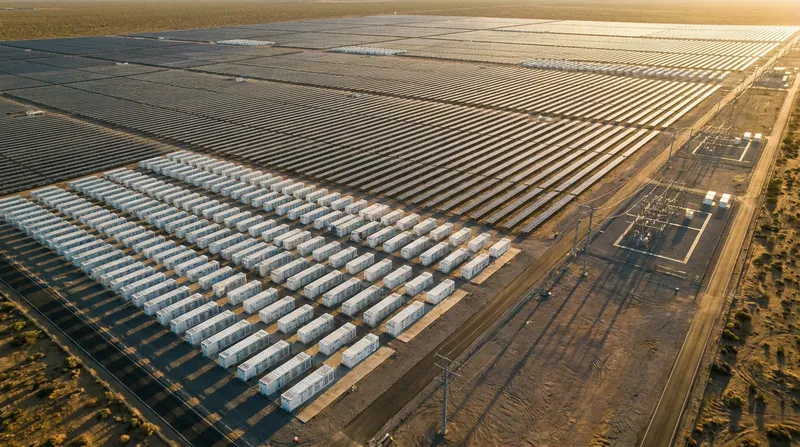
But the most transformative shift in 2026 is happening in energy storage. For the first time, global investment in battery storage has surpassed spending on wind power. The United States alone added a record 9.7 gigawatt-hours of battery capacity in the first quarter of the year, a massive leap that underscores how critical storage has become to modern grid architecture.[1][6]
This storage boom is being driven by two converging forces: the need to balance intermittent solar generation on national grids, and the explosive electricity demand from artificial intelligence data centers. Tech companies and utilities are increasingly pairing massive battery installations with solar farms to guarantee firm, round-the-clock clean power, effectively turning variable sunlight into a reliable baseload resource.[1][6]
The real-world impact of this investment is already visible in wholesale electricity markets. In regions with high renewable penetration, clean energy is actively shielding consumers from the price shocks associated with imported gas and oil. As more zero-marginal-cost electricity enters the grid, it displaces the need to burn expensive fossil fuels during peak demand hours.[3][5]
In Spain, for example, a massive buildout of wind and solar has successfully decoupled the country's electricity prices from the volatile natural gas market. Gas now influences Spanish power prices in only 9% of hours, down drastically from 52% in 2021. This structural shift is saving the average household roughly €10 a month, even amid broader European energy inflation.[5]
Geopolitics is heavily accelerating this trend. The ongoing conflict in the Middle East and disruptions in the Strait of Hormuz have reminded fuel-importing nations of the extreme fragility of global fossil fuel supply chains. When a single waterway can dictate the energy bills of households from Europe to Asia, governments are forced to rethink their long-term vulnerabilities.[4]
In response, nations are treating renewable energy not just as a climate imperative, but as critical national security infrastructure. Sunlight and wind cannot be blockaded or embargoed. The IEA estimates that the deployment of clean energy and efficiency measures saved the world's five largest fuel-importing regions approximately $260 billion in avoided fossil fuel costs in 2025 alone.[3]
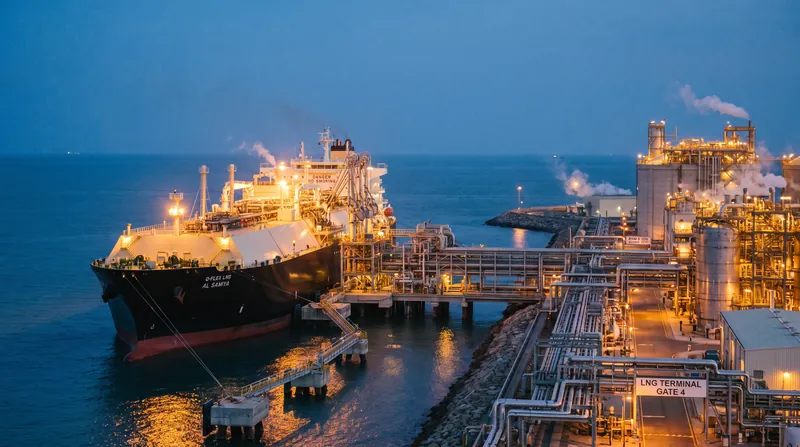
However, the transition is not uniform, and the fossil fuel era is far from over. While upstream oil spending is declining as companies prioritize shareholder returns over new exploration, investment in natural gas is expected to reach $330 billion in 2026. This is driven largely by massive liquefied natural gas (LNG) export projects in the United States and Qatar.[4]
Furthermore, coal investment has stubbornly hit a 14-year high of $180 billion. This resurgence is almost entirely concentrated in Asia, with China and India expanding coal capacity to ensure baseload reliability as their economies and electricity demands grow at a breakneck pace. For these nations, energy security currently requires an 'all of the above' approach.[4]
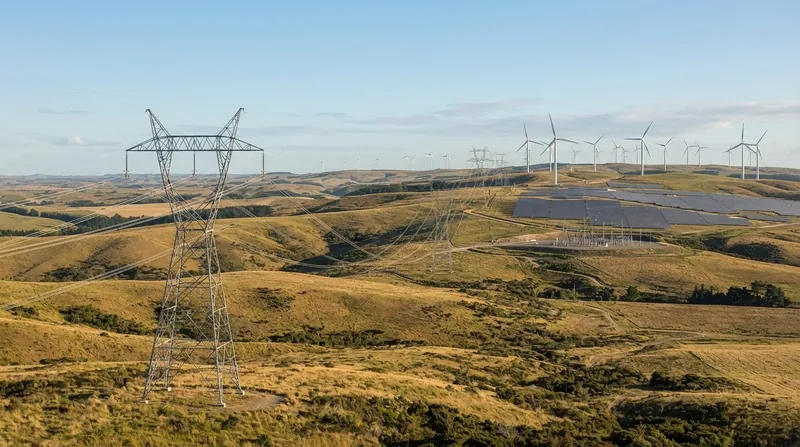
Another critical bottleneck threatening the transition is the physical grid itself. While capital is flooding into power generation, investment in transmission lines and electricity networks is struggling to keep pace. Without accelerated grid expansion and modernization, much of the newly built clean generation cannot be reliably connected to the homes and businesses that need it.[1]
There is also a stark geographic divide in where the money is flowing. Wealthy nations and China account for over 70% of all clean energy investment in 2026. Emerging economies, which house two-thirds of the global population, are receiving less than 30% of the capital, highlighting a severe imbalance that could leave developing nations tethered to expensive fossil fuels for decades.
Despite these hurdles, the sheer scale of the 2026 investment figures indicates that the momentum of clean energy is now largely self-sustaining. With solar and storage reaching cost-competitiveness without subsidies in most of the world, the economic tipping point has been crossed. The global energy system is being fundamentally rewired, and the capital markets have clearly chosen their direction.[2]
Key points
- Global clean energy investment is projected to hit a record $2.2 trillion in 2026, outpacing fossil fuels by nearly two to one.
- Solar power is attracting roughly $1 billion a day, while battery storage investment has surpassed wind power for the first time.
- The surge in renewables is actively shielding consumers in high-adoption markets from volatile natural gas prices.
- Geopolitical tensions and the Middle East conflict are accelerating the transition as countries prioritize domestic energy security.
What we don’t know
- Whether the massive surge in battery storage manufacturing can keep pace with the exponential power demands of new AI data centers.
- How quickly emerging economies will be able to secure the financing needed to close the clean energy investment gap with wealthy nations.
- Whether grid infrastructure expansion can be accelerated fast enough to prevent bottlenecks for newly built solar and wind capacity.
How we got here
2015
Clean energy receives roughly $290 billion in global investment, a fraction of fossil fuel spending.
2021-2024
The global gas crisis drives up wholesale electricity prices, prompting nations to accelerate renewable deployment.
2025
Clean energy and efficiency measures save major importing regions $260 billion in avoided fossil fuel costs.
June 2026
The IEA reports that clean energy investment has hit $2.2 trillion, outstripping fossil fuels by a two-to-one margin.
- Clean Energy Advocates
- Celebrate the historic shift where clean energy outpaces fossil fuels two-to-one, emphasizing energy independence and climate benefits.
- Energy Security Pragmatists
- Focus on the geopolitical drivers, noting that global conflict is accelerating domestic clean energy investments to avoid supply shocks.
- Fossil Fuel Realists
- Point out that while clean energy is booming, fossil fuel investment remains substantial to meet immediate baseload demand.
Perspectives this story doesn't cover
- Developing Nation Policymakers
- Grid Infrastructure Developers
Sources
Source coverage
6 outlets
3 viewpoints surfaced






- [1]International Energy AgencyEnergy Security Pragmatists
World Energy Investment 2026
Read on International Energy Agency → - [2]ForbesClean Energy Advocates
Renewed Iran Fighting Will Sustain Shift To Clean Energy
Read on Forbes → - [3]Down To EarthEnergy Security Pragmatists
Clean energy investment saved fuel importers $260 billion in 2025: IEA
Read on Down To Earth → - [4]ReutersFossil Fuel Realists
Global investment in natural gas projects to rise, while oil spending declines
Read on Reuters → - [5]EmberClean Energy Advocates
Spain's energy crisis response targets a boost in electrification
Read on Ember → - [6]Solar Energy Industries AssociationClean Energy Advocates
U.S. Adds 10 GWh of New Energy Storage Capacity in First Quarter
Read on Solar Energy Industries Association →
More in Energy
See all →Market Design
Why Electricity Markets Pay Every Power Plant the Highest Accepted Bid
10 sources
Energy Trading
Spark and Dark Spreads: How Thermal Generators Calculate Power Margins
7 sources
Global Fuel Markets
China Suspends October Fuel Exports to Rebuild Domestic Stockpiles, Tightening Global Diesel Market
6 sources
LNG Pricing
The S-Curve and J-Curve That Define the Price Relationship Between Oil-Indexed and Hub-Indexed LNG Contracts
6 sources
Comments
Every angle. Every day.
Get Energy stories with full source coverage and perspective breakdowns, free every day.