
Induction vs. Gas Cooktops: The 2026 Trade-Off Analysis
As health concerns and climate policies reshape the modern kitchen, the debate between traditional gas ranges and highly efficient induction cooktops has intensified. Here is a definitive breakdown of the costs, performance, and safety of both technologies.
By Factlen Editorial Team
- Health & Environmental Advocates
- Prioritizes the elimination of indoor air pollutants like nitrogen dioxide and supports the transition away from fossil fuels to combat climate change.
- Pragmatic Homeowners
- Focuses on the practical realities of daily use, weighing the upfront costs of electrical upgrades against the benefits of faster boil times and effortless cleaning.
- Culinary Traditionalists
- Values the tactile, intuitive experience of cooking with an open flame and the versatility of using any type of cookware without restriction.
What's not represented
- · Renters who cannot modify their apartment's electrical infrastructure or choose their appliances.
- · Professional restaurant chefs navigating commercial gas bans in new construction.
Why this matters
Your choice of kitchen stove directly impacts your household's daily indoor air quality, long-term energy bills, and cooking efficiency. Understanding the precise trade-offs between gas and induction empowers you to make a future-proof investment for your home and health.
Key points
- Induction cooktops use magnetic fields to heat pans directly, achieving 85–90% energy efficiency compared to 30–40% for gas.
- Switching to induction eliminates indoor combustion pollutants like nitrogen dioxide, which are linked to respiratory issues.
- Gas ranges remain popular for their visual flame control, compatibility with all cookware, and lower upfront purchase prices.
- Upgrading to induction often requires a 240-volt electrical outlet, which can add significant installation costs.
- Federal rebates and long-term energy savings can offset the higher initial price of premium induction models.
The kitchen stove has transformed from a simple appliance choice into a major decision involving public health, climate policy, and culinary precision. As cities across the United States continue to restrict new natural gas hookups, induction technology has moved from a niche premium upgrade to a mainstream standard. Yet, millions of home cooks remain fiercely loyal to the visual feedback of an open flame, setting up a definitive clash between traditional gas ranges and modern electromagnetic induction cooktops.[3][7]
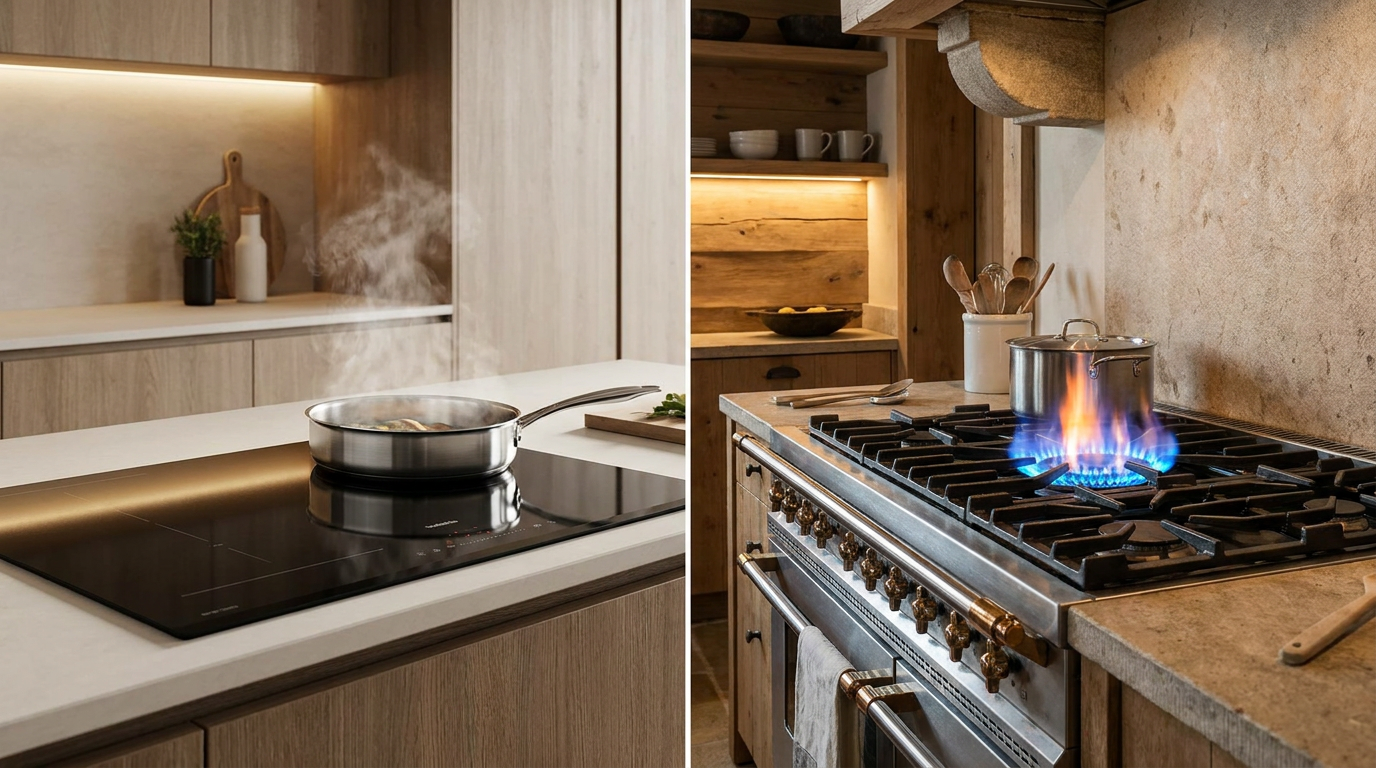
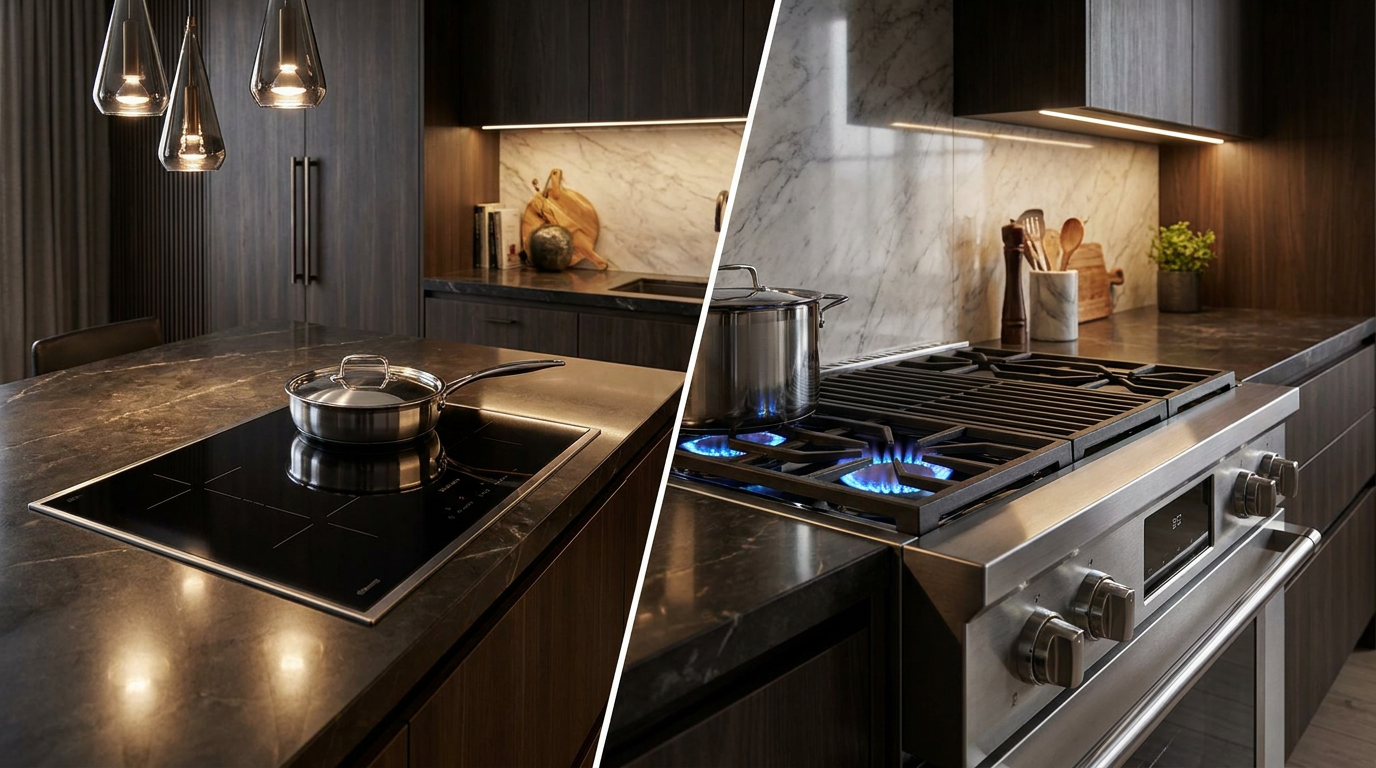
Understanding the divide requires looking at how each technology generates heat. Gas stoves rely on the combustion of natural gas or propane to create an open flame, which then heats the air, the grates, and eventually the cookware through thermal convection and radiation. Induction cooktops, conversely, use copper coils beneath a smooth ceramic-glass surface to generate an alternating magnetic field. This field induces electrical eddy currents directly inside compatible magnetic cookware, turning the pot or pan itself into the heat source while the surrounding glass remains relatively cool.[1][2][6]
When evaluating speed and energy use, the thermodynamic differences become highly quantifiable. **For induction:** The technology transfers heat directly to the food, resulting in lightning-fast boil times and minimal wasted energy. **Against induction:** The sheer speed can catch new users off guard, requiring a learning curve to avoid burning food during the first few weeks of use. **Evidence:** The Department of Energy and Consumer Reports testing reveals that induction is roughly 85 to 90 percent energy-efficient, compared to just 30 to 40 percent for gas. Consequently, induction cooktops can boil water 20 to 50 percent faster than their gas counterparts, saving significant time over a year of daily cooking.[1][2][4][5]

The most urgent debate surrounding kitchen appliances in recent years centers on respiratory health. **For induction:** Electromagnetic cooking produces absolutely zero indoor combustion pollutants, keeping the kitchen air pristine. **Against gas:** Burning natural gas releases harmful byproducts directly into the living space, particularly when range hoods are inadequate or unused. **Evidence:** A sweeping meta-analysis of 41 international studies demonstrated that children in homes with gas stoves face a 42 percent increased risk of developing asthma. Furthermore, research indicates that gas stoves emit nitrogen dioxide and benzene at levels that can exceed outdoor air quality standards, prompting health advocates to strongly recommend induction for households with respiratory concerns.[4][8]

Professional and amateur chefs alike often base their appliance decisions on the tactile experience of cooking. **For gas:** Traditional ranges offer instant visual feedback through the flame size, allowing cooks to intuitively gauge heat levels, char vegetables directly on the grates, and easily use round-bottomed woks. **Against induction:** The smooth glass surface lacks visual heat cues beyond a digital display, and lifting a pan to toss ingredients temporarily breaks the magnetic connection, halting the heating process. **Evidence:** Culinary experts at The New York Times note that while gas provides a familiar lizard-brain appeal, high-end induction units actually offer superior temperature precision, allowing cooks to hold delicate sauces at exact temperatures without the risk of scorching that comes with fluctuating gas flames.[3][6]
Professional and amateur chefs alike often base their appliance decisions on the tactile experience of cooking.
The transition to a new stove often involves evaluating existing kitchen equipment. **For gas:** An open flame is entirely agnostic to cookware materials, working equally well with aluminum, copper, cast iron, and glass pots. **Against induction:** Electromagnetic heating strictly requires cookware with a ferrous, magnetic base to function. **Evidence:** Appliance specialists point out that while this seems limiting, many modern stainless steel and cast iron pans are already induction-compatible. Consumers can perform a simple test: if a standard refrigerator magnet sticks firmly to the bottom of a pan, it will work perfectly on an induction surface. However, those with extensive collections of pure copper or aluminum cookware face the hidden cost of replacing their pots and pans.[1][6]

The financial calculus of upgrading a kitchen involves both upfront sticker prices and long-term operating costs. **For gas:** Standard gas ranges generally feature lower initial purchase prices, often starting around $600, and operate reliably during electrical power outages. **Against induction:** Premium induction ranges can cost twice as much upfront and frequently require a dedicated 240-volt electrical circuit, which can add thousands of dollars in electrician fees to the installation. **Evidence:** While induction units run between $1,000 and $3,000, the Inflation Reduction Act offers rebates up to $840 for income-eligible households making the switch. Over a ten-year lifespan, the superior energy efficiency of induction often offsets the higher initial investment, particularly in regions with volatile natural gas prices.[3][7][8]
Daily upkeep is a major factor for busy households. **For induction:** The completely flat, ceramic-glass surface never gets hot enough to bake on spilled food, making cleanup a simple matter of wiping the surface with a damp cloth. **Against gas:** Cleaning a gas range requires removing heavy cast-iron grates, scrubbing around delicate burner caps, and digging into crevices to remove grease and carbonized food spills. **Evidence:** Consumer testing consistently ranks induction as the easiest cooktop to maintain, saving home cooks hours of scrubbing per month and eliminating the need for harsh chemical oven cleaners on the stovetop.[1][5]
Kitchen accidents remain a leading cause of household injuries, making appliance safety a critical metric. **For induction:** The cooktop itself generates no heat, meaning the glass surface cools down rapidly once the pot is removed, drastically reducing the risk of severe burns. **Against gas:** Open flames present a constant fire hazard, can easily ignite loose clothing or dish towels, and carry the inherent risk of dangerous gas leaks if a knob is accidentally bumped. **Evidence:** Safety organizations highlight that induction cooktops feature automatic shut-off mechanisms when cookware is removed, making them the definitively safer choice for households with young children, elderly residents, or pets that might jump onto counters.[1][5][6]
Beyond the walls of the home, the choice of cooktop intersects with broader climate initiatives. **For induction:** Fully electric appliances can be powered by renewable energy sources like solar and wind, aligning with global decarbonization goals. **Against gas:** Residential gas appliances contribute significantly to greenhouse gas emissions, both through direct combustion and upstream methane leaks. **Evidence:** Over 50 cities in California alone, alongside municipalities in New York and Washington, have implemented ordinances restricting new natural gas hookups. As the electrical grid becomes greener, induction cooking represents a future-proof investment that actively reduces a household's carbon footprint.[4][7][8]

The decision ultimately hinges on a household's specific infrastructure, budget, and cooking habits. **Induction fits well when:** A household prioritizes indoor air quality, desires rapid heating and easy cleanup, has children or elderly family members where safety is paramount, and possesses the electrical infrastructure to support a 240-volt appliance. It is the optimal choice for modern, health-conscious kitchen renovations where long-term efficiency outweighs initial installation hurdles.[3][5][7]
Conversely, traditional combustion still holds value in specific scenarios. **Gas fits well when:** A home already has an existing gas line but lacks high-capacity electrical panels, the cook relies heavily on traditional wok cooking or open-flame charring, the region experiences frequent electrical blackouts, or the household budget cannot accommodate the higher upfront cost of an induction unit and compatible cookware. For these users, investing in high-quality overhead ventilation remains essential to mitigate the health impacts of indoor combustion.[5][6][7]
How we got here
1950s
Early induction technology is pioneered but remains a niche, expensive novelty for decades.
2013
A major meta-analysis links gas stoves to a 42% increased risk of childhood asthma, sparking early health concerns.
2022
Consumer testing reveals high levels of nitrogen oxides near unvented gas stoves, accelerating the push for electric alternatives.
2023
The Inflation Reduction Act introduces federal rebates up to $840 for households switching to electric or induction appliances.
2025–2026
Over 50 US municipalities implement restrictions on new natural gas hookups, making induction the default for new builds.
Viewpoints in depth
Health & Environmental Advocates
Focuses on the urgent need to remove combustion pollutants from the home and reduce reliance on fossil fuels.
This camp views the transition to induction not as a mere culinary preference, but as a critical public health and climate imperative. Citing extensive research linking gas stoves to childhood asthma and elevated indoor nitrogen dioxide levels, advocates argue that burning fossil fuels inside the home is an outdated practice. They emphasize that even when turned off, gas stoves can leak methane—a potent greenhouse gas. For this group, the superior energy efficiency of induction and its ability to run on renewable grid electricity make it the only responsible choice for the future.
Pragmatic Homeowners
Weighs the tangible daily benefits of induction against the logistical hurdles of installation and cost.
For pragmatic consumers, the debate comes down to return on investment and daily convenience. They are highly attracted to induction's lightning-fast boil times, precise temperature control, and the effortless cleanup of a flat glass surface that never bakes on spills. However, this enthusiasm is often tempered by the reality of installation. Upgrading an older home to support a 240-volt appliance can trigger thousands of dollars in electrical panel upgrades, and the need to replace non-magnetic cookware adds a hidden tax to the switch. They view induction as superior technology, provided the household budget can absorb the initial shock.
Culinary Traditionalists
Defends the tactile, intuitive experience of cooking with an open flame and the versatility of gas ranges.
Traditionalists argue that cooking is a sensory experience that induction's digital interfaces fail to replicate. They value the instant visual feedback of a flame, which allows a cook to intuitively gauge heat without looking at a number on a screen. This camp highlights specific culinary techniques that induction struggles with, such as charring peppers directly on a grate, tossing ingredients in a pan without losing heat, or using round-bottomed woks. While acknowledging the environmental concerns, they maintain that high-quality overhead ventilation can mitigate the health risks, allowing cooks to retain the versatility and familiar 'lizard-brain' appeal of gas.
What we don't know
- How quickly the prices of premium induction ranges will drop as manufacturing scales up to meet new regulatory demands.
- Whether future electrical grid upgrades will fully absorb the increased load of millions of households switching to 240-volt electric appliances.
- The exact long-term health impact of low-level, properly ventilated gas cooking compared to unvented exposure.
Key terms
- Electromagnetic Induction
- A process where a magnetic field generates electrical currents directly inside a magnetic material, creating heat without a traditional heating element.
- Nitrogen Dioxide (NO2)
- A harmful indoor air pollutant produced by burning natural gas, linked to respiratory issues and asthma.
- Thermal Convection
- The transfer of heat through the air, which is how gas flames indirectly heat pots and the surrounding kitchen environment.
- Eddy Currents
- Swirling electrical currents created inside the base of magnetic cookware by an induction cooktop's magnetic field.
Frequently asked
Can I use my current pots and pans on an induction stove?
Only if they have a magnetic base. Cast iron and most stainless steel work perfectly, but pure aluminum, copper, and glass cookware will not heat up on an induction surface.
Does induction cooking emit harmful radiation?
No. Induction uses low-frequency electromagnetic fields that are strictly regulated and considered safe for everyday use, though individuals with pacemakers are sometimes advised to consult their doctors.
Will an induction stove work during a power outage?
No, induction cooktops require electricity to function. Traditional gas stoves, however, can often still be lit manually with a match during a blackout.
How much does it cost to switch from gas to induction?
Beyond the $1,000 to $3,000 cost of the stove itself, you may need to pay an electrician to install a dedicated 240-volt outlet, which can add several hundred to a few thousand dollars depending on your home's electrical panel.
Sources
Source coverage
8 outlets
3 viewpoints surfaced








[1]Consumer ReportsPragmatic Homeowners
The pros and cons of induction cooktops
Read on Consumer Reports →[2]Department of EnergyHealth & Environmental Advocates
Making the Switch to Induction Stoves or Cooktops
Read on Department of Energy →[3]The New York TimesCulinary Traditionalists
The Case for Induction Cooking, Versus Gas Stoves
Read on The New York Times →[4]Energy SolutionsHealth & Environmental Advocates
Induction vs Gas Cooktops: The Definitive Health, Efficiency & Economic Analysis
Read on Energy Solutions →[5]Stahl KitchensPragmatic Homeowners
Induction vs Gas Cooktops: Which One Is the Better Choice in 2026?
Read on Stahl Kitchens →[6]The Good GuysCulinary Traditionalists
Induction vs Gas Cooktops: the great debate
Read on The Good Guys →[7]Custom HomePragmatic Homeowners
Induction Cooktop vs Gas Range: Kitchen Guide
Read on Custom Home →[8]HEETHealth & Environmental Advocates
Understanding Cooking with Gas: Indoor Air Quality and Health
Read on HEET →

Every angle. Every day.
Get shopping stories with full source coverage and perspective breakdowns delivered to your inbox.