
How the U.S.-Iran Deal is Reshaping the Global Economy
A tentative peace agreement between the U.S. and Iran aims to reopen the Strait of Hormuz, sending oil prices to a three-month low and offering potential relief for global inflation.
By Factlen Editorial Team
- Global Markets & Investors
- Focuses on the macroeconomic relief and inflation-cooling benefits of the deal.
- Maritime & Shipping Industry
- Prioritizes physical security, mine-clearing, and operational clarity over political declarations.
- Geopolitical Analysts
- Views the agreement as a fragile, temporary economic truce rather than a lasting peace.
What's not represented
- · Iranian civilians facing the domestic economic realities of the post-war landscape.
- · Environmental groups monitoring the potential ecological impact of resumed heavy tanker traffic and naval mines.
Why this matters
The reopening of the Strait of Hormuz directly impacts the cost of energy, shipping, and everyday goods worldwide. By potentially easing the inflation spike that has squeezed household budgets, the deal could alter the Federal Reserve's trajectory on interest rates.
Key points
- The U.S. and Iran have reached a tentative agreement to reopen the Strait of Hormuz by June 19.
- Brent crude prices plunged over 4% to roughly $83 a barrel following the announcement.
- The deal includes a 60-day ceasefire, the lifting of port blockades, and the release of $24 billion in Iranian assets.
- Shipping organizations warn that mine-clearing and security protocols will delay a full return to normal traffic.
- Lower energy costs could ease U.S. inflation, potentially altering the Federal Reserve's interest rate strategy.
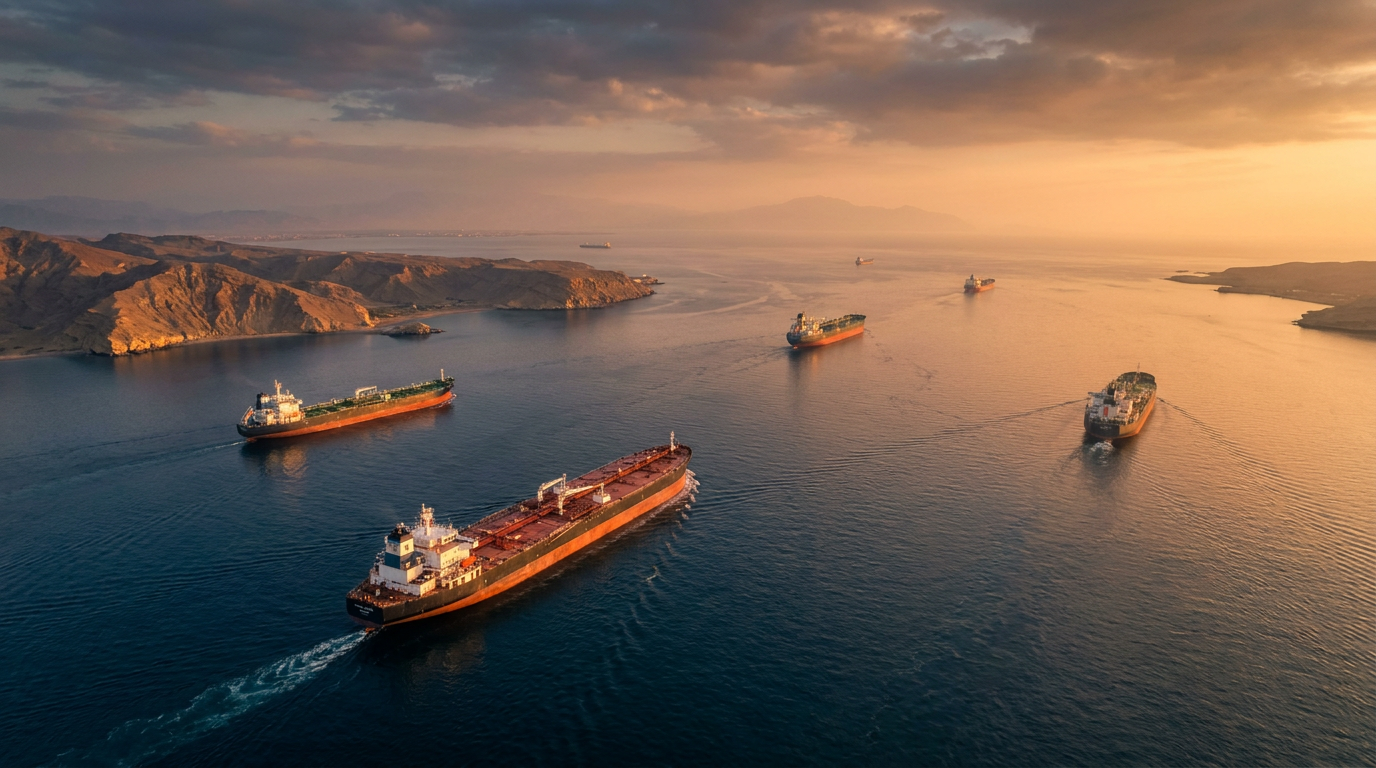
The sudden announcement of a U.S.-Iran peace agreement has sent shockwaves of relief through global markets, promising an end to a 15-week conflict that choked off one of the world's most vital economic arteries. Brokered after months of escalating military and economic tension, the tentative deal aims to reopen the Strait of Hormuz by June 19, effectively unwinding the naval blockades that have paralyzed international shipping since late February. The diplomatic breakthrough marks a critical turning point for a global economy that had been buckling under the weight of soaring energy costs and fractured supply chains.[6][8]
The immediate financial reaction was explosive, reflecting the sheer scale of the economic anxiety that had built up over the spring. Brent crude, the global oil benchmark, plunged more than 4% to roughly $83 a barrel, a steep and rapid drop from its wartime peak of over $115. Simultaneously, global equities surged across the board. The Nasdaq Composite spiked 3% and the Dow Jones Industrial Average hit a record high as investors aggressively priced in the prospect of cheaper energy, stabilizing freight costs, and a return to normalized global trade.[2][8]
Yet, while traders celebrate the headline from trading floors in New York and London, the mechanics of unwinding a major geopolitical conflict are fraught with logistical and diplomatic hurdles. The agreement, which dominated discussions among world leaders at the G7 summit in France, is structured around a fragile 60-day ceasefire window. During this critical period, the United States has committed to lifting its blockade of Iranian ports, while Iran has agreed to allow commercial vessels to transit the Strait of Hormuz without restriction or harassment.[4][7]

The stakes for the global economy are difficult to overstate, rooted in the sheer volume of commerce that relies on this specific geographic chokepoint. Before the conflict erupted, approximately 20% of the world's total oil supply—roughly 20 million barrels per day—flowed through the narrow waterway between Iran and Oman. The effective closure of the strait triggered an unprecedented energy shock, permanently altering established trade routes, forcing nations to rapidly deplete their emergency crude stockpiles, and exposing the fragility of the global energy grid.[1][2]
For the maritime shipping industry, the promise of a reopened strait is welcome but viewed with deep, institutional caution. Maritime organizations and tanker bosses warn that a political signature on a piece of paper does not instantly make the waters safe for civilian crews. A Joint Maritime Information Center advisory maintained a "severe" threat level pending the official execution of the ceasefire, explicitly noting that blockade enforcement actions and the risk of vessel boardings remain technically in effect until the June 19 implementation date.[2][5]
The physical reality of the waterway presents its own immediate dangers that diplomacy cannot wave away. Industry experts emphasize that extensive, highly specialized mine-clearing operations will be required before commercial traffic can safely return to pre-war volumes, a meticulous process that could easily take weeks to complete. Furthermore, clearing the massive backlog of hundreds of laden vessels currently stranded in the Persian Gulf and the Gulf of Oman will require highly coordinated traffic management in a transit corridor that is only two miles wide in each direction.[5][7]
The physical reality of the waterway presents its own immediate dangers that diplomacy cannot wave away.
Beyond the immediate logistical challenges of clearing the waterway, the deal introduces new long-term economic variables that could reshape shipping costs. While the initial 60-day period promises toll-free transit, Iranian state media has clearly signaled that Tehran intends to impose "maritime service fees" for security, navigation, and environmental protection once the window closes. This prospect has raised alarms among shipping executives, who fear that such fees could undermine long-established principles of freedom of navigation and establish a costly new status quo for global energy transport.[5][7]
The ripple effects of the peace agreement extend far beyond the Persian Gulf, landing squarely on the desk of incoming Federal Reserve Chairman Kevin Warsh in Washington. Warsh is set to convene his first Federal Open Market Committee meeting this week under the shadow of a stubbornly high 4.2% U.S. inflation rate for May. That inflationary surge was driven overwhelmingly by a 24% year-over-year spike in energy costs, a direct consequence of the war that has squeezed American consumers and complicated the central bank's mandate.[3][9]

Prior to the weekend's diplomatic breakthrough, bond markets and Fed policymakers were increasingly laying the groundwork for further interest rate hikes to combat this war-induced inflation. The sudden collapse in global oil prices, however, dramatically alters the macroeconomic calculus for the central bank. Analysts at major financial institutions now see "some form of relief in sight" for headline inflation, suggesting that if energy prices remain subdued, the consumer price index could potentially retreat back below the 3% threshold by the fall.[3][9]
This sudden inflationary relief could provide Chairman Warsh with crucial maneuvering room during his critical first 100 days. Rather than being forced into an aggressive, unpopular tightening cycle that risks triggering a domestic recession, the Federal Reserve may now have the latitude to hold rates steady or even consider the rate cuts that President Donald Trump has publicly and repeatedly demanded. However, economists caution that the broader economic damage from the 15-week disruption will not evaporate overnight, and core inflation pressures may still linger in the system.[1][9]
The diplomatic architecture of the deal also leaves several critical, highly contentious issues unresolved. In exchange for the reopening of the strait and the cessation of hostilities, the United States has reportedly agreed to release $24 billion in frozen Iranian assets and suspend crippling sanctions on Iranian oil exports. Crucially, the agreement deliberately defers the most complex issue—the status and monitoring of Iran's nuclear program—to future negotiations, effectively kicking the primary catalyst of the war down the road. This concession was necessary to secure the immediate reopening of the waterway, but it guarantees that diplomatic tensions will remain high.[7]

This strategic deferral has drawn mixed reactions from international observers and diplomats monitoring the situation. While G7 leaders have broadly welcomed the immediate de-escalation of violence and the stabilization of energy markets, geopolitical analysts caution that the underlying framework remains highly fragile. The deliberate decision to separate immediate maritime and economic relief from the complex, intractable nuclear negotiations means that the fundamental drivers of the conflict remain entirely unaddressed. By relying on a short 60-day window to bridge such a massive diplomatic divide, the agreement leaves the door wide open for future instability once the initial economic relief fades and the hard negotiations begin.[4][7]
Ultimately, the U.S.-Iran deal represents a pragmatic, economically driven pause rather than a comprehensive, lasting resolution to decades of animosity. The mounting, unsustainable pressure of runaway inflation, fractured supply chains, and the looming threat of a global recession forced both sides to the negotiating table to find a workable compromise. As massive commercial ships tentatively prepare to navigate the Strait of Hormuz once more, the global economy watches closely, hoping that this fragile truce can hold long enough to repair the extensive damage of the past three months.[1][7][8]
How we got here
Late Feb 2026
The U.S.-Israel war on Iran begins, leading to the effective closure of the Strait of Hormuz.
May 2026
U.S. inflation hits 4.2%, driven largely by a 24% year-over-year spike in energy costs.
June 14, 2026
The U.S. and Iran announce a tentative peace agreement to end hostilities.
June 19, 2026
The scheduled date for the official reopening of the Strait of Hormuz to commercial shipping.
Viewpoints in depth
Global Markets & Investors
Focuses on the macroeconomic relief brought by the deal.
Financial markets have overwhelmingly cheered the agreement, viewing it as a critical release valve for the global economy. Investors argue that the sudden drop in oil prices will quickly filter through to lower transportation and manufacturing costs, cooling the 4.2% inflation rate. This camp believes the deal provides the Federal Reserve with the necessary cover to pause rate hikes, averting a potential war-induced recession and justifying the recent surge in equity valuations.
Maritime & Shipping Industry
Prioritizes physical security and operational clarity over political declarations.
For shipowners, insurers, and maritime unions, a diplomatic signature is only the first step. This camp emphasizes that the Strait of Hormuz remains a high-risk zone until extensive mine-clearing operations are completed and the U.S. naval blockade is physically dismantled. They are also deeply concerned about Iran's stated intention to impose maritime service fees after the 60-day window, warning that such tolls could permanently increase the baseline cost of global shipping.
Geopolitical Analysts
Views the agreement as a fragile, temporary economic truce rather than a lasting peace.
Diplomatic experts caution that the deal is built on immediate economic necessity rather than fundamental conflict resolution. By deferring negotiations on Iran's nuclear program and focusing solely on maritime access and frozen assets, this camp argues the agreement leaves the core drivers of the war unaddressed. They warn that the 60-day window is a narrow timeframe to resolve deeply entrenched hostilities, leaving the global supply chain vulnerable to sudden re-escalation.
What we don't know
- Whether the 60-day ceasefire will hold long enough to finalize a broader diplomatic agreement.
- How much Iran will charge in 'maritime service fees' once the initial toll-free transit window expires.
- The exact timeline for clearing naval mines and stranded vessels from the Persian Gulf.
Key terms
- Strait of Hormuz
- A narrow, strategically vital waterway between Iran and Oman through which approximately 20% of the world's oil supply flows.
- Brent Crude
- The primary international benchmark price for purchases of oil worldwide.
- Federal Open Market Committee (FOMC)
- The branch of the Federal Reserve responsible for determining U.S. monetary policy and interest rates.
- Blockade
- An act of war involving the use of naval forces to prevent ships from entering or leaving a country's ports.
Frequently asked
Why did oil prices drop so suddenly?
Prices fell because the peace deal promises to reopen the Strait of Hormuz, restoring the flow of roughly 20 million barrels of oil per day that had been blocked by the conflict.
Is the Strait of Hormuz completely safe now?
Not yet. Maritime organizations warn that extensive mine-clearing operations and security coordination are required before commercial traffic can safely return to normal levels.
How does this affect U.S. inflation?
The war caused energy prices to spike, driving U.S. inflation to 4.2% in May. The sharp drop in oil prices following the deal is expected to ease those inflationary pressures.
What happens after the 60-day ceasefire?
The initial agreement allows 60 days of toll-free transit. After that, Iran has indicated it plans to charge maritime service fees, though the exact terms remain subject to negotiation.
Sources
Source coverage
9 outlets
3 viewpoints surfaced









[1]NYTGeopolitical Analysts
The Iran War Permanently Altered the Global Economy
Read on NYT →[2]CNBCGlobal Markets & Investors
Oil prices hit three-month low — but tanker bosses remain cautious on Hormuz transit
Read on CNBC →[3]BloombergGlobal Markets & Investors
Citi Sees 'Some Form of Relief in Sight' for Inflation
Read on Bloomberg →[4]NPRGeopolitical Analysts
How leaders at the G7 summit are reacting to the U.S.-Iran deal
Read on NPR →[5]gCaptainMaritime & Shipping Industry
Shipping Industry Welcomes Iran Deal But Warns Strait of Hormuz Reopening Will Take Time
Read on gCaptain →[6]The Straits TimesGeopolitical Analysts
Trump says Hormuz to reopen on June 19 under US-Iran deal
Read on The Straits Times →[7]The GuardianGeopolitical Analysts
US-Iran peace deal hinges on shipping, sanctions relief and deferred nuclear talks
Read on The Guardian →[8]Business InsiderGlobal Markets & Investors
Nasdaq spikes 3%, oil slides on US-Iran deal to open the Strait of Hormuz
Read on Business Insider →[9]Council on Foreign RelationsGeopolitical Analysts
What to Expect From Kevin Warsh's Fed in the First 100 Days
Read on Council on Foreign Relations →

More in business
See all 5 stories →Space Economy
SpaceX Completes Historic $85 Billion IPO, Minting Elon Musk as World's First Trillionaire
0 sources

Monetary Policy
Federal Reserve Chair Kevin Warsh Signals End to Era of Heavy Forward Guidance
0 sources
Space Economy
SpaceX Completes Largest IPO in History, Surpassing $2 Trillion Valuation
0 sources
Every angle. Every day.
Get business stories with full source coverage and perspective breakdowns delivered to your inbox.