
US and Iran Sign Electronic Memorandum to End 109-Day Conflict as Details Remain Under Negotiation
Washington and Tehran have electronically signed a memorandum of understanding to halt hostilities, though US officials caution that key details regarding nuclear inspections and regional ceasefires remain unresolved. The framework agreement arrives as G7 leaders convene in France to discuss the war's global economic fallout.
By Factlen Editorial Team
- US Administration & Diplomats
- Views the memorandum as a historic victory that ends active combat, though acknowledges the need for strict nuclear verification.
- Iranian State & Regional Observers
- Frames the electronic signing as a mutual de-escalation that preserves sovereignty and provides necessary economic relief.
- Israeli Security Establishment
- Expresses deep concern that a premature ceasefire, particularly in Lebanon, will allow hostile militant groups to rearm.
What's not represented
- · European energy consumers
- · Lebanese government officials
Why this matters
The 109-day conflict has severely disrupted global energy markets and shipping through the Strait of Hormuz, prompting central banks worldwide to hike interest rates. A finalized peace deal would stabilize global oil prices, ease inflation pressures, and allow the return of international nuclear inspectors to Iran.
Key points
- The US and Iran have electronically signed a memorandum of understanding to halt a 109-day conflict.
- President Trump declared the framework 'all signed,' while Vice President Vance noted details remain 'very general.'
- The return of UN nuclear inspectors to Iranian facilities remains a critical, unresolved point of negotiation.
- Israel has expressed reluctance regarding a linked ceasefire in Lebanon, complicating regional security guarantees.
- The war's inflationary impact led the Bank of Japan to raise interest rates to a 31-year high.
The United States and Iran have officially exchanged electronic signatures on a memorandum of understanding, marking the first concrete diplomatic breakthrough in a 109-day conflict that has severely disrupted global energy markets and regional stability. The signing, confirmed by both Washington and Tehran, establishes a formal framework to halt direct hostilities across multiple fronts. While the document represents a monumental step toward de-escalation, officials caution that it serves primarily as a foundational agreement rather than a comprehensive peace treaty. The breakthrough comes after weeks of back-channel negotiations aimed at preventing a broader regional conflagration that threatened to draw in neighboring states and severely impact global shipping lanes.[2][6]
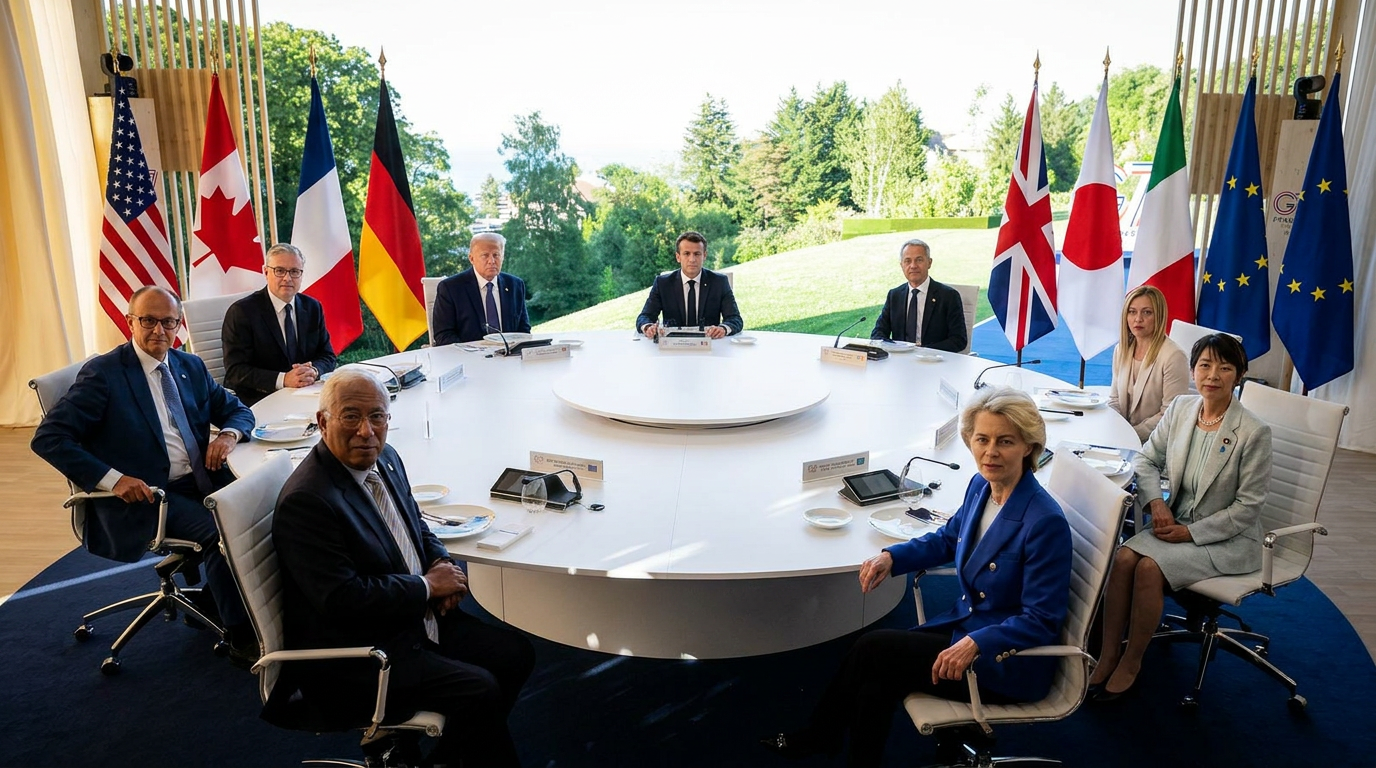
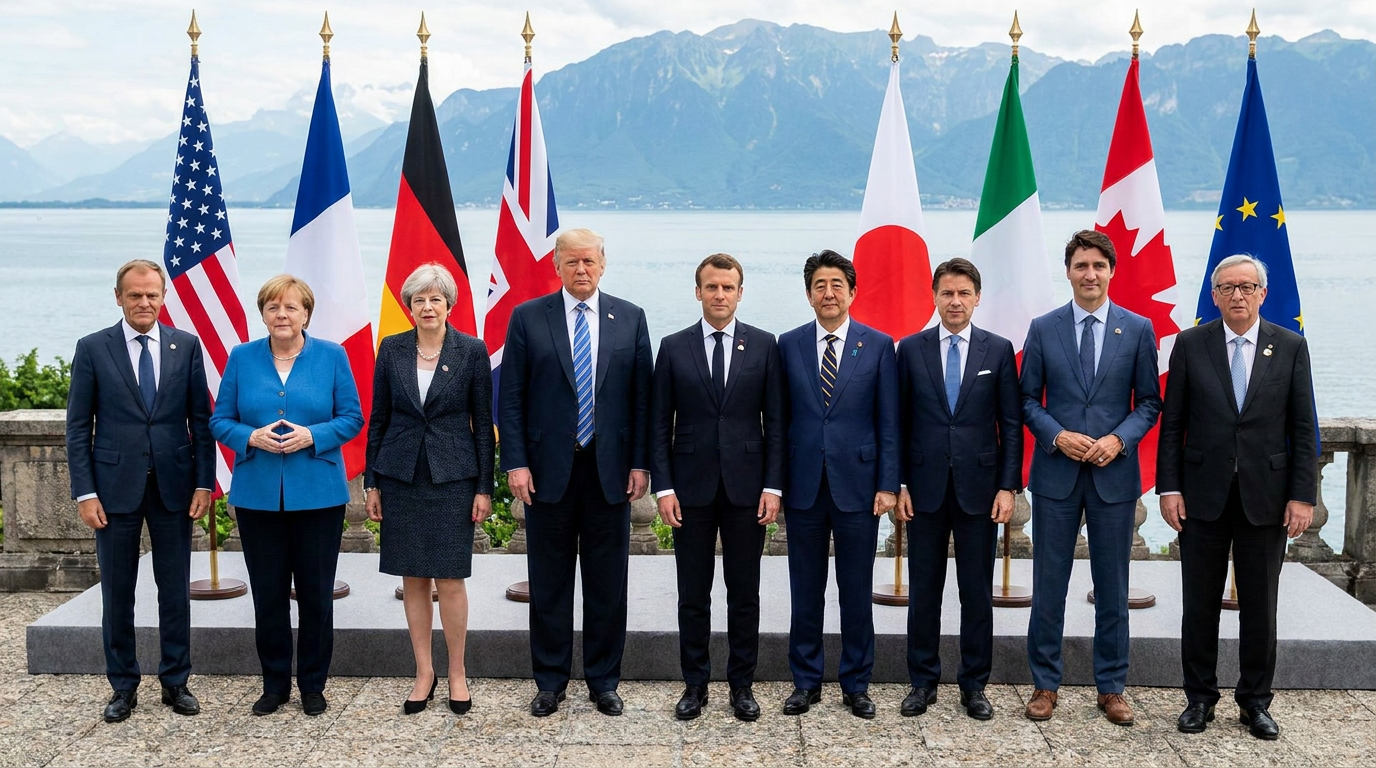
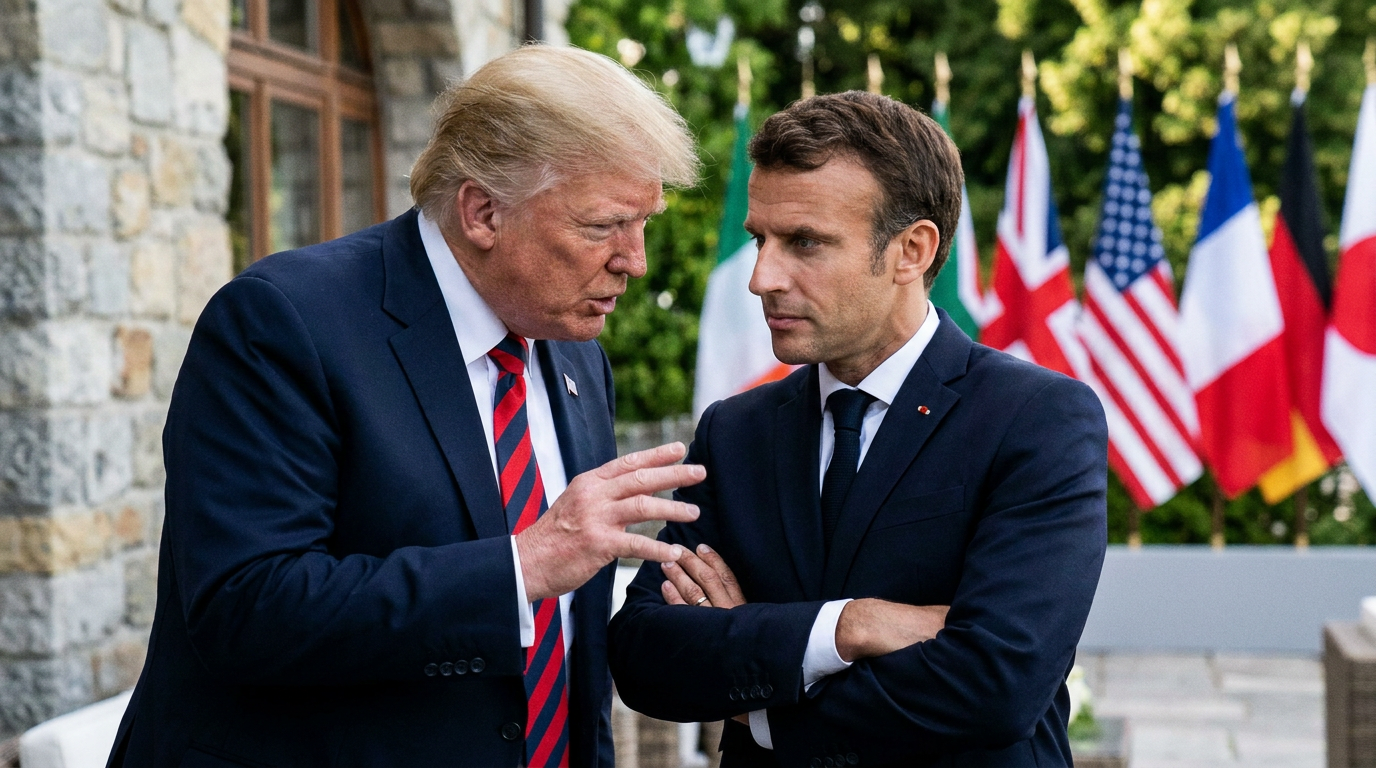
Arriving at the G7 summit in Biarritz, France, President Donald Trump projected immense confidence in the diplomatic achievement, declaring to reporters that the peace framework was "all signed" and effectively complete. The administration is eager to frame the memorandum as a historic foreign policy victory, emphasizing the rapid cessation of direct military engagements. For the White House, securing a tangible agreement before the conclusion of the G7 summit provides significant leverage in discussions with European allies regarding global economic recovery efforts. The announcement was timed to project unified American leadership on the world stage, attempting to reassure international markets that the worst of the geopolitical crisis has passed.[1][4][5]
Despite the president's optimistic framing, Vice President JD Vance offered a notably more measured assessment of the current diplomatic reality. Speaking to domestic audiences, Vance clarified that the US-Iran deal remains "very general" in its current form, with several critical and highly sensitive details still requiring intense negotiation. The vice president's comments highlight the delicate balancing act the administration faces: celebrating the end of active combat while managing expectations regarding the complex, unresolved issues that have historically derailed US-Iranian diplomacy. Vance specifically noted that the framework provides a roadmap, but the actual implementation of security guarantees will require extensive verification mechanisms.[1][8]

The most contentious unresolved issue involves the status of Iran's nuclear program and the reinstatement of international oversight. According to Vice President Vance, a non-negotiable component of the final, binding treaty will be the return of United Nations nuclear inspectors to Iranian facilities. The electronic memorandum reportedly outlines a broad commitment to non-proliferation, but the specific protocols, access rights, and timelines for the International Atomic Energy Agency (IAEA) remain subjects of fierce debate. Western diplomats are insisting on robust, unannounced inspection capabilities to ensure compliance, a demand that has historically met intense resistance from hardline factions within Tehran's political and military establishment.[1][8]
The most contentious unresolved issue involves the status of Iran's nuclear program and the reinstatement of international oversight.
In Tehran, the Iranian National Security Council publicly acknowledged the electronic signing of the memorandum, framing the agreement as a necessary step to end the fighting on all fronts, including proxy engagements in Lebanon. For the Iranian leadership, the cessation of hostilities offers a critical reprieve from the immense economic and military pressure sustained over the past 109 days. Domestic media in Iran has portrayed the agreement as a mutual de-escalation rather than a capitulation, emphasizing that the framework preserves the nation's core sovereignty. The swift electronic execution of the document reflects a mutual urgency to stabilize the situation before further economic degradation or unintended military escalation could occur.[2][6]
The bilateral progress between Washington and Tehran is, however, heavily complicated by the intricate web of regional alliances and ongoing proxy conflicts. Most notably, Israel has expressed deep reluctance regarding the terms of a proposed ceasefire in Lebanon, which is intricately linked to the broader US-Iran framework. Israeli officials are concerned that a premature cessation of hostilities without stringent, enforceable security guarantees will simply allow Iranian-backed militant groups to regroup and rearm along Israel's northern border. This hesitation from Jerusalem presents a significant diplomatic hurdle for the US administration, which must navigate its ironclad commitment to Israeli security while simultaneously pushing for a comprehensive regional de-escalation.[3][7]

The economic fallout from the 109-day war has been a central focus at the G7 summit, where leaders from the world's largest advanced economies are grappling with the conflict's global ripple effects. The disruption of commercial shipping through the Strait of Hormuz—a critical artery for global energy supplies—has triggered severe inflationary pressures worldwide. Central banks have been forced to respond aggressively to the resulting spike in oil prices; in a stark illustration of the war's economic impact, the Bank of Japan recently raised its benchmark interest rate to a 31-year high of 1 percent, abandoning decades of ultra-low borrowing costs in a desperate bid to curb war-induced inflation.[4][9]
As negotiators prepare for the next phase of talks, the focus shifts from halting the violence to constructing a durable, long-term security architecture for the Middle East. The coming days will be critical as diplomatic teams attempt to translate the broad principles of the electronic memorandum into a binding treaty. Success will require bridging massive trust deficits, satisfying the security demands of regional allies like Israel, and establishing a verifiable nuclear inspection regime. While the signing of the MoU marks the definitive end of the 109-day active conflict, the diplomatic heavy lifting required to secure a lasting peace has only just begun.[1][6][8]

How we got here
109 Days Ago
Direct military conflict breaks out, severely disrupting global energy markets.
Last Week
Back-channel negotiations intensify as economic pressures mount globally.
June 16, 2026
Washington and Tehran electronically sign a memorandum of understanding to halt hostilities.
Viewpoints in depth
US Administration
Focuses on securing a historic diplomatic victory while demanding robust verification.
The White House is eager to frame the cessation of hostilities as a major foreign policy triumph, particularly as leaders gather for the G7 summit. However, the administration faces domestic pressure to ensure the agreement is not merely a pause in fighting. Officials emphasize that any final treaty must include the unconditional return of international nuclear inspectors and verifiable constraints on Iran's regional proxy networks.
Iranian National Security Council
Prioritizes immediate economic relief and the preservation of national sovereignty.
For Tehran, the electronic signing represents a necessary tactical de-escalation to relieve crippling economic and military pressure. State media is framing the agreement as a mutual step back from the brink, ensuring that the government does not appear to be capitulating to Western demands. The leadership's primary goal in the upcoming detailed negotiations will be to secure the lifting of sanctions while minimizing intrusive international oversight.
Regional Security Partners
Fears that a broad framework lacks the specific enforcement mechanisms needed to ensure local safety.
Allies such as Israel view the broad US-Iran memorandum with significant skepticism. Their primary concern is that a generalized ceasefire, particularly one extending to groups in Lebanon, will simply provide hostile forces the time and space to rearm. These partners are lobbying Washington heavily to ensure that the final treaty includes stringent, enforceable security guarantees that directly address the threat posed by militant factions on their borders.
What we don't know
- The exact protocols and timelines for the return of international nuclear inspectors to Iran.
- How the US will address Israel's security concerns regarding the proposed ceasefire in Lebanon.
- The specific timeline for converting the general memorandum into a binding, comprehensive peace treaty.
Key terms
- Memorandum of Understanding (MoU)
- A formal agreement between two or more parties that establishes a framework for cooperation, often serving as a precursor to a legally binding treaty.
- G7 Summit
- An annual meeting of leaders from seven of the world's largest advanced economies (Canada, France, Germany, Italy, Japan, the UK, and the US) to discuss global issues.
- Strait of Hormuz
- A critical, narrow waterway between the Persian Gulf and the Gulf of Oman through which a significant portion of the world's oil supply passes.
Frequently asked
Is the war between the US and Iran officially over?
Direct hostilities have been halted following the electronic signing of a memorandum of understanding, but a final, comprehensive peace treaty is still being negotiated.
What happens to Iran's nuclear program?
The return of international nuclear inspectors is a core demand of the US administration, but the specific protocols and access rights remain unresolved.
How has the conflict affected the global economy?
The 109-day war disrupted global energy supplies, driving up inflation and forcing central banks, such as the Bank of Japan, to raise interest rates to multi-decade highs.
Sources
Source coverage
9 outlets
3 viewpoints surfaced







[1]The GuardianUS Administration & Diplomats
JD Vance says US-Iran deal ‘very general’ with many details yet to be negotiated
Read on The Guardian →[2]Al JazeeraIranian State & Regional Observers
Iran war day 109: Tehran, Washington, sign MoU electronically
Read on Al Jazeera →[3]NPRIsraeli Security Establishment
Morning news brief: Israel's reluctance on Lebanon ceasefire complicates U.S.-Iran deal
Read on NPR →G7 leaders meet for first full day of talks with Russia-Ukraine war first on the agenda
Read on The Guardian →[5]Fox NewsUS Administration & Diplomats
Trump declares historic US-Iran peace framework signed as G7 summit begins
Read on Fox News →[6]ReutersIranian State & Regional Observers
US and Iran exchange electronic signatures on draft peace memorandum, ending 109-day conflict
Read on Reuters →[7]Times of IsraelIsraeli Security Establishment
Jerusalem hesitates on Lebanon ceasefire terms linked to US-Iran framework
Read on Times of Israel →[8]Associated PressUS Administration & Diplomats
Vance tempers expectations on Iran deal, noting nuclear inspections remain unresolved
Read on Associated Press →Japan’s central bank raises interest rates to highest level since 1995
Read on Al Jazeera →

Every angle. Every day.
Get news politics stories with full source coverage and perspective breakdowns delivered to your inbox.