
The Science of No-Dig Gardening: How Leaving Soil Undisturbed Transforms the Microbiome
By abandoning the traditional rototiller, home gardeners are cultivating vast underground networks of mycorrhizal fungi that sequester carbon, suppress weeds, and naturally fertilize plants.
By Factlen Editorial Team
- Regenerative Agriculture Advocates
- Advocates who prioritize long-term soil health and carbon sequestration over immediate aesthetic control.
- Soil Scientists & Microbiologists
- Scientists focused on the complex, symbiotic relationships between plant roots and underground fungal networks.
- Traditional Horticulturists & Extension Programs
- Experienced growers who historically relied on tilling but are increasingly adapting to minimal-disturbance methods.
What's not represented
- · Commercial compost suppliers who benefit from the high volume of organic matter required to start no-dig beds.
- · Manufacturers of traditional rototillers and cultivation equipment facing shifting consumer demand.
Why this matters
Adopting no-dig methods saves hours of back-breaking labor while actively fighting climate change by locking carbon into the soil. It transforms the home garden from a chemically dependent plot into a self-sustaining, highly productive ecosystem.
Key points
- No-dig gardening replaces traditional tilling with top-down layering of organic matter like compost and mulch.
- Leaving soil undisturbed protects delicate networks of mycorrhizal fungi that supply plants with water and essential nutrients.
- Tilling destroys soil structure, brings dormant weed seeds to the surface, and releases sequestered carbon into the atmosphere.
- Converting to a no-dig system involves smothering existing weeds with cardboard and planting directly into a thick layer of fresh compost.
For generations, the arrival of spring in the home vegetable garden was heralded by the familiar roar of the gasoline-powered rototiller. Gardeners dutifully churned the earth, operating under the deeply ingrained belief that breaking up the compacted dirt was absolutely essential to create a soft, welcoming bed for fragile new seeds. The goal was a perfectly smooth, uniform surface devoid of any previous plant life. But a quiet, science-backed revolution is currently taking root in backyards worldwide, fundamentally challenging everything we thought we knew about traditional soil cultivation and plant health.[1]
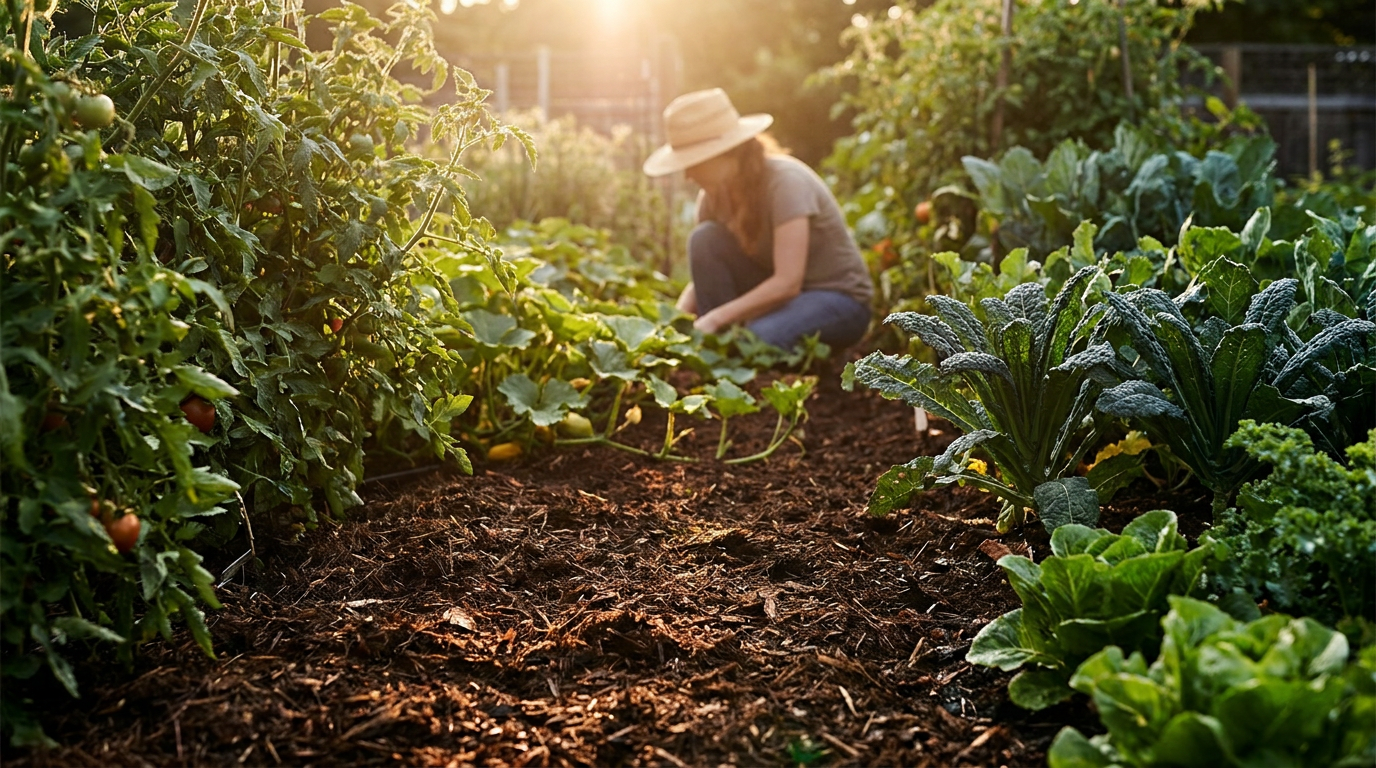
The 'no-dig' or 'no-till' method is rapidly replacing traditional cultivation as the gold standard for home growers. Instead of aggressively turning the soil with metal tines or heavy spades, regenerative gardeners are choosing to leave the ground entirely undisturbed. They opt instead to layer rich organic matter—like high-quality compost, shredded leaves, and straw mulch—directly on the surface of the earth. This top-down approach mimics natural ecosystems, allowing gravity, rainfall, and soil organisms to do the heavy lifting of incorporating nutrients into the ground over time.[3]
The fundamental premise of no-dig gardening is that nature already knows exactly how to build perfect, fertile soil without human intervention. In a thriving old-growth forest, no one ever comes through with a plow to prepare the ground for the spring undergrowth. Instead, autumn leaves, fallen branches, and organic debris simply drop to the forest floor, slowly decomposing from the top down to create a deep, rich layer of moisture-retentive humus that naturally supports an astonishing diversity of plant life.[5]
Traditional tilling offers the dangerous illusion of immediate progress. It temporarily fluffs the dirt, making it look pristine, and conveniently buries surface weeds out of sight. However, agricultural extension programs and soil scientists now warn that this mechanical churning violently destroys the soil's natural particle aggregation. Without that vital structural integrity, the freshly tilled soil is highly vulnerable to erosion and inevitably suffers from severe, brick-like compaction after the first heavy rain of the season, suffocating delicate plant roots.[3]

Worse still, turning the soil acts as a massive, unintended weed-germination event. Every square foot of garden soil contains thousands of dormant weed seeds buried deep underground where it is too dark for them to grow. Tilling acts as an elevator, bringing these dormant seeds up to the surface and exposing them to the exact flash of sunlight and burst of oxygen they need to sprout. This dynamic creates an endless, frustrating cycle of back-breaking weeding labor for the traditional gardener.[3][7]
But the most devastating and long-lasting impact of the rototiller happens on a microscopic level, completely invisible to the naked eye. Just beneath the surface of any healthy garden lies a complex, living universe known as the soil microbiome. This bustling subterranean ecosystem is absolutely teeming with billions of beneficial bacteria, microscopic nematodes, earthworms, and fungi that work in constant, unseen harmony to break down organic matter and create a hospitable environment for plant life.[6]
The undisputed stars of this subterranean ecosystem are mycorrhizal fungi. These microscopic, highly specialized organisms form an incredibly extensive network of delicate, thread-like strands called hyphae. These hyphae weave their way through the dark soil and physically attach themselves directly to the roots of nearly all garden plants. Rather than acting as parasites, these fungi form a mutually beneficial partnership with the plants, creating an underground communication and resource-sharing network often referred to by scientists as the 'wood wide web'.[2][5]
This physical connection forms the basis of a remarkable symbiotic exchange. Plants, utilizing the daily magic of photosynthesis, convert ambient sunlight and atmospheric carbon dioxide into energy-dense, carbon-rich sugars. Because the fungi cannot photosynthesize their own food in the total darkness of the soil, the plants willingly pump a significant portion of their hard-earned sugars down into their root systems specifically to feed their fungal partners.[4][5]

This physical connection forms the basis of a remarkable symbiotic exchange.
In direct exchange for this steady, reliable diet of liquid carbon, the fungi act as an immense, highly efficient secondary root system for the plants. Because fungal hyphae are vastly finer and significantly more far-reaching than even the smallest plant root hairs, they can easily squeeze into microscopic soil crevices. This allows the fungi to efficiently mine the surrounding earth for vital water and essential trace minerals that the plant could never reach on its own.[2]
The sheer scale of this microscopic partnership is staggering to comprehend. Scientific research indicates that a healthy, undisturbed fungal network can cover up to 700 times more soil volume than the plant's biological roots alone. Through this vast fungal pipeline, garden plants can obtain up to 80 percent of their required phosphorus, along with crucial doses of nitrogen, zinc, and copper, directly from the fungi, resulting in dramatically larger, healthier, and more resilient crops.[2][6]
When a well-meaning gardener runs a mechanical tiller or a sharp spade through the soil, they are effectively dropping a bomb on this delicate, life-sustaining infrastructure. The spinning metal tines violently shred the established fungal networks into disconnected fragments. This catastrophic disturbance forces the surviving plants to expend immense amounts of their own energy attempting to rebuild their underground lifelines from scratch every single spring, leaving them stunted and highly vulnerable to pests and diseases in the meantime.[3][5]
Beyond the immediate benefits to plant health and crop yields, the no-dig method offers a profound, globally significant environmental benefit: active carbon sequestration. When garden soil is left entirely undisturbed, the liquid carbon pumped underground by the plants remains safely locked in the earth. The complex soil food web utilizes this carbon to build stable organic matter, effectively pulling greenhouse gases out of the atmosphere and storing them safely beneath our feet.[4]
Conversely, every single time the ground is dug, plowed, or tilled, previously stable, oxidized carbon is suddenly exposed to the open air and rapidly released back into the atmosphere as carbon dioxide gas. By abandoning the rototiller and adopting regenerative, no-till practices, everyday home gardeners have the unprecedented opportunity to transform their modest backyard vegetable patches into active, climate-fighting carbon sinks that help offset their personal environmental footprints.[4][7]

Transitioning a traditional plot to a no-dig system is surprisingly simple and accessible, though it requires a fundamental shift in gardening mindset. To convert an existing patch of turf grass or a stubborn weed patch into a productive garden bed, practitioners typically start by laying down a thick, overlapping layer of plain, unwaxed cardboard directly over the unwanted vegetation, ensuring there are absolutely no gaps for light to penetrate.[8]
This foundational cardboard layer acts as a highly effective, fully biodegradable weed barrier. It completely smothers the existing grass and weeds by blocking out all sunlight, causing them to die back and decompose in place. Gardeners then pile a generous 10 to 12 inches of high-quality, nutrient-dense compost directly on top of the cardboard layer, creating an instant, pristine planting surface that is completely free of weed seeds.[8]
The beauty of this system is that planting can happen immediately, right into the fresh layer of compost. Over the course of the first growing season, the cardboard slowly breaks down into the earth, allowing the roots of the new vegetables to penetrate deeply into the native soil below. Simultaneously, the decaying organic matter from the smothered grass feeds the local earthworm population, which works tirelessly to naturally aerate and soften the ground.[8]

The ongoing maintenance of a well-established no-dig bed is remarkably low-effort, returning countless hours of leisure time to the gardener. Because the underlying soil is never turned over, the millions of buried weed seeds remain permanently dormant in the dark. The very few opportunistic weeds that do happen to blow in on the wind are easily and quickly plucked with two fingers from the loose, friable compost resting on the surface.[5][7]
Furthermore, the thick, protective layer of organic compost and mulch acts exactly like a giant sponge, drastically improving the garden's overall water retention. Even during the blistering heat of late summer, the soil beneath the compost remains consistently cool, dark, and damp. This natural insulation significantly reduces the need for constant, daily irrigation, conserving precious municipal water resources and protecting the plants from the stress of drought.[2][3]
While the first year of establishing a no-dig garden requires a moderate upfront physical investment in hauling and spreading compost, the long-term compounding rewards are undeniable. Year after year, as the soil microbiome flourishes completely undisturbed, the garden ecosystem becomes increasingly resilient, exponentially more productive, and vastly more enjoyable to tend, proving that sometimes the best thing a gardener can do is simply put down the shovel.[1][6]
How we got here
1930s
The Dust Bowl highlights the devastating erosion risks of excessive deep tilling in American agriculture.
1940s
The invention and popularization of the home rototiller makes deep soil cultivation a standard backyard practice.
1980s
English horticulturist Charles Dowding begins pioneering and popularizing the modern no-dig gardening method for vegetable production.
2020s
Regenerative agriculture and no-till practices see a massive surge in mainstream popularity as home gardeners seek climate-friendly, low-labor solutions.
Viewpoints in depth
Regenerative Gardeners
Advocates who prioritize long-term soil health and carbon sequestration over immediate aesthetic control.
This camp views the garden not as a sterile factory for producing vegetables, but as a living ecological community. They argue that any mechanical disturbance of the soil is a step backward, prioritizing the slow, steady accumulation of organic matter. For regenerative gardeners, the ultimate metric of success is the presence of earthworms and fungal mycelium, trusting that healthy, pest-resistant plants will naturally follow as a byproduct of a thriving subterranean ecosystem.
Soil Microbiologists
Scientists focused on the complex, symbiotic relationships between plant roots and underground fungal networks.
Researchers in this field emphasize the invisible mechanics of the 'wood wide web.' They point to data showing that plants expend up to 30% of their energy producing sugars specifically to feed mycorrhizal fungi. From a microbiological perspective, tilling is catastrophic because it severs these vital nutrient pipelines, forcing plants into a state of constant recovery and making them artificially dependent on synthetic, human-applied fertilizers to survive.
Traditional Horticulturists
Experienced growers who historically relied on tilling but are increasingly adapting to minimal-disturbance methods.
Many veteran gardeners and agricultural extension programs acknowledge the science behind no-dig methods but caution that the transition period can be challenging. They note that heavily compacted clay soils or plots overrun with aggressive perennial weeds may still require initial, one-time mechanical intervention before a no-dig system can be successfully established. They advocate for a pragmatic approach, balancing the ideals of soil microbiology with the practical realities of rehabilitating severely degraded land.
What we don't know
- The exact timeline for a fully depleted, chemically treated suburban lawn to rebuild a complete, native soil microbiome remains highly variable.
- How rapidly changing climate conditions and extreme heat waves will affect the moisture-retention capabilities of surface-level compost layers over the next decade.
Key terms
- Mycorrhizal Fungi
- Microscopic fungi that form a symbiotic relationship with plant roots, exchanging water and nutrients for carbon-rich sugars.
- Soil Microbiome
- The complex community of microorganisms, including bacteria and fungi, living in the soil and supporting plant health.
- Hyphae
- The branching, thread-like filaments that make up the mycelium of a fungus, acting as an underground nutrient network.
- Carbon Sequestration
- The process of capturing and storing atmospheric carbon dioxide in the soil to mitigate climate change.
- Conservation Tillage
- Agricultural practices that minimize soil disturbance to maintain structure and microbial life.
Frequently asked
Can I use the no-dig method on heavy clay soil?
Yes. Layering compost on top of clay soil encourages worms and microbes to naturally incorporate the organic matter downward, gradually breaking up the clay without the need for manual digging.
Do I still need to use fertilizer in a no-dig garden?
Generally, no. The thick layer of compost and the active soil microbiome provide a steady, natural supply of nutrients, significantly reducing or eliminating the need for synthetic fertilizers.
How do I deal with aggressive perennial weeds without digging?
For tough perennial weeds, gardeners use a thick layer of overlapping cardboard beneath the compost to smother them. Persistent weeds that push through are repeatedly snipped off at the surface to exhaust their root energy.
Can I use the no-dig method in raised beds?
Absolutely. The principles are identical: fill the raised bed with layers of organic matter and compost, and avoid turning or mixing the soil in subsequent seasons.
Sources
Source coverage
8 outlets
3 viewpoints surfaced







[1]Factlen Editorial TeamSoil Scientists & Microbiologists
Synthesis by Factlen editorial team
Read on Factlen Editorial Team →[2]Gardeners' WorldSoil Scientists & Microbiologists
What is mycorrhizal fungi and how does it work?
Read on Gardeners' World →[3]Piedmont Master GardenersTraditional Horticulturists & Extension Programs
No-Till Gardening: Improving Soil Health
Read on Piedmont Master Gardeners →[4]Sustainable AmericaRegenerative Agriculture Advocates
How to Start a Regenerative Garden
Read on Sustainable America →[5]The Coeur d'Alene CoopRegenerative Agriculture Advocates
Dig Into The No-Dig Method Of Gardening for Better Soil
Read on The Coeur d'Alene Coop →[6]Rural SproutTraditional Horticulturists & Extension Programs
Our Journey with No-Dig Gardening
Read on Rural Sprout →[7]Green Bay Botanical GardenRegenerative Agriculture Advocates
5 Ways to Start a Regenerative Garden
Read on Green Bay Botanical Garden →[8]Zone 3 Vegetable GardeningTraditional Horticulturists & Extension Programs
How to Make a No Dig Garden Bed
Read on Zone 3 Vegetable Gardening →
Every angle. Every day.
Get home stories with full source coverage and perspective breakdowns delivered to your inbox.