
How the Open Social Web Reached Maturity in 2026
Decentralized protocols like ActivityPub and the AT Protocol are transforming internet culture by giving users permanent ownership over their data, algorithms, and communities.
By Factlen Editorial Team
- Open-Web Advocates
- Argue that decentralizing infrastructure is essential for users to regain ownership of their data and escape corporate silos.
- Commercial Platforms
- View open protocols as a feature to connect massive user bases while maintaining their own platform ecosystems.
- Protocol Developers
- Focus on building robust, portable technical standards that allow disparate systems to communicate seamlessly.
- Digital Marketers
- See the decentralized web as a highly engaged environment for reaching specific, niche communities.
What's not represented
- · Casual users who prefer centralized convenience
- · Advertisers navigating decentralized networks
Why this matters
By moving away from centralized corporate platforms, users gain the ability to control their own algorithms, permanently own their digital connections, and escape opaque moderation policies. This shift ensures that your online presence can never be erased or locked in by a single company's business decisions.
Key points
- The Open Social Web replaces corporate walled gardens with interconnected, independent servers.
- Protocols like ActivityPub and the AT Protocol allow users to move between platforms without losing their followers.
- Meta's Threads has integrated ActivityPub, connecting its massive user base to the broader Fediverse.
- Decentralized platforms give users the power to choose their own algorithms and moderation rules.
- The shift empowers global communities to build digital spaces tailored to their specific cultural needs.
For over a decade, participating in internet culture meant accepting a rigid bargain: you could connect with the world, but only inside a corporate walled garden. If you wanted to leave a platform, you had to leave your friends, your audience, and your digital history behind. In 2026, that era is quietly coming to an end. A structural shift is sweeping across the internet, replacing isolated silos with an interconnected ecosystem known as the Open Social Web.[6]
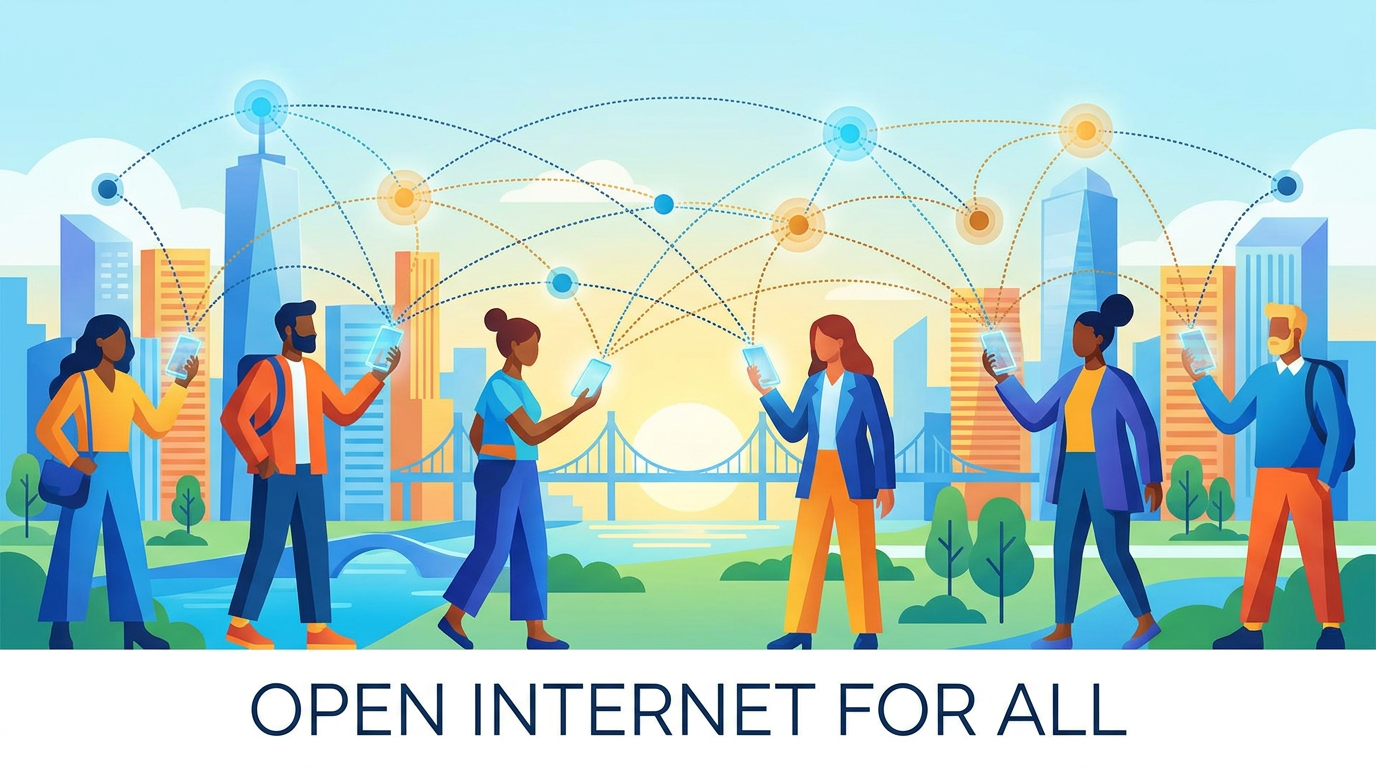
The core of this transformation is the Fediverse—a decentralized network of independent servers that all speak the same digital language. Instead of a single company owning the servers, the algorithm, and the moderation policies, the Fediverse distributes that power. Users can choose exactly where their data lives while still communicating seamlessly with people across the entire global network.[3][6]
To understand how this works, consider how email functions. A person using Gmail can easily send a message to someone using Outlook or a private company server because they all use standard email protocols. The Open Social Web applies this exact same logic to social media. You can post a photo on one platform, and a friend on a completely different platform can like and reply to it without needing to create a new account.[4][6]

The developers behind these new systems often use a "moving cities" analogy to explain the benefit. On traditional centralized platforms, leaving is like moving to a new city but being forced to leave all your belongings and contacts behind. On the decentralized web, standard formats for identity and data act like a digital passport. If you dislike the server you are currently on, you can pack up your data and your followers and move to a new one without losing your connections.[2][6]
The backbone of this interoperability is ActivityPub, an open standard published by the World Wide Web Consortium (W3C). ActivityPub provides the technical rules that allow different servers to deliver notifications, posts, and content to one another. It is the defining standard of the Fediverse, powering platforms like Mastodon for microblogging, Pixelfed for photos, and PeerTube for video.[4]
The most significant validation of ActivityPub has come from Meta's Threads. In a historic shift for a major tech conglomerate, Threads has integrated ActivityPub support, allowing its massive user base to interact with the broader Fediverse. Users on Mastodon can now follow opted-in Threads accounts, and Threads users can see aggregated likes and replies from independent servers directly within their app.[1]
While ActivityPub dominates much of the Fediverse, a parallel innovation is driving growth elsewhere: the Authenticated Transfer (AT) Protocol. Developed initially alongside Bluesky, the AT Protocol places a heavy emphasis on account portability and algorithmic choice. It allows the content a user creates to exist across different applications, rather than being locked into a single feed controlled by a central authority.[2]
While ActivityPub dominates much of the Fediverse, a parallel innovation is driving growth elsewhere: the Authenticated Transfer (AT) Protocol.
In 2026, Bluesky is expanding the AT Protocol's capabilities by launching "Communities." Similar to subreddits, these are dedicated spaces within the broader network where users can gather around specific interests. Because these communities are built on an open protocol, developers and community owners can create custom experiences and moderation tools that plug directly into the network's architecture.[2]
The growth metrics across these decentralized platforms demonstrate a clear appetite for user sovereignty. Mastodon alone has grown to host between 10 and 15 million accounts across its federated servers, maintaining roughly 1.5 million monthly active users. More importantly, independent servers hosting niche communities—ranging from open-source developers to specialized hobbyists—are seeing year-over-year growth exceeding 50 percent.[5]

As the ecosystem matures, the strategy for expanding the Open Social Web has evolved. Instead of trying to convince users to abandon their favorite apps and "join Mastodon," developers are increasingly bringing the Fediverse to the users. By embedding open social graphs into existing websites and applications, creators can instantly connect their audiences to the broader network without requiring them to understand the underlying protocols.[3]
This decentralized architecture fundamentally changes how content moderation works. Rather than relying on a single corporate trust-and-safety team to police billions of users, moderation happens at the community level. Individual servers set their own rules—some are strictly family-friendly, while others are more permissive. If a server becomes a haven for bad actors, other servers can simply sever the connection, isolating the abuse without affecting the rest of the network.[6]
Algorithmic choice is another major victory for users in 2026. On traditional platforms, an opaque algorithm dictates what users see, often prioritizing engagement and outrage to keep people scrolling. On the Open Social Web, users can choose their own algorithms. They can opt for a simple chronological feed, or they can subscribe to custom feeds curated by other users that focus strictly on specific topics or communities.[2][6]

The implications of this shift extend far beyond North America and Europe. For billions of people in global majority countries, the Open Social Web offers a chance to build digital spaces that reflect their own cultural norms. Instead of conforming to the assumptions and rules of Silicon Valley, international communities can own their infrastructure and tailor their platforms to their specific linguistic and social needs.[3]
Challenges certainly remain as the technology scales. Account migration across ActivityPub still has friction, often leaving historical data behind, and interactions between massive platforms like Threads and smaller independent servers can sometimes be one-way or limited by technical constraints. The ecosystem is still working to standardize how long-form content and private messaging flow securely across different applications.[1][4][6]

Despite these growing pains, the trajectory is undeniable. The Open Social Web is no longer a niche experiment for tech enthusiasts; it is becoming the foundational infrastructure of the next internet. By returning ownership, portability, and choice to the people who actually create the content, decentralized protocols are proving that a healthier, more empowering digital culture is entirely possible.[6]
How we got here
2016
Mastodon launches as a decentralized alternative to traditional microblogging.
Jan 2018
The World Wide Web Consortium (W3C) officially publishes ActivityPub as a recommended standard.
2023
Bluesky launches in beta, introducing the AT Protocol to test true account portability.
Mar 2024
Meta begins rolling out ActivityPub integration for Threads, bridging a massive commercial platform with the Fediverse.
2026
Bluesky introduces protocol-level 'Communities,' while Mastodon surpasses 1.5 million monthly active users.
Viewpoints in depth
Open-Web Advocates
They argue that social media is too important to be controlled by a single corporation.
Advocates for the decentralized web believe that the era of the corporate walled garden was a historical anomaly. By decentralizing the infrastructure, users regain ownership of their data, and communities can set their own cultural norms without Silicon Valley interference. They point to the rapid growth of niche servers as proof that people want digital spaces tailored to their specific needs, free from algorithmic manipulation and opaque moderation policies.
Commercial Platforms
Companies view open protocols as the next evolution of networking that benefits both users and platforms.
For massive commercial entities like Meta, integrating open protocols is not about abandoning their business model, but evolving it. By integrating ActivityPub into Threads, they aim to offer users the vast reach and slick interface of a major platform while still participating in the broader, interoperable ecosystem. This approach allows them to retain users who value open standards without forcing them to choose between convenience and connectivity.
Protocol Developers
Engineers focus on the technical hurdles of making disparate systems talk to each other securely.
The developers building ActivityPub and the AT Protocol are primarily concerned with the mechanics of interoperability. Their priority is ensuring that features like account migration, rich media sharing, and private state work seamlessly across different architectures. They acknowledge that while the foundational protocols are solid, standardizing complex interactions—like moving historical data between servers or bridging different moderation systems—remains an ongoing technical challenge.
What we don't know
- How quickly full two-way interoperability between massive platforms like Threads and smaller independent servers will be achieved.
- Whether standardizing account migration will eventually allow users to move their entire post history, rather than just their follower graph.
Key terms
- Fediverse
- A portmanteau of 'federation' and 'universe,' referring to the interconnected network of independent social media servers.
- ActivityPub
- An open, decentralized social networking protocol established by the W3C, used by platforms like Mastodon and Threads.
- AT Protocol
- The Authenticated Transfer Protocol, an open-source framework powering Bluesky that emphasizes account portability and custom algorithms.
- Instance
- An independent server within the Fediverse that hosts its own community, rules, and user accounts.
- Defederation
- The process by which one server severs its connection to another server, typically used to block communities that harbor spam or abuse.
Frequently asked
What exactly is the Fediverse?
The Fediverse is a network of independent social media servers that communicate with each other using shared protocols, allowing users on different platforms to interact seamlessly.
Do I need a new app to join the Open Social Web?
Not necessarily. If you use platforms like Threads or Mastodon, you are already part of it. Developers are also increasingly embedding these networks directly into existing websites.
Can I take my followers with me if I leave a platform?
Yes. Protocols like the AT Protocol and ActivityPub are designed to act like a digital passport, allowing you to move your account and connections to a new server if you choose.
Who controls what I see on my feed?
You do. Decentralized platforms allow for algorithmic choice, meaning you can select a chronological feed or subscribe to custom algorithms created by the community.
Sources
Source coverage
6 outlets
4 viewpoints surfaced






[1]MetaCommercial Platforms
Threads has entered the fediverse
Read on Meta →[2]EngadgetProtocol Developers
Bluesky will launch Reddit-style communities this year
Read on Engadget →[3]FediForumOpen-Web Advocates
Growing the Open Social Web
Read on FediForum →[4]W3C / WikipediaProtocol Developers
ActivityPub Protocol
Read on W3C / Wikipedia →[5]MarketingAgentDigital Marketers
Mastodon Marketing Strategy for 2026
Read on MarketingAgent →[6]Factlen Editorial TeamOpen-Web Advocates
Synthesis by Factlen editorial team
Read on Factlen Editorial Team →

More in culture
See all 5 stories →Digital Religion
How Virtual Reality is Opening the World's Most Sacred Sites to Everyone
0 sources

Endangered Languages
How Artificial Intelligence is Racing to Save the World's Endangered Languages
0 sources

Cozy Web
The Rise of the 'Cozy Web': Why Millions Are Abandoning the Algorithmic Feed for Private Digital Spaces
0 sources

Every angle. Every day.
Get culture stories with full source coverage and perspective breakdowns delivered to your inbox.