
The Rise of the 'Cozy Web': Why Millions Are Abandoning the Algorithmic Feed for Private Digital Spaces
Exhausted by performative algorithms and synthetic content, internet users are migrating from massive public platforms to private, high-trust communities known as the 'Cozy Web.'
By Factlen Editorial Team
- Privacy & Well-being Advocates
- Champion the retreat from algorithmic feeds as a necessary defense against the mental health toll of the attention economy.
- Digital Sociologists
- Focus on the human need for community and how digital spaces are replacing physical 'third places' like cafes.
- Brand & Culture Strategists
- Analyze the commercial shift from public reach to 'Dark Social' and the rising value of niche, high-trust communities.
- Factlen Editorial Synthesis
- Views the migration as an empowering reclamation of digital agency by users rejecting algorithmic manipulation.
What's not represented
- · Legacy Platform Executives
- · Local Small Business Owners
Why this matters
The era of the public internet as a massive, anxiety-inducing town square is ending. By understanding the shift toward private digital communities, readers can actively reclaim their attention, protect their mental health, and find more genuine human connections online.
Key points
- Users are migrating from public, algorithmic social media to private, intimate digital spaces.
- This shift is driven by 'algorithm fatigue' and a desire to escape feeds flooded with synthetic content.
- Private spaces like Discord and group chats are acting as 'Digital Third Places,' replacing physical cafes and parks.
- The trend fundamentally changes digital influence, moving value from mass public reach to private 'Dark Social' sharing.
- While empowering, the retreat into curated digital silos risks reducing exposure to diverse viewpoints.
The era of the infinite scroll is fracturing. For the better part of two decades, the internet's default social contract was built on mass public broadcasting: accumulating followers, chasing viral reach, and performing for an algorithmic feed. But in 2026, a profound migration is reshaping internet culture. Users—led largely by Gen Z—are quietly packing up and leaving the digital town square.[2]
They are retreating into what digital theorists call the "Cozy Web." Instead of the sensationalism and performative outrage that characterize legacy platforms, the Cozy Web is defined by sincerity, simplicity, and gatekeeper-bounded intimacy. It thrives in Discord servers, Geneva groups, private Telegram chats, Substack communities, and locked neighborhood forums.[3]
This shift represents a transition from "Big Social" to "Small Social." The metrics of success have fundamentally changed: users are no longer measuring their digital worth by the breadth of their audience, but by the depth and quality of their conversations. It is a rejection of the engagement-at-all-costs model in favor of psychological safety and genuine connection.[2]
To understand the mechanism behind this exodus, one must look at the concept of "Algorithm Fatigue." For years, social media feeds have been engineered for emotional velocity, prioritizing content that sparks immediate, often negative, reactions. As generative AI tools have flooded these platforms with synthetic text and images—often referred to as "AI slop"—the signal-to-noise ratio has plummeted.[2]

Users are exhausted by feeds that feel increasingly robotic and manipulative. A recent industry analysis noted that approximately 40% of Gen Z users reported deleting at least one major social media app in the past year, citing content toxicity and an unbearable ratio of sponsored ads to genuine interaction.[2]
This environment has given rise to the "Dark Forest" theory of the internet, a concept originally borrowed from science fiction by writer Yancey Strickler and adapted by tech theorist Venkatesh Rao. The theory posits that the public web has become a dangerous, predatory forest filled with tracking bots, advertisers, trolls, and algorithmic traps.[3][4]
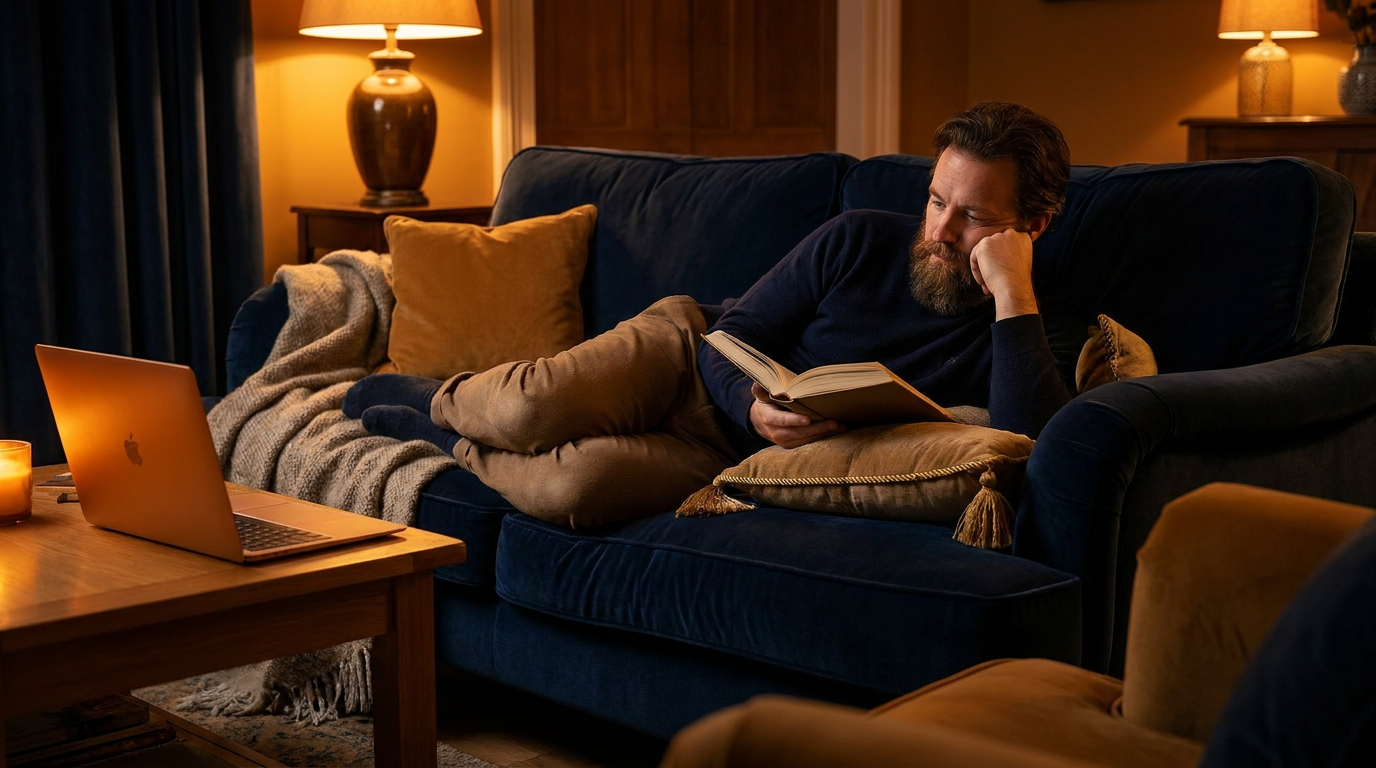
In response to these predators, the natural human instinct is to hide. Users are building digital campfires—small, illuminated, private spaces where they can let their guard down without fear of being weaponized or commodified. The Cozy Web is the collection of these hidden campfires, offering warmth and safety away from the hostile public square.[4]

Sociologists are framing this migration as the search for "Digital Third Places." In the 1990s, American sociologist Ray Oldenburg coined the term "third place" to describe the essential social environments outside of the home (the first place) and the workplace or school (the second place).[5][6]
Physical third places—cafes, local pubs, libraries, and public parks—have historically fostered community, inclusivity, and informal conversation. However, urbanization, rising commercial rents, and the lingering social shifts of the post-pandemic era have decimated many of these physical spaces, leaving a void in community infrastructure.[5][6]
Physical third places—cafes, local pubs, libraries, and public parks—have historically fostered community, inclusivity, and informal conversation.
As physical spaces become less accessible or increasingly commodified, the human need for connection has sought a digital equivalent. Platforms like Discord and specialized group chats are attempting to replicate Oldenburg's criteria: they offer neutral ground, a playful mood, and a space where conversation is the primary activity, free from the pressures of public performance.[5]

This behavioral shift is also driving the phenomenon of "friction-maxxing." After years of seamless, frictionless digital consumption that left users feeling empty, people are intentionally seeking out digital experiences that require effort. Joining a private server, reading a long-form newsletter, or participating in a niche hobbyist forum requires active intent, which in turn builds a higher tolerance for meaningful engagement.[1]
The commercial implications of this shift are massive. Marketers and brands are realizing that the era of cheap organic reach is over; average organic reach for business accounts on legacy platforms has plummeted to a mere 3% to 4%. The traditional playbook of shouting into the algorithmic void is yielding diminishing returns.[2]

Instead, the most valuable cultural conversations are now happening in "Dark Social"—the untrackable sharing of links and ideas within direct messages and private groups. Influence is no longer about how many people see a post, but about the resonance it achieves within a highly trusted, specialized community.[2]
However, the transition to the Cozy Web is not without its uncertainties and trade-offs. While digital third places offer refuge and accessibility—particularly for marginalized groups or those with social anxiety—they fundamentally alter the nature of societal interaction and the way communities intersect.[5]
Urbanists and sociologists warn that digital spaces cannot fully replace the serendipity of physical third places. A crucial function of a physical cafe or park is the exposure to "weak ties"—casual interactions with strangers who hold different backgrounds and viewpoints, which fosters empathy and social cohesion.[6]
When users retreat entirely into hyper-curated digital silos, they risk losing this exposure. The Cozy Web, by its very design, groups like-minded individuals together, which can inadvertently foster echo chambers and degrade a society's ability to engage in good-faith debate with opposing views.[4][6]
Despite these challenges, the rise of the Cozy Web is overwhelmingly a story of digital reclamation. It proves that users are not passive victims of algorithmic architecture. By actively choosing where and how they spend their attention, communities are forcing a renegotiation of the internet's social contract.[7]
The future of online culture is unlikely to be dominated by a single, monolithic app that serves as a universal public square. Instead, it is evolving into a fragmented, intentional, and deeply human ecosystem. In the dark forest of the modern internet, the campfires are burning brighter than ever.[2][7]
How we got here
1989
Sociologist Ray Oldenburg coins the term 'third place' to describe essential physical community spaces.
2019
The 'Dark Forest' theory of the internet is popularized, describing the public web as a hostile environment.
2020–2022
Pandemic lockdowns accelerate the decline of physical third places and the rise of digital alternatives like Discord.
2025–2026
Algorithm fatigue peaks as AI-generated content floods legacy platforms, driving a mass migration to the Cozy Web.
Viewpoints in depth
Digital Sociologists
Focus on the human need for community and how digital spaces are replacing physical 'third places' like cafes.
Sociologists argue that the human need for community is immutable. As physical 'third places' like cafes, libraries, and parks become less accessible due to economic pressures and urban sprawl, society is naturally adapting by building digital equivalents. They emphasize that while platforms like Discord provide crucial support networks and unprecedented accessibility for marginalized groups, they lack the serendipitous 'weak tie' interactions of physical spaces, which are vital for a cohesive society.
Privacy & Well-being Advocates
Champion the retreat from algorithmic feeds as a necessary defense against the mental health toll of the attention economy.
From a mental health perspective, the Cozy Web is viewed as a necessary survival mechanism. Advocates argue that legacy algorithmic feeds are explicitly engineered for outrage, comparison, and addiction. By retreating into private, encrypted, and chronological spaces, users are engaging in a profound act of digital self-care. This camp believes that reclaiming one's attention from the 'Dark Forest' of the public internet is the first step toward healthier digital habits.
Brand & Culture Strategists
Analyze the commercial shift from public reach to 'Dark Social' and the rising value of niche, high-trust communities.
Industry analysts focus on the collapse of traditional digital broadcasting. They note that the era of cheap viral reach is dead, replaced by 'Dark Social' where the most valuable recommendations and cultural shifts happen in private direct messages. They argue that success in this new era requires earning trust within niche communities rather than shouting into the public void, forcing a complete rewrite of how influence is measured and valued.
What we don't know
- Whether legacy platforms will successfully pivot to capture this desire for intimacy, or if they will face structural decline.
- How the long-term loss of 'weak ties' and serendipitous physical interactions will impact broader societal empathy.
- If the Cozy Web will eventually become commodified and infiltrated by advertisers in the same way the public web was.
Key terms
- Cozy Web
- A term for the private, intimate corners of the internet—such as group messaging apps and locked forums—that are free from algorithmic curation and public visibility.
- Digital Third Place
- An online environment that replicates the community-building aspects of physical social spaces like cafes, pubs, or parks.
- Algorithm Fatigue
- The mental exhaustion users experience from consuming content feeds that are engineered to maximize emotional engagement and outrage.
- Dark Social
- The sharing of content and ideas that occurs in private channels like direct messages and emails, which cannot be easily tracked by traditional analytics tools.
- Friction-maxxing
- The intentional choice to engage in digital activities that require more effort and active participation, rejecting passive, seamless consumption.
Frequently asked
What exactly is the 'Cozy Web'?
The Cozy Web refers to private, gatekeeper-bounded digital spaces—like Discord servers, group chats, and private forums—where users interact away from public algorithmic feeds.
What is the 'Dark Forest' theory of the internet?
It is a concept suggesting that the public internet has become a hostile environment filled with bots, ads, and trolls, prompting real users to hide in private, safe 'campfires.'
What are 'Digital Third Places'?
They are online communities that serve the social function of physical cafes or parks, offering a neutral, accessible space for informal conversation outside of home and work.
Why are Gen Z users leaving public social media?
Many cite 'algorithm fatigue,' a desire for better privacy, and exhaustion from feeds engineered for outrage rather than genuine human connection.
Sources
Source coverage
7 outlets
4 viewpoints surfaced







[1]MeyocksBrand & Culture Strategists
2026 Digital Marketing Trends: The Rise of the Intentional Internet
Read on Meyocks →[2]SynQ SocialPrivacy & Well-being Advocates
From Scroll To Soul: Why Gen Z Is Abandoning Big Social For The Cozy Web
Read on SynQ Social →[3]SocialWickBrand & Culture Strategists
The Rise of Cozy Web and Why Users Prefer Smaller Intimate Online Spaces
Read on SocialWick →[4]MediumPrivacy & Well-being Advocates
The Great Disassociation: Survival in the Age of Engineered Reality
Read on Medium →[5]ResearchGateDigital Sociologists
Beyond the Coffee Shop: The Transition of Third Places in the Digital Age
Read on ResearchGate →[6]The La Salle FalconerDigital Sociologists
What We're Missing: Third Places
Read on The La Salle Falconer →[7]Factlen Editorial TeamFactlen Editorial Synthesis
Synthesis by Factlen editorial team
Read on Factlen Editorial Team →

More in culture
See all 6 stories →Art Conservation
AI and Polymer Masks Are Restoring Centuries-Old Masterpieces in Hours
0 sources
Digital Wellness
The Rise of the Digital Sabbath: How Unplugging One Day a Week is Rewiring Modern Life
0 sources

Digital Religion
How Virtual Reality is Opening the World's Most Sacred Sites to Everyone
0 sources

Endangered Languages
How Artificial Intelligence is Racing to Save the World's Endangered Languages
0 sources
Every angle. Every day.
Get culture stories with full source coverage and perspective breakdowns delivered to your inbox.