
How AI Learned to Think: The Shift to Test-Time Compute
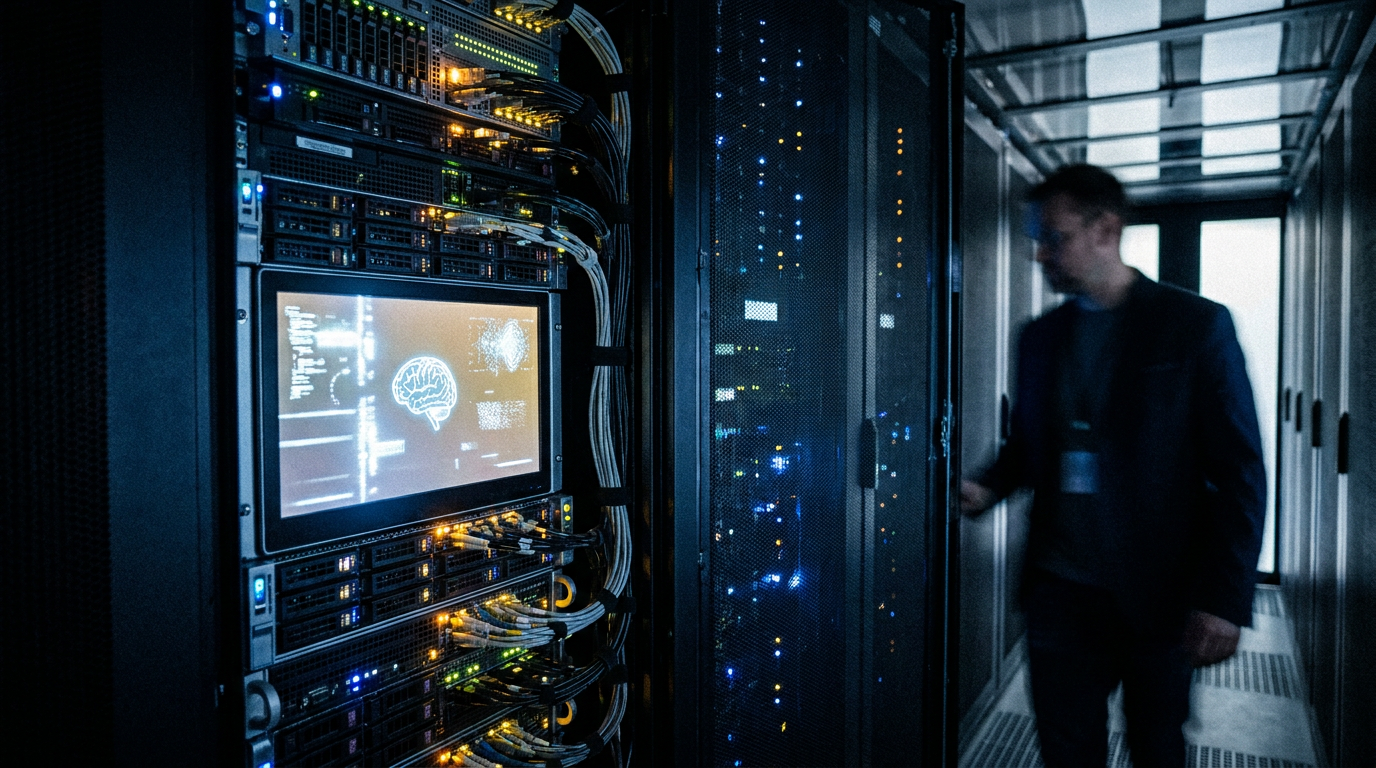
Artificial intelligence is moving beyond instant pattern-matching. By utilizing "test-time compute," a new generation of reasoning models can pause, deliberate, and self-correct before answering complex problems.
By Factlen Editorial Team
- AI Researchers
- Focus on scaling laws and the theoretical limits of reinforcement learning.
- Enterprise Developers
- Focus on balancing accuracy with the high latency and cost of reasoning models.
- Prompt Engineers
- Focus on adapting human interaction to models that already know how to think.
What's not represented
- · Hardware Manufacturers
- · Environmental Analysts
Why this matters
Understanding how reasoning models work allows developers and users to deploy AI for high-stakes tasks like coding, legal analysis, and scientific research, moving beyond the limitations of simple chatbots.
Key points
- Test-time compute allows AI models to spend more processing power during inference to solve complex problems.
- Reasoning models simulate 'System 2' thinking by generating a hidden chain of thought to verify their own logic.
- These models are trained using reinforcement learning rather than traditional supervised mimicry.
- Extended deliberation dramatically improves accuracy on math, coding, and scientific benchmarks.
- The trade-off for this accuracy is significantly higher latency and compute cost per query.
- Enterprise systems use hybrid routing to send simple tasks to fast models and complex tasks to reasoning models.
For the better part of a decade, the artificial intelligence industry relied on a single, brute-force lever to make language models smarter: making them bigger. Companies spent billions of dollars and months of computing time pre-training massive neural networks on vast oceans of internet text. But as the supply of high-quality human data begins to dry up and the cost of training runs approaches the tens of billions, that traditional scaling law is showing signs of diminishing returns. In response, the field has rapidly pivoted to a new paradigm in 2026. Instead of trying to cram more knowledge into the model before it is ever used, researchers are giving the model the ability to dynamically spend more computational power while it is answering a question.[7]
This concept is known as "test-time compute," or inference-time scaling. To understand the shift, it helps to borrow a framework from cognitive psychology: the distinction between System 1 and System 2 thinking. Traditional large language models operate almost entirely as System 1 thinkers. They are instinctual, automatic, and immediate. When asked a question, they generate the next word based on statistical probabilities in a single, rapid forward pass. They are incredible at pattern matching and linguistic fluency, but they do not actually stop to deliberate before they speak.[4]
Reasoning models, such as OpenAI's o1 series and DeepSeek's R1, are designed to simulate System 2 thinking. They are deliberate, analytical, and effortful. Rather than spitting out the first statistically likely answer, these models perform a dedicated deliberation pass before producing their visible response. They are given a "thinking budget"—a set amount of computational time and memory to explore the problem, test hypotheses, and verify their own logic before committing to a final output.[1][2]

The mechanism that powers this deliberation is a hidden "Chain of Thought." When handed a complex prompt, a reasoning model essentially talks to itself. It breaks the overarching problem down into smaller, manageable sub-tasks. It attempts a solution for the first step, and then critically evaluates its own work. If the model realizes it made a mathematical error or a logical leap, it actively backtracks, discards the flawed reasoning, and tries a different approach. Only after synthesizing and verifying the entire chain does it present the final answer to the user.[3]
Crucially, this internal monologue is entirely different from the old prompt engineering trick of simply asking a standard model to "think step by step." In the past, users had to coax a model into showing its work to improve accuracy. In 2026, reasoning is baked directly into the architecture. The model has been explicitly trained to deliberate, and the thinking process often occurs in hidden tokens that the user never sees. In fact, experts now warn that trying to micromanage a reasoning model with step-by-step instructions can actively degrade its performance.[6]
Building these models requires a fundamental shift in how artificial intelligence is trained. Standard models are trained via supervised learning, where they are fed millions of examples of correct answers and taught to mimic them. Reasoning models, however, are trained using Reinforcement Learning (RL). In this setup, the model is given a complex problem—like a competitive programming challenge or a physics equation—and is rewarded not just for getting the right answer, but for developing a sound, logical process to reach it.[1]
Building these models requires a fundamental shift in how artificial intelligence is trained.
DeepSeek demonstrated the extreme efficiency of this approach with its R1-Zero model. Instead of relying on expensive, human-annotated datasets of step-by-step solutions, they applied pure reinforcement learning directly to a base model. Using an algorithm that evaluates how well the model's logic holds up against verifiable outcomes, the AI naturally learned to verify its own logic. Over time, the model autonomously developed sophisticated behaviors, such as double-checking its math and allocating more thinking time to harder problems, without human intervention.[2]
During the actual inference phase, developers can scale test-time compute in two primary ways: sequentially or in parallel. Sequential scaling allows the model to think longer, generating extended, self-revising reasoning traces until it arrives at a high-confidence conclusion. Parallel scaling, on the other hand, involves the model generating dozens or even hundreds of independent answers simultaneously. A secondary AI, known as a Process Reward Model, then evaluates each step of those parallel reasoning chains, selecting the single most robust and accurate path to present to the user.[5]
The performance gains unlocked by test-time compute have shattered previous benchmarks. On the AIME exam, a notoriously difficult test used to qualify high school students for the USA Math Olympiad, standard models historically struggled to solve more than 12 percent of the problems. By utilizing extended test-time compute and consensus voting, reasoning models like OpenAI's o1 routinely score above 80 percent, rivaling the performance of human mathematical experts. Similar breakthroughs have been recorded in graduate-level physics, biology, and software engineering.[1]

However, this new capability introduces a stark and unavoidable trade-off: latency and cost. There is no free lunch in artificial intelligence. While a standard model might generate a fluent response in two seconds, a reasoning model might deliberate for thirty seconds, two minutes, or even an hour depending on the complexity of the task. Because every hidden "thinking" token requires computational power, the financial cost of a single query can be exponentially higher than a traditional prompt.[3][4]
For consumer-facing applications like real-time customer service chatbots or simple email summarization, a two-minute wait and a high compute bill are entirely unacceptable. But for high-stakes, background autonomous agents—such as an AI tasked with reviewing a dense legal contract, debugging a massive enterprise codebase, or synthesizing years of medical research—waiting a few minutes for a highly accurate, verified result is a game-changing proposition.[7]
To balance these competing needs, enterprise developers are increasingly adopting "hybrid orchestration" architectures. In these systems, a fast, inexpensive standard model acts as a frontline router. It quickly analyzes an incoming request; if the task is simple, it handles it immediately. If the request requires deep logic, complex math, or multi-step planning, the router hands the task off to a heavy reasoning model, maximizing both speed and accuracy while keeping compute costs under control.[3]

The industry is also finding ways to make reasoning more accessible through a process called distillation. Researchers have discovered that they can take the highly sophisticated, step-by-step reasoning traces generated by massive models and use them to train much smaller, open-weight models. This allows developers to run highly capable reasoning engines locally on consumer hardware, democratizing access to System 2 thinking without requiring massive, centralized data centers.[2]
Ultimately, the rise of test-time compute proves that the future of artificial intelligence is not just about memorizing the internet. It is about the ability to verify, self-correct, and explore solutions dynamically. As the technology continues to mature, the most capable AI systems will be those that possess the self-awareness to know when an answer can be given instantly, and when a problem requires them to pause, reflect, and think.[7]
How we got here
2020–2023
The era of scaling pre-training, where models grew exponentially larger to improve performance.
Late 2024
OpenAI releases the o1 model, introducing large-scale reinforcement learning and test-time compute to the public.
Early 2025
DeepSeek releases R1, proving that reasoning models can be trained highly efficiently and distilled into smaller open-weight models.
2026
Test-time compute becomes the industry standard for complex AI tasks, leading to hybrid routing architectures.
Viewpoints in depth
AI Researchers
Focus on scaling laws and the theoretical limits of reinforcement learning.
For researchers, test-time compute represents a new frontier in the "scaling laws" of artificial intelligence. While pre-training models on vast amounts of internet text is hitting diminishing returns, allowing models to search for solutions during inference opens a new axis for performance gains. They emphasize that reasoning models don't just memorize answers; they learn generalized problem-solving strategies through reinforcement learning, pushing AI closer to genuine logical deduction.
Enterprise Developers
Focus on balancing accuracy with the high latency and cost of reasoning models.
Developers building real-world applications view reasoning models as a powerful but expensive tool. Because each "thinking" token costs money and adds seconds or minutes of latency, they cannot be used for standard chatbot interactions. Instead, this camp advocates for "hybrid orchestration"—using fast, cheap models to route simple queries, and reserving heavy reasoning models strictly for high-stakes tasks like autonomous coding, legal analysis, or complex math.
Prompt Engineers
Focus on adapting human interaction to models that already know how to think.
For those who interact directly with AI, the rise of reasoning models requires unlearning old habits. Tricks like appending "think step by step" to a prompt—once the gold standard for getting better answers—are now considered anti-patterns that can actively confuse models like o1 and R1. This camp emphasizes writing clear, constraint-heavy briefs that direct the model's native deliberation, rather than trying to micromanage its internal logic.
What we don't know
- The theoretical upper limit of how much accuracy can improve simply by giving a model more time to think.
- Whether the massive energy costs of extended test-time compute can be sustainably managed at a global scale.
Key terms
- Test-Time Compute
- The computational resources used by an AI model during the actual generation of a response, as opposed to during its initial training.
- Chain of Thought (CoT)
- A step-by-step internal reasoning process where an AI breaks down a complex problem into smaller, verifiable parts before answering.
- Reinforcement Learning (RL)
- A training method where an AI learns by trial and error, receiving mathematical 'rewards' for correct logic and formatting.
- Process Reward Model (PRM)
- An evaluator AI that scores each individual step of a reasoning model's thought process, ensuring the logic is sound throughout.
- Distillation
- The process of transferring the advanced problem-solving skills of a massive reasoning model into a smaller, more efficient model.
Frequently asked
What exactly is test-time compute?
It is the computational power and time an AI model uses to generate an answer after it has already been trained, allowing it to 'think' through complex problems.
Why do reasoning models take so long to answer?
Instead of predicting the next word instantly, they generate thousands of hidden tokens to explore different solutions, verify their math, and correct their own mistakes before showing the final result.
Should I still tell the AI to 'think step by step'?
For older, standard models, yes. But for modern reasoning models like o1 or R1, this is unnecessary and can actually confuse the model, as it already thinks natively.
Are reasoning models going to replace standard AI?
No. Because reasoning models are slower and more expensive, the future involves 'hybrid orchestration,' where fast models handle simple questions and reasoning models tackle the hard ones.
Sources
Source coverage
7 outlets
3 viewpoints surfaced







[1]OpenAI ResearchAI Researchers
Learning to Reason with LLMs
Read on OpenAI Research →[2]arXivAI Researchers
DeepSeek-R1: Incentivizing Reasoning Capability in LLMs via Reinforcement Learning
Read on arXiv →[3]MediumEnterprise Developers
How Reasoning Models Work: The Chain of Thought
Read on Medium →[4]Instill AIEnterprise Developers
From System 1 to System 2: How test-time compute is disrupting AI
Read on Instill AI →[5]MemXPrompt Engineers
What is Test-Time Compute (Inference-Time Scaling)?
Read on MemX →[6]SurePromptsPrompt Engineers
What Reasoning Models Actually Are in 2026
Read on SurePrompts →[7]Factlen Editorial TeamEnterprise Developers
Synthesis by Factlen editorial team
Read on Factlen Editorial Team →

More in ai
See all 5 stories →Local AI
How Small Language Models Are Bringing AI Offline
0 sources

Animal Cognition
AI Decodes Sperm Whale Communication, Revealing Complex 'Phonetic Alphabet' and Cooperative Care
0 sources

Drug Discovery
New AI Model Accelerates Molecular Simulations 10,000x, Reshaping Drug Discovery Timelines
0 sources

Every angle. Every day.
Get ai stories with full source coverage and perspective breakdowns delivered to your inbox.