
How to Navigate Japan's 2026 Smart Tourism Rules: A Guide to Kyoto, Mt. Fuji, and Beyond
Japan has implemented strict new measures—including tolls, daily caps, and neighborhood bans—to combat overtourism and protect local heritage. Here is how travelers can adapt to the 2026 regulations while experiencing the country responsibly.
By Factlen Editorial Team
- Local Residents & Heritage Defenders
- Prioritizing the protection of daily life and cultural dignity over unrestricted tourism revenue.
- Sustainable Tourism Advocates
- Focusing on the environmental and economic balance required to keep destinations viable long-term.
- International Travelers
- Navigating the friction between a desire for authentic experiences and the reality of strict new guardrails.
What's not represented
- · Local business owners who rely heavily on foot traffic and impulse purchases from wandering tourists.
- · Domestic Japanese tourists who feel penalized by rules primarily designed to manage international crowds.
Why this matters
As Japan shifts from mass tourism to a highly regulated sustainable model, travelers must fundamentally change how they plan their trips. Understanding these new rules is essential to avoid hefty fines, secure access to iconic sites, and ensure your visit supports rather than harms local communities.
Key points
- Kyoto has banned tourists from entering private residential alleys in the Gion district to protect locals from harassment.
- Violators who trespass on marked private roads in Kyoto face a strict 10,000 yen fine.
- Mount Fuji's Yoshida Trail now requires advance online reservations and limits access to 4,000 hikers per day.
- A 4,000 yen toll and strict gate closures on Mount Fuji aim to fund maintenance and stop dangerous overnight 'bullet climbing'.
Japan's tourism landscape in 2026 represents a profound and necessary shift from the era of unchecked mass travel. Following a record-breaking surge of international visitors that severely strained local infrastructure and tested the patience of residents, the country has officially pivoted toward a model of sustainable, highly managed tourism. The days of showing up unannounced at the base of Mount Fuji or wandering freely through every narrow residential alley in Kyoto are officially over. Instead, a comprehensive new framework of advance reservations, mandatory tolls, and strict neighborhood boundaries has taken root across the nation's most iconic destinations. For travelers, this means that spontaneity must now be replaced with meticulous preparation and a deep respect for local boundaries.[4][7]
This transition is not about closing Japan to the world, but rather about preserving the very heritage and natural beauty that makes the country so magnetic in the first place. The Japan National Tourism Organization (JNTO) has heavily promoted its Japan Sustainable Tourism Standard for Destinations (JSTS-D), a rigorous framework designed to balance economic benefits with environmental and cultural protection. By implementing these standards, authorities hope to transform travelers from passive consumers into active participants in preserving local ecosystems. The overarching goal is to ensure that tourism dollars directly support the communities hosting the visitors, rather than simply enriching large multinational corporations while leaving locals to deal with the physical and social cleanup.[4][7]
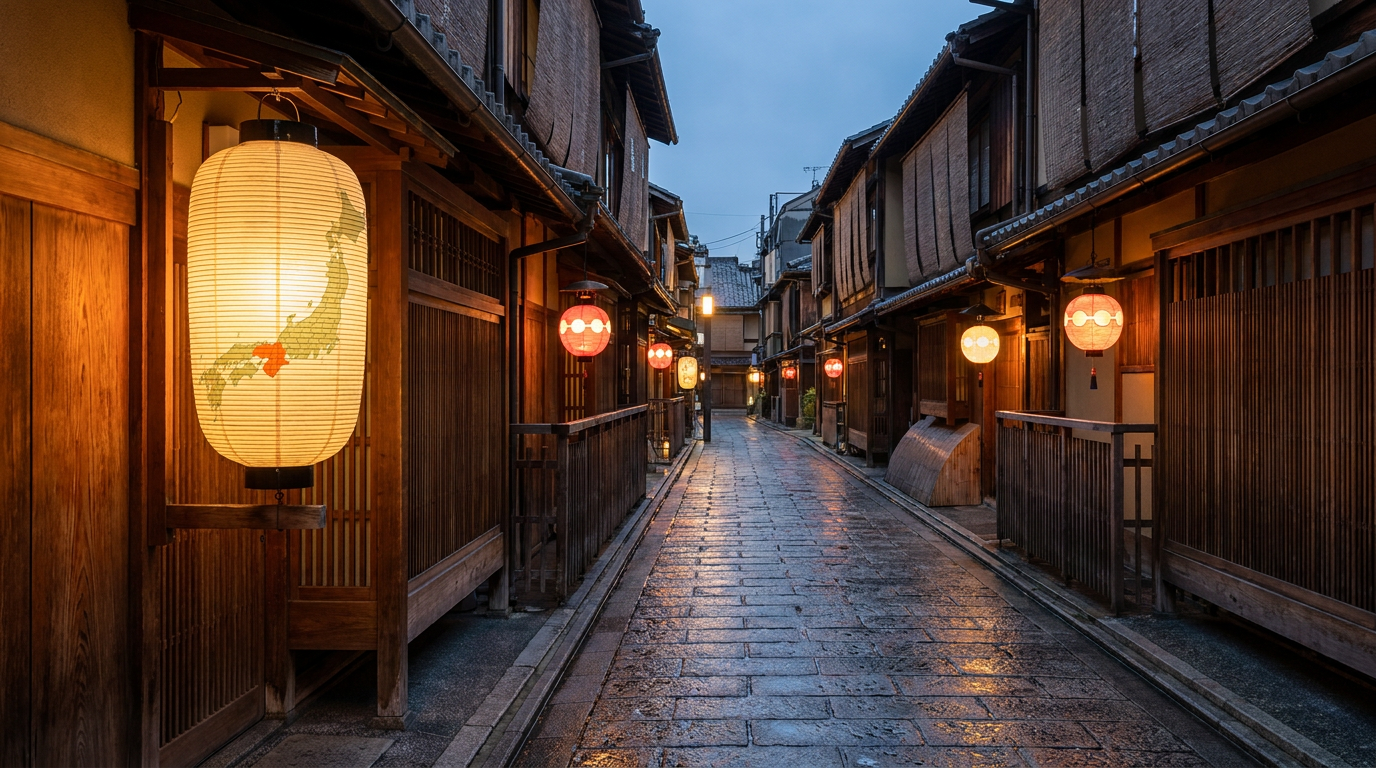
Nowhere is this urgent need for cultural preservation more visible than in Kyoto’s historic Gion district. For years, the picturesque neighborhood—famous for its beautifully preserved traditional wooden teahouses, glowing lanterns, and cobblestone streets—served as the epicenter of Japan's overtourism crisis. Residents increasingly complained that their quiet residential blocks were being treated like an interactive theme park by massive crowds of smartphone-wielding visitors. The sheer volume of foot traffic made it difficult for locals to go about their daily lives, run errands, or maintain the quiet dignity that the historic district is known for, prompting a severe backlash from the community.[1][2][3]
The breaking point for the community arrived when the harassment of geiko (the local term for geisha) and their young maiko apprentices escalated to unacceptable levels. Local district councils reported numerous instances of tourists acting like "amateur paparazzi," aggressively chasing the women down narrow streets to snap photos. There were even reports of visitors pulling at the women's expensive, delicate kimonos, and blatantly trespassing on private property to secure the perfect social media shot. In response to this escalating disrespect, the Gion district council decided they could no longer rely on polite requests and took unprecedented, legally enforceable action to reclaim their neighborhood from unruly crowds.[1][2][3]

Under the current regulations, tourists are strictly banned from entering the narrow, privately owned alleys that branch off the main thoroughfares of the district. Bilingual signs in Japanese and English clearly mark these restricted zones, such as the well-known Kosode Koji alley, explicitly warning pedestrians that entry is forbidden. Those who choose to ignore the signage and trespass on these private residential roads face a strict and immediately enforceable fine of 10,000 yen (approximately $70). Local authorities have made it clear that these fines are not merely symbolic; they are an active deterrent designed to fundamentally change how visitors interact with residential spaces.[1][2][7]
However, local officials and tourism boards are quick to clarify that Gion is not entirely closed off to the public. The district’s primary public artery, Hanamikoji Street, remains fully accessible, allowing visitors to experience the area's historic atmosphere, dine at local restaurants, and appreciate the architecture without intruding on the daily lives of its residents. The regulatory mechanism relies entirely on spatial segregation: keeping the economic engine of public tourism running smoothly on main streets while throwing a protective, legally backed barrier around private domestic life. It is a compromise that allows the city to welcome guests while fiercely protecting its inhabitants.[2][4][7]
A similar philosophy of managed access and strict regulation has completely transformed the experience of climbing Mount Fuji. The iconic volcano, which straddles the borders of Yamanashi and Shizuoka prefectures, had long suffered from severe overcrowding during its brief, intense July-to-September climbing season. Trails were routinely choked with thousands of hikers moving shoulder-to-shoulder, leading to overflowing waste facilities, severe environmental degradation along the paths, and significant safety hazards as tired climbers navigated steep, rocky terrain in the dark. The mountain's designation as a UNESCO World Heritage site only accelerated the influx, forcing authorities to intervene before the ecosystem collapsed.[5][6][7]
A similar philosophy of managed access and strict regulation has completely transformed the experience of climbing Mount Fuji.
The most pressing danger that authorities had to address was the rapid rise of "bullet climbing" (dangan tozan). In a misguided attempt to save money and time, thousands of hikers would begin their ascent late at night, pushing straight to the 3,776-meter summit in time for sunrise without stopping to sleep or acclimatize at a mountain hut. This grueling, non-stop practice predictably led to a massive spike in severe altitude sickness, hypothermia, physical exhaustion, and emergency rescues. The sheer volume of medical emergencies placed an immense, unsustainable burden on local first responders and volunteer medical staff stationed on the mountain.[5][6]

To combat these compounding environmental and safety crises, Yamanashi Prefecture completely overhauled the rules for the Yoshida Trail, which historically served as the mountain's most popular and congested route. In 2026, the system requires mandatory online reservations for all climbers, strictly capping the number of daily hikers at exactly 4,000. Once that daily quota is reached through the online portal, no further hikers are permitted to pass the 5th Station trailhead under any circumstances. This hard cap ensures that the trail density remains manageable and that emergency services are not overwhelmed on peak weekends.[5][6][7]
Alongside the hard daily cap, authorities implemented a mandatory climbing toll to fund the mountain's extensive upkeep. Hikers must now pay a 4,000 yen fee just to access the Yoshida Trail, a significant increase from the voluntary donations requested in previous decades. This critical revenue is directly ring-fenced for mountain maintenance, funding the deployment of professional safety guides, the continuous upkeep of specialized high-altitude bio-toilets, and the vital construction of volcanic eruption shelters. Officials argue that this fee simply forces visitors to internalize the true cost of maintaining a safe environment in such an extreme, high-altitude setting.[5][6][7]
To finally eradicate the dangerous practice of bullet climbing, a physical gate at the 5th Station now enforces strict operating hours for the trail. The path is entirely closed to new climbers from the late afternoon—typically 4:00 PM—until 3:00 AM the following morning. The only exception to this strict curfew is for hikers who can prove they have a pre-booked, confirmed reservation at one of the official mountain huts located further up the trail. This mechanism effectively forces visitors to rest, sleep, and acclimatize properly before making the final, most physically demanding push to the summit.[5][6]

These high-profile, successful interventions in Kyoto and Mount Fuji are now serving as functional blueprints for other regions across Japan facing similar pressures. Destinations like Hakone, Kamakura, and Hokkaido are increasingly experimenting with their own smart-tourism mechanisms, ranging from dynamic pricing on crowded public transit networks to real-time crowd-monitoring apps that guide tourists to less congested areas. The overarching national goal is to disperse the intense concentration of international tourists away from the heavily trodden "Golden Route" of Tokyo, Kyoto, and Osaka, and funnel that economic benefit into Japan's beautiful, but often overlooked, rural prefectures.[4][7]
For international travelers planning a trip to Japan in 2026, adapting to this new regulatory landscape requires a fundamental shift in mindset. The era of freewheeling spontaneity must be replaced with meticulous, advance preparation. Securing a climbing slot for Mount Fuji or a reservation at a highly sought-after cultural site now requires booking months in advance, much like securing a table at a Michelin-starred restaurant or a ticket to a premier global sporting event. Travelers who fail to plan ahead will simply find themselves locked out of the country's most famous experiences.[5][6][7]
Beyond the logistical hurdles, the new era of Japanese travel demands a significantly heightened level of cultural awareness and respect. The Japan National Tourism Organization actively encourages visitors to hire licensed, local guides, who not only provide deep historical context but also ensure that tourists navigate complex social etiquette flawlessly. Understanding exactly when to take off your shoes, recognizing where photography is strictly prohibited, and knowing how to respectfully observe local religious customs is no longer just polite—it is considered a strict prerequisite for entry into these historic spaces.[4][7]

Despite the broad success and public support of these measures, some uncertainties and challenges remain on the horizon. Tourism analysts and local business owners question whether capping attendance at marquee sites will simply push the overcrowding problem to secondary, unregulated destinations that lack the physical infrastructure and policing to handle sudden influxes of foreign visitors. Monitoring this potential "spillover effect" remains a top priority for regional governments, who must stay agile to protect newly popularized towns from suffering the same fate as Gion.[7]
Ultimately, Japan's 2026 smart tourism rules represent a necessary, positive evolution for the global travel industry. By establishing clear physical boundaries, enforcing financial contributions, and demanding baseline respect, the country is ensuring that its natural wonders and cultural treasures survive the modern travel boom. For the mindful, prepared traveler, these guardrails do not diminish the joy of the experience; rather, they guarantee that the Japan they traveled thousands of miles to see remains authentic, pristine, and profoundly welcoming for generations to come.[4][7]
How we got here
2013
Mount Fuji is designated as a UNESCO World Heritage site, triggering a massive surge in domestic and international climbers.
2019
Kyoto's Gion district first introduces 'no photography' signs on private roads, though enforcement remains difficult.
April 2024
Kyoto officially bans tourists from entering narrow private alleys in Gion, implementing a 10,000 yen fine.
July 2024
Yamanashi Prefecture introduces the first mandatory toll and daily hiker cap for Mount Fuji's Yoshida Trail.
2026
Expanded reservation systems and increased fees are fully normalized across Japan's major heritage sites.
Viewpoints in depth
Local Residents & Heritage Defenders
Prioritizing the protection of daily life and cultural dignity over unrestricted tourism revenue.
For the residents of Kyoto's historic districts and the communities surrounding Mount Fuji, the new regulations are a long-overdue correction. They argue that their neighborhoods are living, breathing communities, not open-air museums designed for social media consumption. By enforcing strict fines and physical barriers, this camp believes they are reclaiming their right to privacy and protecting cultural ambassadors—like the geiko and maiko—from physical and emotional harassment.
Sustainable Tourism Advocates
Focusing on the environmental and economic balance required to keep destinations viable long-term.
Organizations like the JNTO and environmental groups view these measures as essential triage for fragile ecosystems. They point out that unrestricted foot traffic on Mount Fuji was causing severe soil erosion and waste management crises. From their perspective, tolls and daily caps are not punitive; they are necessary funding mechanisms that force travelers to internalize the true cost of their visit, ensuring that the infrastructure can support future generations.
International Travelers
Navigating the friction between a desire for authentic experiences and the reality of strict new guardrails.
While many travelers broadly support the concept of sustainable tourism, there is growing frustration over the logistical hurdles. Travel guides and booking platforms note that the fragmented reservation systems and sudden rule changes can be deeply confusing for foreigners. This camp advocates for clearer, centralized communication and worries that high fees might eventually price out budget-conscious backpackers, turning Japan's natural wonders into exclusive luxury experiences.
What we don't know
- Whether capping attendance at major sites will simply push overcrowding to secondary, unregulated towns.
- How strictly the 10,000 yen fines in Kyoto will be enforced during peak cherry blossom and autumn foliage seasons.
Key terms
- Bullet Climbing (Dangan Tozan)
- The dangerous practice of attempting to climb Mount Fuji overnight without resting at a mountain hut, leading to high rates of altitude sickness.
- Geiko and Maiko
- Traditional Japanese female entertainers and their apprentices, highly skilled in classical arts, music, and dance, who primarily work in Kyoto's historic districts.
- JSTS-D
- The Japan Sustainable Tourism Standard for Destinations, a set of national guidelines designed to protect local environments and cultures from overtourism.
- Yoshida Trail
- The most popular of the four main routes up Mount Fuji, starting from the Yamanashi Prefecture side, which now features strict daily caps and tolls.
Frequently asked
Can I still visit the Gion district in Kyoto?
Yes. The main public streets, such as Hanamikoji, remain fully open to visitors. The ban only applies to narrow, privately owned residential alleys.
Do I need a reservation to climb Mount Fuji?
Yes, if you are using the popular Yoshida Trail. You must book your slot online in advance and pay the mandatory climbing fee.
What happens if I enter a restricted alley in Kyoto?
Tourists who ignore the bilingual 'no entry' signs on private roads face an immediate fine of 10,000 yen (approximately $70).
Why are the Mt. Fuji trails closed at night?
Gates close between the late afternoon and 3:00 AM to prevent 'bullet climbing,' forcing hikers to book mountain huts and acclimatize to the altitude safely.
Sources
Source coverage
7 outlets
3 viewpoints surfaced







[1]The Straits TimesLocal Residents & Heritage Defenders
Tourists to be banned from private alleys in Kyoto's geisha district
Read on The Straits Times →[2]Associated PressLocal Residents & Heritage Defenders
Kyoto's picturesque geisha district fights back against over-tourism with keep-out signs
Read on Associated Press →[3]The GuardianLocal Residents & Heritage Defenders
Kyoto bans tourists from parts of geisha district amid reports of bad behaviour
Read on The Guardian →[4]Japan National Tourism OrganizationSustainable Tourism Advocates
Sustainable Travel Japan: Responsible Travel Guide
Read on Japan National Tourism Organization →[5]Japan GuideInternational Travelers
Climbing Mount Fuji - 2026 Regulations
Read on Japan Guide →[6]Japan ExperienceInternational Travelers
Mount Fuji toll: everything you need to know about the new regulations
Read on Japan Experience →[7]Factlen Editorial TeamSustainable Tourism Advocates
Synthesis by Factlen editorial team
Read on Factlen Editorial Team →

Every angle. Every day.
Get travel stories with full source coverage and perspective breakdowns delivered to your inbox.