
QuEra and AWS Announce 'Libra', a Fault-Tolerant Quantum Computer Targeted for 2028
Quantum hardware developer QuEra and Amazon Web Services have unveiled plans to bring a fully error-corrected, 256-logical-qubit system to the cloud within two years. The neutral-atom architecture aims to cross the "megaquop" threshold, enabling one million reliable quantum operations.
By Factlen Editorial Team
- Neutral-Atom Innovators
- Argue that dynamic reconfiguration of Rydberg atoms is the key to overcoming the noise limitations of early quantum systems.
- Cloud Infrastructure Providers
- View quantum processors as a foundational compute modality that must be seamlessly integrated with classical HPC pipelines.
- Industry Analysts
- Emphasize that disciplined, peer-reviewed roadmaps are essential for enterprise adoption, maintaining cautious optimism about the 2028 timeline.
What's not represented
- · Superconducting Circuit Developers
- · Enterprise End-Users
Why this matters
Quantum computers have the potential to revolutionize drug discovery, materials science, and cryptography, but current systems are too error-prone for practical use. The deployment of a cloud-accessible, fault-tolerant quantum computer by 2028 would mark the transition from laboratory experiments to real-world commercial applications, fundamentally altering the landscape of high-performance computing.
Key points
- QuEra Computing and AWS plan to bring 'Libra,' a fault-tolerant quantum computer, to the cloud by 2028.
- The system is designed to execute one million reliable logical operations, crossing the 'megaquop' threshold.
- Libra will feature over 256 error-corrected logical qubits with a projected logical error rate of 10⁻⁶.
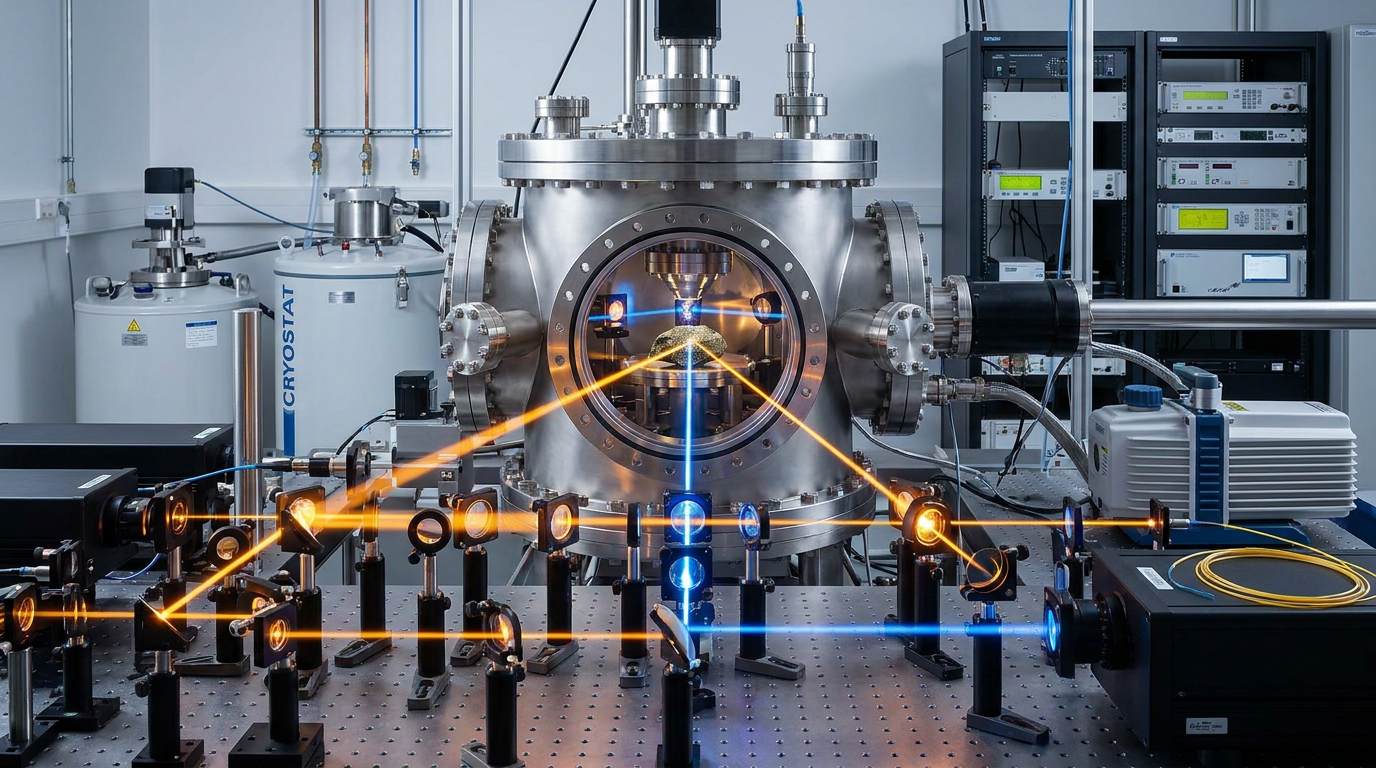
- The architecture uses neutral Rydberg atoms manipulated by optical tweezers, allowing for dynamic, all-to-all connectivity.
- This dynamic movement enables highly efficient error-correcting codes, reducing the physical hardware overhead.
- AWS Braket will host the system, integrating the quantum processor directly into classical high-performance computing pipelines.
For the past decade, the quantum computing industry has been trapped in the Noisy Intermediate-Scale Quantum (NISQ) era. While researchers have built machines capable of astonishing calculations, the underlying physical qubits remain notoriously fragile. The slightest environmental disturbance—a stray photon, a microscopic temperature fluctuation, or even the vibration of a passing truck—can collapse their quantum state, rendering the computation useless. To achieve the technology's true promise in drug discovery, materials science, and cryptography, the industry must cross the chasm from noisy experiments to fully fault-tolerant systems. This transition requires computers that can detect and correct their own errors faster than those errors accumulate.[2][3]
A major breakthrough in this pursuit was announced this week, signaling that the era of error-free quantum computing may be closer than previously thought. Neutral-atom hardware developer QuEra Computing and Amazon Web Services (AWS) have unveiled an expanded, multi-year strategic collaboration to bring "Libra," a fault-tolerant quantum computer, to the cloud by 2028. The announcement shifts the industry narrative from theoretical physics milestones to a concrete engineering and deployment roadmap, providing enterprise clients with a clear timeline for integrating quantum capabilities into their high-performance workflows.[1][4]
At the heart of the announcement is a new performance metric: the "megaquop." Practical quantum applications depend not only on the sheer number of qubits a system possesses, but on how many logical operations those qubits can perform before errors overwhelm the computation. QuEra classifies Libra as a megaquop-class processor, meaning it is engineered to execute on the order of one million reliable logical quantum operations. This threshold is widely considered the starting line for commercial quantum advantage, where machines can finally tackle problems that are intractable for classical supercomputers.[4][5]
To achieve this megaquop milestone, the Libra system is projected to feature over 256 error-corrected logical qubits with a staggering logical error rate of 10⁻⁶. This represents a massive leap over today's noisy systems, which typically struggle to maintain coherence for more than a few thousand operations. By grouping multiple noisy physical qubits together to form a single, highly stable logical qubit, the system can continuously run error-correcting codes in the background, preserving the integrity of the calculation over long durations.[3][5]

The mechanism driving this leap relies on a fundamentally different architecture than the superconducting circuits pursued by tech giants like IBM and Google. Instead of relying on ultra-cold, fabricated circuits that must be kept at temperatures near absolute zero, QuEra utilizes a "neutral-atom" approach. This method leverages the natural, identical properties of individual atoms, ensuring that every physical qubit is exactly the same. By using nature's own building blocks, the architecture inherently eliminates the microscopic manufacturing variations and defects that plague solid-state quantum processors and introduce persistent noise into their calculations.[2]
Specifically, the system employs Rydberg atoms—highly excited atoms that have one or more electrons pushed into a highly charged state. In this configuration, the atoms are characterized by a very high principal quantum number, meaning they can interact strongly and predictably with electric and magnetic fields. These Rydberg atoms are suspended in a perfect vacuum and held in place by tightly focused laser beams acting as "optical tweezers." The lasers arrange the atoms into precise, stable arrays, allowing researchers to control their quantum states with extraordinary precision.[2][6]
Specifically, the system employs Rydberg atoms—highly excited atoms that have one or more electrons pushed into a highly charged state.
The most significant advantage of this optical tweezer system is its capacity for dynamic reconfiguration. In traditional superconducting quantum computers, qubits are physically wired together in a static grid. If a qubit needs to interact with another qubit on the opposite side of the chip, the information must be swapped step-by-step across the grid, introducing massive error overhead. In contrast, QuEra's lasers can literally move individual atoms on the fly during a computation, bringing them together to interact and then moving them apart.[2][4]
This dynamic movement provides the system with all-to-all connectivity, a holy grail for quantum error correction. Because any qubit can interact directly with any other qubit in the array, the system can run ultra-high-rate, transversal error-correcting codes. These advanced mathematical codes drastically lower the physical-to-logical qubit overhead ratio compared to rigid, static topologies. Instead of needing thousands of physical qubits to create a single logical qubit—a scaling requirement that has bottlenecked superconducting designs—the neutral-atom architecture can achieve robust fault tolerance with a much leaner, more efficient physical footprint.[4]

Despite these architectural advantages, significant uncertainty remains regarding the physical scaling of the hardware. Maintaining perfect vacuum conditions, isolating the system from external electromagnetic interference, and ensuring precise laser coherence across thousands of physical qubits simultaneously remains a daunting engineering hurdle. While the physics of Rydberg atoms is well understood, transitioning from a laboratory prototype to a reliable, cloud-accessible data center machine requires unprecedented levels of optical and mechanical stability. If the optical tweezers lose their grip for even a fraction of a millisecond, the entire computation collapses.[1][2]
To bridge the gap between laboratory hardware and enterprise end-users, cloud integration has emerged as the only viable delivery mechanism. AWS Braket will host the Libra system, positioning the quantum processor as a foundational compute modality alongside traditional CPUs, GPUs, and specialized AI accelerators. Because fault-tolerant quantum algorithms are inherently hybrid, they require constant, high-speed interaction between quantum and classical systems. The Braket cloud architecture enables native, low-latency data pipelines between QuEra's error-corrected logical QPUs and Amazon's scalable High-Performance Computing (HPC) resources.[2][4]
This hybrid infrastructure highlights a looming software gap: the algorithms required to fully harness a 256-logical-qubit system do not entirely exist yet. The quantum software ecosystem is currently optimized for noisy, short-depth circuits, and adapting these for deep, error-corrected operations is a non-trivial mathematical challenge. As the industry enters the early fault-tolerant era, achieving practical quantum advantage will require massive hardware-software co-design. Developers must begin tailoring algorithmic structures, circuit decompositions, and error-correction schemes to match the specific physical constraints of the Libra hardware long before it comes online.[4][5]
To facilitate this co-design, fully managed developer environments will support standard open-source quantum software frameworks, including Qiskit, PennyLane, CUDA-Q, and QuEra's native Bloqade. By providing access to these tools now, AWS and QuEra aim to ensure that enterprise organizations, research institutions, and government agencies are operational on day one, rather than scrambling to catch up when the hardware officially launches. In the run-up to 2028, QuEra plans to stand up successive generations of smaller fault-tolerant systems in-house to give strategic partners hands-on access.[4][6]
Industry analysts view the 2028 timeline as a significant inflection point for the broader quantum computing sector. Observers note that QuEra's disciplined approach of publishing every milestone and validating system advances through peer review is building the necessary trust among enterprise clients. For high-performance computing centers and government programs, this visible, transparent strategy is exactly what is needed before committing substantial financial resources and developer hours to an emerging technology. The shift from vague promises of future supremacy to concrete, verifiable engineering steps marks a maturation of the market.[3]

While the 2028 target date is undeniably ambitious, the partners view Libra as just the starting point. Future iterations of the architecture will aim to optimize and scale the system to support even more complex commercial applications, from simulating novel molecular structures for drug design to optimizing global financial portfolios and logistics networks. The transition from theoretical physics to a concrete deployment roadmap signals that the era of useful, error-free quantum computing is finally moving into direct line of sight, promising to unlock computational capabilities that have eluded scientists for decades.[2][5]
How we got here
2018
QuEra Computing is founded by researchers from Harvard University and MIT.
2022
QuEra launches Aquila, a 256-physical-qubit system, on Amazon Braket.
June 2026
QuEra and AWS announce the Libra system and the 'megaquop' milestone.
2028
Projected cloud availability of the fully fault-tolerant Libra system.
Viewpoints in depth
Neutral-Atom Innovators
Argue that dynamic reconfiguration of Rydberg atoms is the key to overcoming the noise limitations of early quantum systems.
Proponents of the neutral-atom architecture emphasize that the ability to move qubits on the fly using optical tweezers solves the connectivity bottleneck that plagues other quantum designs. By allowing any qubit to interact with any other qubit, the system can implement highly efficient transversal error-correcting codes. This drastically reduces the number of physical qubits required to create a stable logical qubit, providing a faster, leaner path to fault tolerance than static, solid-state circuits.
Cloud Infrastructure Providers
View quantum processors as a foundational compute modality that must be seamlessly integrated with classical HPC pipelines.
From the perspective of cloud providers like AWS, quantum computers will not replace classical computers, but rather act as specialized accelerators for specific workloads. Achieving practical quantum advantage requires building low-latency data pipelines that allow classical supercomputers to hand off complex calculations to the quantum processing unit (QPU) and retrieve the results instantly. This hybrid approach demands that quantum hardware be fully integrated into existing cloud ecosystems and accessible via standard open-source software frameworks.
Industry Analysts
Emphasize that disciplined, peer-reviewed roadmaps are essential for enterprise adoption, maintaining cautious optimism about the 2028 timeline.
Market watchers note that the quantum computing industry has historically suffered from overpromising and underdelivering, leading to skepticism among enterprise clients. Analysts praise QuEra's strategy of publishing verifiable, peer-reviewed milestones, arguing that this transparency is crucial for securing the massive investments required to scale the technology. While they acknowledge the immense engineering challenges of maintaining laser coherence across thousands of atoms, they view the shift from theoretical physics to concrete deployment roadmaps as a critical maturation of the sector.
What we don't know
- Whether the physical-to-logical qubit overhead can be kept low enough to scale the system efficiently.
- How stable the optical tweezers will remain when managing thousands of physical qubits simultaneously.
- Which specific commercial algorithms will be the first to demonstrate definitive quantum advantage on the Libra system.
Key terms
- Qubit
- The fundamental unit of quantum information, capable of existing in multiple states simultaneously.
- Logical Qubit
- A highly stable, error-corrected qubit created by grouping together multiple noisy physical qubits.
- Fault Tolerance
- The ability of a quantum computer to detect and correct errors faster than they accumulate, allowing for long computations.
- Rydberg Atom
- An atom excited to a high energy state, making it highly responsive to electromagnetic fields and ideal for quantum operations.
- Optical Tweezers
- Tightly focused laser beams used to trap, hold, and move individual atoms in a vacuum.
Frequently asked
What makes Libra different from current quantum computers?
Current systems are "noisy" and prone to errors. Libra is designed to be fault-tolerant, using error correction to perform up to one million reliable operations.
Why use neutral atoms instead of superconducting circuits?
Neutral atoms, manipulated by lasers, allow for dynamic reconfiguration and all-to-all connectivity, which significantly reduces the overhead needed for error correction.
When will this technology be available to the public?
QuEra and AWS plan to make the Libra system available to cloud customers via Amazon Braket in 2028.
Sources
Source coverage
6 outlets
3 viewpoints surfaced






[1]New ScientistNeutral-Atom Innovators
Are useful and error-free quantum computers only two years away?
Read on New Scientist →[2]SiliconANGLECloud Infrastructure Providers
AWS and QuEra partner to bring fault-tolerant quantum computing to the cloud by 2028
Read on SiliconANGLE →[3]Quantum SpectatorIndustry Analysts
QuEra Computing and AWS Expand Collaboration to Bring Fault-Tolerant Quantum Computing to the Cloud
Read on Quantum Spectator →[4]Quantum Computing ReportIndustry Analysts
QuEra and AWS Announce Libra Fault-Tolerant System for 2028
Read on Quantum Computing Report →[5]QuEra ComputingNeutral-Atom Innovators
QuEra's Libra system will bring cloud-accessible fault-tolerant quantum computing to early commercial and research workflows
Read on QuEra Computing →[6]PR NewswireNeutral-Atom Innovators
QuEra Computing today announced Libra, its first fault-tolerant quantum computer, arriving on Amazon Braket in 2028
Read on PR Newswire →

Every angle. Every day.
Get science stories with full source coverage and perspective breakdowns delivered to your inbox.