
Strait of Hormuz Reopens Following US-Iran Deal, Easing Global Energy Crunch
A diplomatic breakthrough has ended the blockade of the world's most critical energy chokepoint, allowing Qatar to restart LNG exports and offering immediate relief to global markets.
By Factlen Editorial Team
- Macro Investors
- Weighs the immediate relief of falling oil prices against structural headwinds like inflation and Fed policy.
- Energy Importers
- Focuses on securing supply and lowering domestic inflation through the resumption of trade.
- Gulf Producers
- Prioritizes restoring lucrative export revenues and establishing resilient regional security frameworks.
- Energy Security Analysts
- Highlights the permanent vulnerabilities of global chokepoints and the resulting 'war risk premium'.
What's not represented
- · Environmental Advocates
- · Iranian Domestic Economy
Why this matters
The reopening of the Strait of Hormuz restores the flow of 20% of the world's oil and natural gas, directly lowering energy bills, reducing global inflation, and stabilizing financial markets that had been rocked by the blockade.
Key points
- The US and Iran have signed a Memorandum of Understanding, reopening the Strait of Hormuz to commercial shipping after a months-long blockade.
- Tankers chartered by India's Petronet LNG have already successfully navigated the strait, signaling the resumption of vital energy corridors.
- Qatar plans to rapidly boost its liquefied natural gas production, aiming to restore its full export capacity within two months.
- Prior to the conflict, the strait handled 20.9 million barrels of oil per day and 20% of the world's LNG trade.
- While the reopening eases immediate inflationary pressures, analysts warn that a permanent 'war risk premium' will keep long-term energy costs elevated.
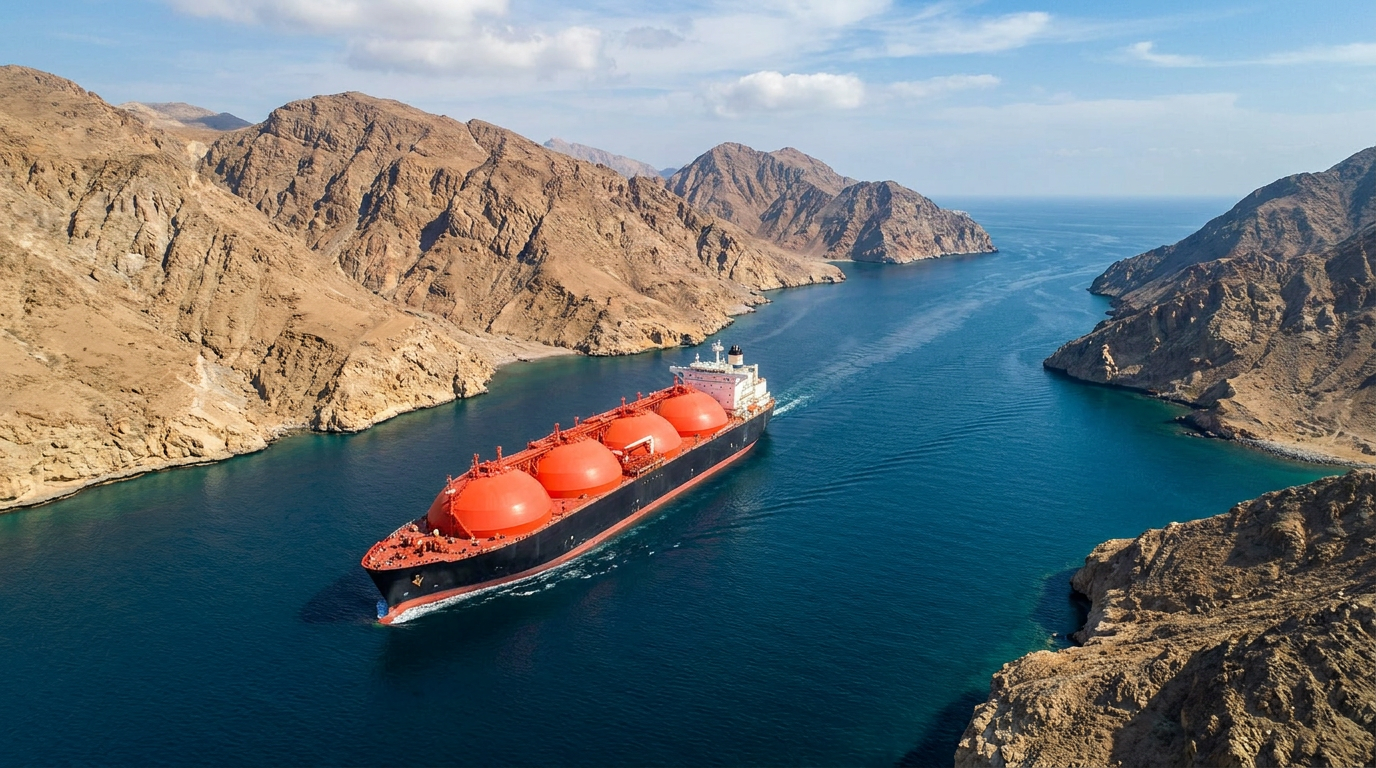
The signing of a Memorandum of Understanding between the United States and Iran has officially broken the months-long logistical logjam in the Middle East, reopening the Strait of Hormuz to commercial energy traffic. The diplomatic breakthrough halts a regional conflict that had effectively severed one of the global economy's most vital arteries, sending shockwaves through commodity and equity markets alike. By establishing a framework for de-escalation, the agreement allows international shipping conglomerates and national energy producers to safely route vessels through the Persian Gulf for the first time since the blockade began.[8]
The immediate physical evidence of this geopolitical thaw is already visible on the water. Liquefied natural gas tankers chartered by India's Petronet LNG have successfully navigated the strait and are heading eastward, marking the resumption of a vital supply route. The restoration of this corridor is critical for Petronet, which relies on the passage to fulfill a 7.5 million metric tonnes per annum (MMTPA) long-term supply contract. The successful transit effectively eliminates the need for costly alternative routing and drastically reduces the freight-related war risk premiums that had inflated delivery costs over the past quarter.[7]
Qatar, the world's second-largest exporter of liquefied natural gas, is moving aggressively to capitalize on the newly opened waters. The Gulf nation is executing a rapid operational ramp-up, aiming to restore the vast majority of its export capacity within a two-month window. Because Qatar's primary export terminals are located deep within the Persian Gulf, the country's energy sector was disproportionately paralyzed by the strait's closure, forcing widespread force majeure declarations on Asian and European contracts. The accelerated restart is designed to clear a massive backlog of idled tankers and stabilize spot prices ahead of the winter heating season.[9]
To understand the sheer magnitude of this reopening, one must examine the mechanics of the chokepoint itself. The Strait of Hormuz is a narrow waterway separating the Arabian Peninsula from Iran, connecting the Persian Gulf to the Gulf of Oman and the broader Arabian Sea. At its narrowest point, the navigable shipping lanes are just two miles wide in either direction. Because there are virtually no viable pipeline alternatives capable of handling the region's massive output, any disruption in this specific corridor translates immediately into a hard physical constraint on global energy supplies, stripping markets of their ability to balance price through alternative sourcing.[6]

The empirical data underscores the strait's unparalleled importance to the global macroeconomic engine. According to the U.S. Energy Information Administration, an average of 20.9 million barrels of crude oil and petroleum liquids flowed through the strait daily prior to the conflict. This staggering volume represents roughly 20 percent of global petroleum liquids consumption and more than a quarter of all seaborne traded oil worldwide. When the blockade choked off this supply, it forced buyers in heavily dependent markets—particularly China, India, and South Korea—to aggressively bid up alternative crude grades from the Atlantic Basin, driving a severe inflationary spike.[6]
The natural gas arithmetic is equally stark, highlighting a secondary mechanism of global vulnerability. Approximately 20 percent of the world's entire liquefied natural gas (LNG)—natural gas that has been super-cooled to a liquid state for transport on specialized vessels—relies exclusively on this single maritime corridor. Qatar and the United Arab Emirates historically export nearly 100 percent of their LNG production through the strait. Unlike oil, which can occasionally be rerouted through limited overland pipelines in Saudi Arabia and the UAE, Qatari gas has no physical exit from the Gulf other than the Strait of Hormuz, making the LNG market uniquely inelastic to blockade events.[6]
The natural gas arithmetic is equally stark, highlighting a secondary mechanism of global vulnerability.
The sudden removal of this supply earlier in the year demonstrated how quickly geopolitical friction translates into localized economic pain. The reversal of that shock is now providing immediate, tangible relief to energy-importing nations that had been squeezed by soaring import bills. The Philippines, for instance, swiftly returned to the international bond market this week to fund state spending. The sovereign issuer seized on the immediate drop in global borrowing costs, capitalizing on the optimism that a sustained US-Iran agreement will permanently ease the oil-driven inflationary pressures that had battered emerging market currencies.[2]

However, financial markets are not simply snapping back to their pre-war baseline, and the path forward remains fraught with uncertainty. While equity traders are enthusiastically pricing out the worst-case scenarios of a prolonged, multi-front Middle East war, they face a sobering reality check regarding underlying macroeconomic fundamentals. The relief rally sparked by the reopening is already beginning to fade as investors pivot their focus back to structural headwinds that were temporarily masked by the geopolitical crisis.[1]
Analysts warn that the stock market still has a daunting "to-do list" to conquer before a sustained bull run can materialize. Chief among these concerns is a potentially hawkish Federal Reserve, which may view the drop in energy prices as insufficient to declare victory over sticky core inflation. Furthermore, equities must absorb the largest wave of stock supply in market history, while navigating Washington's increasingly disruptive regulatory interventions in the artificial intelligence trade—a sector that had previously single-handedly propped up major indices during the height of the Hormuz blockade.[1]
In the commodities sector, the physical flow of oil may be normalizing, but the psychological and financial scars of the blockade will persist. Energy strategists argue that crude markets will live with a "war hangover" for several years. The conflict fundamentally shattered the illusion of guaranteed maritime security, proving that a localized dispute can instantly sever 20 percent of global supply. Consequently, traders are expected to permanently embed a higher geopolitical risk premium into long-dated forward curves, ensuring that baseline energy costs remain structurally elevated even during periods of relative peace.[3]

This lingering uncertainty regarding long-term inflation and risk is clearly reflected in global bond markets. The resolution of the Iran crisis is pointing toward steeper yield curves—a financial phenomenon where the gap between short-term and long-term interest rates widens. As the immediate panic subsides, short-term yields are falling, but long-term yields remain stubbornly high as investors demand greater compensation for the newly proven risk of sudden, catastrophic supply chain disruptions over the next decade.[5]
Beyond the immediate financial metrics, the resolution of the crisis is catalyzing a profound structural shift in Middle Eastern geopolitics. The conflict laid bare the severe vulnerabilities of Gulf Cooperation Council (GCC) countries, demonstrating that their entire economic models could be frozen by a single maritime blockade. More importantly, the crisis tested the reliability of traditional U.S. security guarantees, leaving regional leaders questioning the efficacy of relying solely on Western naval power to protect their sovereign economic lifelines.[4]

As a result, geopolitical analysts predict that regional powers will rapidly forge new Middle Eastern partnerships in the aftermath of the war. Gulf nations are expected to prioritize diversified alliances, potentially deepening economic and security ties with major Asian buyers like China and India, while developing localized, intra-regional security frameworks. For now, the global economy is breathing a collective sigh of relief as the tankers resume their routes, but the crisis has permanently altered the calculus for energy security, proving that the world's reliance on a 29-mile stretch of water remains its greatest unmitigated risk.[4][8][9]
How we got here
Feb 2026
Regional conflict escalates, leading to the effective blockade of the Strait of Hormuz and a massive spike in global energy prices.
March 2026
Global LNG and oil markets are forced to reroute; Qatar declares force majeure on several major Asian and European supply contracts.
Early June 2026
The United States and Iran sign a Memorandum of Understanding to de-escalate the conflict and restore maritime security.
June 15, 2026
The first laden LNG tankers, including vessels chartered by India's Petronet, successfully transit the newly reopened strait.
June 16, 2026
Qatar announces an accelerated operational ramp-up, aiming to restore full LNG export capacity within two months.
Viewpoints in depth
Energy Importers' Relief
Asian economies are the primary beneficiaries of the reopening, as the resumption of energy flows directly lowers their import bills.
For nations heavily dependent on imported energy, such as India, China, and the Philippines, the reopening of the Strait of Hormuz is a critical macroeconomic lifeline. The resumption of LNG and oil flows directly lowers their import bills, eases domestic inflation, and allows sovereign issuers to tap global debt markets at much more favorable borrowing costs. These countries are moving quickly to secure their delayed shipments and stabilize their domestic energy grids ahead of the winter season.
Gulf Producers' Recalibration
Gulf nations are eager to restart exports but are fundamentally rethinking their long-term security alliances.
While Qatar and the UAE are moving aggressively to restart their lucrative export machines, the blockade exposed their fundamental geographic vulnerability. The realization that their entire economic models could be frozen by a single maritime chokepoint has deeply unsettled the Gulf Cooperation Council. Consequently, this camp is now actively pushing for diversified security alliances, looking beyond traditional U.S. guarantees to forge localized frameworks and deeper ties with major Asian buyers to protect future maritime trade.
Macro Investors' Caution
Wall Street emphasizes that the end of the blockade does not mean a return to easy money or low baseline inflation.
Global bond traders and equity analysts argue that the relief rally sparked by the reopening is masking deeper structural issues. They emphasize that a hawkish Federal Reserve, a massive influx of stock supply, and a permanent 'war risk premium' in commodities will continue to weigh on global growth. From this perspective, the conflict permanently shattered the illusion of guaranteed maritime security, meaning energy costs will remain structurally elevated even during periods of relative peace.
What we don't know
- Whether the US-Iran Memorandum of Understanding will hold long-term or if regional skirmishes could threaten the strait again.
- Exactly how much the months-long disruption has permanently accelerated the global transition away from Middle Eastern fossil fuels.
- How the Federal Reserve will weigh the sudden drop in energy prices against other sticky inflationary pressures in its upcoming rate decisions.
Key terms
- Strait of Hormuz
- A narrow, 29-mile-wide waterway between Iran and Oman that serves as the only sea route for exporting oil and gas from the Persian Gulf.
- Liquefied Natural Gas (LNG)
- Natural gas that has been super-cooled to a liquid state, making it compact enough to transport globally on specialized ships.
- War Risk Premium
- An extra cost added to the price of commodities and shipping insurance to account for the danger of vessels being attacked or delayed in conflict zones.
- Yield Curve
- A financial graph that plots the interest rates of bonds with equal credit quality but differing maturity dates, used to gauge investor sentiment about the economy's future.
- Force Majeure
- A legal clause that frees companies from liability when an extraordinary, unavoidable event prevents them from fulfilling their contractual obligations.
Frequently asked
What caused the Strait of Hormuz to close?
A regional conflict involving the US, Iran, and Gulf states escalated in early 2026, making the narrow waterway too dangerous for commercial shipping and effectively blocking transit.
Why is the Strait of Hormuz so important to the economy?
It is the only sea passage from the Persian Gulf to the open ocean, handling over 20% of the world's oil and liquefied natural gas (LNG) trade. There are virtually no alternative routes.
How quickly will energy supplies return to normal?
Qatar, the world's second-largest LNG exporter, estimates it will take up to two months to fully restore its export capacity and clear the backlog of idled tankers.
Will global gas and oil prices drop back to 2025 levels?
While prices are falling on the news, analysts expect a 'war hangover' to keep a permanent risk premium embedded in energy costs for years due to the proven vulnerability of the supply chain.
Sources
Source coverage
9 outlets
4 viewpoints surfaced





[1]BloombergMacro Investors
Equity Market Still Has a Long To-Do List After Iran Peace Deal
Read on Bloomberg →Philippines Returns to Global Bond Market as Oil Pressure Eases
Read on Bloomberg →Gooden: Oil Will Live with War Hangover for Several Years
Read on Bloomberg →Kamrava: New Mideast Partnerships to Follow War
Read on Bloomberg →Iran Deal Points to Steeper Yield Curves: 3-Minutes MLIV
Read on Bloomberg →[6]U.S. Energy Information AdministrationEnergy Security Analysts
World Oil Transit Chokepoints
Read on U.S. Energy Information Administration →[7]Sahi MarketsEnergy Importers
Petronet LNG Tankers Resume Strait of Hormuz Transit Securing 7.5 MMTPA Vital Supply Route
Read on Sahi Markets →[8]ReutersGulf Producers
US-Iran Memorandum of Understanding reopens critical Gulf shipping lanes
Read on Reuters →[9]Al JazeeraGulf Producers
Qatar rapidly restarts LNG production as Strait of Hormuz reopens
Read on Al Jazeera →
Every angle. Every day.
Get business stories with full source coverage and perspective breakdowns delivered to your inbox.