
EV vs. PHEV: The Complete 2026 Guide to Choosing Your Next Car
As electric ranges expand and charging networks grow, the choice between a pure electric vehicle and a plug-in hybrid comes down to daily driving habits and charging access.
By Factlen Editorial Team
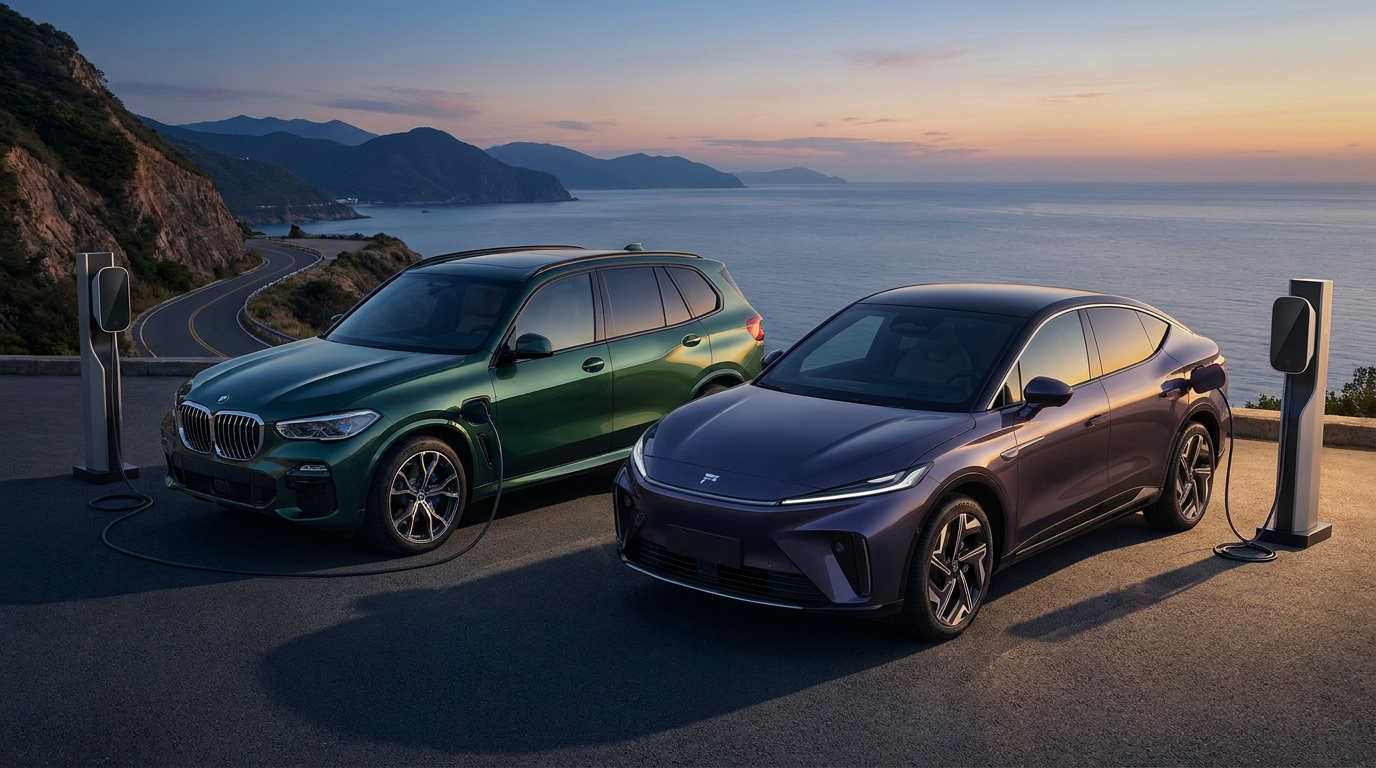
- Pure EV Advocates
- Argue that fully electric vehicles offer the best long-term savings and environmental benefits due to mechanical simplicity.
- PHEV Pragmatists
- Value the flexibility of a gas engine for road trips and areas with poor charging infrastructure.
- Cost-Conscious Drivers
- Focus strictly on the per-mile math, noting that high public charging costs can sometimes negate EV savings.
What's not represented
- · Apartment renters who lack access to dedicated overnight home charging.
- · Used-car buyers navigating the secondary market for out-of-warranty hybrid batteries.
Why this matters
Choosing the wrong powertrain can cost thousands in unnecessary fuel and maintenance, or leave you stranded with charging logistics that don't fit your lifestyle. Understanding the exact trade-offs between EVs and PHEVs ensures your next vehicle matches your actual daily needs.
Key points
- Pure electric vehicles (EVs) offer the lowest daily running costs and require minimal maintenance due to their mechanical simplicity.
- Plug-in hybrids (PHEVs) provide 30 to 60 miles of electric range for daily commutes, backed by a gas engine for unlimited road-trip flexibility.
- PHEVs are the most mechanically complex vehicles on the road, carrying the long-term maintenance requirements of both electric and combustion systems.
- The financial viability of a pure EV depends heavily on access to cheap, reliable overnight home charging.
The automotive landscape in 2026 has fundamentally shifted. With fully electric vehicles routinely crossing the 300-mile range threshold and charging networks expanding globally, the transition away from fossil fuels is accelerating. Yet, for millions of drivers, the leap to a pure battery electric vehicle still feels daunting. Enter the plug-in hybrid electric vehicle, a bridge technology that promises the best of both worlds: emission-free daily commuting with the limitless road-trip range of a traditional gas tank.[2]
Deciding between a pure EV and a PHEV is no longer just a question of environmental ideals; it is a strict mathematical calculation based on daily habits, geography, and infrastructure. Both platforms offer substantial upgrades over traditional internal combustion engines, but they serve entirely different lifestyles. Understanding the trade-offs requires looking past the sticker price and examining the total cost of ownership, mechanical complexity, and the reality of modern charging networks.[7]
At the core of the comparison is how each vehicle is powered. A battery electric vehicle relies entirely on a large battery pack and electric motors. It has no tailpipe, no gas tank, and cannot operate without being plugged in to recharge. A plug-in hybrid, conversely, houses two distinct powertrains: a smaller electric battery capable of 30 to 60 miles of emission-free driving, paired with a standard gasoline engine that takes over seamlessly when the battery is depleted.[1][4]
From a pure running-cost perspective, the fully electric vehicle is the undisputed champion of the daily commute. Electricity is significantly cheaper than gasoline in most global markets. When charged overnight at home on off-peak utility rates, an EV can cost as little as two to four cents per mile to operate. For a driver covering 15,000 miles a year, the fuel savings alone can easily surpass a thousand dollars annually compared to a traditional gas-powered car.[3][6]

However, the plug-in hybrid offers a unique financial loophole for the disciplined driver. Because the average daily commute falls well under 40 miles, a PHEV owner who plugs in every night can complete their daily driving entirely on electric power, matching the low running costs of a pure EV. The gasoline engine remains dormant, acting merely as an insurance policy for weekend getaways or unexpected long trips where charging infrastructure might be sparse.[1][2]
The catch with the PHEV lies in that required discipline. If a plug-in hybrid is not charged regularly, it essentially becomes a heavy, inefficient gas car. The added weight of the electric battery and motor forces the gasoline engine to work harder, often resulting in worse fuel economy than a standard, non-plug-in hybrid. Industry data shows that many PHEV owners fail to plug in consistently, negating the vehicle's primary environmental and financial benefits.[2][3]
If a plug-in hybrid is not charged regularly, it essentially becomes a heavy, inefficient gas car.
Maintenance costs present another stark divergence between the two technologies. A pure electric vehicle is a marvel of mechanical simplicity. Its drivetrain contains roughly twenty moving parts, eliminating the need for oil changes, spark plugs, transmission fluid, and exhaust system repairs. Furthermore, regenerative braking—which uses the electric motor to slow the car and recapture energy—means that EV brake pads can often last well past 100,000 miles.[2][5]
The plug-in hybrid, by contrast, is the most mechanically complex vehicle on the road today. It carries the maintenance burden of both an electric system and a traditional combustion engine. While the electric motor reduces wear and tear on the gas engine during daily driving, owners must still adhere to regular oil changes and engine servicing. Over a ten-year ownership period, this dual-system complexity translates to higher maintenance bills and more potential points of failure.[2][5]

Range anxiety, once the primary deterrent to EV adoption, has been largely neutralized for the average driver in 2026. Modern electric vehicles comfortably deliver 300 to 400 miles on a single charge, more than enough for a week of typical commuting. Yet, for drivers who frequently embark on cross-country road trips or live in rural areas with underdeveloped fast-charging networks, the PHEV's ability to refuel at any gas station in five minutes remains an unbeatable advantage.[2][5]
The cost of public charging also complicates the EV value proposition. While home charging is incredibly cheap, relying on commercial fast chargers can sometimes cost as much as, or even more than, pumping gasoline—especially in regions with high commercial electricity rates. For apartment dwellers without access to a dedicated home charger, the financial math of owning a pure EV can quickly deteriorate, making a PHEV or standard hybrid a more logical choice.[6]
Environmental regulations are also beginning to tip the scales. Major global cities are increasingly implementing zero-emission zones, charging fees to any vehicle that produces tailpipe emissions. While pure EVs navigate these zones freely, PHEVs are often penalized if they are running on their combustion engines. As these regulations tighten toward the end of the decade, the pure EV offers a more future-proof investment against urban driving restrictions.[2][3]
Ultimately, the fully electric vehicle fits perfectly for drivers who have reliable access to home or workplace charging, predictable daily commutes, and a desire for the lowest possible long-term maintenance costs. It is the definitive choice for those ready to fully sever ties with the gas station and embrace the mechanical simplicity of the electric era.[3][7]

Conversely, the plug-in hybrid remains the ideal solution for single-car households that require maximum versatility. It fits well for drivers who want electric efficiency for their daily errands but regularly drive into remote areas or take long road trips where charging logistics would be a burden. For these drivers, the PHEV serves as the perfect transitional vehicle, bridging the gap between the combustion past and the electric future.[4][7]
How we got here
2010
The Chevrolet Volt and Nissan Leaf are introduced, kicking off the modern era of PHEVs and pure EVs.
2020
Global EV range averages cross the 250-mile mark, significantly reducing everyday range anxiety.
2024
Major automakers begin standardizing charging ports, expanding access to fast-charging networks across North America and Europe.
2026
Pure EVs routinely achieve 300-400 miles of range, while PHEVs solidify their role as the preferred transitional vehicle for single-car households.
Viewpoints in depth
Pure EV Advocates
Focus on the long-term financial and environmental superiority of fully electric platforms.
Proponents of pure electric vehicles argue that the transition away from fossil fuels should be absolute. They point to the mechanical elegance of EVs—which feature a fraction of the moving parts found in combustion engines—as the key to decades of low-maintenance ownership. From this perspective, plug-in hybrids are viewed as a compromised stopgap that unnecessarily prolongs reliance on oil and burdens owners with the maintenance costs of two separate drivetrains.
PHEV Pragmatists
Emphasize the real-world flexibility and infrastructure independence of plug-in hybrids.
For many drivers and industry analysts, the plug-in hybrid represents the most realistic solution for the current decade. This camp highlights that because the vast majority of daily driving falls under 40 miles, a PHEV operates as a zero-emission vehicle for 90% of its life. Yet, it entirely eliminates the logistical stress of road trips and the reliance on public fast-charging networks, which can still be unreliable or expensive in rural areas. They argue PHEVs are the perfect single-car solution for households that cannot afford a dedicated road-trip vehicle.
Cost-Conscious Drivers
Evaluate vehicles strictly on per-mile operating costs and infrastructure reality.
For drivers focused purely on the spreadsheet, the EV versus PHEV debate hinges entirely on where the vehicle is charged. This camp points out that while home electricity rates make EVs incredibly cheap to run, relying on commercial fast chargers can sometimes cost as much per mile as pumping gasoline. They argue that for apartment dwellers or those without dedicated home charging, a PHEV or even a standard hybrid often makes more financial sense than a pure EV.
What we don't know
- How quickly secondary market values for aging PHEVs will drop as their complex dual-powertrains exit warranty periods.
- Whether upcoming solid-state battery technology will extend EV ranges enough to render the PHEV bridge technology obsolete by 2030.
Key terms
- Battery Electric Vehicle (BEV)
- A vehicle powered entirely by electricity stored in a large battery pack, producing zero tailpipe emissions.
- Plug-in Hybrid Electric Vehicle (PHEV)
- A vehicle that combines a rechargeable electric battery for short trips with a traditional gasoline engine for longer distances.
- Regenerative Braking
- A system that captures the kinetic energy normally lost during braking and uses it to recharge the vehicle's battery.
- Level 2 Charging
- A charging standard using a 240-volt outlet (similar to a heavy appliance) that can fully recharge an EV overnight.
- Zero-Emission Zone
- Urban areas where vehicles producing tailpipe exhaust are either banned or subject to daily entry fees.
Frequently asked
Do plug-in hybrids charge themselves while driving?
While PHEVs use regenerative braking to recapture small amounts of energy, their main battery must be plugged into a wall outlet or charging station to regain its full 30-60 mile electric range.
Is a pure EV cheaper to maintain than a PHEV?
Yes. Pure EVs have significantly fewer moving parts and require no oil changes or engine maintenance, making them cheaper to maintain over the long term than PHEVs, which house both electric and gas powertrains.
Can I drive a PHEV if I forget to charge it?
Yes. If the electric battery is depleted, a PHEV seamlessly switches to its gasoline engine and operates like a traditional hybrid car, though fuel efficiency will be lower due to the battery's added weight.
Do I need a special home charger for an EV or PHEV?
Both can be charged using a standard 120-volt household outlet, which is often sufficient for a PHEV's smaller battery. However, pure EVs typically require the installation of a 240-volt Level 2 charger for practical overnight charging.
Sources
Source coverage
7 outlets
3 viewpoints surfaced







[1]GreenCarsPHEV Pragmatists
PHEV vs. EV: Total Cost of Ownership
Read on GreenCars →[2]MobileStudio24hPure EV Advocates
EV vs PHEV: 2026 Comparison at a Glance
Read on MobileStudio24h →[3]ElectraPure EV Advocates
Electric Car or Plug-in Hybrid: Which One Should You Choose?
Read on Electra →[4]ZenithPHEV Pragmatists
EV vs PHEV: What's the difference?
Read on Zenith →[5]Cars.co.zaPHEV Pragmatists
EV vs PHEV vs REEV: Which is best?
Read on Cars.co.za →[6]InsideEVsCost-Conscious Drivers
Cost comparison: EV vs PHEV running costs
Read on InsideEVs →[7]Factlen Editorial TeamCost-Conscious Drivers
Synthesis by Factlen editorial team
Read on Factlen Editorial Team →



Every angle. Every day.
Get guides stories with full source coverage and perspective breakdowns delivered to your inbox.