
Induction vs. Gas Cooktops: The 2026 Efficiency, Health, and Cost Breakdown
As induction technology matures and indoor air quality concerns rise, the choice between magnetic cooking and traditional gas flames comes down to a complex mix of health data, upfront costs, and culinary preference.
By Factlen Editorial Team
- Induction Advocates
- Argue that electromagnetic cooking is the thermodynamically superior, faster, and safer choice for modern homes.
- Public Health Researchers
- Focus on the respiratory impacts of indoor combustion and advocate for source elimination to improve air quality.
- Gas Traditionalists
- Value the culinary versatility of open flames and the pragmatic cost-savings of using existing home infrastructure.
What's not represented
- · Professional Restaurant Chefs
- · Electric Grid Operators
Why this matters
Replacing a stove is a decade-long commitment that directly impacts your household's daily energy bills, cooking speed, and indoor air quality. Understanding the precise trade-offs between induction and gas ensures you invest in the technology that actually fits your home's infrastructure and your family's health needs.
Key points
- Induction cooktops transfer 85–90% of their energy directly to the pan, compared to 32–40% for gas stoves.
- A 2024 Columbia University study found switching to induction reduced indoor nitrogen dioxide levels by 56%.
- Gas stoves remain cheaper upfront and do not require the 240-volt electrical upgrades often needed for induction.
- Induction requires magnetic cookware, such as cast iron or stainless steel, rendering aluminum and pure copper pans unusable.
- The choice ultimately hinges on balancing culinary preferences, existing home infrastructure, and indoor air quality priorities.
The kitchen stove is the functional heart of the home, and in 2026, buyers face a fundamental choice between two entirely different laws of physics. For decades, the debate was simply gas versus radiant electric coils, with gas reigning as the undisputed champion for serious cooks. Today, the landscape has shifted. Induction technology has matured from a premium European niche into a mainstream powerhouse, forcing homeowners to reevaluate what makes a kitchen efficient, safe, and functional. This transition represents more than just a culinary preference; it is a generational shift in how residential energy is consumed and how indoor environments are managed.[6]
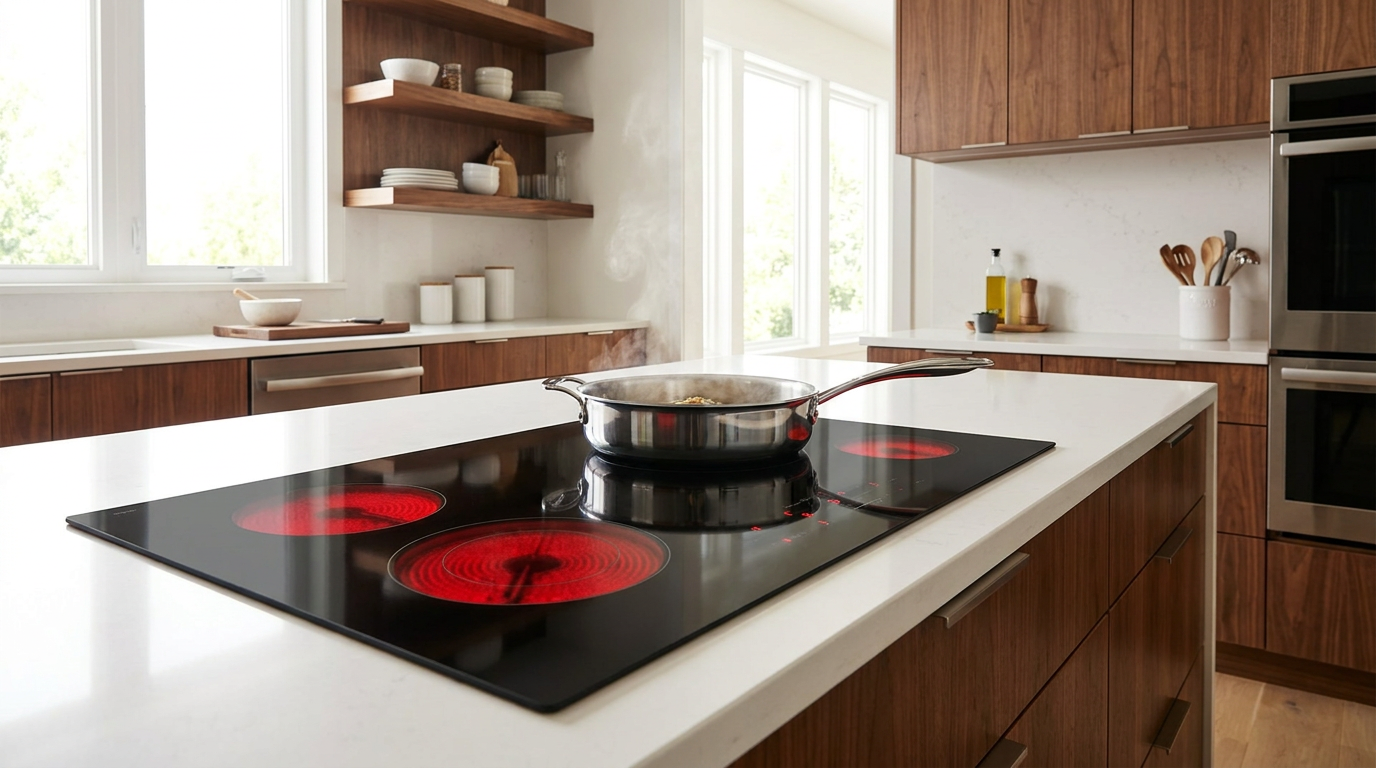
To understand the trade-offs, one must first look at how the heat is generated. Gas cooktops rely on an open flame, burning natural gas or liquid propane to heat the ambient air, the heavy cast-iron grates, and eventually the bottom of the pan. It is a visceral, visual process that cooks have relied on for generations, offering immediate feedback as the flame is adjusted. Induction, by contrast, bypasses the middleman entirely. Beneath the sleek glass surface lie tightly wound copper coils that generate an alternating magnetic field. When a magnetic pan is placed on the cooking zone, this field induces electrical currents directly inside the metal of the cookware. The pan itself becomes the heater, while the glass surface remains relatively cool to the touch.[4][6]
This direct transfer of energy creates a massive gap in thermal efficiency. According to energy analysts, induction cooktops convert between 85 and 90 percent of their consumed energy into usable heat for cooking. Gas stoves, however, are inherently lossy; they manage only 32 to 40 percent efficiency, with the vast majority of the generated heat escaping into the surrounding kitchen air. That escaping heat has secondary consequences for household energy bills. In the summer months, a gas stove forces the home's air conditioning system to work significantly harder to cool the kitchen. Induction keeps the ambient temperature stable, which translates to lower overall household energy consumption, even before accounting for the speed of the cooking itself.[3][4]

Speed is where induction routinely surprises new users and wins over skeptics. Because the electromagnetic energy goes directly into the metal of the cookware, an induction cooktop can bring a large pot of water to a rolling boil in under two minutes—significantly faster than the most powerful residential gas burners or traditional electric coils. The temperature control is also instantaneous. A rolling boil can drop to a delicate, barely-there simmer the exact moment the digital dial is turned, offering a level of precision that rivals or exceeds the responsiveness of a gas flame.[4][5]
Yet, the most significant shift in the 2026 appliance debate centers on indoor air quality. Public health researchers have amassed decades of data showing that burning gas indoors releases nitrogen dioxide (NO2), carbon monoxide, and benzene—a known carcinogen. The scientific scrutiny reached a tipping point following a landmark 2022 study, which estimated that 12.7 percent of current childhood asthma cases in the United States are directly attributable to gas stove use. These findings have moved the conversation from pure culinary preference into the realm of respiratory health, particularly for vulnerable populations and children.[2][3]
The real-world impact of removing combustion from the kitchen is highly measurable. A 2024 pilot study led by researchers at Columbia University’s Mailman School of Public Health replaced gas stoves with induction models in affordable housing units in the Bronx. The intervention resulted in a 56 percent reduction in average daily NO2 concentrations, fundamentally altering the respiratory environment for the families involved. During controlled cooking tests in the study, background NO2 concentrations in gas-equipped homes spiked dramatically, while levels in the induction homes remained virtually unchanged.[1]

The real-world impact of removing combustion from the kitchen is highly measurable.
Gas traditionalists correctly point out that proper ventilation can mitigate many of these respiratory risks. A high-quality range hood that vents directly to the outdoors is highly effective at capturing combustion byproducts before they circulate through the home. However, field studies consistently show that a vast majority of homes either lack proper exterior ventilation—relying instead on ineffective recirculating fans—or have occupants who simply forget to turn the hood on for every cooking session. For public health experts, eliminating the source of the pollution entirely is a far more reliable safeguard than depending on perfect ventilation habits.[1][2]
Beyond health and efficiency, the financial calculus of the two technologies requires a close look at both upfront and hidden installation costs. Gas cooktops generally carry a lower initial price tag, often ranging from $800 to $1,500 for standard models. If a home already has an active natural gas or propane line plumbed to the kitchen, the installation is straightforward and relatively inexpensive. For budget-conscious renovations where the infrastructure is already in place, sticking with gas remains the path of least financial resistance.[3]
Induction units have steadily come down in price as manufacturing scales, but they still command a slight premium, typically starting around $1,000 to $1,800. The hidden hurdle for many older homes is the electrical requirement. Upgrading a kitchen to support a dedicated 240-volt, 50-amp circuit can add anywhere from $200 to $600 to the project, depending on the capacity of the home's main electrical panel and the complexity of running new wire. While induction saves money on monthly utility bills, the payback period depends heavily on local electricity and natural gas rates.[3]
Cookware compatibility is another practical trade-off that buyers must navigate. Gas stoves are entirely agnostic; they will heat copper, aluminum, cast iron, and warped pans with equal enthusiasm. Induction, however, demands magnetic cookware to complete the electromagnetic circuit. Cast iron, enameled cast iron, and most modern stainless steel work flawlessly. However, cooks transitioning to induction may need to replace beloved aluminum or pure copper pans. A simple refrigerator magnet provides the definitive test: if it sticks firmly to the bottom of the pan, it will work on an induction surface.[4]

Day-to-day maintenance and safety strongly favor the flat glass of induction. Because the surface itself does not get hot enough to bake on spilled food, cleanup usually requires nothing more than a quick wipe with a damp cloth. Gas stoves, with their heavy cast-iron grates and intricate burner caps, require regular disassembly and scrubbing to maintain an even flame. Furthermore, induction eliminates the risk of a gas leak and features automatic shut-offs if a pot boils dry, making it an exceptionally safe choice for households with young children or aging family members.[4][5]
When evaluating the trade-offs, induction fits exceptionally well when a homeowner is prioritizing indoor air quality, seeking the easiest possible cleanup, or looking to maximize energy efficiency. It is the clear choice for households aiming to electrify their homes and step away from fossil fuels. For families with young children, the cool-to-the-touch surface and the impossibility of a gas leak provide unmatched peace of mind. As prices continue to fall, induction is rapidly becoming the default recommendation for new construction and major kitchen remodels.[3][6]
Conversely, gas remains a highly practical choice for homes that already have the gas infrastructure in place but lack the electrical panel capacity for a 240-volt upgrade. It fits well for culinary traditionalists who rely on visual flame feedback, frequently use non-magnetic specialty cookware, or employ techniques like charring peppers directly on the grate. Additionally, in regions prone to frequent winter power outages, a match-lit gas stove provides a layer of resilience that grid-dependent induction simply cannot match. Ultimately, the best choice requires balancing culinary habits against infrastructure realities and long-term health priorities.[3][6]
How we got here
1970s
Early research begins identifying respiratory hazards linked to indoor pollution from gas stoves.
2013
A major meta-analysis links gas stove emissions to a 32% higher risk of childhood asthma.
2022
New research estimates that 12.7% of current US childhood asthma cases are attributable to gas stove use.
2024
Columbia University publishes a pilot study showing a 56% reduction in indoor NO2 when affordable housing units switched to induction.
Viewpoints in depth
Induction Advocates
Argue that electromagnetic cooking is the thermodynamically superior and safer choice for modern homes.
Proponents of induction point to the undeniable physics of electromagnetic heating. By turning the pan itself into the heat source, induction achieves an 85 to 90 percent thermal efficiency rate, drastically reducing wasted energy and keeping kitchens cooler. Advocates emphasize that as the electrical grid becomes greener, transitioning away from fossil fuel combustion in the home is a necessary step for environmental sustainability. They also highlight the unmatched speed of boiling water and the safety of a cooktop that remains cool to the touch.
Gas Traditionalists
Maintain that open flames offer unmatched visual feedback and culinary versatility.
For many home chefs, cooking is a tactile and visual experience that relies on the immediate feedback of an open flame. Gas traditionalists value the ability to char vegetables directly on the grates, toss food in a round-bottom wok, and use any type of cookware regardless of its magnetic properties. Pragmatically, they also point out that homes already plumbed for gas can avoid the expensive 240-volt electrical panel upgrades required to install an induction range, making gas the more economical choice for many renovations.
Public Health Researchers
Focus on the hidden respiratory costs of indoor combustion.
Medical professionals and environmental health scientists view the cooktop debate primarily through the lens of indoor air quality. Decades of research have linked the nitrogen dioxide and benzene emitted by gas stoves to elevated risks of respiratory illness, particularly childhood asthma. While recognizing that high-quality, exterior-venting range hoods can mitigate some of this risk, researchers argue that source elimination—removing the combustion entirely via induction—is the only foolproof way to protect vulnerable populations from indoor pollutants.
What we don't know
- How quickly the secondary market for used gas stoves will decline as more municipalities ban new gas hookups.
- Whether future iterations of induction technology will be able to efficiently heat non-magnetic metals like pure copper or aluminum.
Key terms
- Electromagnetic Induction
- A process where a magnetic field generates electric currents directly inside magnetic cookware, creating heat without an open flame or heated coil.
- Nitrogen Dioxide (NO2)
- A gaseous air pollutant produced by combustion, including gas stoves, which can irritate airways and exacerbate respiratory diseases.
- Thermal Efficiency
- The percentage of energy consumed by an appliance that is actually transferred into the food being cooked, rather than lost to the surrounding air.
- Primary Energy
- The total raw energy required to power an appliance, including the energy lost during electricity generation and transmission.
Frequently asked
Do I need to buy all new pots and pans for an induction stove?
Only if your current cookware isn't magnetic. Cast iron and most stainless steel work perfectly; aluminum and pure copper will not.
Will an induction cooktop work during a power outage?
No. Unlike some gas stoves that can be lit manually with a match during an outage, induction cooktops require electricity to function.
Is induction the same as a traditional electric glass-top stove?
No. Traditional electric stoves use radiant heating coils under the glass, which are slower and less efficient. Induction uses electromagnets to heat the pan directly.
How much does it cost to switch from gas to induction?
Beyond the cost of the stove itself ($1,000–$1,800), you may need an electrician to install a 240V outlet, which typically adds $200 to $600 depending on your home's electrical panel.
Sources
Source coverage
6 outlets
3 viewpoints surfaced






[1]Columbia UniversityPublic Health Researchers
Study Finds Switching From Gas to Electric Stoves Cuts Indoor Air Pollution
Read on Columbia University →[2]National Institutes of HealthPublic Health Researchers
The Health Effects of Gas Stoves
Read on National Institutes of Health →[3]Energy SolutionsInduction Advocates
Induction vs Gas Cooktops: The Definitive Health, Efficiency & Economic Analysis
Read on Energy Solutions →[4]Good HousekeepingGas Traditionalists
The Pros and Cons of Buying an Induction Stove or Cooktop
Read on Good Housekeeping →[5]Consumer ReportsInduction Advocates
Induction Cooktops and Ranges: the Pros
Read on Consumer Reports →[6]Factlen Editorial TeamPublic Health Researchers
Synthesis by Factlen editorial team
Read on Factlen Editorial Team →


Every angle. Every day.
Get shopping stories with full source coverage and perspective breakdowns delivered to your inbox.