
Precision Fermentation: How Microbes Are Brewing the Next Generation of Dairy and Protein
Scientists are programming yeast and bacteria to produce identical milk, egg, and meat proteins without the animals. This high-tech evolution of traditional brewing could drastically reduce agriculture's environmental footprint while preserving the exact taste and texture of familiar foods.
By Factlen Editorial Team
- Food Tech Innovators
- Advocates focused on the efficiency, sustainability, and exact replication of animal proteins.
- Regulatory Bodies
- Agencies prioritizing food safety, rigorous testing, and transparent consumer labeling.
- Traditional Agriculture
- Farmers and conventional producers navigating the disruption and seeking new roles in the supply chain.
What's not represented
- · Consumer Advocacy Groups
- · Culinary Traditionalists
Why this matters
By decoupling the production of beloved foods from resource-intensive animal farming, precision fermentation offers a viable path to feeding a growing global population without further depleting land and water. If the industry can achieve price parity, it could fundamentally reshape the grocery aisle.
Key points
- Precision fermentation uses programmed microbes to brew identical animal proteins without livestock.
- The process involves inserting specific DNA sequences, like cow casein, into yeast or bacteria.
- Final products are highly purified and contain no genetically modified organisms (GMOs).
- The technology could reduce agricultural greenhouse gas emissions by up to 70 percent.
Fermentation is one of humanity's oldest and most reliable culinary tools, serving as the invisible engine behind many of our most foundational foods. For millennia, we have relied on the natural metabolic processes of microscopic organisms to transform raw, perishable ingredients into complex, shelf-stable staples. By harnessing wild yeasts and bacteria, ancient cultures learned to turn wheat into leavened bread, grapes into wine, and raw milk into a vast array of preserved cheeses. This traditional form of fermentation relies on the broad, somewhat unpredictable biological activity of whole microbial communities to alter the texture, flavor, and nutritional profile of the food. It is a scattershot approach, producing a wide mix of organic acids, alcohols, and flavor compounds that give fermented foods their characteristic tang and complexity.[1][3]
Today, a high-tech evolution of this ancient practice is quietly revolutionizing the global food system, promising to decouple our favorite meals from the environmental toll of industrial agriculture. Known as precision fermentation, this highly controlled process leverages modern biotechnology to program microorganisms—such as specific strains of yeast, fungi, or bacteria—to act as microscopic cellular factories. Rather than relying on the broad metabolic output of a microbe to change a food's flavor, scientists are using these organisms to manufacture highly specific, high-value biological molecules from scratch. By treating microbes as programmable hardware, researchers can instruct them to synthesize the exact proteins, fats, and flavor compounds that have traditionally only been available by raising and slaughtering livestock or cultivating resource-intensive crops.[2][5]
The implications of this technological leap are staggering for the future of the grocery aisle. Instead of relying on millions of cows, chickens, or vast tracts of arable land to produce our daily protein, scientists are shifting production indoors to controlled, sterile environments. These cellular factories can synthesize the exact molecular structures of the foods we already know and love, meaning consumers do not have to compromise on taste, texture, or nutritional value. Because the end product is biologically identical to its animal-derived counterpart, precision fermentation offers a seamless substitution. A cheese made with precision-fermented casein will melt, stretch, and brown in the exact same way as a traditional dairy cheese, because at a molecular level, it is the exact same substance.[1][6]
The biological mechanism behind precision fermentation is a marvel of modern synthetic biology and genetic engineering. The process begins with researchers identifying and isolating the specific genetic sequence that codes for a desired compound in nature. For example, if a company wants to produce whey—one of the primary proteins found in cow's milk—they map the exact DNA sequence responsible for whey production in a bovine genome. Scientists then safely insert this genetic instruction manual into the DNA of a host microbe, effectively rewriting the organism's biological software. Once programmed, the yeast or bacteria is no longer just a simple single-celled organism; it is a highly specialized, self-replicating factory designed to pump out one specific protein with incredible efficiency.[4][5]

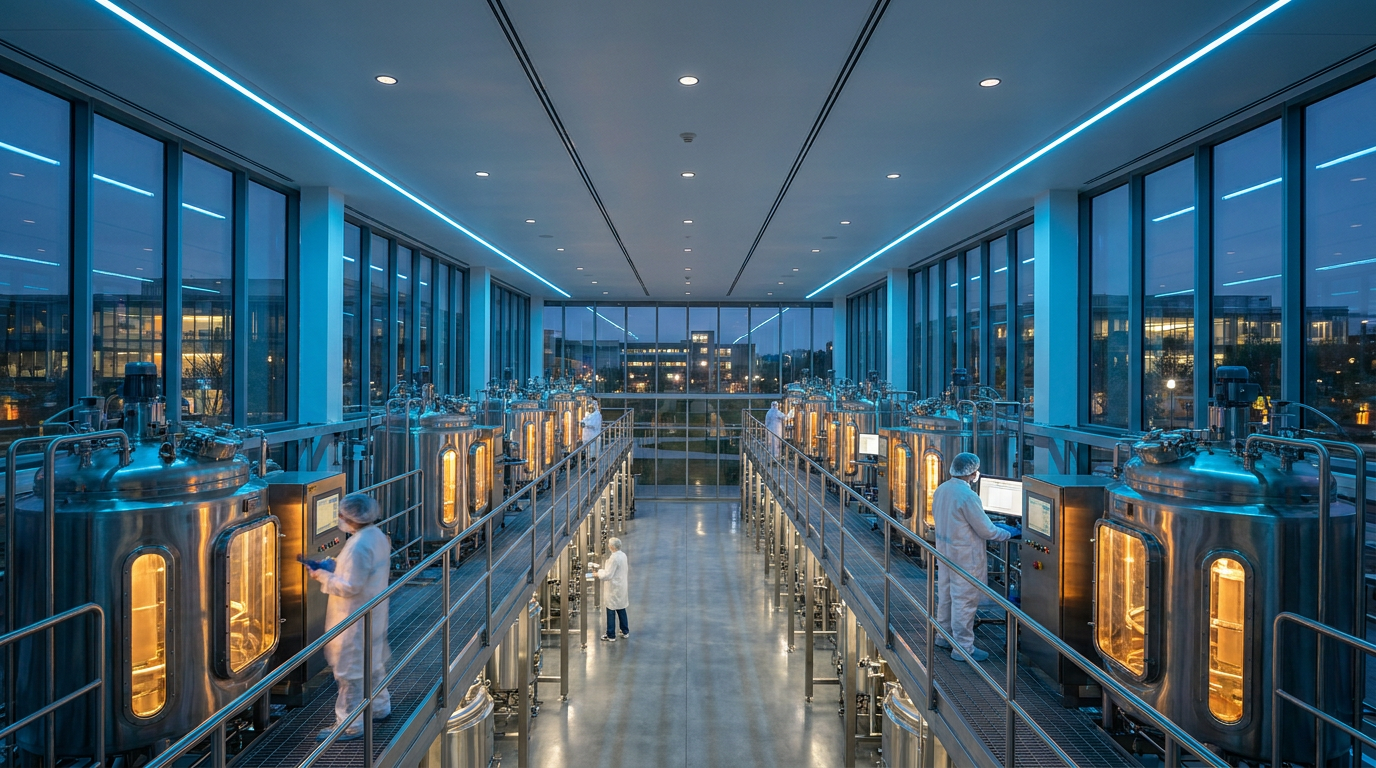
Once the microbes have been successfully programmed, they are moved out of the laboratory and into large-scale production facilities. The engineered yeast or bacteria are placed into massive stainless-steel fermentation tanks, known as bioreactors, which look remarkably similar to the equipment used in a commercial craft brewery. Inside these tanks, the microbes are kept in a warm, carefully monitored liquid broth and fed a steady diet of basic sugars, nitrogen, and essential vitamins. This nutrient-rich environment allows the microbes to multiply rapidly, growing exponentially in a matter of hours or days. As they consume the sugars and undergo their natural metabolic processes, their newly inserted genetic code forces them to produce the target molecule, which they secrete directly into the surrounding fermentation broth.[4][5]
Crucially, the final step of the precision fermentation process involves rigorous and highly sophisticated purification. Once the microbes have produced a sufficient yield of the target protein, the entire mixture is filtered and separated. The host microbes—the genetically modified yeast or bacteria that did the actual manufacturing—are completely removed from the liquid. The target protein is then isolated, dried, and refined into a pure powder or liquid ingredient. Because the microbes themselves are entirely filtered out of the final product, the resulting food ingredient contains no genetically modified organisms (GMOs). The consumer is left with only the pure, molecularly identical protein, completely divorced from the engineered organism that created it.[5][6]
While the application of this technology to everyday consumer foods is relatively new, the underlying science has been safely utilized in the pharmaceutical and food processing industries for decades. Since the 1980s, precision fermentation has been the standard, FDA-approved method for producing human insulin for diabetics, entirely replacing the older, less reliable method of extracting insulin from the pancreases of slaughtered pigs. Similarly, the vast majority of the cheese consumed globally today is made using chymosin, a coagulating enzyme produced via precision fermentation. Before this breakthrough in the 1990s, cheesemakers relied on rennet extracted from the stomach linings of calves. The technology is already a deeply integrated, thoroughly tested component of our modern medical and agricultural supply chains.[5][6]
Similarly, the vast majority of the cheese consumed globally today is made using chymosin, a coagulating enzyme produced via precision fermentation.
What is genuinely novel today is the sheer scale, ambition, and consumer-facing nature of the alternative protein sector's embrace of the technology. Food tech startups are no longer just producing invisible processing enzymes; they are brewing the core macronutrients that make up our diets. Companies like Perfect Day have successfully commercialized animal-free dairy proteins, partnering with major food conglomerates to release ice creams, cream cheeses, and milk beverages that offer the exact sensory profile of conventional dairy. Meanwhile, companies like The EVERY Company are utilizing engineered yeast to produce animal-free egg albumen, providing commercial bakeries with a highly soluble, neutral-tasting protein that whips and binds exactly like a chicken egg, without the associated risks of avian flu or supply chain volatility.[4][7]
The applications of precision fermentation extend far beyond replacing basic dairy and egg proteins. The technology is proving instrumental in solving some of the most complex flavor and texture challenges in the broader plant-based meat industry. Perhaps the most famous example is Impossible Foods, which uses precision fermentation to brew 'heme,' an iron-rich molecule naturally found in animal muscle. By programming yeast to produce this specific molecule, the company is able to give its plant-based burgers their characteristic meaty flavor, aroma, and the ability to 'bleed' when cooked. This highly targeted approach allows food scientists to isolate the exact compounds that make meat appealing and recreate them without the need for animal slaughter.[4][7]

Beyond proteins, the technology is rapidly being adapted to brew sustainable alternatives to some of the world's most environmentally destructive and ethically fraught agricultural crops. Researchers and startups are currently developing precision-fermented palm oil, a breakthrough that could drastically reduce the rampant deforestation and habitat destruction associated with tropical palm plantations in Southeast Asia. Similarly, scientists are working on brewing complex cocoa flavor compounds and natural vanilla extract. By growing the specific flavor molecules in a bioreactor rather than cultivating the entire plant, the industry can create consistent, high-quality ingredients that are entirely insulated from the climate shocks, droughts, and labor abuses that frequently plague traditional tropical agriculture.[3][7]
The environmental stakes driving this technological shift are profound, offering a rare bright spot in the fight against agricultural climate change. According to life-cycle analyses and industry research, producing dairy and egg proteins via precision fermentation could reduce greenhouse gas emissions by up to 70 percent compared to traditional animal agriculture. Livestock farming is currently one of the leading global drivers of methane emissions, a highly potent greenhouse gas produced during the digestive processes of ruminant animals. By replacing the cow's complex, methane-producing digestive system with a highly efficient, closed-loop bioreactor, precision fermentation effectively bypasses one of the most stubborn environmental bottlenecks in the modern food system, offering a scalable way to feed a growing population without breaking the carbon budget.[4][7]
Furthermore, the fermentation process is incredibly resource-efficient, addressing critical global shortages of arable land and fresh water. Because the production operates vertically in industrial bioreactors rather than horizontally across open fields, precision fermentation requires up to 95 percent less land than traditional livestock farming. This massive reduction in land use opens up the possibility of rewilding vast tracts of agricultural land, restoring native ecosystems, and boosting global biodiversity. Additionally, the closed-loop nature of the bioreactors means the process uses up to 80 percent less water, while virtually eliminating the severe nutrient pollution and agricultural runoff that currently creates massive dead zones in coastal waters and river systems around the world.[4][7]

Despite its immense promise and rapid technological advancement, the precision fermentation industry faces a significant, existential hurdle: economic cost. As of the mid-2020s, producing proteins through these novel biotechnologies remains highly capital-intensive. It can currently cost up to ten times more to produce a kilogram of precision-fermented protein than it does to produce the same amount using conventional agricultural methods. The microbes themselves are highly efficient, but the stainless-steel bioreactors, the sterile operating environments, and the downstream purification processes require massive upfront capital expenditure. Achieving true price parity with subsidized animal agriculture will require unprecedented investments in global manufacturing infrastructure and the development of cheaper, more abundant feedstocks to fuel the microbes.[1][2]

Regulatory bodies worldwide are actively responding to the rapid commercialization of these novel ingredients, working to establish robust safety frameworks that protect consumers while fostering innovation. Agencies like the UK's Food Standards Agency and the US Food and Drug Administration require extensive safety dossiers before any precision-fermented product can hit supermarket shelves. These rigorous reviews are designed to ensure that the final purified proteins are entirely free from the genetically modified host microbes and that no unintended toxins or novel allergens have been introduced during the fermentation process. Regulators are also grappling with complex labeling challenges, striving to ensure that consumers clearly understand a product is animal-free, while simultaneously warning those with severe dairy or egg allergies that the molecular structure of the protein is identical to the traditional allergen.[3][7]
Ultimately, precision fermentation is not necessarily about entirely replacing traditional agriculture, but rather expanding our options and building a more resilient global food system. As climate change increasingly threatens traditional crop yields and livestock production, having the ability to brew essential macronutrients indoors, anywhere in the world, offers a critical buffer against food insecurity. As production scales, bioreactor technology improves, and costs inevitably fall, precision fermentation is poised to transition from a niche, premium food-tech novelty into a foundational pillar of the global diet. By harnessing the microscopic power of yeast and bacteria, scientists are brewing a future where we can enjoy the exact foods we love, without demanding more than the planet can sustainably provide.[3][7]
How we got here
1980s
Precision fermentation is first used commercially to produce human insulin for diabetics, replacing insulin extracted from pigs.
1990
The FDA approves chymosin produced via precision fermentation, which quickly becomes the standard vegetarian rennet used in global cheese production.
2019
Perfect Day brings the first animal-free dairy ice cream to market, utilizing whey protein brewed by genetically engineered flora.
2024
The EVERY Company successfully commercializes animal-free egg albumen and pepsin for large-scale food manufacturing.
2026
Global food standards agencies expand regulatory frameworks to evaluate a new wave of complex precision-fermented fats, flavors, and proteins.
Viewpoints in depth
Food Tech Innovators
Advocates who view precision fermentation as the ultimate solution to the inefficiencies of animal agriculture.
This camp argues that traditional livestock farming is fundamentally limited by the biological constraints of animals. By bypassing the cow or the chicken entirely, innovators believe we can produce the exact same sensory experience for consumers while drastically cutting carbon emissions, land use, and water consumption. They emphasize that this is not about forcing people to eat plant-based substitutes, but rather providing the exact same molecular product through a cleaner, more efficient technological process.
Traditional Agriculture
Farmers and conventional producers who emphasize the holistic role of livestock in food systems.
While some in the agricultural sector view lab-grown proteins as a threat to rural livelihoods, others point out that precision fermentation still requires agricultural inputs. Microbes need to be fed, primarily with sugars derived from crops like corn or sugar beet. Some forward-thinking agricultural groups are exploring how crop residues and agricultural byproducts could be sold as feedstock for bioreactors, potentially creating a new revenue stream that integrates traditional farming with high-tech food production.
Regulatory Bodies
Agencies focused on food safety, transparent labeling, and rigorous scientific review.
For regulators like the FDA and the Food Standards Agency, the priority is ensuring that novel food technologies do not introduce new allergens or toxins into the food supply. They require extensive safety dossiers proving that the final purified proteins are free from the genetically modified host microbes. Additionally, regulators are grappling with labeling challenges: ensuring that consumers understand a product is animal-free, while simultaneously warning those with dairy or egg allergies that the molecular structure of the protein is identical to the traditional allergen.
What we don't know
- Exactly when precision-fermented proteins will reach true price parity with subsidized traditional animal agriculture.
- How quickly global consumers will adopt animal-free dairy and eggs once they become widely available.
- The long-term economic impact on rural farming communities as bioreactor production scales up.
Key terms
- Precision Fermentation
- A biotechnology process that programs microorganisms to produce specific, highly purified molecules, such as proteins or fats, without using plants or animals.
- Bioreactor
- A large, controlled stainless-steel tank where microorganisms are fed nutrients and cultivated to produce target ingredients.
- Recombinant Protein
- A protein created by inserting the genetic code of one organism (like a cow) into the DNA of another (like yeast) so that the host produces the desired protein.
- Heme
- An iron-rich molecule that gives meat its characteristic color and flavor, which can now be brewed using engineered yeast for use in plant-based foods.
- Casein
- The primary family of proteins found in mammalian milk, responsible for the melting and stretching qualities of cheese.
Frequently asked
Are foods made with precision fermentation genetically modified?
The microorganisms used to brew the ingredients are genetically modified. However, the final protein is highly purified, meaning no genetically modified organisms (GMOs) remain in the food you eat.
Is animal-free dairy safe for people with milk allergies?
No. Because precision fermentation creates proteins that are molecularly identical to those found in cow's milk, they will trigger the same dairy allergies as traditional milk.
Is this the same as lab-grown meat?
No. Lab-grown (cultivated) meat involves growing actual animal cells in a bioreactor. Precision fermentation uses microbes like yeast to produce specific proteins or flavor compounds, not whole cells.
Why is this better for the environment?
Brewing proteins in a bioreactor requires significantly less land and water than raising livestock, and it drastically reduces the greenhouse gas emissions associated with animal digestion and manure.
Sources
Source coverage
7 outlets
3 viewpoints surfaced






[1]FoodUnfoldedFood Tech Innovators
Precision fermentation: the technology that could transform our food system
Read on FoodUnfolded →[2]CSIRORegulatory Bodies
Precision fermentation – CSIRO's food innovation centre
Read on CSIRO →[3]Food Standards AgencyRegulatory Bodies
Precision fermentation
Read on Food Standards Agency →[4]The Good Food InstituteFood Tech Innovators
The science of fermentation
Read on The Good Food Institute →[5]grow AGFood Tech Innovators
Precision fermentation explained: how it works & why it matters
Read on grow AG →[6]WikipediaFood Tech Innovators
Precision fermentation
Read on Wikipedia →[7]Factlen Editorial TeamFood Tech Innovators
Synthesis by Factlen editorial team
Read on Factlen Editorial Team →
Every angle. Every day.
Get lifestyle stories with full source coverage and perspective breakdowns delivered to your inbox.