
Oura vs. Whoop vs. Apple Watch: The 2026 Guide to Recovery Trackers
As fitness wearables shift from step-counting to longevity metrics, choosing the right device requires balancing form factor, sensor accuracy, and lifestyle friction.
By Factlen Editorial Team
- Passive Data Advocates
- Users who prioritize frictionless, invisible health monitoring and sleep accuracy.
- Ecosystem Generalists
- Consumers who want an all-in-one device for fitness, medical alerts, and lifestyle.
- Performance Optimizers
- Athletes focused on strain-to-recovery coaching and high-intensity tracking.
What's not represented
- · Traditional mechanical watch wearers
- · Budget-conscious consumers looking for sub-$100 options
Why this matters
Investing in the wrong wearable can mean spending hundreds of dollars on a device that ends up sitting in a drawer. Understanding the specific physiological trade-offs between wrist and finger sensors ensures you buy a tool that actually improves your health decisions.
Key points
- The wearable market has shifted from active workout tracking to passive recovery and longevity metrics.
- Oura Ring Gen 4 offers the highest sleep stage accuracy and least lifestyle friction, but lacks real-time workout utility.
- Whoop 5.0 provides the best strain-to-recovery coaching for serious athletes, though it requires a monthly subscription.
- Apple Watch Series 11 excels as an all-in-one smartwatch with FDA-cleared medical alerts, but requires daily charging.
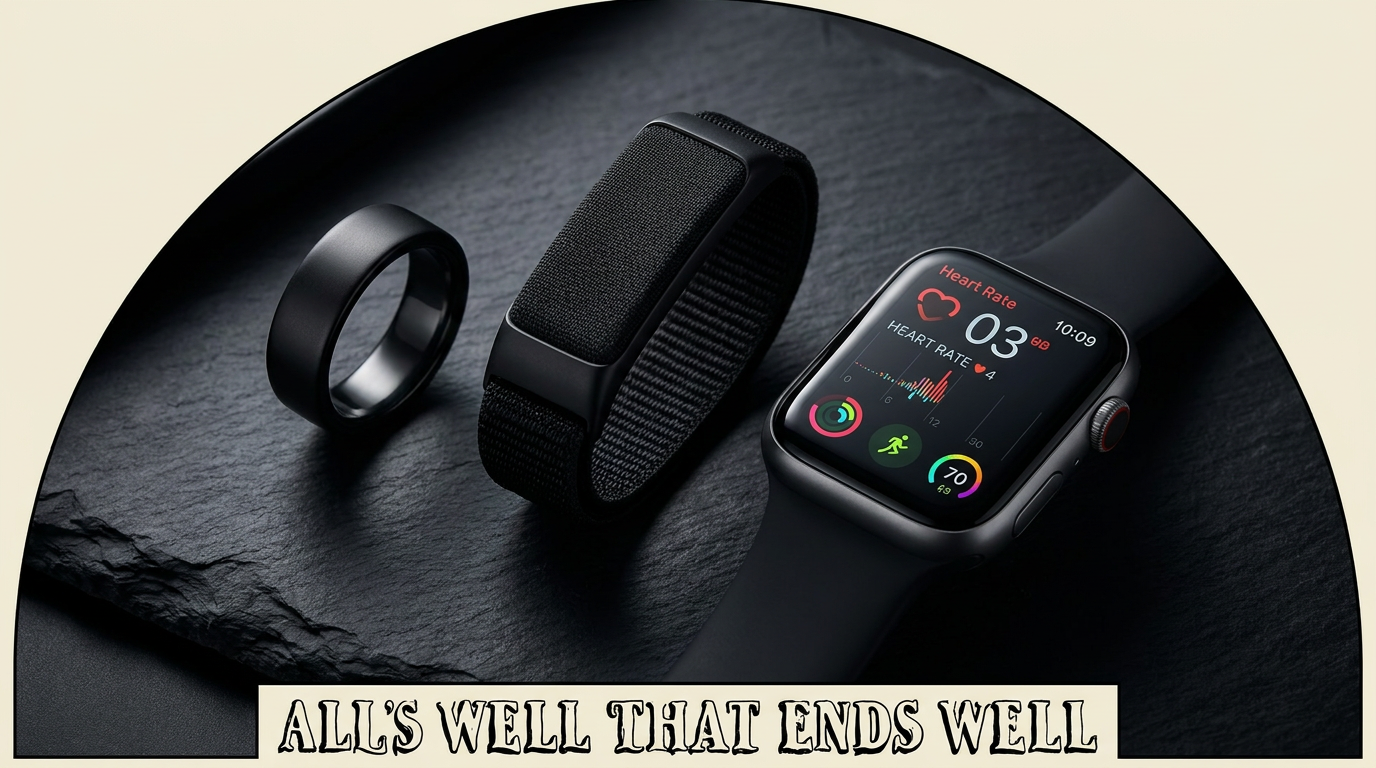
The consumer wearable market in 2026 has fundamentally shifted its focus from active workout tracking to passive recovery and longevity metrics. Where early devices simply counted steps and estimated calories burned, the current generation of hardware is designed to answer a more complex physiological question: how well is the human body recovering from the strain of daily life? This pivot has elevated heart rate variability, sleep architecture, and respiratory rate to the forefront of consumer health technology. Three devices currently dominate this specialized recovery space, each engineered around a distinct philosophy of how data should be collected and presented. The Oura Ring Gen 4, the Whoop 5.0, and the Apple Watch Series 11 represent divergent approaches to form factor, sensor technology, and user experience. Choosing among them is no longer a matter of finding the objectively superior device, but rather matching the hardware's specific trade-offs to an individual's lifestyle, training demands, and tolerance for wearing technology to bed.[1][4][6]
The core tension in evaluating these devices lies in the physiological realities of where and how they measure blood flow. Wrist-based optical sensors must filter out significant motion artifacts, as the wrist is constantly moving and the underlying tissue is dense with muscle and bone. Finger-based sensors benefit from a cleaner signal, as the digital arteries are closer to the surface and the finger experiences less complex rotational movement during sleep. Furthermore, the sheer volume of sensors a device can house is dictated by its size. A smartwatch can accommodate a vast array of hardware, including electrocardiogram sensors and multi-band GPS receivers, while a ring or a minimalist band must prioritize a few highly optimized optical sensors. These hardware constraints directly dictate the software experience, forcing consumers to choose between a comprehensive smartwatch ecosystem, a dedicated athletic coaching tool, or a frictionless passive health monitor.[3][6]
The argument for the Oura Ring Gen 4 centers entirely on its frictionless form factor and the superior signal quality of its finger-based sensors. By moving the hardware off the wrist, Oura has created a device that boasts the highest nighttime compliance rate in the industry; users simply forget they are wearing it. The Gen 4 model utilizes an eighteen-path photoplethysmography system with three photodiodes that read directly through the finger arteries. This hardware configuration provides a biometric signal that is significantly stronger and less prone to motion noise than wrist-based alternatives. Coupled with an eight-day battery life, the device is explicitly designed to disappear into the background of daily life, passively collecting continuous data without demanding the user's active attention or frequent charging.[1][3]

The primary argument against the Oura Ring Gen 4 is its near-total lack of utility during active, high-intensity workouts. Because it lacks a screen, a GPS receiver, and real-time pacing feedback, it cannot replace a dedicated sports watch for a runner or cyclist who needs to monitor their heart rate zones or split times mid-stride. Furthermore, while the ring is comfortable for sleep and general daily wear, it can be cumbersome or easily scratched during strength training sessions that involve gripping heavy barbells or dumbbells. The device is fundamentally a passive receiver of physiological data, meaning users who want to actively interact with their metrics throughout the day must constantly rely on pulling out their smartphone to view the companion application.[1][4]
The clinical evidence supporting the Oura Ring's accuracy is currently the most robust among consumer wearables, particularly regarding overnight metrics. A 2025 validation study by Dial and colleagues demonstrated that the Oura Ring achieved a 0.99 concordance correlation coefficient for heart rate variability when compared to medical-grade electrocardiograms. Furthermore, independent sleep laboratory tests conducted in Europe revealed that the Gen 4 model achieved a seventy-nine percent agreement rate with polysomnography for sleep stage classification, the highest of any consumer device tested. While no wearable perfectly matches the gold standard of a clinical sleep study, the independent data consistently positions Oura as the most reliable consumer tool for tracking night-to-night variations in rapid eye movement and deep sleep cycles.[1][2][5]
Ultimately, the Oura Ring Gen 4 fits well when a user prioritizes the highest possible accuracy for sleep and passive recovery tracking, and specifically wants a device that does not look or feel like traditional technology. It is the optimal choice for individuals who suffer from smartwatch fatigue or who already wear a traditional mechanical watch but still want clinical-grade health data. Conversely, the Oura Ring does not fit when an athlete requires real-time pacing data, GPS tracking for outdoor endurance sports, or a device that can actively guide them through a structured interval workout. It is a recovery tool first and foremost, not a primary training computer.[1][6]
The case for the Whoop 5.0 is built entirely around its integrated strain-to-recovery coaching ecosystem and its uncompromising focus on athletic performance. Unlike other devices that merely present raw data, Whoop explicitly connects how hard a user trained with how well they recovered, offering actionable behavioral guidance. The 5.0 hardware update introduced a twenty-six hertz sampling rate for its optical sensors, the fastest in this comparison, which significantly improves heart rate accuracy during rapid, high-intensity movements. Additionally, the device features a screenless, minimalist band design and a remarkable fourteen-day standalone battery life, which can be extended indefinitely using a slide-on battery pack that allows the user to charge the device without ever removing it from their wrist.[1][3][4]
The case for the Whoop 5.0 is built entirely around its integrated strain-to-recovery coaching ecosystem and its uncompromising focus on athletic performance.
The arguments against the Whoop 5.0 focus on its recurring financial cost and its relatively lower accuracy in specific sleep staging. Whoop operates on a mandatory subscription model, costing roughly thirty dollars per month, making it the most expensive device over a multi-year period despite the hardware being included. Furthermore, while its overall heart rate tracking is excellent, independent European sleep lab tests from 2026 indicate that Whoop's sleep stage agreement with polysomnography sits between sixty and sixty-five percent, trailing behind the Oura Ring. Finally, the lack of a screen means it cannot function as a watch, forcing users to either wear a second device to tell the time or rely entirely on their smartphone for basic daily notifications.[2][4]

The evidence validating Whoop's core physiological measurements remains exceptionally strong, particularly regarding cardiovascular load. A comprehensive study by Central Queensland University demonstrated that Whoop achieved a 0.99 intraclass correlation for resting heart rate accuracy when tested simultaneously against medical-grade equipment. While its sleep architecture classification may lag slightly behind finger-based sensors, its ability to accurately capture the autonomic nervous system's response to training stress is well-documented. The platform's proprietary recovery score, while a composite metric rather than a raw physiological data point, has been widely adopted by professional sports leagues because the underlying heart rate variability and resting heart rate measurements feeding the algorithm are clinically sound.[1][5]
The Whoop 5.0 fits well when a serious athlete or fitness enthusiast wants explicit, daily coaching on how hard they should train based on their body's actual physiological readiness. It is the premier choice for data-driven individuals who want to understand the precise relationship between their lifestyle habits, their training load, and their cardiovascular recovery. The device does not fit when a user is looking for a one-time hardware purchase without recurring subscription fees, or when they want a device that offers smartwatch conveniences like mobile payments, text message notifications, or the ability to check the time during a meeting.[1][4]
The argument for the Apple Watch Series 11 rests on its unparalleled versatility, its massive sensor array, and its seamless integration into the broader iOS ecosystem. It is the only device in this comparison that functions as a world-class smartwatch, a highly capable active fitness tracker, and a proactive medical alert system simultaneously. The Series 11 features an electrocardiogram, blood oxygen monitoring, and, crucially, a 2026 FDA-cleared and CE-marked sleep apnea detection feature that makes it a legitimate first-step screening tool for respiratory issues. For active tracking, its vibrant display, precise GPS, and vast library of third-party workout applications make it an indispensable tool for runners, cyclists, and gym-goers who want real-time feedback on their wrist.[1][2][6]
The primary arguments against the Apple Watch for recovery tracking are its battery life and its physical form factor during sleep. Despite incremental improvements, the Series 11 still requires daily charging, and most users default to charging the device overnight—precisely when the most critical heart rate variability and sleep architecture data needs to be collected. Even for users who charge the watch during the day, wearing a glowing, notification-enabled screen to bed can be disruptive to sleep hygiene. Furthermore, the device is physically bulkier than a ring or a minimalist band, making it less comfortable for side sleepers or those who are sensitive to wearing jewelry overnight.[1][3]
The clinical evidence regarding the Apple Watch's sleep tracking capabilities presents a mixed picture of distinct strengths and notable weaknesses. Independent studies, including those by The Quantified Scientist and the University of Salzburg, show that the Apple Watch is the undisputed leader in detecting awake time, achieving an eighty-eight percent agreement rate for basic sleep-wake classification. However, the same studies reveal that the device struggles significantly with deep sleep accuracy compared to its competitors. While its raw heart rate sensors are highly accurate during both rest and exercise, its algorithmic interpretation of complex sleep architecture remains less reliable than the dedicated recovery wearables.[2][5]

The Apple Watch Series 11 fits well when a user wants a single, all-encompassing device that handles active workout tracking, daily communication, and baseline health monitoring without needing to manage multiple wearables. It is particularly valuable for individuals who want the security of medical features like fall detection, irregular heart rhythm notifications, and sleep apnea screening. It does not fit when a user's primary goal is distraction-free, passive recovery tracking, or when they are unwilling to adapt their daily routine to accommodate a device that requires frequent, often daily, charging sessions to maintain its functionality.[1][2][4]
Ultimately, the 2026 wearable landscape proves that the concept of a universally perfect fitness tracker is a myth; there are only optimal choices for specific use cases. The Oura Ring Gen 4 has mastered the art of invisible, highly accurate passive measurement, making it the gold standard for pure sleep tracking. The Whoop 5.0 has cornered the market on athletic load management, transforming raw data into actionable behavioral coaching for those willing to pay a premium. The Apple Watch Series 11 remains the undisputed king of active utility and medical screening, provided the user accepts the burden of daily charging. Selecting the right device requires an honest assessment of what data will actually change your behavior, and what form factor you are genuinely willing to wear twenty-four hours a day.[1][3][6]
How we got here
2022
Central Queensland University publishes a landmark validation study comparing six major wearables against medical-grade sleep and heart rate equipment.
Late 2024
Apple receives FDA clearance for its sleep apnea detection algorithm, shifting the Apple Watch into the realm of proactive medical screening.
2025
Independent validation studies, including Dial et al., confirm the Oura Ring's 0.99 concordance correlation coefficient for heart rate variability.
Early 2026
Whoop releases the 5.0 hardware update, introducing a 26 Hz optical sampling rate and extending standalone battery life to 14 days.
Viewpoints in depth
The Biohacker Perspective
Prioritizes raw data accuracy, passive collection, and minimal lifestyle disruption.
This camp heavily favors devices like the Oura Ring. They argue that the most valuable health data is collected passively over long periods, particularly during sleep. For these users, a device that requires frequent charging or manual interaction introduces friction that inevitably leads to gaps in the data. They prioritize clinical-grade sensor accuracy, such as 18-path PPG systems, over smart features, viewing screens and notifications as active detriments to the parasympathetic nervous system they are trying to optimize.
The Performance Athlete Perspective
Focuses on actionable coaching, load management, and the relationship between strain and recovery.
Athletes in this camp gravitate toward the Whoop ecosystem. They argue that raw physiological data is useless without context. Their primary concern is knowing exactly how hard they can push their bodies on any given day without risking overtraining or injury. They value high-frequency sampling rates during intense exercise and rely on algorithmic coaching that explicitly tells them when to rest and when to peak. For this group, a monthly subscription is a justified expense for what they consider a digital coach rather than just a passive monitor.
The Connected Generalist Perspective
Values versatility, ecosystem integration, and active workout tracking over specialized recovery metrics.
This viewpoint, largely represented by Apple Watch users, argues that the best wearable is the one that serves multiple functions throughout the day. They prioritize the convenience of having a single device that can track a run with precise GPS, screen for medical anomalies like sleep apnea, and handle daily communication. While they acknowledge that wrist-based sleep tracking may have slight algorithmic disadvantages compared to finger-based sensors, they believe the trade-off is worth the immense utility of a fully integrated smartwatch ecosystem.
What we don't know
- How upcoming non-invasive blood glucose monitoring sensors will affect the battery life and form factor of future smart rings and bands.
- Whether proprietary composite metrics like 'recovery scores' will eventually be standardized across the medical and consumer wearable industries.
Key terms
- Heart Rate Variability (HRV)
- The measure of the variation in time between each heartbeat, used as a primary indicator of how well the body is recovering from physical and mental stress.
- Photoplethysmography (PPG)
- An optical measurement technique used by wearables to detect blood volume changes in the microvascular bed of tissue, allowing them to calculate heart rate.
- Polysomnography
- A comprehensive, medical-grade sleep study used as the gold standard to validate the accuracy of consumer sleep tracking devices.
- Concordance Correlation Coefficient (CCC)
- A statistical measure used in scientific studies to evaluate how closely a wearable device's measurements agree with medical-grade equipment.
Frequently asked
Can the Apple Watch accurately track sleep?
Yes, the Apple Watch is highly accurate at detecting awake time and basic sleep-wake cycles. However, independent studies show it struggles slightly more with deep sleep stage classification compared to dedicated devices like the Oura Ring.
Does the Whoop 5.0 require a subscription?
Yes, Whoop operates on a mandatory subscription model, typically costing around $30 per month. The hardware itself is included with the membership, but the device will not function without an active subscription.
Which wearable is best for sleep apnea screening?
The Apple Watch Series 11 is the only device among the major consumer wearables that features an FDA-cleared and CE-marked sleep apnea detection algorithm, making it the most reliable first-step screening tool.
Is a ring or a watch better for heart rate tracking?
For resting and overnight heart rate, a ring often provides a cleaner signal because finger arteries are closer to the surface and experience less motion. However, for active workouts, tightly secured wristbands or chest straps are generally preferred.
Sources
Source coverage
6 outlets
3 viewpoints surfaced





[1]SensAIPassive Data Advocates
Apple Watch vs Oura Ring vs WHOOP vs Garmin: Which Fitness Tracker Should You Actually Buy in 2026?
Read on SensAI →[2]Back2SleepPassive Data Advocates
Whoop vs Oura Ring vs Apple Watch for Sleep Apnea: 2026 Accuracy Test
Read on Back2Sleep →[3]Kygo HealthPerformance Optimizers
Garmin vs Whoop vs Oura vs Apple Watch vs Fitbit: Hardware & Software Differences Explained (2026)
Read on Kygo Health →[4]CNETEcosystem Generalists
The Best Fitness Trackers of 2026 for Every Type of Workout
Read on CNET →[5]Central Queensland UniversityPerformance Optimizers
Validation of Six Consumer Wearables for Sleep and Heart Rate Tracking
Read on Central Queensland University →[6]Factlen Editorial TeamEcosystem Generalists
Synthesis by Factlen editorial team
Read on Factlen Editorial Team →



Every angle. Every day.
Get guides stories with full source coverage and perspective breakdowns delivered to your inbox.