
The Science of 'Awe Walks': How Everyday Wonder Rewires the Brain for Better Mental Health
A growing body of clinical research reveals that intentionally seeking out moments of awe can significantly reduce loneliness, lower inflammation, and shift the nervous system into a state of healing.
By Factlen Editorial Team
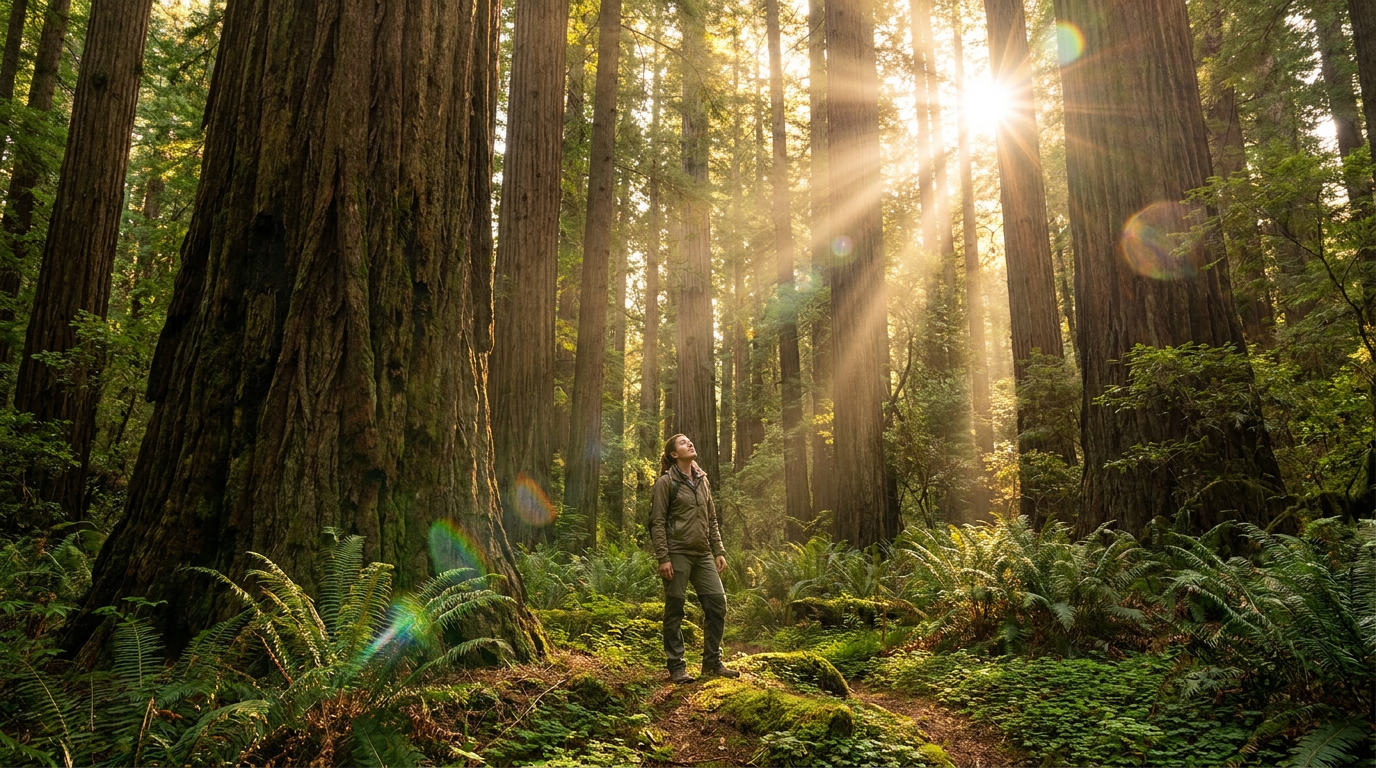
- Clinical Psychologists & Neuroscientists
- Focuses on the measurable, physiological impacts of awe on the human nervous system and immune response.
- Behavioral Researchers
- Focuses on how awe alters human behavior, ego, and social dynamics through the 'small self' effect.
- Public Health Advocates
- Views awe as a highly scalable, zero-cost intervention for population-level well-being and loneliness.
What's not represented
- · Individuals with severe clinical depression whose response to awe interventions remains under-researched.
- · Urban planners advocating for the integration of awe-inducing green spaces in low-income neighborhoods.
Why this matters
Chronic stress and epidemic loneliness are driving a global mental health crisis that traditional interventions struggle to contain. Understanding how simple, zero-cost practices like 'awe walks' can physically rewire the nervous system offers readers an immediate, evidence-backed tool to improve their daily resilience and physical health.
Key points
- Clinical studies show that taking weekly 15-minute 'awe walks' significantly reduces daily distress and increases positive emotions.
- Experiencing awe activates the parasympathetic nervous system, lowering heart rate and reducing markers of chronic inflammation.
- Awe triggers the 'small self' effect, diminishing ego-driven rumination and increasing feelings of connection to others.
- A 2026 study found that daily experiences of awe act as a direct antidote to loneliness among healthcare workers.
- Everyday awe is highly accessible and can be triggered by nature, music, or witnessing acts of kindness.
For decades, the emotion of awe was relegated to the domains of philosophy and poetry—a fleeting, ineffable feeling sparked by a sweeping mountain vista or a soaring symphony. But in recent years, clinical psychology and neuroscience have begun to quantify the profound impact that moments of wonder have on the human body. Far from being a mere luxury of the human experience, awe is emerging as a potent, evidence-based intervention for mental health, capable of rewiring the nervous system and combating the modern epidemics of chronic stress and loneliness.[1][5][7]
The scientific pivot toward awe gained significant momentum through the pioneering work of researchers like Dr. Dacher Keltner at UC Berkeley and Dr. Virginia Sturm at UC San Francisco. They hypothesized that awe—defined as the complex feeling of being in the presence of something vast that challenges our understanding of the world—could be deliberately cultivated to improve well-being. To test this theory in a real-world setting, Sturm's team designed a randomized controlled trial focusing on a simple, highly accessible intervention: the "awe walk".[3][5]
In the UCSF study, a cohort of healthy older adults was instructed to take a 15-minute outdoor walk once a week for eight weeks. Half the group was asked to approach their walks with a fresh perspective, tapping into a childhood sense of wonder and actively seeking out the unexpected in their everyday environment. The control group was simply told to walk. Both groups walked in similar locations and exerted the exact same physical effort, but the psychological outcomes of the two groups diverged dramatically.[3][4][6]

Participants who intentionally sought out awe reported significantly lower levels of daily distress and higher levels of prosocial positive emotions, such as compassion and gratitude, compared to the control group. Remarkably, the emotional gains in the awe group compounded over time, suggesting that the brain can be trained to notice and absorb wonder more efficiently with practice. The researchers noted that a mere three-minute conversation orienting participants to look for awe was enough to drive significant shifts in their daily emotional baseline.[3][4]
One of the most fascinating pieces of evidence from the UCSF study came from the photographs participants were asked to take of themselves during their walks. Over the course of the eight weeks, the selfies taken by the awe group visibly changed. The participants physically took up less space in the frame, allowing the surrounding environment—trees, skies, and landscapes—to dominate the image. This photographic shift perfectly illustrated a core psychological mechanism of awe: the "small self" effect.[3][5][6]

When we experience awe, our ego temporarily shrinks. The relentless, often anxious internal monologue that dominates daily life quiets down, and our attention is drawn outward. Brain imaging research supports this, showing that awe decreases activity in the default mode network, the brain region associated with self-referential processing and rumination. By diminishing our sense of self-importance, awe paradoxically makes us feel more connected to the larger world and the people within it, fostering a profound sense of belonging.[1][5][7]
The relentless, often anxious internal monologue that dominates daily life quiets down, and our attention is drawn outward.
This outward shift in attention has profound implications for social health. A February 2026 study published in Scientific Reports tracked healthcare workers over 22 days, a demographic highly vulnerable to burnout and isolation. The daily diary study found a direct, within-person correlation: on days when participants experienced more awe than usual, they reported significantly lower levels of loneliness. The researchers concluded that the sense of connectedness central to awe acts as a powerful antidote to the physical and emotional costs of isolation.[2]
The benefits of awe extend far beyond subjective emotional states and into measurable, objective physiological changes. Neuroscientists have found that experiencing awe physically moves the body out of the sympathetic nervous system's "fight-or-flight" response and activates the parasympathetic "rest-and-digest" state. This crucial biological shift is associated with higher vagal tone, meaning the vagus nerve is effectively calming the heart rate, slowing down respiration, and reducing overall physiological arousal, allowing the body to enter a state of recovery and repair.[1][5]

Furthermore, studies have linked frequent experiences of awe to lower levels of circulating cytokines, the proteins that signal the immune system to produce inflammation. While acute inflammation is a necessary healing response, chronic inflammation is tied to a host of negative health outcomes, including depression, cognitive decline, and heart disease. By regularly downregulating the body's stress response, micro-doses of awe may serve as a protective buffer against the wear and tear of modern life, extending both healthspan and emotional resilience.[1][4][5][7]
A common misconception is that awe requires grand, expensive experiences—a trip to the Grand Canyon or a view of the Northern Lights. However, emotion scientists emphasize that "everyday awe" is highly accessible. Keltner's research across 26 different cultures identified eight universal domains of awe, demonstrating that wonder can be found in mundane settings. While nature is the most common trigger, people frequently report awe when listening to music, witnessing acts of moral beauty or kindness, or participating in "collective effervescence" like singing in a choir or cheering in a stadium.[1][5][7]

The accessibility of everyday awe makes it a uniquely scalable public health tool. Unlike pharmaceutical interventions or intensive psychotherapy, taking a mindful walk or pausing to appreciate a complex piece of music carries no financial cost and zero negative side effects. Mental health professionals are increasingly incorporating "awe narratives"—where patients write about and mentally re-experience past moments of wonder—into therapeutic practices to build resilience and expand narrowed, anxious perspectives, proving that the memory of awe can be as healing as the event itself.[4][6][7]
Despite the robust clinical findings, researchers acknowledge transparent uncertainties in the current data. Many of the foundational studies, including the UCSF awe walk trial, were conducted on relatively healthy, highly educated, or older populations. It remains unclear exactly how these interventions scale across diverse socioeconomic demographics or how effective they are for individuals experiencing severe clinical depression. Additionally, scientists are still investigating whether the affective benefits of awe walks persist long-term if the deliberate practice is completely abandoned by the patient.[3][7]
What is clear, however, is that the human brain is deeply wired to respond to wonder. In a cultural moment often defined by digital distraction, hyper-individualism, and ambient anxiety, the science of awe offers a compelling counter-narrative. By simply choosing to look up, to notice the vastness of the sky, or to appreciate the intricate beauty of a leaf, we can actively participate in our own emotional regulation. Awe reminds us that we are part of a much larger whole, and in that smallness, there is profound relief.[1][4][6][7]
How we got here
2003
Psychologists Dacher Keltner and Jonathan Haidt publish a foundational framework defining the emotion of awe.
2015
Early studies begin linking frequent experiences of awe to reduced markers of physical inflammation.
2020
UC San Francisco publishes the landmark 'awe walk' study demonstrating emotional benefits in older adults.
2023
Comprehensive models are published detailing the specific neurophysiological pathways through which awe improves health.
Feb 2026
A daily diary study in Scientific Reports links moments of everyday awe to significantly reduced loneliness in healthcare workers.
Viewpoints in depth
Clinical Psychologists & Neuroscientists
Focuses on the measurable, physiological impacts of awe on the human nervous system.
This camp emphasizes that awe is not just a subjective feeling, but a biological intervention. Researchers in this space track metrics like vagal tone, cortisol levels, and cytokine production to prove that awe actively downregulates the body's stress response. They argue that shifting the nervous system from a sympathetic (fight-or-flight) state to a parasympathetic (rest-and-digest) state is critical for long-term health and disease prevention.
Behavioral Researchers
Focuses on how awe alters human behavior, ego, and social dynamics.
Behavioral scientists are primarily interested in the 'small self' phenomenon. They study how awe diminishes self-referential rumination and increases prosocial behaviors like empathy, generosity, and cooperation. From this perspective, the true value of awe lies in its ability to bind communities together and foster a sense of shared humanity, counteracting modern trends of narcissism and isolation.
Public Health Advocates
Views awe as a highly scalable, zero-cost intervention for population-level well-being.
For public health experts, the appeal of awe walks lies in their accessibility. In an era where mental health resources are often strained or expensive, awe requires no prescription, no copay, and no specialized equipment. This camp advocates for integrating awe-based practices into preventative care, urban planning (by creating accessible green spaces), and workplace wellness programs to combat epidemic levels of loneliness and burnout.
What we don't know
- Whether the mental health benefits of awe walks persist long-term if the deliberate practice is abandoned.
- How the physiological impacts of awe vary across different cultural and socioeconomic demographics.
- The exact neurobiological pathways that differentiate 'positive awe' (wonder) from 'negative awe' (fear or dread).
Key terms
- Awe
- The emotion experienced when encountering something vast that challenges our current understanding of the world, prompting a shift in perspective.
- Vagal tone
- A measure of cardiovascular function that indicates the activity of the parasympathetic nervous system, which helps the body rest and recover.
- Default mode network
- A network of interacting brain regions associated with self-referential thoughts, rumination, and mind-wandering.
- Cytokines
- Small proteins crucial in controlling the growth and activity of immune system cells, often linked to systemic inflammation.
- Collective effervescence
- The profound sense of connection and shared emotional experience that occurs when people participate in a synchronized group activity, like a concert or religious ritual.
Frequently asked
What exactly is an awe walk?
An awe walk is a stroll where you intentionally shift your attention outward, actively looking for things that inspire wonder, surprise, or a sense of vastness in your environment.
Do I need to go to a national park to experience awe?
No. Research shows that 'everyday awe' can be found in mundane settings by observing nature, listening to moving music, or witnessing acts of kindness.
How does awe affect the body physically?
Awe activates the parasympathetic nervous system, increasing vagal tone, lowering heart rate, and reducing the circulation of inflammatory cytokines.
What is the 'small self' effect?
It is a psychological phenomenon where experiencing awe temporarily shrinks our ego and self-focus, making us feel more connected to the larger world and other people.
Sources
Source coverage
7 outlets
3 viewpoints surfaced







[1]National GeographicBehavioral Researchers
The life-changing power of awe
Read on National Geographic →[2]Scientific ReportsPublic Health Advocates
Experiencing awe in daily life is linked to lower loneliness
Read on Scientific Reports →[3]UC San FranciscoClinical Psychologists & Neuroscientists
Awe Walks Boost Emotional Well-Being
Read on UC San Francisco →[4]Stanford Lifestyle MedicineClinical Psychologists & Neuroscientists
Take an 'Awe Walk': The Benefits of Walking with Presence
Read on Stanford Lifestyle Medicine →[5]Perspectives on Psychological ScienceClinical Psychologists & Neuroscientists
Awe as a Pathway to Mental and Physical Health
Read on Perspectives on Psychological Science →[6]Psychology TodayBehavioral Researchers
The Awe Walk: An Antidote to Despair
Read on Psychology Today →[7]Factlen Editorial TeamPublic Health Advocates
Synthesis by Factlen editorial team
Read on Factlen Editorial Team →



Every angle. Every day.
Get health stories with full source coverage and perspective breakdowns delivered to your inbox.