
US and Iran Reach Framework Peace Deal to End War and Reopen Strait of Hormuz
The United States and Iran have signed a preliminary memorandum of understanding to end their months-long conflict, triggering a 60-day ceasefire and a sharp drop in global oil prices. However, key details regarding Iran's nuclear program, sanctions relief, and Israel's ongoing military operations in Lebanon remain unresolved ahead of a formal signing ceremony in Geneva.
By Factlen Editorial Team

- US Negotiators
- The White House frames the deal as a total victory that ends the war and neutralizes Iran's nuclear threat without upfront costs.
- Iranian State Leadership
- Tehran views the framework as a successful defense of its sovereignty, securing the end of the US blockade without surrendering its core military assets.
- Israeli Security Cabinet
- Israel remains deeply skeptical of the framework and refuses to be bound by its provisions regarding Lebanon.
- US Congressional Skeptics
- Republican lawmakers are demanding transparency and expressing concern over potential financial concessions to Tehran.
- International Mediators
- Global allies and regional powers view the deal as a critical, albeit fragile, first step toward stabilizing the Middle East.
What's not represented
- · Lebanese Civilians
- · Global Shipping Companies
- · Iranian Citizens
Why this matters
This framework pauses a devastating regional war and immediately reopens the world's most critical oil chokepoint, instantly lowering global energy costs. However, because it defers the hardest questions about Iran's nuclear capabilities and excludes Israel's ongoing operations, the risk of the conflict reigniting within 60 days remains extremely high.
Key points
- The US and Iran signed a 1.5-page memorandum of understanding to halt their months-long war.
- The agreement establishes a 60-day ceasefire and immediately lifts the US naval blockade on Iran.
- Global oil prices dropped nearly 5% as the vital Strait of Hormuz prepares to reopen.
- Complex negotiations regarding Iran's nuclear program and sanctions relief are deferred to a technical phase.
- Israel is not a party to the deal and refuses to withdraw its forces from Lebanon.
The United States and Iran have reached a preliminary agreement to end their months-long war, signing a memorandum of understanding that establishes a 60-day ceasefire and reopens the vital Strait of Hormuz to global shipping. The breakthrough, mediated by Pakistan and Qatar, marks a sudden de-escalation of a conflict that has devastated the Middle East and choked international energy markets.[1][2]
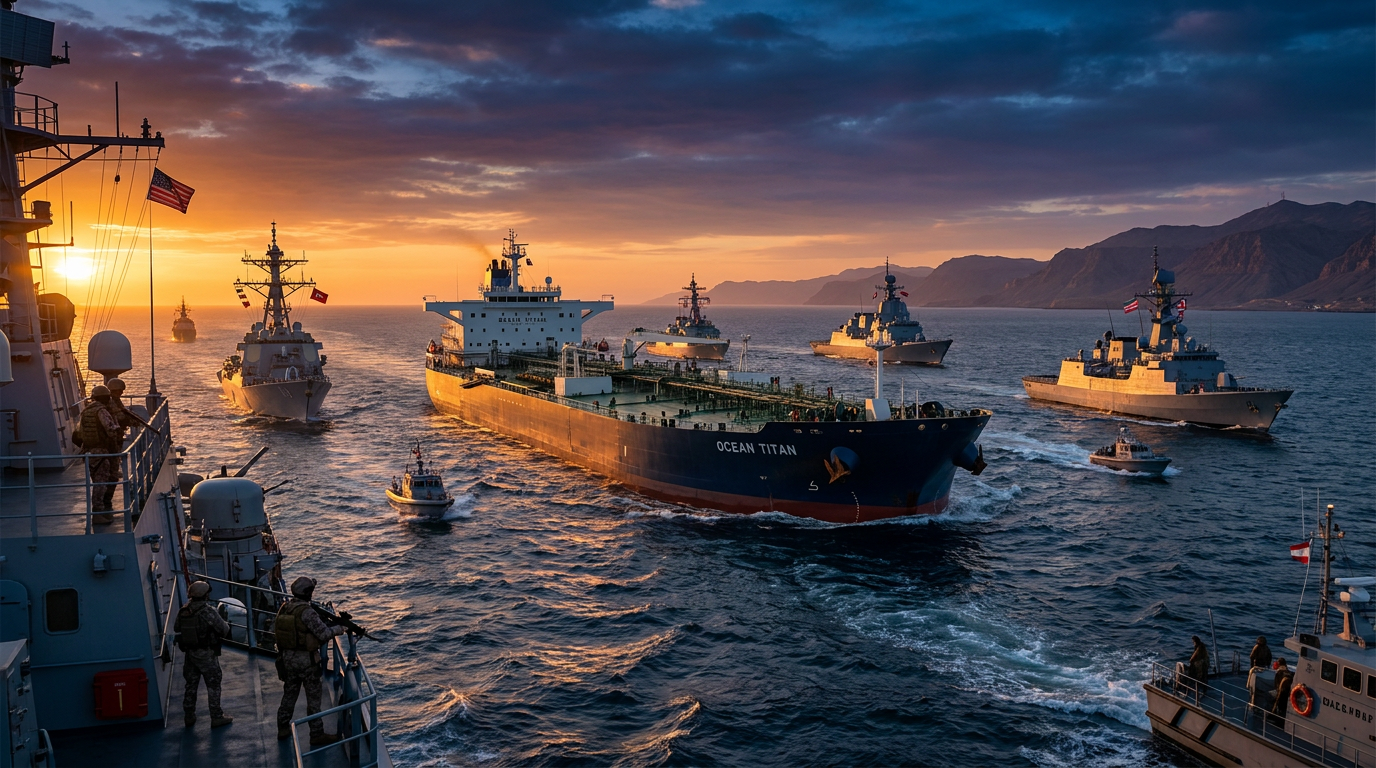
US President Donald Trump announced the electronic signing of the framework on Sunday, declaring the deal "complete" and ordering an immediate end to the US naval blockade. "Ships of the world, start your engines. Let the oil flow!" Trump posted on social media, projecting total victory as he headed to the Group of Seven (G7) summit in France.[7]
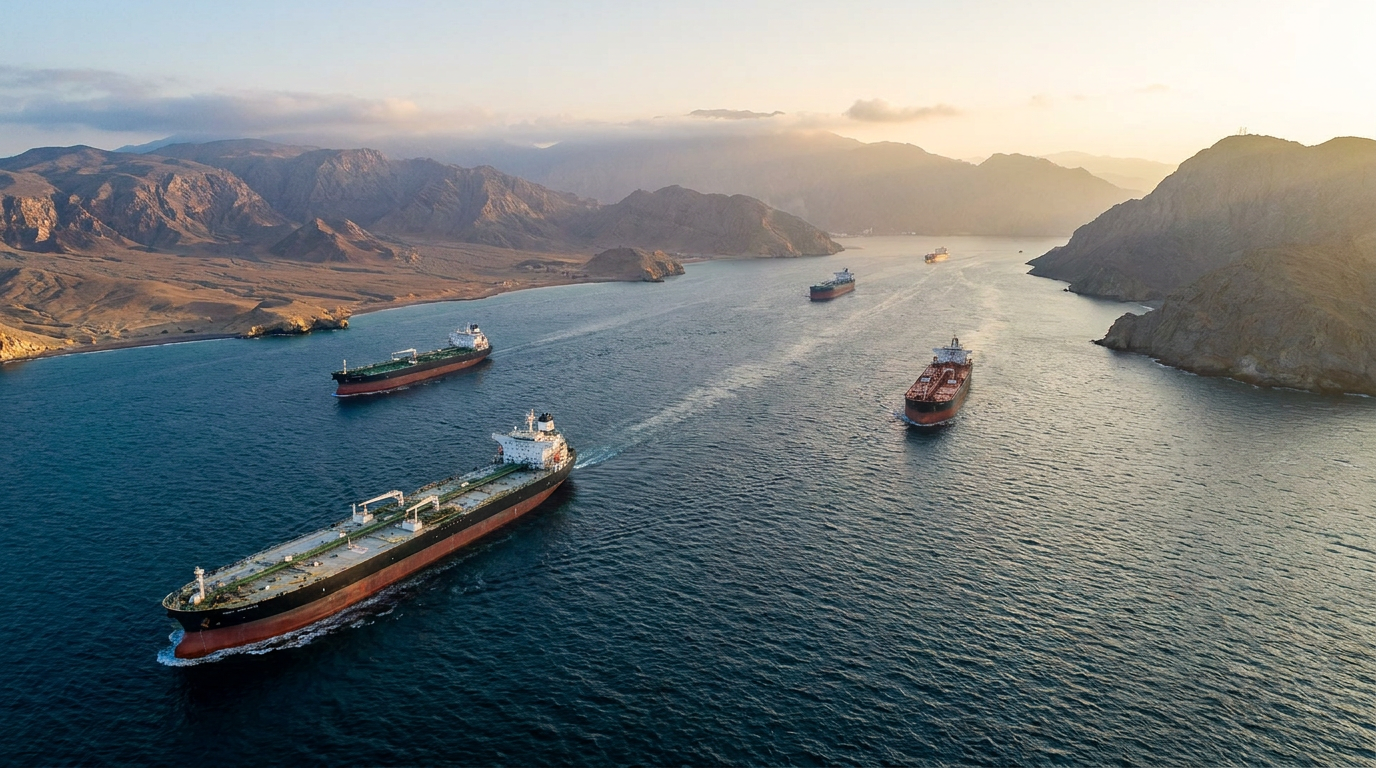
Global markets reacted instantly to the news. Oil prices plummeted by nearly 5% to their lowest close since early March, while stock markets surged on the prospect of restored energy supplies. The Strait of Hormuz, through which roughly 20% of the world's crude oil historically flows, has been effectively paralyzed since the war began on February 28.[3][4]

Despite the sweeping declarations from the White House, the actual text of the agreement remains remarkably thin. US Vice President JD Vance acknowledged on Monday that the memorandum is a "very general document" spanning only about a page and a half. The framework defers the most intractable issues—including the fate of Iran's nuclear program and the specifics of sanctions relief—to a highly complex technical negotiation phase.[1][5][6]
"On a number of issues, we are going to have to figure this stuff out during the technical negotiation phase," Vance said in a television interview, emphasizing that the current document merely sets up a structure where Iran receives benefits only by meeting strict obligations.[5]
A formal signing ceremony is scheduled for Friday in Geneva, Switzerland. Before then, technical teams from both nations are rushing to Doha, Qatar, to hammer out the implementation details that will determine whether the fragile truce holds.[1][7]
The most glaring omission from the immediate framework is a definitive resolution to Iran's nuclear ambitions, the ostensible catalyst for the war. Trump claimed on social media that Iran had agreed "never to have a nuclear weapon," but the memorandum itself reportedly grants Tehran 60 days to decide the fate of its highly enriched uranium stockpile.[3][7]
Vance confirmed that international nuclear inspectors will "absolutely" be allowed to return to Iranian facilities as part of the broader arrangement. However, the precise mechanisms for verifying compliance and dismantling existing infrastructure remain entirely unresolved.[4][5]

Vance confirmed that international nuclear inspectors will "absolutely" be allowed to return to Iranian facilities as part of the broader arrangement.
On the economic front, the Biden-Trump administration is dangling significant financial incentives, provided Tehran complies with the forthcoming technical benchmarks. US officials floated the possibility of a $300 billion reconstruction fund—reportedly financed by neighboring Gulf states—to rebuild the war-battered nation.[3][4]
Yet Vance was adamant that no immediate financial windfall has been granted. "There hasn't been a single dollar of sanctions relief or unfrozen assets, either from the United States or any of our allies in the Gulf," he stated, framing the deal as strictly performance-based.[5]
For Iran, the immediate victory lies in the lifting of the US blockade and a return to the pre-war status quo without capitulating on its core military architecture. The agreement notably contains no restrictions on Iran's ballistic missile program, nor does it demand the dismantling of its regional proxy network, which includes Hezbollah, Hamas, and the Houthis.[1]
The survival of those proxy forces points to the deal's most volatile complication: Israel. While the US-Iran memorandum reportedly includes provisions for a ceasefire in Lebanon, Israel is not a signatory to the pact and has shown no intention of halting its operations against Hezbollah.[1][3]
Israeli Prime Minister Benjamin Netanyahu has explicitly told the Trump administration that Israel will not withdraw its forces from the buffer zones it has seized in southern Lebanon. Defying the momentum of the peace deal, the Israeli military launched fresh airstrikes on a Hezbollah command center in Beirut just hours before the memorandum was finalized.[3][7]

The Beirut strikes prompted a rare public rebuke from Trump, who stated that "all sides should stand down" and that the attack "should not have happened." The diplomatic friction underscores the reality that while Washington and Tehran may be pausing their direct conflict, the broader regional war involving Israel remains highly active.[7]
Back in Washington, the rapid and opaque nature of the agreement has sparked deep skepticism among congressional Republicans. Senate Majority Leader John Thune noted that lawmakers have not been briefed on the specifics, expressing concern over the potential release of funds to Tehran without ironclad guarantees regarding its nuclear capabilities.[5][8]
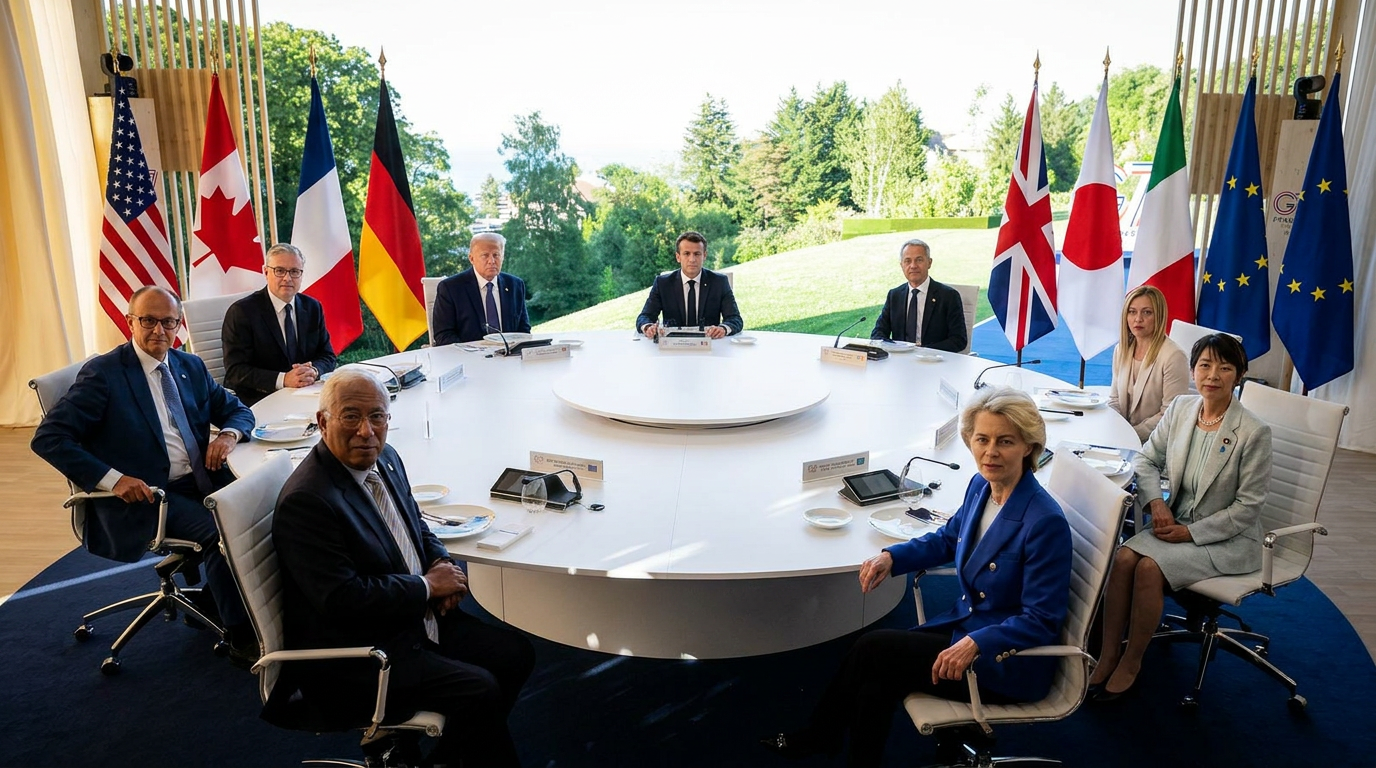
Internationally, the reaction has been one of cautious relief. At the G7 summit in the French Alps, leaders including French President Emmanuel Macron and UK Prime Minister Keir Starmer welcomed the diplomatic breakthrough, urging rapid and comprehensive implementation to stabilize the Middle East.[2][7]

Qatar and Pakistan, which spent 17 hours facilitating the final sprint of negotiations, were praised by the United Nations for their mediation. UN Secretary-General Antonio Guterres called the framework a "critical step" toward a peaceful settlement, though diplomats privately acknowledge the hardest work lies ahead.[2][7]
How we got here
Feb 2026
The US-Israeli war on Iran officially begins, severely disrupting global energy markets.
June 14, 2026
The US and Iran electronically sign a 1.5-page Memorandum of Understanding.
June 15, 2026
Oil prices plummet 5% as Trump announces the end of the US naval blockade.
June 19, 2026
Scheduled date for the formal signing ceremony in Geneva, Switzerland.
Viewpoints in depth
US Administration
The White House frames the deal as a total victory that ends the war and neutralizes Iran's nuclear threat without upfront costs.
President Trump and Vice President Vance emphasize that the agreement is strictly performance-based, requiring Iran to prove compliance before receiving any sanctions relief or access to a proposed $300 billion reconstruction fund. They argue the immediate reopening of the Strait of Hormuz is a massive win for the global economy, while maintaining that Iran has fundamentally agreed to abandon its nuclear ambitions.
Iranian State Leadership
Tehran views the framework as a successful defense of its sovereignty, securing the end of the US blockade without surrendering its core military assets.
For Iranian negotiators, the deal represents a return to the pre-war status quo. They successfully resisted demands to dismantle their ballistic missile program or abandon their regional proxy network. By securing the lifting of the naval blockade upfront, Tehran ensures immediate economic relief through oil exports while deferring the thorniest nuclear concessions to a later, highly complex negotiation phase.
Israeli Security Cabinet
Israel remains deeply skeptical of the framework and refuses to be bound by its provisions regarding Lebanon.
Prime Minister Benjamin Netanyahu and the Israeli military establishment view the survival of Iran's proxy forces—particularly Hezbollah—as an unacceptable outcome. Israel is not a signatory to the US-Iran memorandum and has explicitly stated it will not withdraw from captured territory in southern Lebanon, demonstrating its willingness to continue military operations even if it causes friction with the Trump administration.
US Congressional Skeptics
Republican lawmakers are demanding transparency and expressing concern over potential financial concessions to Tehran.
Senate leaders, including John Thune, have voiced frustration over the lack of briefings regarding the 1.5-page document. Skeptics worry that the promise of a $300 billion reconstruction fund, even if financed by Gulf states, effectively rewards Iran. They are demanding ironclad, verifiable proof that Iran's highly enriched uranium is destroyed before any economic normalization occurs.
What we don't know
- How the US and Iran will verify the dismantling or containment of Tehran's highly enriched uranium.
- Whether the proposed $300 billion reconstruction fund will survive congressional scrutiny in Washington.
- How the Trump administration will manage Israel's ongoing military operations against Hezbollah in Lebanon.
Key terms
- Memorandum of Understanding (MoU)
- A formal, preliminary agreement between parties that outlines general principles but often lacks legally binding, detailed enforcement mechanisms.
- Strait of Hormuz
- A narrow, strategically vital waterway between the Persian Gulf and the Gulf of Oman through which a massive portion of the world's oil supply is transported.
- Highly Enriched Uranium
- Uranium that has been processed to a purity level capable of being used in nuclear weapons, a central focus of international inspections.
- Proxy Forces
- Armed groups funded, trained, or directed by a larger state power to fight on its behalf, such as Hezbollah or the Houthis acting with Iranian backing.
Frequently asked
Is the US-Iran war officially over?
Not entirely. The current agreement is a 60-day ceasefire and a framework memorandum; a final, permanent peace treaty still requires complex technical negotiations.
Will Iran get a nuclear weapon?
The US administration claims Iran has agreed never to build one, and inspectors will return. However, the exact fate of Iran's existing enriched uranium is still being negotiated.
Is Israel participating in this peace deal?
No. Israel is not a signatory to the US-Iran memorandum and has stated it will not abide by the deal's provisions regarding a ceasefire in Lebanon.
Why did global oil prices drop?
Prices fell nearly 5% because the agreement immediately lifts the US naval blockade and reopens the Strait of Hormuz, restoring the flow of commercial energy shipments.
Sources
Source coverage
8 outlets
5 viewpoints surfaced





[1]The GuardianUS Congressional Skeptics
US-Iran peace deal hinges on shipping, sanctions relief and deferred nuclear talks
Read on The Guardian →[2]Al JazeeraInternational Mediators
World leaders welcome US-Iran deal to end war
Read on Al Jazeera →[3]CTV NewsInternational Mediators
Iran peace deal expected to secure 60-day ceasefire
Read on CTV News →[4]The HinduInternational Mediators
Oil prices fall 5% after US-Iran peace deal
Read on The Hindu →[5]Anadolu AgencyUS Negotiators
US vice president says memorandum of understanding with Iran is 'very general document'
Read on Anadolu Agency →[6]Times of IsraelIsraeli Security Cabinet
Vance says US-Iran MOU is a 'very general document'
Read on Times of Israel →[7]CBS NewsUS Negotiators
Iran peace deal to be signed Sunday and strait reopened immediately, Trump says
Read on CBS News →Senate Republicans say there are many unanswered questions about the deal
Read on The Guardian →
Every angle. Every day.
Get news politics stories with full source coverage and perspective breakdowns delivered to your inbox.