
US and Iran Reach Framework Peace Deal to End 15-Week War, Reopen Strait of Hormuz
President Donald Trump announced a memorandum of understanding with Iran to halt hostilities and reopen the Strait of Hormuz, kicking off a 60-day negotiation period. The tentative agreement faces immediate hurdles, including conflicting claims over financial relief and Israel's refusal to be bound by the ceasefire.
By Factlen Editorial Team
- U.S. Administration
- Frames the deal as a historic victory that reopens vital shipping lanes from a position of strength, ensuring Iran never obtains a nuclear weapon without surrendering immediate financial leverage.
- Iranian Leadership
- Views the agreement as a successful defense of national sovereignty that forces the U.S. to lift its naval blockade and will inevitably lead to the unfreezing of billions in assets.
- Israeli Government
- Rejects the U.S.-Iran memorandum as a bilateral arrangement that fails to address the immediate threat of Hezbollah, leaving Israel free to continue its military operations in Lebanon.
- Global Mediators & G7
- Prioritizes immediate de-escalation and the rapid restoration of commercial shipping through the Strait of Hormuz to stabilize the global economy, regardless of the deal's imperfections.
What's not represented
- · Lebanese civilians affected by ongoing Israeli operations
- · Families of casualties from the 15-week conflict
Why this matters
The 15-week conflict has severely disrupted global shipping and caused energy prices to surge. If the framework holds, the reopening of the Strait of Hormuz will stabilize global markets, though the unresolved status of Iran's nuclear program and Israel's ongoing operations in Lebanon leave the region highly volatile.
Key points
- The U.S. and Iran have digitally signed a memorandum of understanding to end their 15-week military conflict.
- The framework establishes a 60-day ceasefire to negotiate a comprehensive treaty regarding Iran's nuclear program and sanctions relief.
- Vice President JD Vance denied claims by Iran's Revolutionary Guard that $24 billion in frozen assets would be immediately released.
- Israeli officials rejected the deal, stating they are not bound by it and will continue military operations against Hezbollah in Lebanon.
- G7 leaders and global mediators welcomed the agreement, focusing on the imminent reopening of the Strait of Hormuz to commercial shipping.
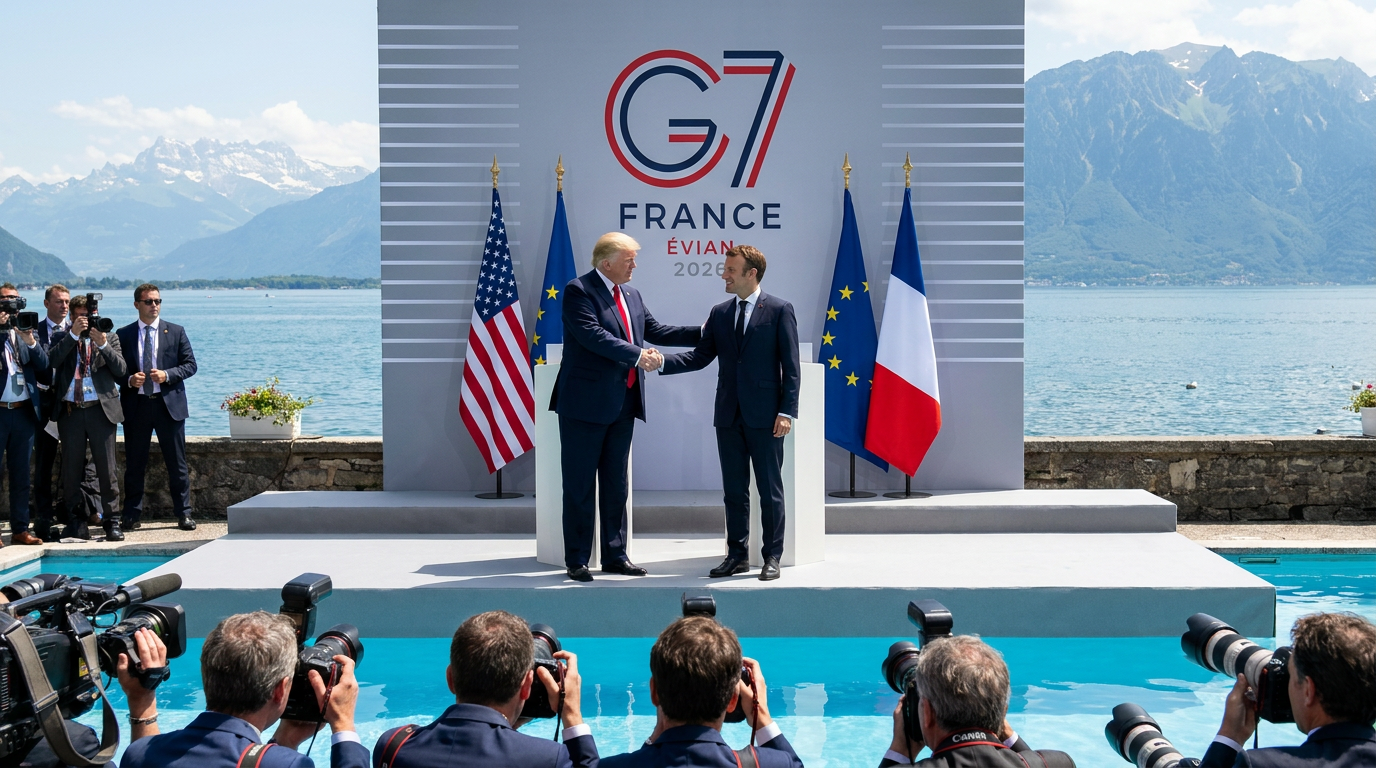
President Donald Trump announced a tentative peace agreement between the United States and Iran, aiming to halt a 15-week military conflict that has roiled the Middle East and severely disrupted global energy markets. The memorandum of understanding, which Trump declared "all signed" ahead of his arrival at the Group of Seven summit in France, establishes a 60-day ceasefire and paves the way for the reopening of the critical Strait of Hormuz. This framework marks a sudden and dramatic de-escalation of a war that began with U.S. and Israeli strikes in late February. However, the initial text leaves critical details regarding the future of Iran's nuclear program, the lifting of sanctions, and the status of regional proxy forces entirely unresolved, setting the stage for a tense negotiation period.[1][3]
The agreement was reportedly signed digitally over the weekend by President Trump, Vice President JD Vance, and Iranian Parliament Speaker Mohammad-Bagher Ghalibaf, bypassing traditional diplomatic protocols to secure an immediate halt to hostilities. A formal, in-person signing ceremony is scheduled for Friday in Geneva, Switzerland, where Vance and Ghalibaf are expected to finalize the initial pact. Arriving in the French alpine resort town of Evian-les-Bains for the G7 summit, Trump touted the deal to French President Emmanuel Macron as a historic breakthrough for global security. The U.S. president predicted that oil prices would plummet and stock markets would surge as commercial shipping resumes, framing the memorandum as a definitive victory that achieved its primary goals without requiring a prolonged military occupation.[1][3]

However, the precise terms of the one-page memorandum remain heavily contested, particularly regarding the timeline and scale of financial concessions. Iran's powerful Islamic Revolutionary Guard Corps claimed on Monday that Tehran would receive $24 billion in frozen funds during the 60-day negotiation period, asserting that half of that amount must be made available before final talks even begin. Vice President Vance forcefully denied that figure in a series of television interviews, stating that the $24 billion number "just doesn't appear anywhere" in the agreed-upon text. Vance emphasized that the United States has not released any money to date, and that any future sanctions relief or asset unfreezing will be strictly tied to Iran meeting long-term, verifiable commitments regarding its nuclear infrastructure.[2][3]
The ambiguity of the framework has drawn intense scrutiny from lawmakers in Washington, where Vance openly acknowledged that the memorandum is a "very general document." While Trump asserted that Iran has "fully agreed" to never possess a nuclear weapon, the initial agreement reportedly lacks technical specifics on verification protocols, international inspections, or the removal of highly enriched uranium from Iranian facilities that were damaged by U.S. strikes over the summer. Administration officials indicated that these thorny issues, along with the potential establishment of a $300 billion international reconstruction fund for Iran, will be the primary focus of the upcoming 60-day technical negotiations. Critics argue that without these details locked down, the U.S. has surrendered its military leverage for a mere promise of future compliance.[1][2]

Critics argue that without these details locked down, the U.S.
The most immediate geopolitical friction stems from Israel's outright rejection of the ceasefire framework. Israeli Prime Minister Benjamin Netanyahu and far-right National Security Minister Itamar Ben Gvir declared that Israel is not a party to the U.S.-Iran agreement and is absolutely not bound by its terms. Israeli officials insisted that their military operations will continue unabated in Lebanon until the Iran-backed militant group Hezbollah is completely dismantled, flatly refusing to withdraw troops from the established buffer zone. This ongoing Israeli military campaign in Lebanon threatens to complicate the fragile truce before the ink on the formal document is even dry, as Tehran has historically viewed attacks on its regional proxies as an attack on its own security interests.[1][4]
Despite the public rift with its closest Middle Eastern ally, the Trump administration projected optimism that Israel would eventually embrace the diplomatic track. Vance told reporters that while the U.S. and Israel occasionally disagree on specific tactical approaches, he feels "quite confident" that the Israeli government will recognize the deal as a pathway to broader Middle Eastern stability once the full details are understood and implemented. For now, however, the U.S. military has advised global merchant ships to hold their positions and not attempt to cross the Strait of Hormuz until explicit directions are given, keeping the U.S. naval blockade technically in effect pending the successful conclusion of Friday's ceremony in Geneva.[3][4]

The broader international community, weary of the severe economic fallout from the 15-week war, broadly welcomed the diplomatic breakthrough. Pakistan, whose Prime Minister Shehbaz Sharif played a central role in mediating the back-channel talks, hailed the agreement as a historic step toward lasting regional tranquility. Leaders from China, Qatar, and Egypt echoed the sentiment, emphasizing the urgent need to restore freedom of navigation to prevent further supply chain shocks. At the G7 summit, European nations—including France, Britain, Germany, and Italy—signaled their readiness to provide immediate logistical support for mine clearance and safe commercial shipping escorts in the Strait of Hormuz, provided the agreement is rapidly and comprehensively implemented by both Washington and Tehran.[5][6]
As the Friday signing ceremony in Geneva approaches, the durability of the framework remains highly uncertain. The 60-day window will rigorously test whether Washington and Tehran can bridge the massive gap between a generalized, one-page ceasefire and a binding, comprehensive treaty. With Israel continuing its military campaign in Lebanon, Iranian hardliners demanding immediate financial relief, and European allies waiting to see if the Strait of Hormuz is truly safe for navigation, the diplomatic architecture constructed this week will face immediate stress tests on multiple fronts. The coming weeks will determine whether this memorandum represents a permanent end to the war or merely a temporary pause in a deeply entrenched regional conflict.[1][4]
How we got here
Feb 28, 2026
U.S. and Israeli forces launch initial strikes against Iran, beginning a 15-week conflict.
June 14, 2026
The U.S. and Iran digitally sign a one-page memorandum of understanding to halt hostilities.
June 15, 2026
President Trump announces the framework deal at the G7 summit in France.
June 19, 2026
Formal in-person signing ceremony scheduled in Geneva between U.S. and Iranian officials.
Viewpoints in depth
U.S. Administration's view
The deal is a historic victory that reopens vital shipping lanes from a position of strength.
U.S. officials, led by President Trump and Vice President JD Vance, argue that the memorandum of understanding achieves America's primary strategic goals without the need for a prolonged military occupation. They emphasize that the agreement secures a commitment from Iran to never obtain a nuclear weapon and forces the reopening of the Strait of Hormuz, which will immediately stabilize global energy markets. The administration firmly pushes back against domestic critics by insisting that no financial concessions have been made yet, and that any future sanctions relief will be strictly tied to verifiable, long-term compliance from Tehran.
Iranian Leadership's view
The agreement is a successful defense of national sovereignty that forces the U.S. to lift its naval blockade.
Iranian officials and state media portray the ceasefire as a strategic victory that successfully withstood a 15-week military assault by the U.S. and Israel. Hardline factions, including the Islamic Revolutionary Guard Corps, emphasize that the deal will inevitably lead to the unfreezing of billions of dollars in assets, claiming that $24 billion will be released during the 60-day negotiation period alone. Tehran maintains that it never intended to build a nuclear weapon, framing the upcoming negotiations as a mechanism to finally end crippling economic sanctions while retaining its regional influence.
Israeli Government's view
The U.S.-Iran memorandum is a bilateral arrangement that fails to address the immediate threat of Hezbollah.
Israeli leadership, including Prime Minister Benjamin Netanyahu, views the framework deal with deep skepticism, arguing that it leaves Israel's core security concerns unresolved. By focusing primarily on the Strait of Hormuz and long-term nuclear negotiations, the Israeli government believes the U.S. has prematurely abandoned its leverage over Iran's network of regional proxies. Consequently, Israel has declared it is not bound by the ceasefire and will continue its military operations in Lebanon to dismantle Hezbollah, risking further escalation in defiance of Washington's diplomatic timeline.
Global Mediators & G7's view
The priority is immediate de-escalation and the rapid restoration of commercial shipping through the Strait of Hormuz.
For the broader international community, the primary concern is the severe economic damage caused by the 15-week conflict. Mediating nations like Pakistan, alongside European G7 members, view the memorandum as a critical, albeit imperfect, first step toward regional stability. Their focus is squarely on the logistical realities of reopening the Strait of Hormuz, with European navies offering to assist in mine clearance and commercial escorts. These nations are urging both Washington and Tehran to strictly adhere to the 60-day negotiation window, warning that a collapse of the deal would trigger catastrophic shocks to global supply chains.
What we don't know
- How the U.S. and Iran will resolve the technical specifics of nuclear verification and the removal of highly enriched uranium during the 60-day window.
- Whether Israel's ongoing military operations in Lebanon will provoke a response from Iran that shatters the fragile ceasefire.
- What specific 'small gestures' or benchmarks the U.S. requires from Iran before any frozen assets are officially released.
Key terms
- Strait of Hormuz
- A crucial maritime chokepoint between the Persian Gulf and the Gulf of Oman, through which a significant portion of the world's oil supply passes.
- Memorandum of Understanding (MOU)
- A formal, non-binding agreement between two or more parties outlining the broad terms of a negotiated settlement before a final treaty is drafted.
- Group of Seven (G7)
- An intergovernmental political and economic forum consisting of seven major advanced democracies, including the U.S., France, and the UK.
- Highly Enriched Uranium
- Uranium that has been processed to increase the concentration of the U-235 isotope, a critical component required for developing nuclear weapons.
Frequently asked
Has the Strait of Hormuz reopened yet?
Not officially. While the agreement paves the way for its reopening, the U.S. military has advised merchant ships to wait for explicit directions following the formal signing ceremony on Friday.
Will Iran receive billions of dollars immediately?
No. Despite claims from Iran's Revolutionary Guard, U.S. officials confirmed that no assets have been unfrozen and any financial relief will depend on Iran meeting strict benchmarks.
Is Israel participating in the ceasefire?
No. Israeli officials have explicitly stated they are not bound by the U.S.-Iran agreement and will continue their military operations against Hezbollah in Lebanon.
Sources
Source coverage
6 outlets
4 viewpoints surfaced






[1]The GuardianGlobal Mediators & G7
Trump declares US-Iran peace deal 'all signed' as G7 leaders battle to tie up loose ends
Read on The Guardian →[2]CBS NewsU.S. Administration
Vance denies that Iran will receive 'billions of dollars of assets' in deal
Read on CBS News →[3]Associated PressU.S. Administration
Trump arrives at G7 summit looking for momentum after announcing a deal to end the Iran war
Read on Associated Press →[4]The Times of IsraelIsraeli Government
Vance: I 'feel confident' Israel will join the US-Iran deal 'further down the road'
Read on The Times of Israel →[5]Al JazeeraIranian Leadership
World leaders welcome US-Iran tentative peace deal
Read on Al Jazeera →[6]The HinduGlobal Mediators & G7
G7 leaders meet in France after U.S. and Iran declare agreement to end war
Read on The Hindu →


Every angle. Every day.
Get news politics stories with full source coverage and perspective breakdowns delivered to your inbox.