
U.S. and Iran Reach Framework Peace Deal to End 15-Week War and Reopen Strait of Hormuz
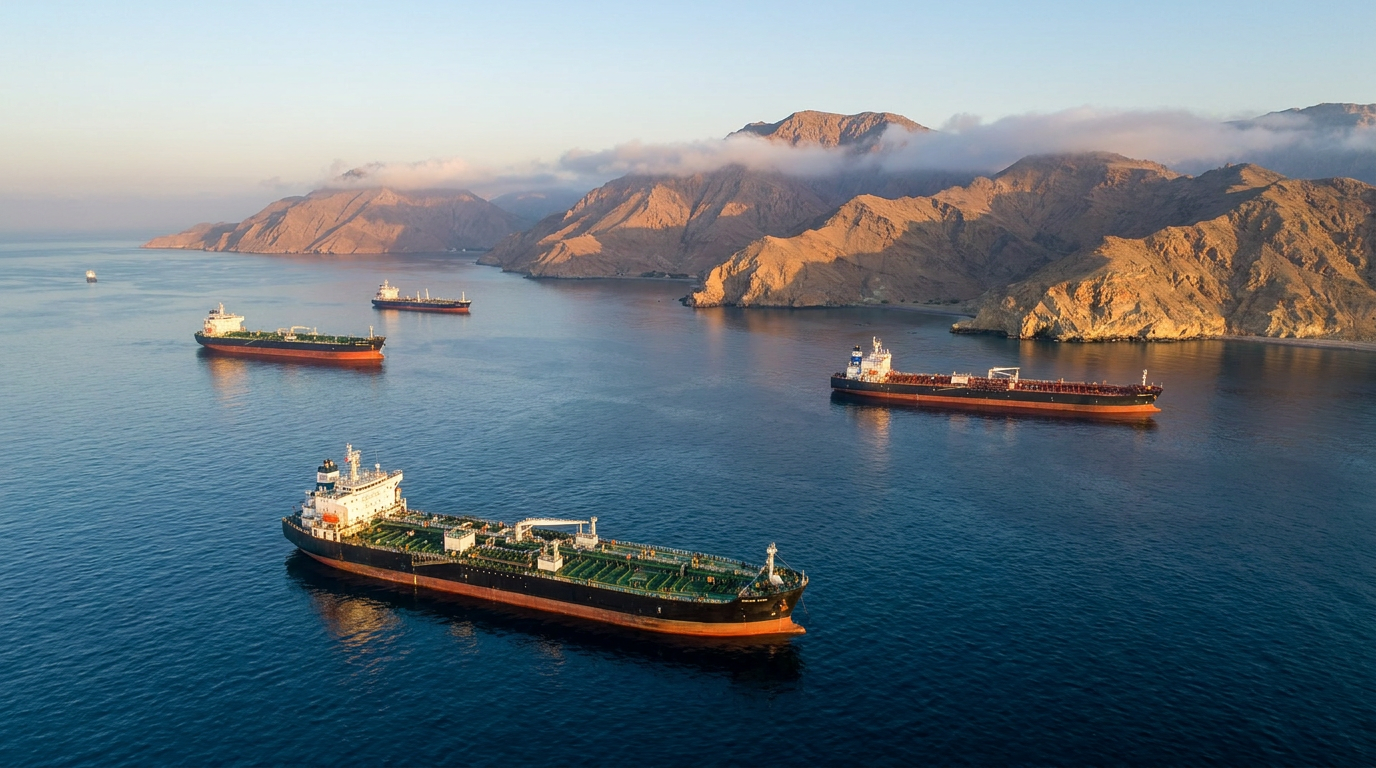
The United States and Iran have agreed to a preliminary ceasefire mediated by Pakistan and Qatar, lifting the U.S. naval blockade and reopening the vital Strait of Hormuz to global shipping.
By Factlen Editorial Team
- U.S. Administration
- Focuses on the reopening of the Strait of Hormuz and claims the deal will halt Iran's nuclear program.
- Iranian Leadership
- Frames the ceasefire as a victory of endurance, asserting that the U.S. was forced to lift its naval blockade.
- Israeli Government
- Criticizes the framework for failing to dismantle Iran's nuclear infrastructure and vows to continue military operations in Lebanon.
- Geopolitical Analysts
- Highlights the massive civilian toll of the 15-week war and the uncertainty surrounding the upcoming 60-day technical talks.
What's not represented
- · Lebanese civilians affected by ongoing Israeli operations
- · Global shipping insurers assessing the risk of the Strait of Hormuz
- · European allies reliant on Middle Eastern energy
Why this matters
The reopening of the Strait of Hormuz promises immediate relief to a global economy battered by 15 weeks of skyrocketing energy prices, but the fragile nature of the ceasefire means the threat of a renewed, nuclear-armed conflict still looms over international markets.
Key points
- The U.S. and Iran have reached a preliminary agreement to end their 15-week war.
- The deal immediately lifts the U.S. naval blockade and reopens the Strait of Hormuz.
- A formal signing ceremony is scheduled for Friday, June 19, in Geneva, Switzerland.
- The agreement triggers a 60-day period of technical talks regarding Iran's nuclear program.
- Israel has criticized the deal and vowed to maintain its military presence in Lebanon.
The 15-week war between the United States and Iran is coming to a tentative close. Following months of devastating conflict that reshaped the Middle East and crippled global energy markets, U.S. President Donald Trump and senior Iranian officials have announced a framework peace deal.[1][2]
The immediate breakthrough centers on the Strait of Hormuz. Under the preliminary agreement, the United States will lift its naval blockade of Iranian ports, and Tehran will end its de facto closure of the vital shipping lane. Trump celebrated the development on social media, declaring, "Ships of the World, start your engines. Let the oil flow!"[1][2][3]
Mediated heavily by Pakistan and Qatar, the deal was digitally signed over the weekend and is scheduled for a formal ceremony in Geneva, Switzerland, on Friday, June 19. The secretariat of Iran's Supreme National Security Council confirmed that military operations on all fronts will cease immediately.[2][4]
The agreement pauses a war that began on February 28, 2026, with a joint U.S.-Israeli military offensive dubbed "Operation Epic Fury." Those initial airstrikes assassinated Iran's Supreme Leader, Ayatollah Ali Khamenei, and targeted military and government infrastructure across the country.[6]
In response, Tehran launched waves of retaliatory missile and drone strikes against Israel, U.S. bases, and allied Gulf nations. Crucially, Iran militarized the Strait of Hormuz, choking off a waterway that typically handles one-fifth of the world's oil and liquid gas.[1][2][6]

The resulting global energy crisis placed immense pressure on the Trump administration and international markets. The U.S. retaliated with a strict naval blockade, leading to a grueling standoff that killed thousands of people, primarily in Iran and Lebanon, but also in Israel and neighboring states.[1][3]
While the framework deal halts the violence, the core issue that sparked the broader crisis—Iran's nuclear program—remains unresolved. The Geneva memorandum is designed to trigger an immediate 60-day period of intensive technical talks.[1][3]
While the framework deal halts the violence, the core issue that sparked the broader crisis—Iran's nuclear program—remains unresolved.
During this window, negotiators will attempt to hammer out a broader agreement regarding Iran's enriched uranium stockpiles. The U.S. and Israel originally justified the war as necessary to destroy Iran's nuclear and missile capabilities, but the extent of the damage to deeply buried nuclear sites remains unclear.[2][3]
Sanctions relief is a central pillar of the ongoing negotiations. According to draft terms leaked before the announcement, the United States may agree to release up to $25 billion in frozen Iranian assets. However, the sequencing of this financial relief is expected to be a major friction point in the upcoming 60-day window.[1]

Domestically, the Trump administration is framing the ceasefire as a decisive victory. The president claimed the agreement will permanently prevent Iran from attaining a nuclear weapon, despite the lack of finalized technical details.[2]
Conversely, Iranian state television broadcast banners asserting that the U.S. "was forced to sign an agreement to end the war." Despite the heavy casualties and the loss of its Supreme Leader, the Iranian government has leveraged its ability to disrupt global trade into a potent negotiating tool. As some analysts note, the conflict has paradoxically turned Iran into a symbol of defiance against Western military intervention.[3][5]
The most volatile wild card in the peace process is Israel. Sidelined from the final rounds of mediation, the Israeli government has sharply criticized the emerging deal.[3]
A key Iranian demand was that the ceasefire must include the fighting in Lebanon, where Israeli forces have pushed a deep ground invasion targeting Hezbollah. While the U.S.-Iran framework nominally covers all fronts, Israeli Prime Minister Benjamin Netanyahu has declared that Israel will maintain its military presence in Lebanon regardless of the agreement.[1][3][4]

This disconnect threatens to unravel the fragile truce. If Israel continues its operations in Beirut and southern Lebanon, Iran's Islamic Revolutionary Guard Corps could view it as a violation of the ceasefire, potentially reigniting regional strikes.[3]
Even the logistical implementation of the deal faces hurdles. While political leaders promise an immediate resumption of global trade, U.S. military officials caution that fully reopening the Strait of Hormuz to commercial traffic will take weeks. The waterway must be cleared of naval mines and military debris before insurance companies will underwrite oil tankers.[2]
For now, the world watches Geneva. Friday's signing ceremony will officially transition the conflict from a hot war to a high-stakes diplomatic standoff. Whether the 60-day technical talks can resolve decades of nuclear anxiety—or merely delay the next phase of the conflict—remains the defining question for the Middle East.[1][2][3][4]
How we got here
Feb 28, 2026
The U.S. and Israel launch Operation Epic Fury, killing Supreme Leader Ali Khamenei and sparking the war.
March 2026
Iran retaliates with regional strikes and effectively closes the Strait of Hormuz, triggering a global energy crisis.
April 2026
The U.S. military imposes a strict naval blockade on Iranian ports in response to the Hormuz closure.
June 14, 2026
President Trump and Iranian officials announce a framework peace deal mediated by Pakistan and Qatar.
June 19, 2026
The formal memorandum of understanding is scheduled to be signed in Geneva, Switzerland.
Viewpoints in depth
The U.S. Administration's view
The White House frames the ceasefire as a decisive victory that secures global trade.
President Trump and U.S. officials argue that the 15-week military campaign successfully degraded Iran's capabilities and forced Tehran to the negotiating table. By securing the reopening of the Strait of Hormuz, the administration claims it has rescued the global economy from a crippling energy crisis. Furthermore, the U.S. maintains that the upcoming 60-day technical talks will permanently dismantle Iran's nuclear ambitions, justifying the heavy costs of the conflict.
Iran's view
Tehran projects defiance, claiming its blockade strategy forced the U.S. to concede.
Despite the assassination of Supreme Leader Ali Khamenei and extensive damage to its infrastructure, the Iranian government views the peace deal as a strategic triumph. Iranian state media emphasizes that the U.S. was compelled to lift its naval blockade and potentially unfreeze $25 billion in assets due to the unbearable economic pressure of the Hormuz closure. Tehran insists that its core nuclear program remains negotiable rather than destroyed.
Israel's view
Sidelined from the talks, Israel views the deal as a premature concession.
The Israeli government, which partnered with the U.S. to launch the initial February strikes, is deeply skeptical of the Geneva framework. Prime Minister Benjamin Netanyahu and other officials argue the deal fails to definitively eliminate Iran's nuclear threat or dismantle its regional proxy network. In defiance of the agreement's terms, Israel has signaled it will maintain its military offensive against Hezbollah in Lebanon, creating a major fault line that could threaten the broader ceasefire.
What we don't know
- Whether the 60-day technical talks will successfully result in a permanent agreement on Iran's nuclear program.
- How Israel's stated intention to maintain its military presence in Lebanon will impact the broader ceasefire.
- Exactly how long it will take to clear the Strait of Hormuz of naval mines and resume full commercial shipping.
Key terms
- Strait of Hormuz
- A narrow, strategically vital waterway between the Persian Gulf and the Gulf of Oman through which roughly 20% of the world's oil passes.
- Operation Epic Fury
- The U.S. code name for the initial joint military strikes with Israel on February 28, 2026, that targeted Iran's leadership and infrastructure.
- Naval Blockade
- A military operation by the U.S. Navy to prevent goods and vessels from entering or leaving Iranian ports, implemented in retaliation for Iran's closure of the Strait of Hormuz.
- Sanctions Relief
- The lifting of economic penalties by the U.S., which could allow Iran to access billions in frozen assets and sell its oil on the global market.
Frequently asked
When did the 2026 U.S.-Iran war begin?
The conflict began on February 28, 2026, when the U.S. and Israel launched "Operation Epic Fury," a series of airstrikes that killed Iranian Supreme Leader Ali Khamenei.
What does the new peace deal actually do?
The preliminary agreement ends hostilities on all fronts, lifts the U.S. naval blockade of Iranian ports, and reopens the Strait of Hormuz to global shipping.
Is Iran's nuclear program dismantled?
Not yet. The current deal is a framework that triggers a 60-day period of intensive technical talks to address Iran's enriched uranium and potential sanctions relief.
Will the fighting in Lebanon stop?
While the U.S.-Iran deal calls for an end to military operations on all fronts, Israel has stated it intends to keep its forces in Lebanon, creating a potential risk to the ceasefire.
Sources
Source coverage
6 outlets
4 viewpoints surfaced






[1]The GuardianIsraeli Government
US and Iran reach framework peace deal to end war
Read on The Guardian →[2]TimeU.S. Administration
U.S. and Iran Sign Preliminary Agreement to End War
Read on Time →[3]PBS NewsHourU.S. Administration
Deal is reached to end Iran war and Trump orders stop to U.S. naval blockade
Read on PBS NewsHour →[4]Al JazeeraIranian Leadership
US-Iran 'peace deal' announced; Trump says Strait of Hormuz reopening
Read on Al Jazeera →[5]The New York TimesGeopolitical Analysts
Trump’s War Has Turned Iran Into a Symbol of Defiance
Read on The New York Times →[6]Encyclopedia BritannicaGeopolitical Analysts
2026 Iran war
Read on Encyclopedia Britannica →
More in news politics
See all 6 stories →Strait of Hormuz
US and Iran Reach Framework Peace Deal to End War and Reopen Strait of Hormuz
0 sources

Digital Literacy
Fact Check: Can 'Prebunking' Actually Inoculate Voters Against Political Misinformation?
0 sources

US-Iran Deal
US and Iran Reach Framework Peace Deal to End 15-Week War, Reopen Strait of Hormuz
0 sources
Title IX
Supreme Court strikes down federal Title IX gender identity mandate in 5-4 ruling
0 sources
Every angle. Every day.
Get news politics stories with full source coverage and perspective breakdowns delivered to your inbox.