
Women's Champions League Viewership Doubles to 44.5 Million in Record-Breaking Season
The 2025/26 UEFA Women's Champions League season set a new benchmark for the sport, drawing a projected 44.5 million viewers globally. A revamped competitive format and expanded free-to-air broadcasting culminated in a sold-out final where Barcelona defeated Lyon 4-0.

The 2025/26 UEFA Women's Champions League season has officially rewritten the record books for women's club football, culminating in a viewership surge that saw global audiences more than double to a projected 44.5 million. After years of steady, incremental growth, the European tournament has achieved a genuine commercial breakthrough, proving that the appetite for elite women's soccer extends far beyond the quadrennial World Cup cycle. The staggering numbers reflect a deliberate strategy to modernize the competition's format and prioritize accessibility for fans worldwide.[1][2]
The season concluded on May 23 with a sold-out final at the Ullevaal Stadion in Oslo, Norway, where Spanish powerhouse Barcelona dismantled French rivals Olympique Lyonnais 4-0. The highly anticipated matchup between the two most dominant clubs of the modern era drew 24,258 spectators, setting a new all-time attendance record for any women's football match in the host nation.
Barcelona's victory secured their fourth continental title and cemented their status as the premier force in European football, but the sheer scale of the event signaled a victory for the entire sport.[1][3]
However, the story of the season extends far beyond Barcelona's trophy lift. According to a comprehensive season-end report released by UEFA, the tournament's unprecedented growth was driven by a revamped competitive format and a massive expansion in broadcast accessibility.
Governing bodies and network executives had gambled that a more rigorous, unpredictable tournament structure would translate to higher sustained viewership, and the final data has overwhelmingly validated that approach across both traditional television and digital platforms. The results demonstrate that fans are eager to follow the week-to-week drama of club football when the product is packaged and distributed with the same premium treatment afforded to the men's game.[1]
For the first time, the competition utilized a Swiss-system 'league phase,' replacing the traditional group stage that had often been criticized for producing lopsided, predictable results. This structural shift generated 54 unique matchups—more than double the previous format—bringing high-profile clashes earlier in the calendar and eliminating repetitive fixtures. By forcing top-tier clubs to face a wider variety of elite opponents before the knockout rounds, the new format sustained competitive tension throughout the autumn and winter months, keeping fans engaged long before the spring finals.[1][3]
The result was a dramatically more competitive tournament on the pitch. UEFA noted that nearly half of all matches—49 percent—were decided by a single goal or ended in a draw, a sharp departure from the heavy defeats that occasionally characterized the early rounds of past seasons.
Furthermore, the number of comebacks tripled, with 33 percent of matches seeing teams recover from a deficit to win or draw, compared to just 11 percent the previous year. This tighter competitive balance meant that viewers tuning in were virtually guaranteed a compelling, high-stakes contest.[1][2]
This heightened on-pitch drama translated directly into commercial and broadcast success. Matches were aired in 207 territories, blending premium subscription coverage with strategic free-to-air partnerships designed to lower the barrier to entry for casual fans. Rather than locking the sport's biggest moments behind expensive paywalls, UEFA and its broadcast partners made a concerted effort to ensure the tournament was visible in as many living rooms as possible, a strategy that paid immediate dividends in audience acquisition.
By prioritizing reach over immediate subscription revenue, the league successfully captured a broader demographic, introducing the sport to viewers who might not have otherwise sought it out. This hybrid broadcast model is increasingly viewed as the gold standard for growing women's sports properties globally.[1]
The final alone was carried by 30 free-to-air partners, making it the most widely available Women's Champions League decider in history. The European Broadcasting Union (EBU) reported that 22 of its member networks broadcast the Oslo final live, yielding massive domestic audiences that rivaled major men's sporting events. This unprecedented level of free-to-air exposure allowed the climax of the European club season to dominate the sporting conversation across the continent, rather than being siloed to dedicated football channels.[2]
In Spain, RTVE captured an average audience of 1.15 million viewers—a 14.9 percent market share and a historic high for the network's coverage of the tournament, reflecting the immense national pride in Barcelona's continued success. Meanwhile, host nation Norway saw nearly half of all television viewers tune in at kickoff, with NRK recording a peak audience of 264,000. Similar viewership spikes were reported in France and Portugal, proving that the audience growth was a pan-European phenomenon rather than an isolated regional anomaly.[1]
Digital engagement mirrored the television boom, highlighting the sport's deep resonance with younger, digitally native audiences. Across official competition accounts, social media video views skyrocketed by 50 percent year-over-year to reach an astonishing 947 million. The tournament also generated 1.49 billion impressions and 52 million direct engagements. These metrics are particularly valuable to sponsors and commercial partners, as they demonstrate a highly active and passionate fanbase that interacts with the sport daily, rather than just tuning in for the 90 minutes of match time.[1][2]
Broadcasters and UEFA officials view these metrics as a definitive turning point for the sport's commercial viability. By closing the coverage gap and prioritizing accessibility, the league has cultivated a deeply engaged audience, proving that the demand for premium women's football extends year-round.
The data dismantles the outdated narrative that women's club soccer cannot draw sustainable, mass-market audiences, providing a powerful negotiating tool for future broadcast rights cycles and commercial sponsorships. As the financial pie grows, the expectation is that these revenues will be reinvested into the sport, funding better training facilities, higher player salaries, and more robust youth academies across the continent.[1]
The introduction of the second-tier UEFA Women's Europa Cup this season also played a crucial role in broadening the ecosystem. By offering a secondary continental competition, UEFA provided 86 clubs from 50 national associations the opportunity to compete on the European stage.
This expanded footprint allowed for €37.7 million to be distributed across the system, fueling domestic development and ensuring that the financial windfall of the Champions League's success helps professionalize clubs outside the traditional elite. This system-building approach is vital for the long-term health of the sport, as it prevents a small handful of mega-clubs from monopolizing all the resources and talent, thereby preserving the competitive balance that made this season so successful.[1]
As Barcelona celebrates another historic quadruple and cements its dynasty, the broader narrative is one of a sport rapidly scaling its infrastructure to meet exploding global demand. With audiences surging past 44 million, tournament formats optimizing for maximum drama, and broadcasters reaping the rewards of free-to-air exposure, the 2025/26 season stands as a definitive benchmark. The challenge for European football is no longer about proving that the audience exists, but rather about how high the ceiling can ultimately be pushed in the years to come.[2][3]
Key points
- The 2025/26 UEFA Women's Champions League season reached a projected 44.5 million viewers, more than doubling the previous year's audience.
- Barcelona secured their fourth title with a 4-0 victory over Olympique Lyonnais in front of a record-breaking Norwegian crowd of 24,258.
- A revamped Swiss-system league phase generated 54 unique matchups and dramatically increased the number of closely contested games.
- The final was broadcast by 30 free-to-air partners across 207 territories, making it the most widely available title match in the tournament's history.
- Social media engagement surged, with video views across official accounts jumping 50% year-over-year to 947 million.
How we got here
2021/22 Season
UEFA introduces a group stage to the Women's Champions League, beginning the modernization of the tournament.
December 2023
UEFA announces a revamped 'league phase' format to begin in the 2025/26 season to increase competitive balance.
May 2024
Barcelona defeats Lyon in the 2024 final, signaling a shift in European dominance.
2025/26 Season
The new league phase debuts, producing 54 unique matchups and a dramatic rise in closely contested games.
May 23, 2026
Barcelona defeats Lyon 4-0 in Oslo in front of a record-breaking Norwegian crowd to cap off a historic season.
- European Broadcasters
- Networks emphasize the success of offering the tournament on free-to-air television to capture massive domestic market shares.
- Football Governing Bodies
- Organizers focus on how the revamped tournament structure successfully increased competitive balance and ecosystem funding.
- Sports Analysts
- Football observers highlight the tighter margins, dramatic comebacks, and the on-pitch quality that sustained audience interest.
Perspectives this story doesn't cover
- Domestic league organizers who must compete with the expanded European calendar.
- Players' unions advocating for workload management amid the increased number of high-intensity matches.
Sources
Source coverage
4 outlets
3 viewpoints surfaced



- [1]UEFAFootball Governing Bodies
Women's Champions League hits new audience benchmark
Read on UEFA → - [2]The Straits TimesSports Analysts
Women's Champions League hits new audience benchmark, says UEFA
Read on The Straits Times → - [3]WikipediaSports Analysts
2026 UEFA Women's Champions League final
Read on Wikipedia → - [4]Olympics.comSports Analysts
FC Barcelona vs OL Lyonnes head-to-head
Read on Olympics.com →

More in Sports
See all →Saudi Pro League
Ronaldo Returns to Al-Nassr Lineup for Critical Clash Against Al-Diriyah
5 sources
Eredivisie Title Race
Depleted PSV Eindhoven Hosts SC Heerenveen Following First Eredivisie Defeat
7 sources
Saudi Pro League
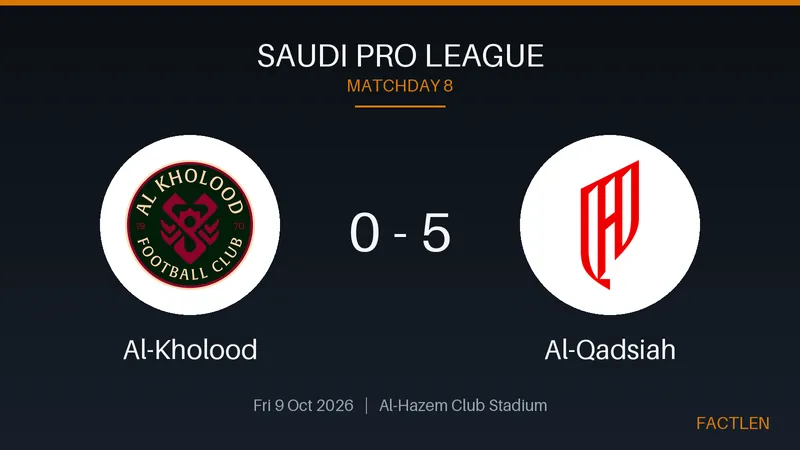
Al-Qadsiah Dismantles Al-Kholood 5-0 to Seize Top Spot in Saudi Pro League
6 sources
Pitch Geometry
Enforcing Law 14's 9.15-Metre Buffer: Why Soccer's Penalty Arc Extends Four Yards Beyond the Box
4 sources

Comments
Every angle. Every day.
Get Sports stories with full source coverage and perspective breakdowns, free every day.